Pros:
• Premium polished titanium build with an elegant 24K gold volume knob
• More solid, substantial feel than the original aluminum version
• Excellent fit and finish, with tactile buttons and a well-damped volume knob
• Clean, detailed sound with natural vocals and instruments
• Perceived improvements in clarity, bass definition, and soundstage over the aluminum version
• Versatile connectivity, including balanced 4.4mm output, Bluetooth, USB DAC, and wireless streaming
• Compact, portable design with a feature-rich HiByOS interface
Cons:
• leather case sold separately.
• The perceived sound differences versus the aluminum version are subtle and subjective
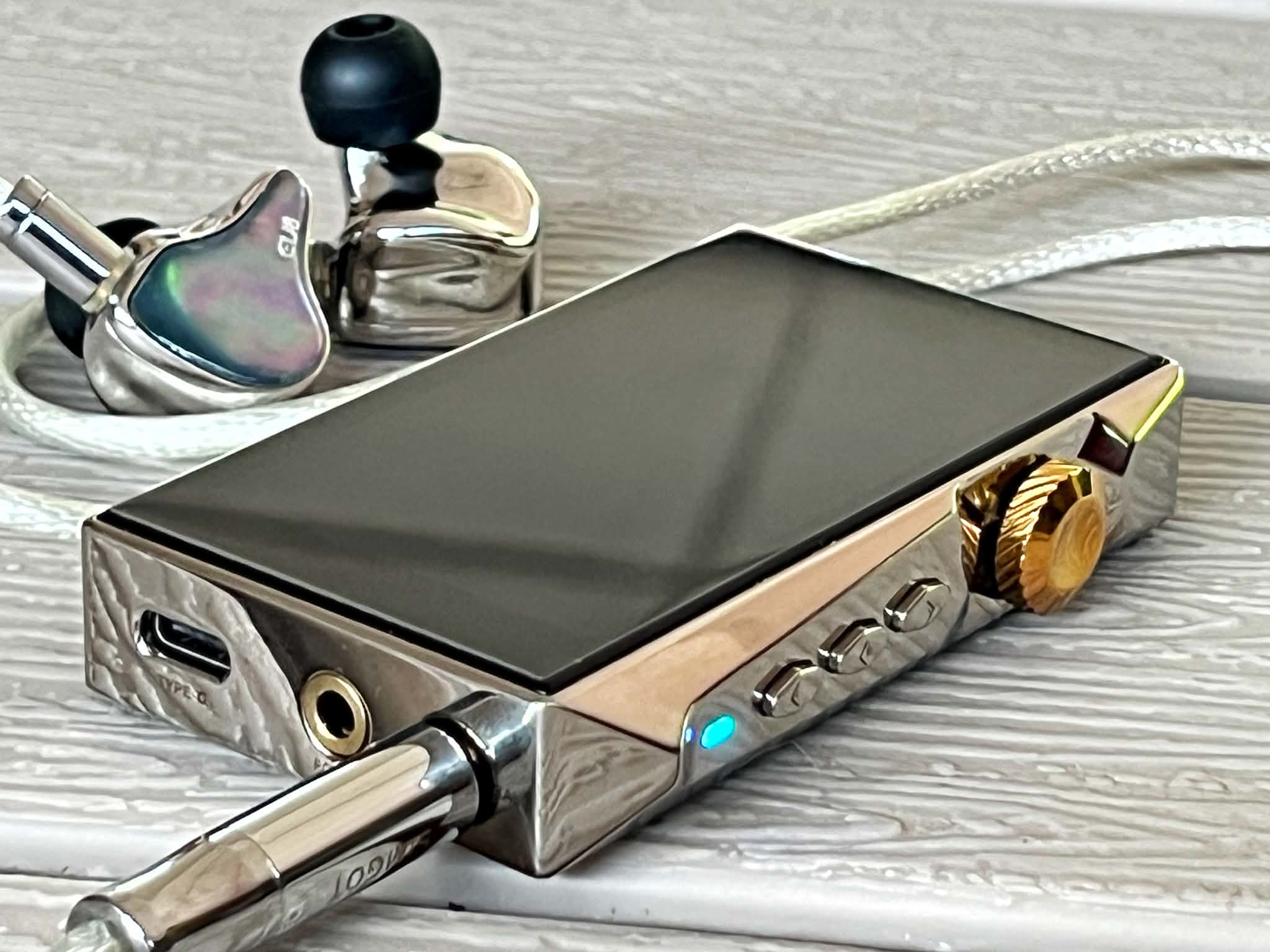
Some audio gear just feels different when you’ve already grown attached to the original. I finally got my hands on the limited edition Hidizs AP80 Pro Max Titanium, and I’m really excited about this one. My original aluminum AP80 Pro Max has been one of my favorite compact DAPs and a trusted daily driver, so seeing this familiar little player reimagined in titanium feels extra special.
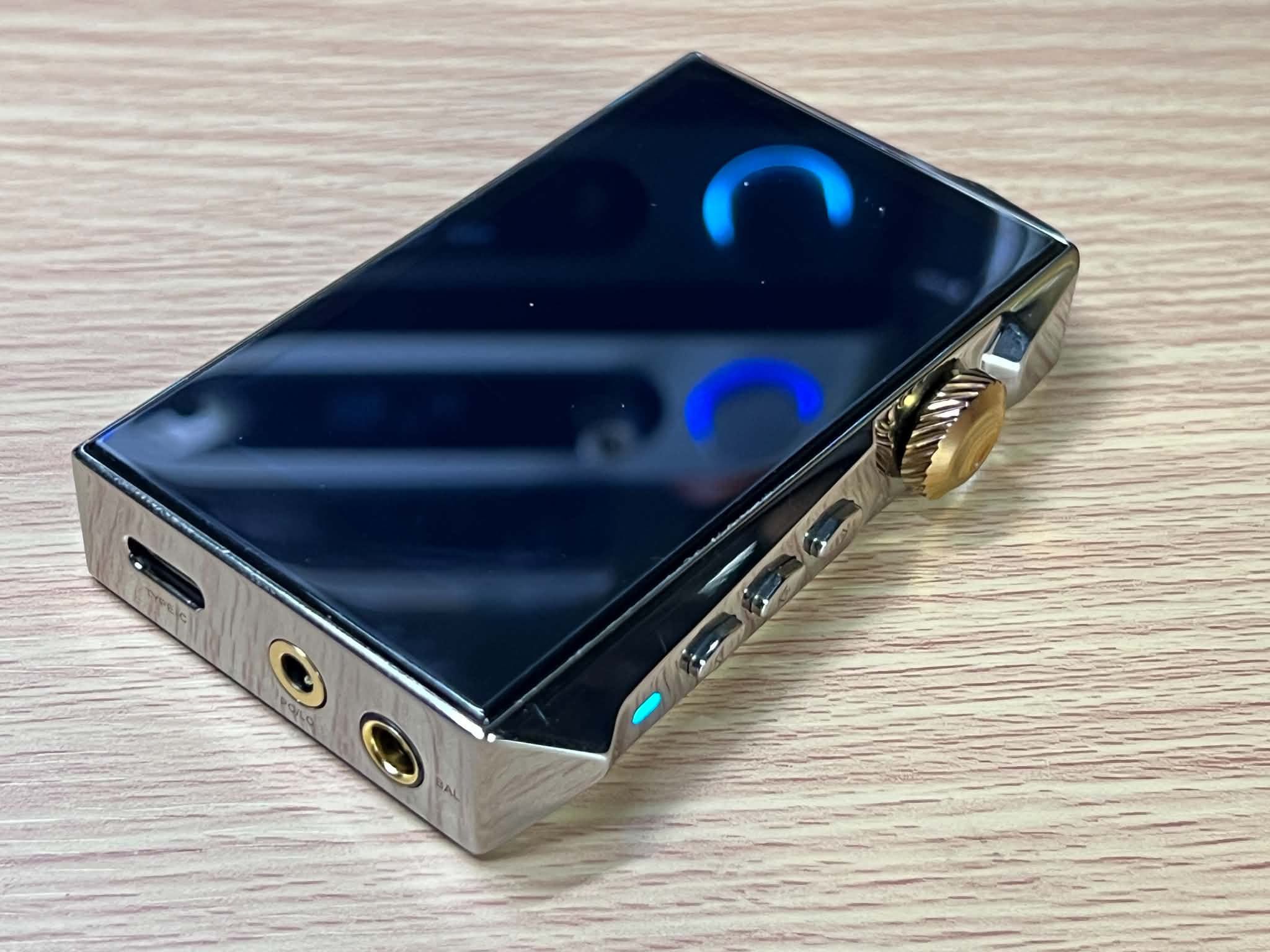
This version comes with a polished titanium body and a 24K gold-colored volume knob. It has the same familiar hardware and audio architecture as the standard AP80 Pro Max, but the overall look, feel, and presentation are on a completely different level.
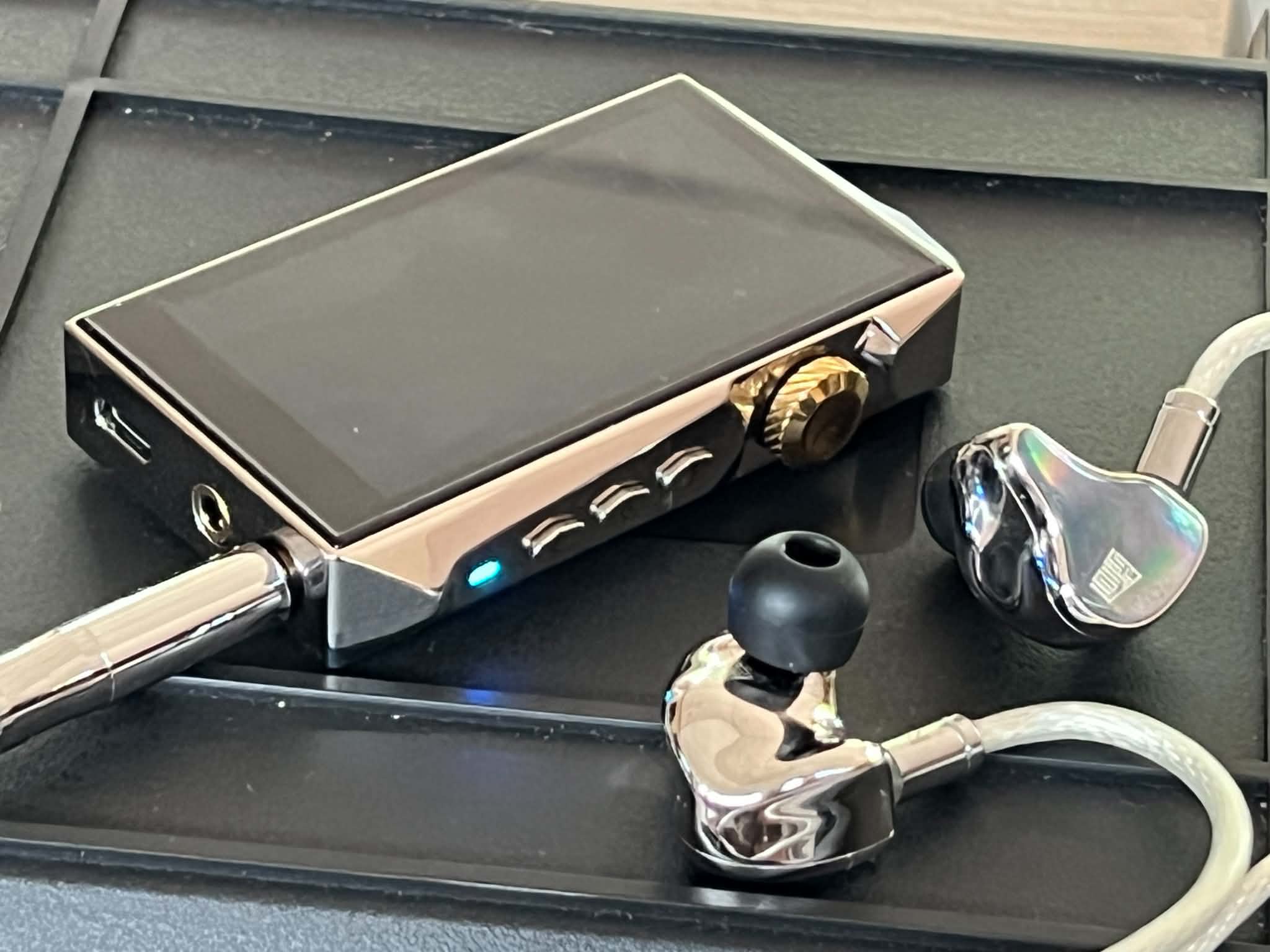
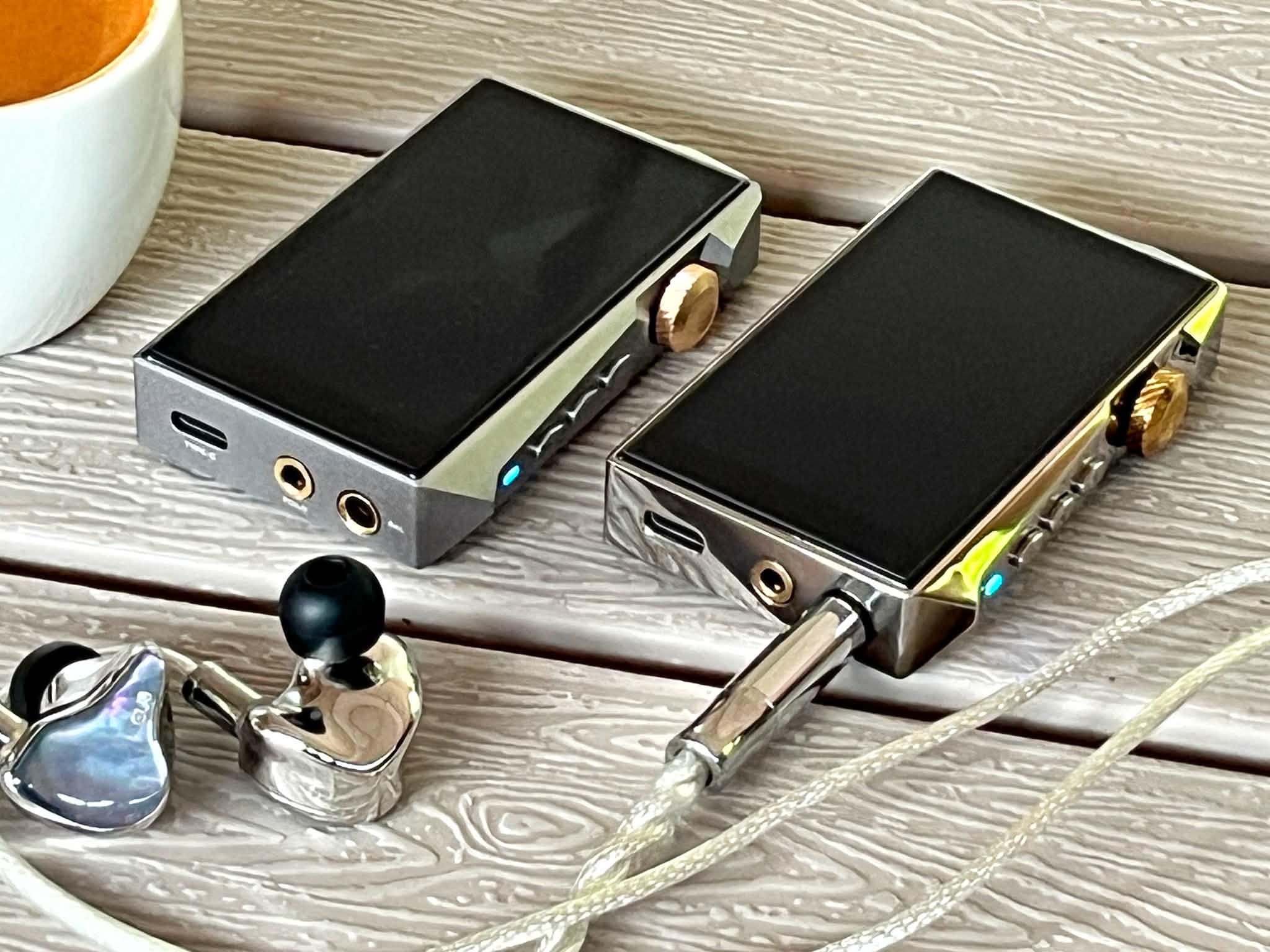
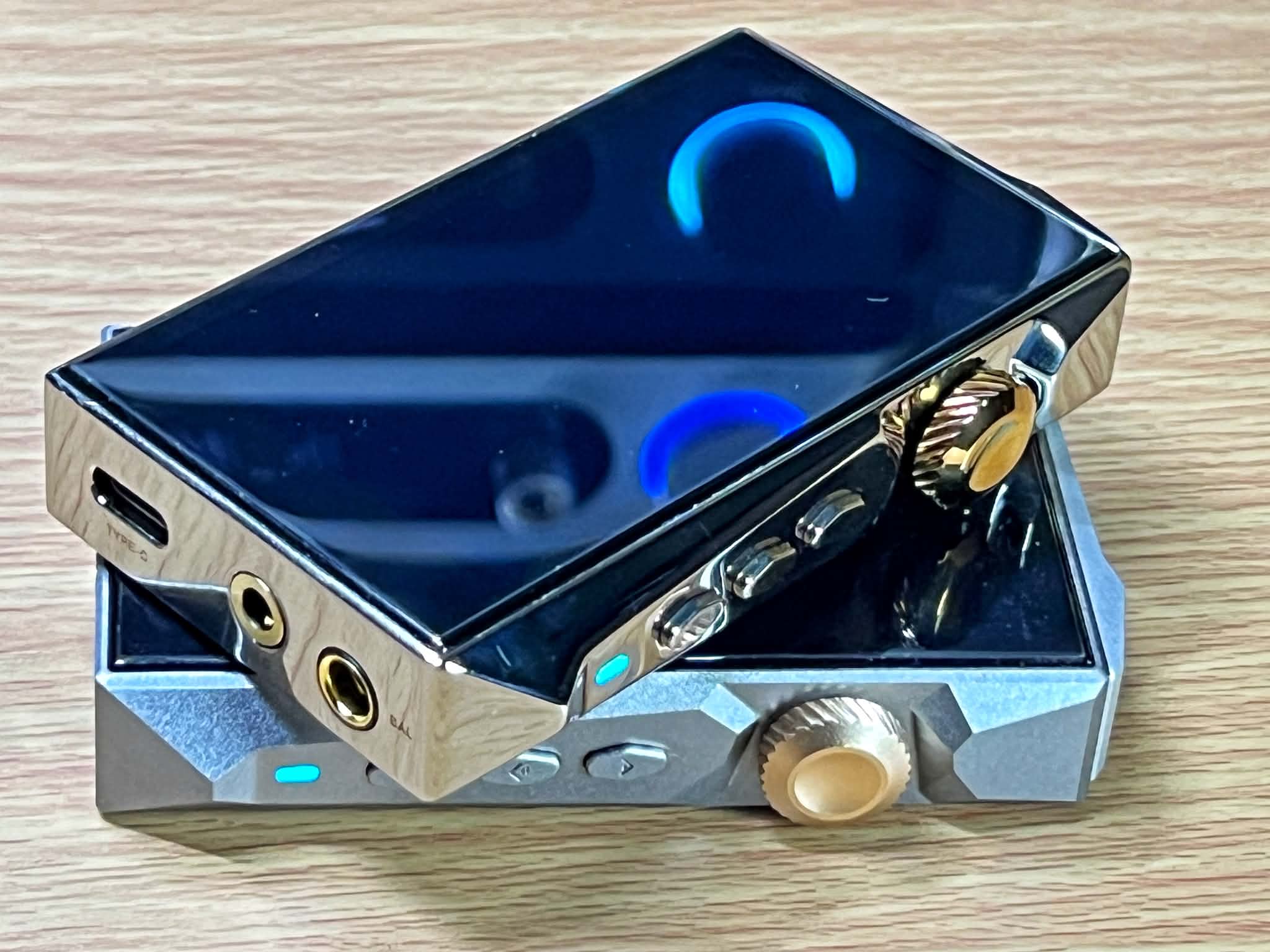
My iPhone camera honestly does not do this DAP justice. The mirror-polished titanium looks stunning in person. It has a different kind of shine compared to an ordinary chrome finish, with reflections that give it a much more refined and premium appearance. Depending on the angle and lighting, the surface almost looks like a little piece of jewelry rather than a portable music player.
And yes, that gold-colored volume knob adds just the right amount of bling without making the design look overdone.
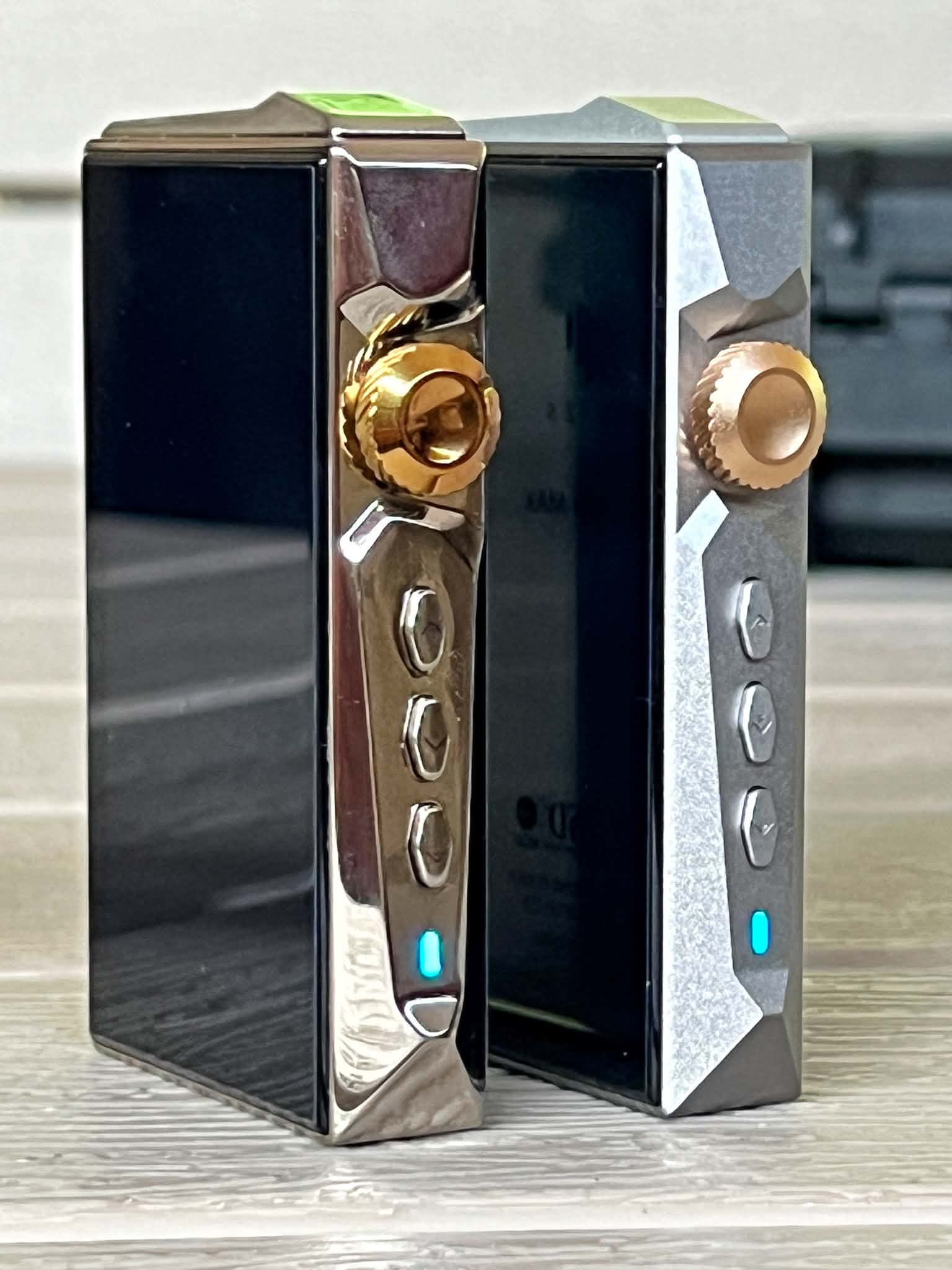
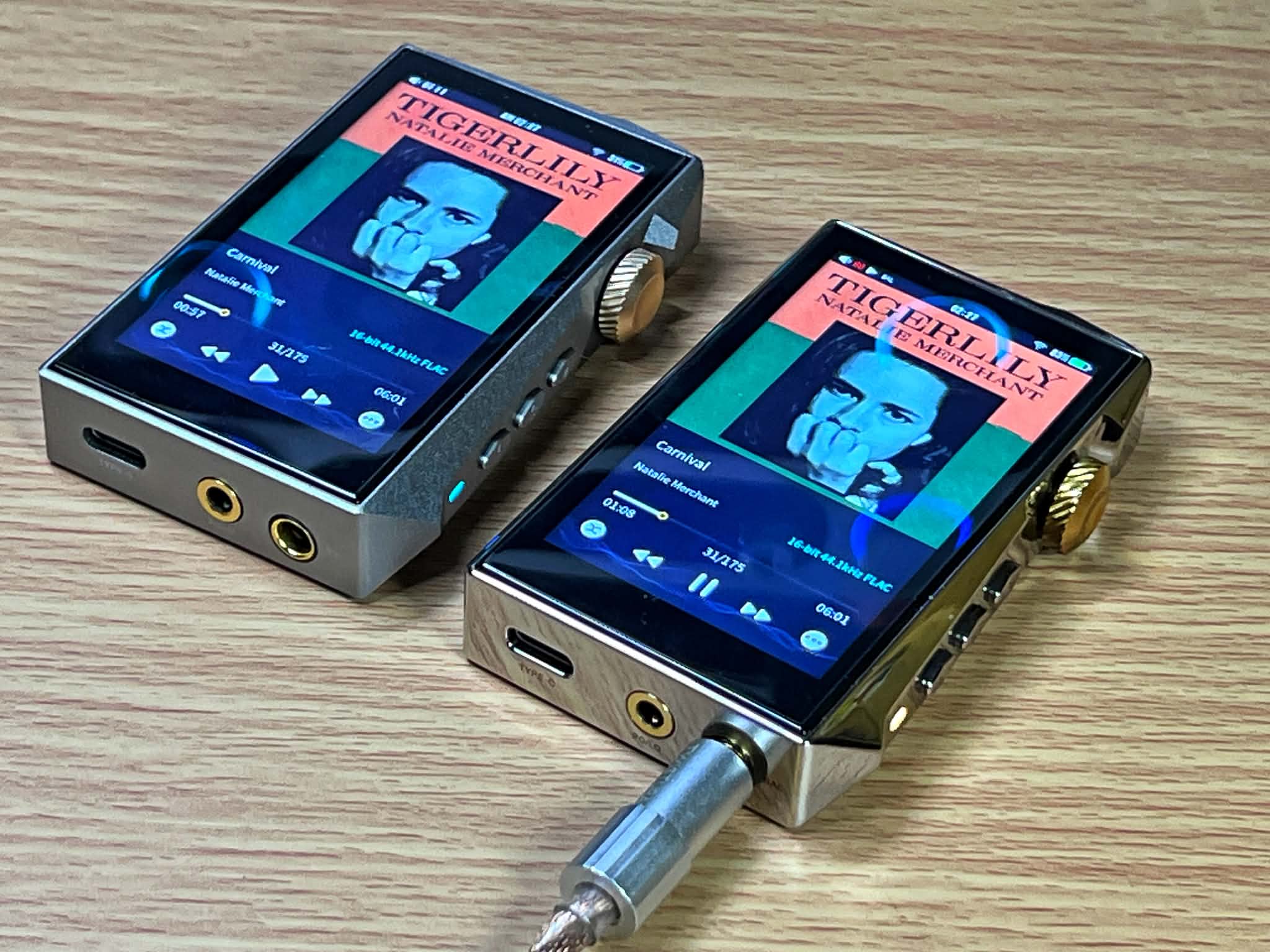
But what surprised me most was the way it feels in the hand. Compared to my original aluminum AP80 Pro Max, the titanium version feels denser and more substantial. The physical controls also feel slightly different. The buttons have a firmer, more reassuring click, while the volume knob has just the right amount of resistance. It feels smooth and deliberate, with no noticeable wobble.
These might sound like small details, but they make a difference when you're handling a device every day. The titanium version feels like a more exclusive, carefully finished take on a player I already know and enjoy.
I think this could be the most desirable version of the AP80 Pro Max series from a design perspective. Whether it is the best overall version will depend on what you value most, but in terms of material, finish, and that unmistakable premium feel, it certainly makes a strong case for itself.
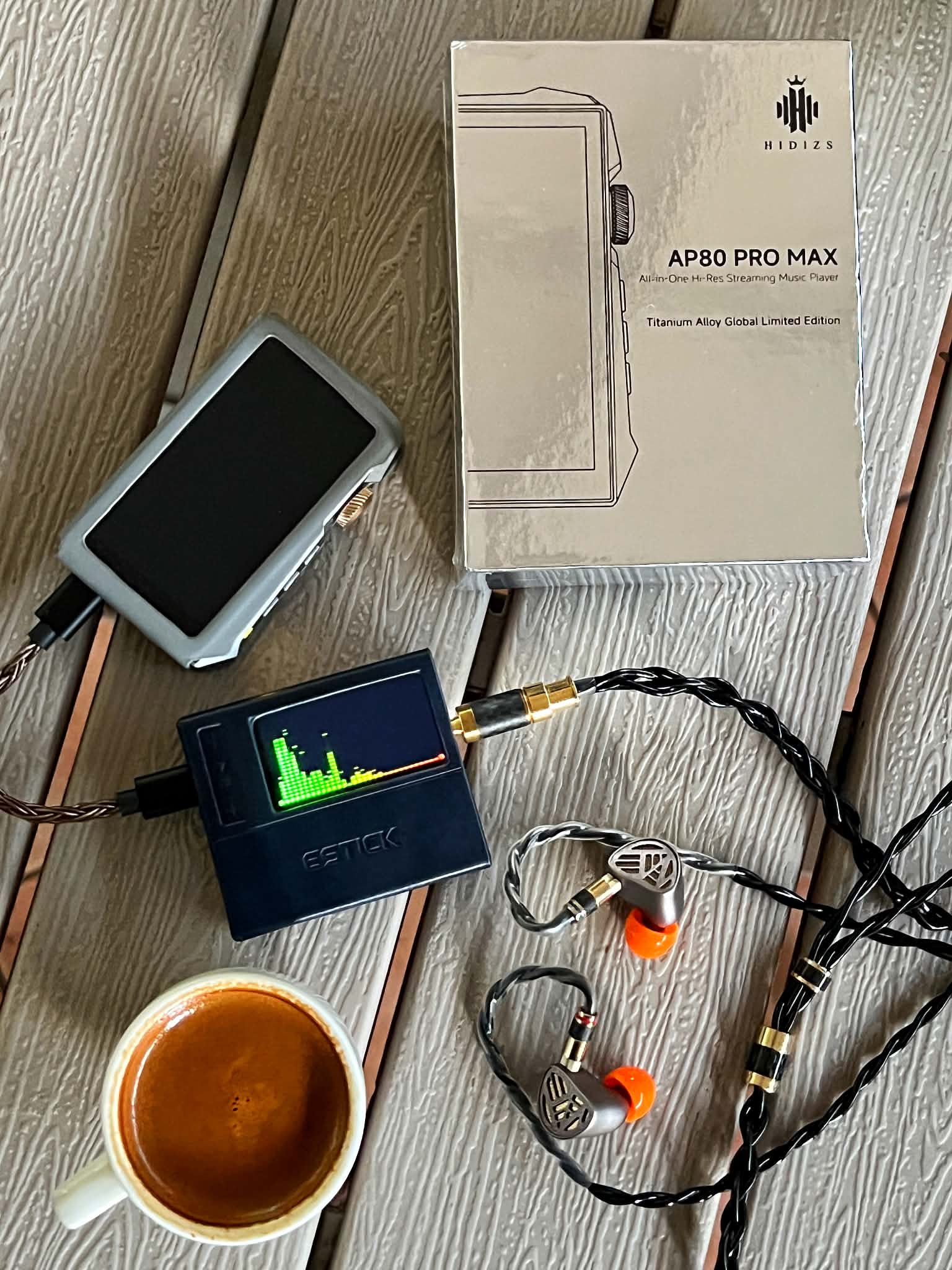
Whats in the box? check out my quick unboxing video and take a closer look and the AP80.
Three Materials, Three Personalities
One of the interesting things about the AP80 Pro Max lineup is that Hidizs offers different body materials, each with its own aesthetic and physical character.
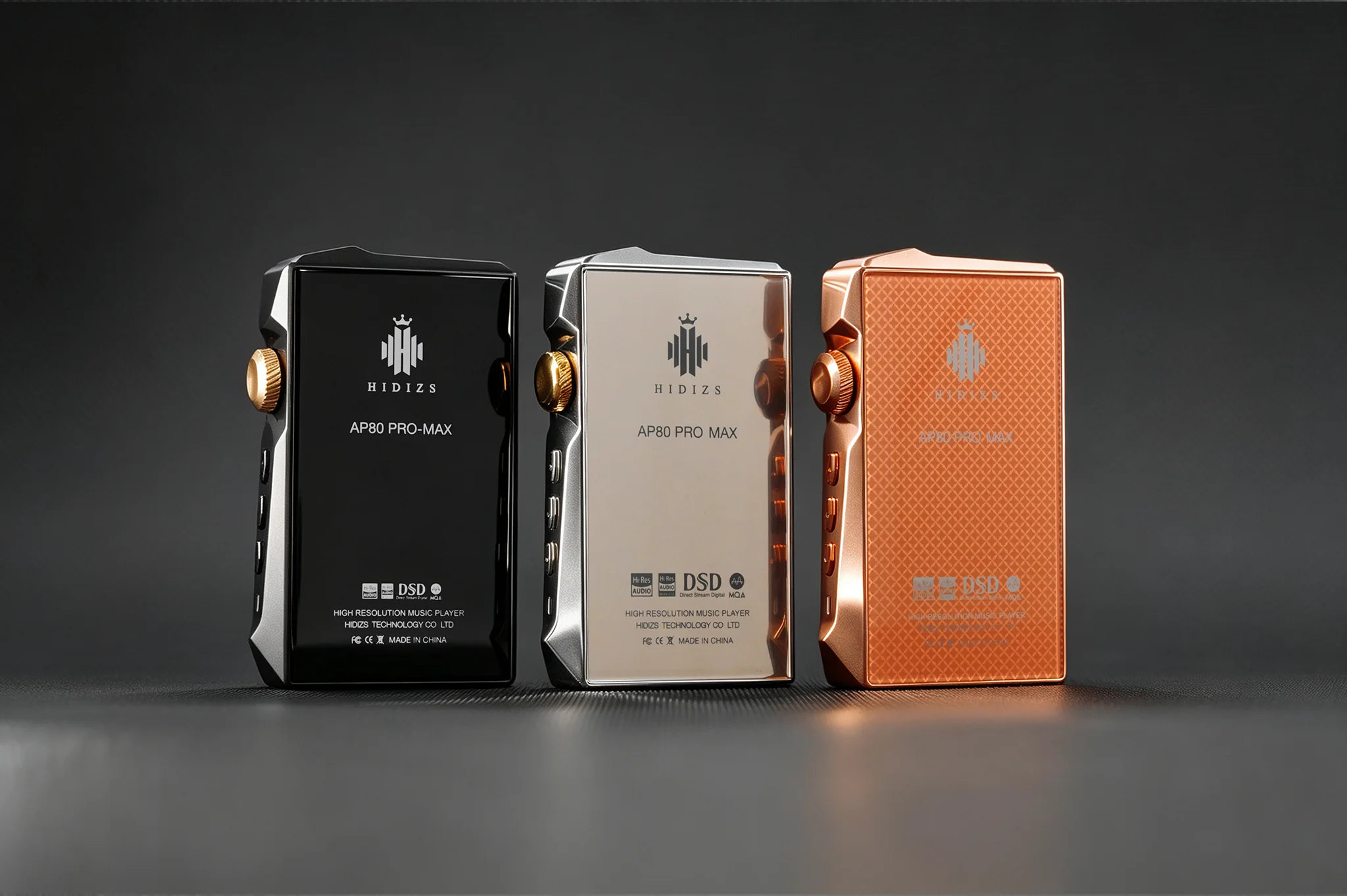
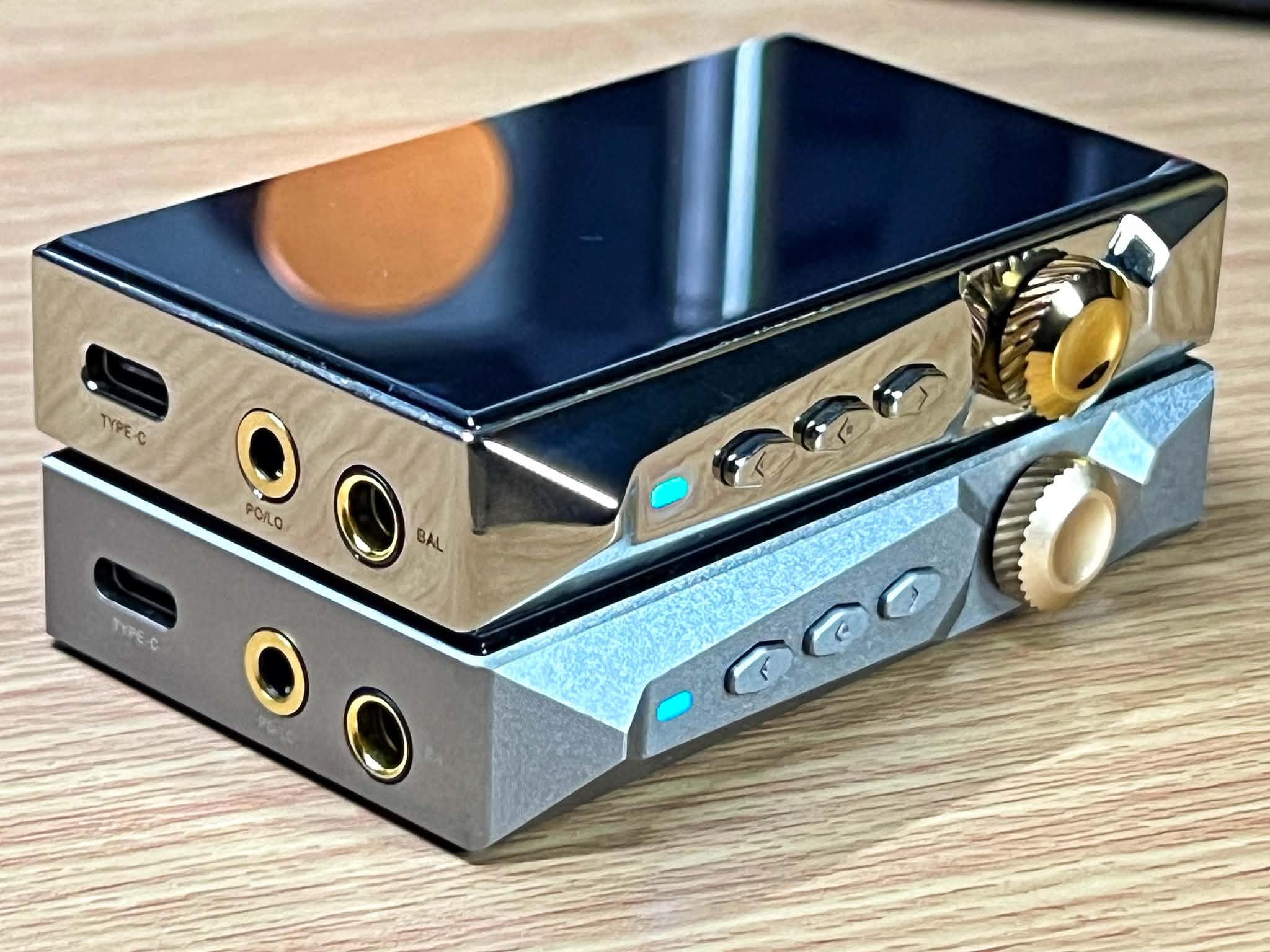
The standard aluminum version is the most familiar and practical choice. It is lightweight, durable, and easy to carry around, making it a good fit for a compact DAP intended for everyday use.
Its metal construction feels solid without adding unnecessary weight. For someone who prioritizes portability and wants a no-nonsense little music player, the aluminum version remains a sensible option.
This is the version I have been using as my reference for the comparison with the titanium edition.
The copper version has a completely different personality. Its warm, reddish finish gives it a vintage look, and the material has a substantial feel in the hand. It is also heavier than aluminum and can develop a natural patina over time.
Some people love that aged appearance, while others prefer to keep their copper looking bright and polished. Fortunately, the surface can generally be brought back closer to its original appearance with appropriate copper polishing, depending on the finish and any protective coating.
I haven't personally tried the copper AP80 Pro Max, so I won't pretend to know how it sounds. I've heard fellow reviewers describe it as warmer and smoother, with greater perceived note weight, but those are their impressions rather than my own.
Still, the copper edition has its own appeal, especially for collectors and listeners who appreciate the character of the material as much as the device itself.
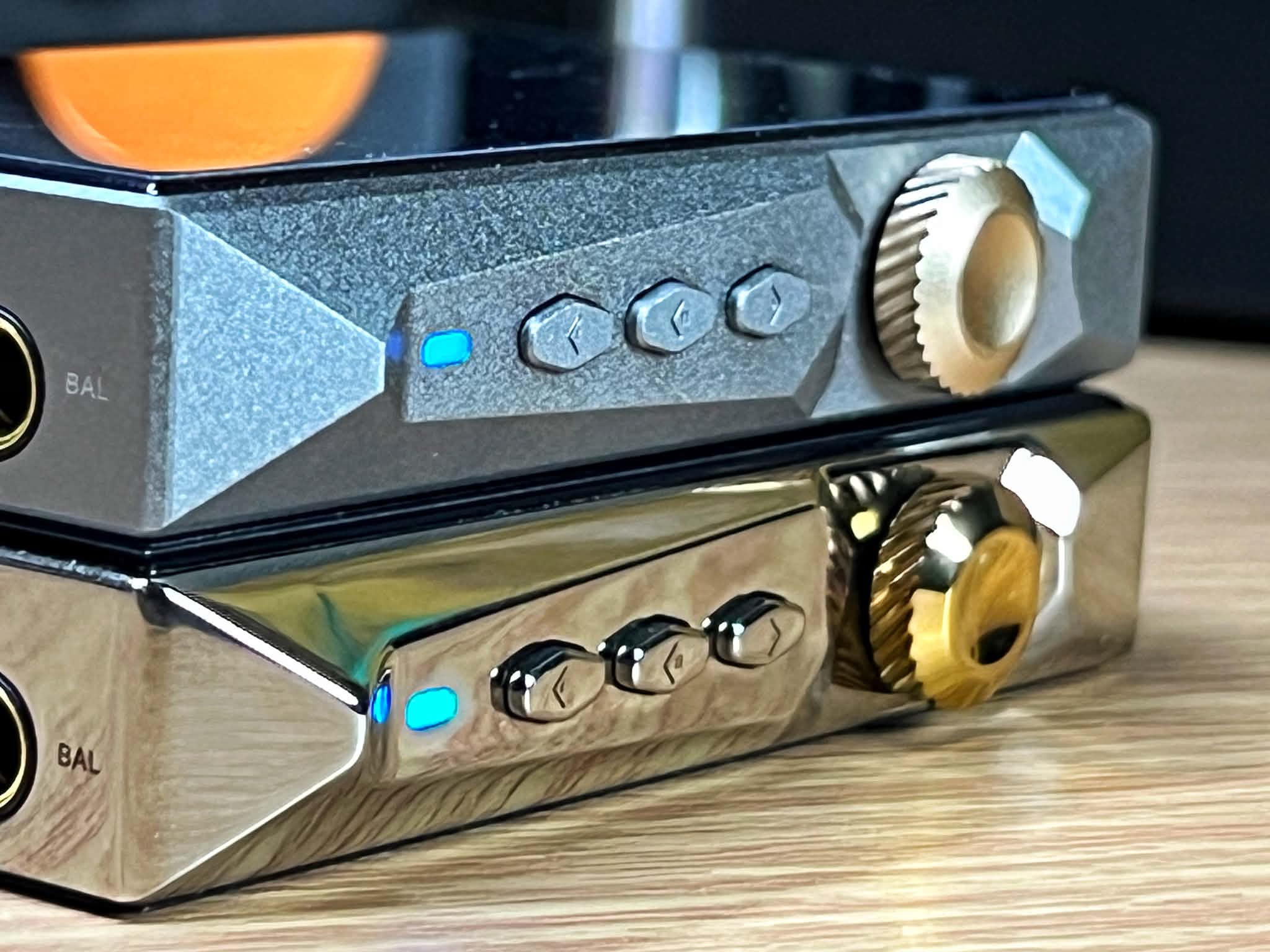
Then there's the titanium edition.
With its mirror-polished finish, gold-colored volume knob, and more substantial feel, this is easily the version that catches my attention the most. It has a cooler, more modern look than copper and a more distinctive visual presence than the standard aluminum model.
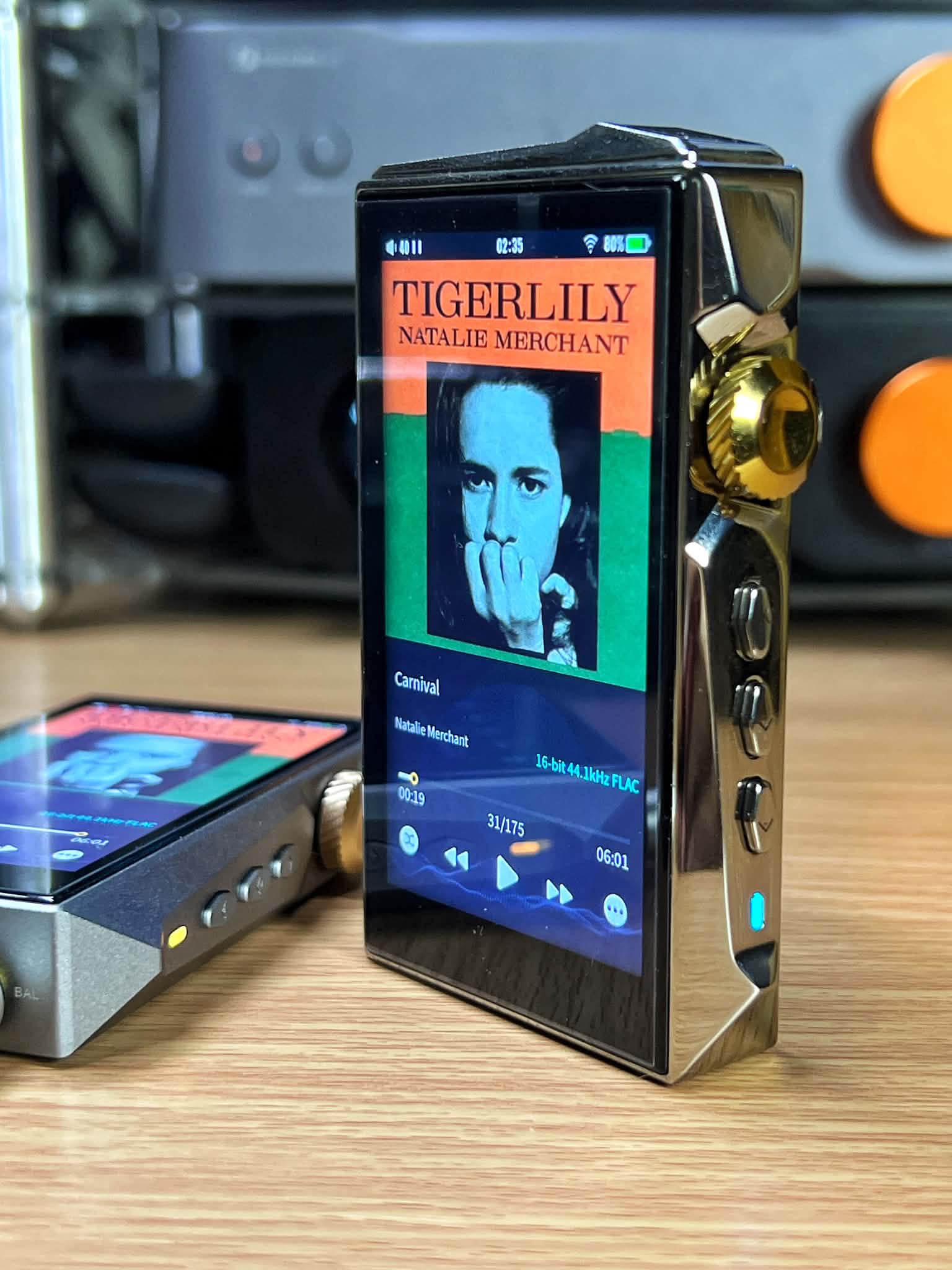
For me, it feels like the most fully realized version of the AP80 Pro Max from a design and finish perspective. The combination of polished titanium and gold accents gives it a more luxurious character without losing the compact identity of the original player.
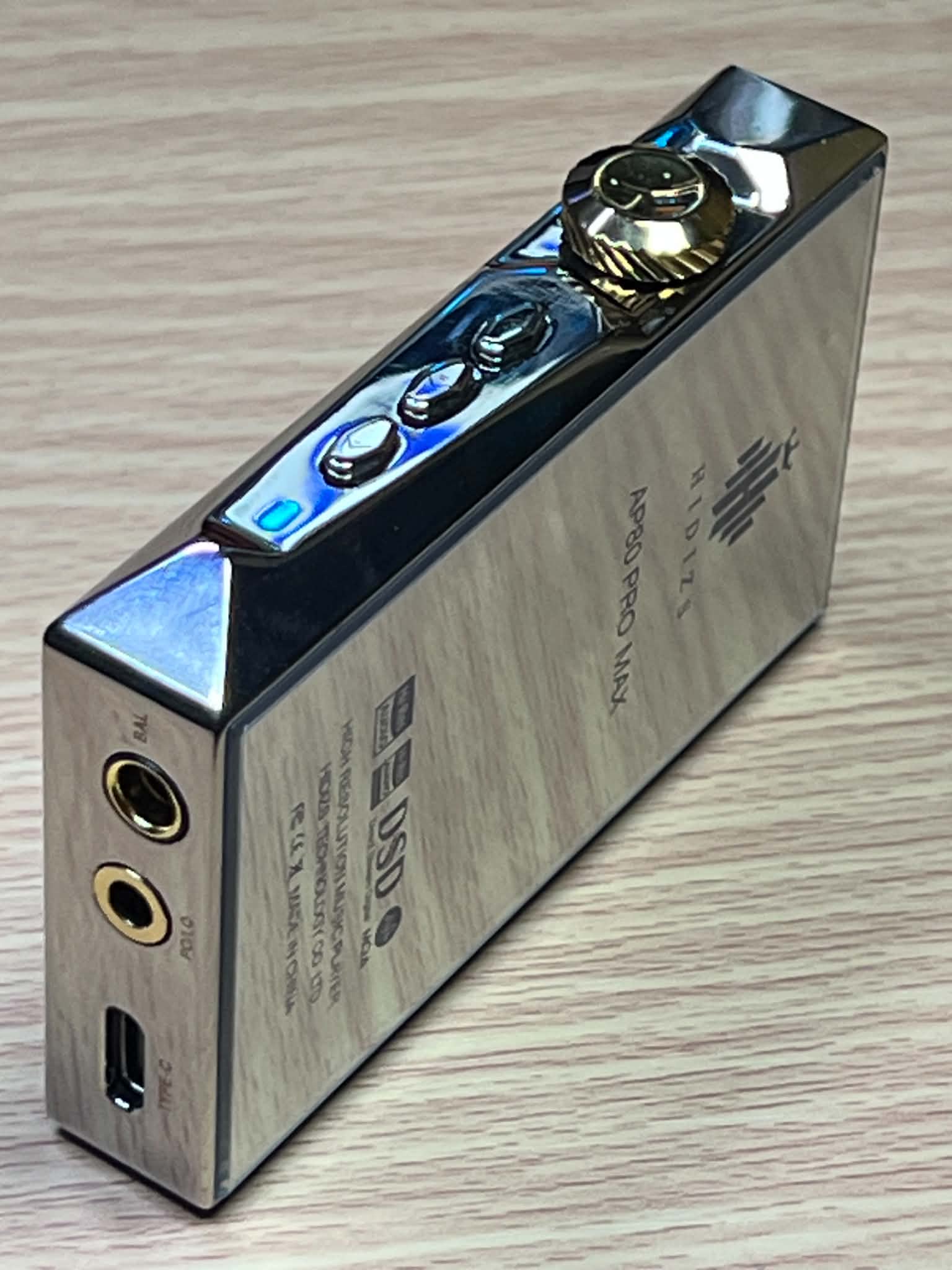
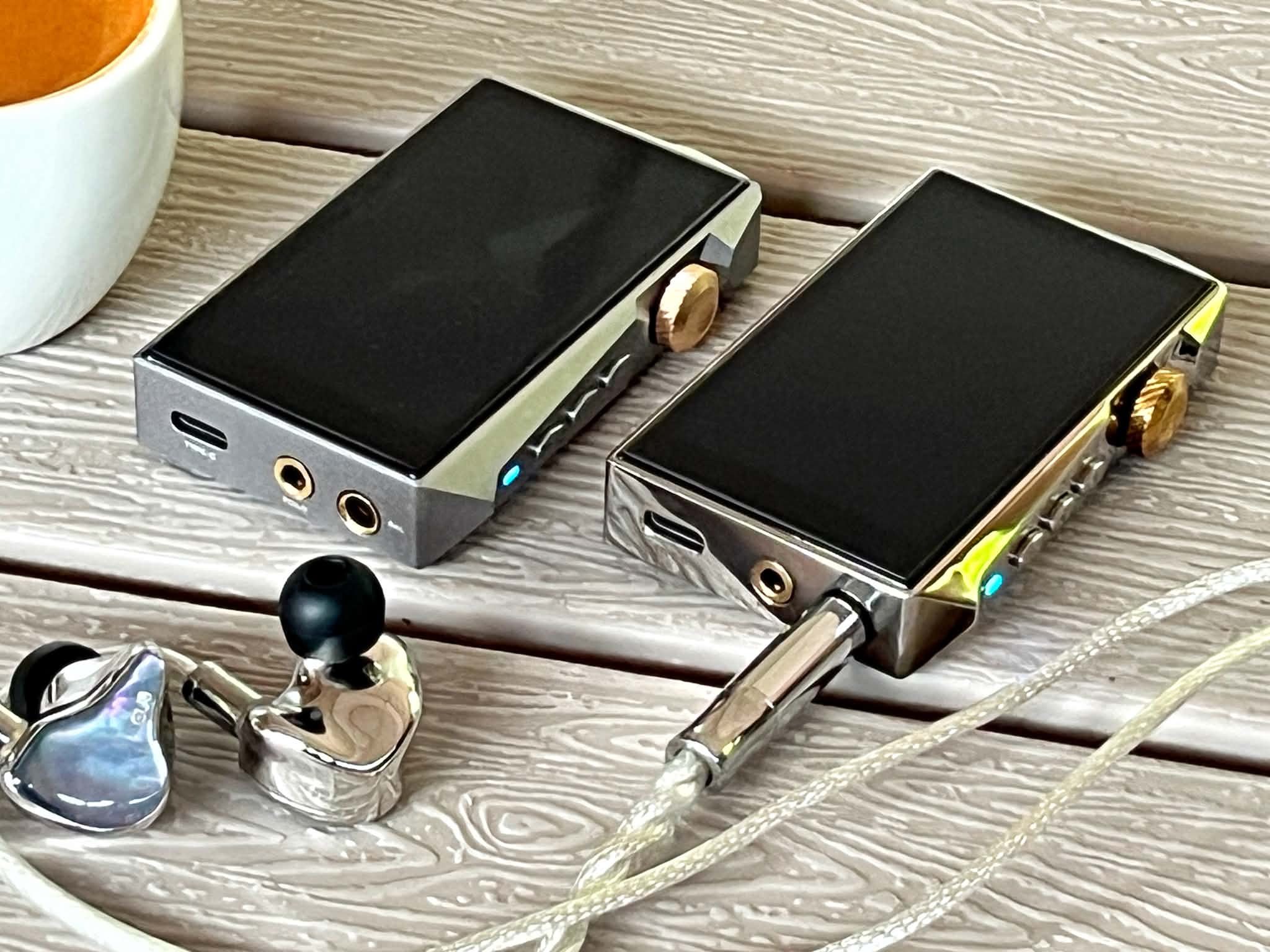
The titanium version does come with a slight trade-off in weight, but the difference compared to the aluminum version is only a few grams, making it barely noticeable in everyday use. Copper, on the other hand, is clearly heavier than both. Titanium strikes a nice middle ground, giving you a denser, more premium feel without adding too much weight. For me, the small increase in weight is hardly a deal-breaker, especially considering the material upgrade and the more exclusive look and feel.
Now, if this were only about looks and build quality, I could leave it there. But the sound comparison turned out to be much more interesting.
The Sound Mystery: Did I Just Eat My Own Words?
Here's the part that genuinely caught me off guard.
All three versions share the same basic internal audio architecture. They use dual ESS ES9219C DACs and the same Ingenic X1600E system-on-chip platform. On paper, you would expect their sound to be essentially the same, assuming the rest of the circuit implementation, firmware, settings, and output conditions are equivalent.
I used to joke about reviewers who claimed that changing the body material of a DAP could change its sound.
My argument was simple: imagine changing my shirt from black to white. I'm still the same person, and my voice still sounds the same. So why should a music player sound different just because its body is made from another material?
I had a good laugh about it with a few reviewer friends who swore that the copper version sounded different. Since I hadn't tried the copper model myself, I figured I could safely remain skeptical.
Then the titanium AP80 Pro Max arrived.
After spending time listening to it alongside my original aluminum version, I found myself questioning that assumption. To my ears, the titanium edition sounded a little cleaner and clearer, with a slightly different bass presentation and a soundstage that seemed wider and deeper.
And just like that, I had to swallow some of my own words. Haha!
I'm not saying the titanium version suddenly transforms the AP80 Pro Max into a completely different class of DAP. The differences I perceived were subtle, and the overall sonic character remained familiar. But I could hear enough of a distinction to make me curious about what might be happening.
Naturally, I wanted to understand why.
A Conversation With Larry: Resonance, RF Shielding, and a Detour Into Coffee
When I have a question that sits somewhere between audio engineering and audiophile curiosity, one of the people I enjoy talking to is Larry. He is a fellow geek with interests spanning audio and coffee, and he runs audioreviews.org, a website known for its extensive ear-tip reviews and audio-related content.
I asked him what could explain the differences listeners sometimes report when a DAP uses a different chassis material despite retaining the same internal components.
Interestingly, Larry told me he had experienced something similar when comparing the Lotoo PAW Gold Touch with its titanium version. His titanium unit sounded cleaner and clearer to him, which was remarkably close to what I thought I was hearing from the AP80 Pro Max.
Of course, one listener's experience doesn't establish a technical explanation, but it was an interesting point of comparison.
Our conversation nearly wandered completely off-topic when we started talking about Italian copper espresso machines and the Turkish coffee pot known as an ibrik. You know how it goes when two people who are equally obsessed with audio and coffee start talking. Hehe
Eventually, we found our way back to the subject.
We discussed internal resonance, electromagnetic interference, and the possibility that the enclosure material might influence the electrical environment inside the device. These are reasonable areas to investigate, but I also wanted to be careful not to confuse a possible explanation with a proven one.
Can the Chassis Material Actually Affect Sound?
Technically, it is possible for the enclosure to influence a device's performance, but the explanation is more complicated than saying one metal sounds better than another.
1. Mechanical resonance
Different materials have different densities, stiffness, and damping characteristics. These properties affect how a structure responds to vibration.
A chassis can influence mechanical vibration and, depending on the design, how that vibration couples into internal components. However, a difference in material resonance does not automatically mean a difference in the electrical audio signal. In a properly designed portable DAP, the effect may be negligible or inaudible.
2. Electromagnetic interference and shielding
The enclosure can also play a role in shielding sensitive electronics from electromagnetic interference. This matters because a portable player contains digital processing, clock circuits, power regulation, wireless radios, and analog audio circuitry in a very small space.
However, one important correction is worth making: titanium does not automatically provide better RF shielding than aluminum or copper.
Copper is highly conductive, and aluminum is also an excellent electrical conductor. Titanium is considerably less conductive than either. In general, conductivity is an important factor in electromagnetic shielding, although actual performance depends on the frequency of the interference, material thickness, enclosure continuity, grounding, openings, and overall design.
So it would be inaccurate to rank titanium as the best shielding material simply because it is denser. Density and electrical conductivity are different properties.
A well-designed enclosure made from any of these materials can provide effective shielding. The important question is how the complete device is engineered, not just which metal is used.
3. Circuit implementation and manufacturing variation
Even when two devices share the same DAC chips and processor, the complete electrical implementation matters. Power delivery, grounding, PCB layout, output-stage behavior, component tolerances, and firmware can all influence measured performance.
If the different versions use equivalent electronics and are built to the same electrical specifications, I would generally expect their measured audio performance to be very similar. A chassis material alone is not sufficient evidence that one version must sound warmer, cleaner, or more detailed.
4. Listening conditions and perception
There is another possibility we should never ignore: perception.
Small differences in output level, playback settings, source material, listening conditions, or expectations can affect what we hear. This doesn't mean anyone is imagining things deliberately. It simply means that our ears and brains are not measurement instruments.
To establish whether the material itself causes a sonic difference, I would want carefully level-matched comparisons, ideally conducted blind, along with measurements of frequency response, output impedance, noise, distortion, and possible interference.
Until then, I can confidently describe what I heard, but I cannot confidently claim to know why I heard it.
For now, the titanium AP80 Pro Max sounds slightly different to me. The cause remains an open question, and I think that is a more honest conclusion than assigning a specific sonic signature to a metal without evidence.
Build Quality and Handling: The Details Matter
Putting the sound mystery aside for a moment, the titanium edition has plenty to offer on its own.
The polished body is the first thing you notice, but the overall tactile experience is what makes it feel special. It has a reassuring density without feeling excessively heavy, and the finish gives it a distinct identity compared with the standard aluminum version.
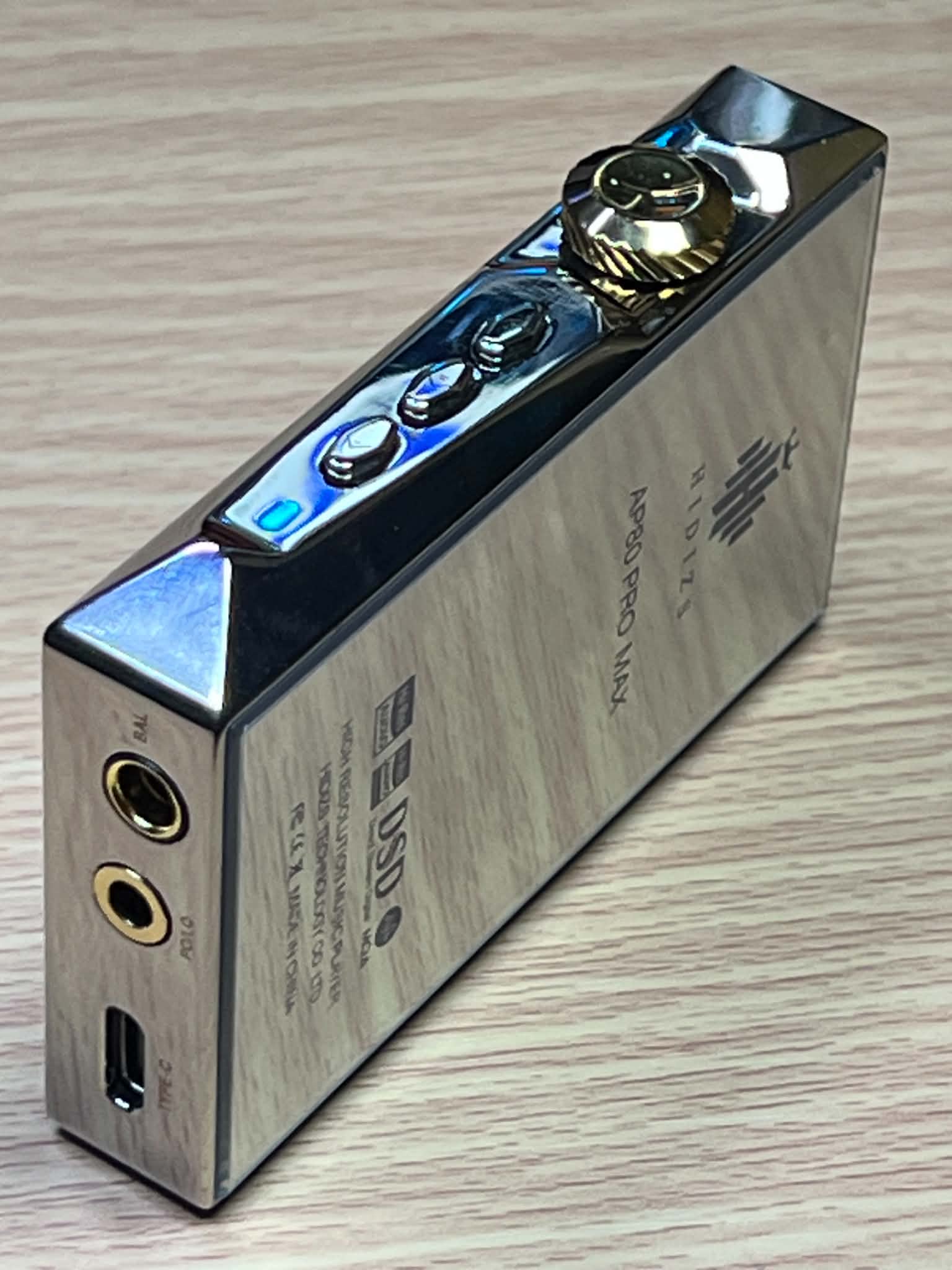
The physical buttons feel firm and responsive. The volume knob has a satisfying amount of resistance and a solid tactile feel. It doesn't feel loose or flimsy, and the gold-colored finish complements the polished titanium beautifully.
I appreciate these details because a DAP is something you interact with constantly. You adjust the volume, skip tracks, navigate menus, and pull it out of your pocket throughout the day. Good controls and a well-finished chassis make those everyday interactions more enjoyable.
There is one practical consideration, though. A mirror-polished surface will naturally show reflections, fingerprints, and handling marks more readily than a matte finish. If you like keeping your gear looking pristine, you may find yourself wiping it down more often.
Still, I would rather have a finish with this much visual character than another ordinary metal body that looks like everything else.
The titanium edition feels like a premium collectible, but it remains a functional music player rather than a display piece. That balance is what I like about it.
Technical Specifications and Features
The AP80 Pro Max remains a compact, feature-packed digital audio player. Its small size makes it suitable for portable listening, while its connectivity options give it more flexibility than a basic offline music player.
Specification
Display
2.95-inch touchscreen, 360 × 640 resolution
DAC architecture
Dual ESS ES9219C DAC chips
Processor
Ingenic X1600E SoC
PCM playback
Up to 32-bit/384 kHz
DSD playback
Native DSD256
MQA
Up to 16× hardware decoding, as specified
3.5 mm single-ended output
70 mW + 70 mW at 32 Ω
4.4 mm balanced output
190 mW + 190 mW at 32 Ω
Operating system
HiByOS
USB functionality
Bidirectional USB DAC functionality
Bluetooth
Bluetooth 5.1
Listed Bluetooth codecs
LDAC, aptX, AAC, SBC, UAT
Wireless networking
2.4 GHz Wi-Fi
Network playback
Tidal, Qobuz, DLNA, and AirPlay, subject to firmware and service support
Additional features
E-book function, Hi-Res and Hi-Res Wireless certifications
The listed output power is particularly useful to understand. At 32 ohms, the balanced output is rated at 190 mW per channel, compared with 70 mW per channel from the single-ended output. That gives the 4.4 mm connection more headroom for earphones and some less-sensitive headphones.
Actual usable power will depend on the load, output conditions, and distortion limits, so these figures should not be treated as a guarantee that the player can drive every demanding headphone to its full potential. For sensitive IEMs, I would also pay attention to background noise and usable volume range rather than power alone.
The dual ES9219C DAC architecture provides the digital-to-analog conversion, while the X1600E platform handles the player’s system functions. The supported high-resolution formats give you plenty of flexibility with local music libraries, although a higher sample rate does not automatically mean better sound. I always believe that the quality of the recording and the overall implementation matter more than the format number by itself.
USB DAC functionality is another welcome feature, allowing the AP80 Pro Max to serve as a compact DAC for a compatible computer or other supported source. Its wireless capabilities add further versatility.
Sound Quality: Clean, Clear, and Transparent
Now, let's get back to what matters most to me: the listening experience.
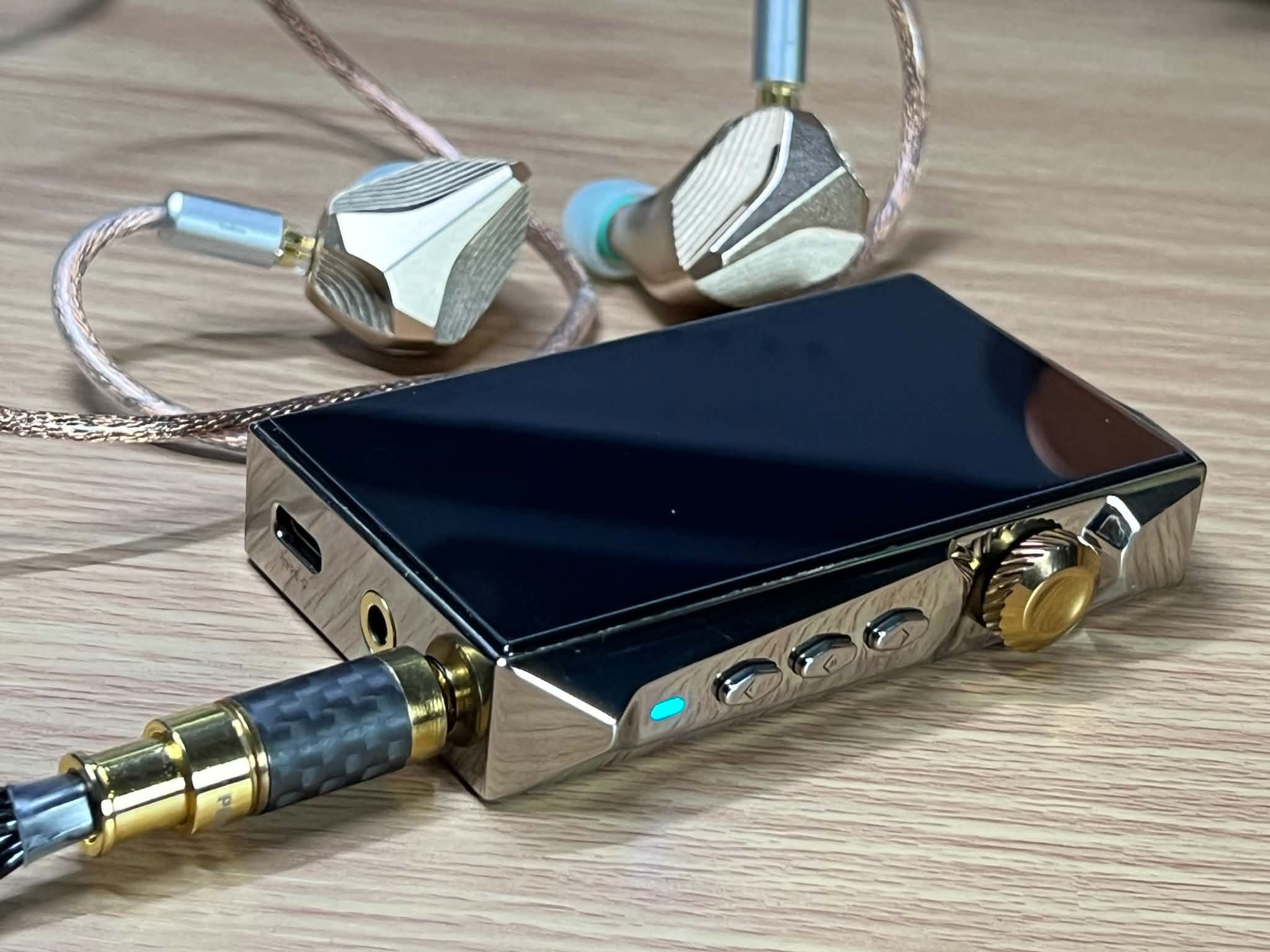
My overall impression of the titanium AP80 Pro Max is that it sounds clean, clear, and transparent. I don't hear an obvious tonal coloration or an artificial warmth that seems to be added on top of the recording. It lets the character of the music and the connected IEM do most of the talking.
Compared with my original aluminum AP80 Pro Max, the titanium version gives me the impression of a slightly cleaner presentation. The differences are not dramatic, and I would not describe them as a complete change in tuning. Instead, they are small perceived shifts in how the bass, spatial presentation, and overall clarity come across.
As always, these are my listening impressions rather than measured differences.
Bass: Cleaner Presentation With Slightly Less Perceived Warmth
The bass response is one of the areas where I noticed a difference during my comparison.
The titanium version seems to have slightly less warmth in the low end than my aluminum unit, although I would not say it has less bass quantity overall. Extension and general low-frequency presence feel broadly similar to me.
What stands out is the presentation. Bass notes seem a little cleaner and quicker, with a more defined leading edge to kick drums and bass lines. The low end feels less warm in character, making individual notes easier for me to follow in busy passages.
With electronic music, that cleaner presentation helps keep the rhythm organized. Kick drums have a defined impact, while bass lines remain distinct instead of blending into a single mass of low-frequency energy.
I wouldn't call the titanium version lean or bass-light. It still gives the music the foundation it needs, but the bass seems to have a slightly tidier character compared with what I remember from the aluminum version.
Whether that difference would remain obvious in a properly level-matched blind comparison is something I would still like to investigate.
Midrange: Natural Tone and Clear Vocal Presentation
The midrange is where I tend to spend a lot of my listening time, especially with vocals, jazz, acoustic recordings, and the older tracks I regularly use for evaluation.
The AP80 Pro Max Titanium presents vocals and instruments with a vivid, transparent quality. I don't hear an obvious artificial warmth being added to voices, nor does the midrange come across as thin or sterile to my ears.
Vocal tone and timbre sound natural, with enough clarity to follow the texture of a singer's voice and the character of individual instruments. The presentation feels direct and unforced, allowing differences between recordings and IEM tunings to come through.
Upper-midrange energy is well defined. Vocals remain clear, and instruments have a precise attack without the presentation becoming excessively bright or aggressive in my listening setup.
This is important to me because clarity is not the same thing as brightness. I want to hear articulation and detail without introducing glare or making recordings fatiguing. The titanium version gives me that impression of clean definition while maintaining a controlled overall balance.
It doesn't appear to impose a strong sonic personality of its own. Instead, it allows the connected IEM and the recording to shape most of the listening experience.
Treble: Airy, Detailed, and Controlled
The treble is another strong point in my listening experience.
There is a good sense of air and extension, with enough detail to reveal the fine textures of cymbals, percussion, string harmonics, and room ambience. Microdetails are easy to notice when they are present in the recording, while larger changes in dynamics remain clear and distinct.
What I appreciate most is that the presentation doesn't strike me as artificially bright. Some listeners associate particular DAC chips with a specific sound signature, but I wouldn't make that assumption here. A DAC chip's brand or architecture alone does not establish whether the final sound will be bright, smooth, warm, or analytical.
In my experience with the titanium AP80 Pro Max, the treble sounds precise and controlled rather than pushed forward simply to create an impression of extra detail.
There is enough energy to keep the music lively, but it doesn't immediately draw attention to itself. With a well-matched IEM, that balance makes it easier to enjoy the detail without turning every cymbal strike or upper-frequency transient into the focus of the presentation.
Of course, the IEM still matters enormously. An inherently bright or sibilant earphone will not suddenly become smooth just because it is connected to this DAP.
Technical Performance: Separation, Imaging, and Soundstage
In terms of technical performance, the titanium edition feels very close to my original aluminum AP80 Pro Max.
Instrument separation remains clear, and individual elements in a busy mix are easy to follow. Imaging gives me a reasonable sense of where sounds sit within the presentation, while transient definition helps keep fast passages from becoming muddled.
The main difference I perceive is in the soundstage. Compared with my aluminum unit, the titanium version seems to present a little more width and depth. Instruments feel slightly more spread out, with a greater sense of space between some elements of the mix.
I want to stress that this is a subjective impression, not a confirmed change in measured channel separation or frequency response. Soundstage perception is influenced by the recording, the IEM, fit, frequency response, and listening conditions, among other factors.
I also wouldn't describe the titanium version as a massive technical upgrade. The overall level of separation, detail retrieval, and imaging feels broadly consistent with the original player. The difference, if it holds up under controlled comparison, is more of a subtle change in spatial presentation than a wholesale improvement in technical capability.
For me, that is an important distinction. The titanium version is not suddenly revealing an entirely new layer of information in every recording. Rather, it gives me a slightly different impression of the same familiar musical presentation.
Is the Titanium Version Actually Better Sounding?
This is where I have to separate personal preference from technical fact.
I hear a cleaner presentation, a little less perceived warmth in the bass, and a wider, deeper soundstage compared with my original aluminum AP80 Pro Max. Those impressions are genuine to my listening experience, and I don't want to dismiss them simply because the two players share the same DAC chips and processor.
At the same time, I cannot confidently attribute those differences to the titanium chassis itself.
Shared internal components do not guarantee that every electrical detail is identical, but neither does a change in body material prove that the sound must change.
A careful comparison would involve matching playback levels precisely, using the same IEMs and recordings, checking settings and firmware, and ideally conducting blind listening tests.
Electrical measurements could then help establish whether any audible differences correspond to changes in the actual output signal.
And that is perfectly fine. Audio is full of interesting questions, and not every listening impression needs an immediate, definitive explanation. The important thing is to stay curious while being honest about what we know and what we don't.
Final Thoughts: A Familiar DAP With a More Exclusive Identity
The Hidizs AP80 Pro Max Titanium Limited Edition has impressed me more than I initially expected. I came in mainly for the looks, but after spending time with it, I found more to appreciate beyond that gorgeous mirror-polished titanium body and 24K gold-colored volume knob.
The build quality is a big part of the appeal. It feels denser and more substantial than my original aluminum version, and the firmer buttons and well-weighted volume knob give it a more refined, satisfying feel. These may seem like small details, but they make the whole experience feel more premium. This doesn't feel like an ordinary AP80 Pro Max in a different finish. It feels like a special edition that has been given its own identity.
Sound-wise, I still hear the clean, transparent character I enjoy from the original AP80 Pro Max, but my titanium unit seems to offer a slightly cleaner presentation, a little less perceived warmth in the bass, and a wider, deeper soundstage. The differences aren't night and day, and I can't conclusively attribute them to the chassis material, but the experience has certainly made this comparison more interesting than I anticipated.
So, would I choose the titanium version? Honestly, yes. The premium finish, satisfying build, and distinctive character make it the version I'd reach for first. I haven't spent time with the copper edition to make a fair comparison across all three, but the titanium has already won me over.
The funny thing is, I initially came for the looks. I wasn't expecting this little DAP to challenge some of my own assumptions about audio gear. It reminded me that even after spending so much time in this hobby, there's always something new to explore and question.
My final word? If you're considering the AP80 Pro Max and want the version that feels a little more special, I'd go straight for the titanium. It combines a genuinely beautiful finish with excellent build quality, a capable feature set, and a sound presentation I've really enjoyed. It's more than just a pretty face, and I came away far more impressed than I expected.
Highly recommended from me. Hidizs really got the look and feel of this Limited Edition right, and it has become my favorite version of the AP80 Pro Max.
Free AP80 leather case if you use the link below.
Link: https://www.hidizs.net/products/hid...eaming-music-player?utm_source=PineappleAudio
Comments
Post a Comment