FiiO DM15 R2R : Old-school soul, modern execution
* Musical, R2R-style tuning with natural timbre and good note weight
* Strong output power for a portable unit, especially from balanced out
* Versatile all-in-one design: CD player, USB DAC, Bluetooth transmit, and digital transport
* Clean and stable coaxial and optical output for use with external DACs
* Well-implemented Bluetooth with aptX HD and aptX Adaptive and excellent stability
* Built-in EQ and filters that are actually useful, not gimmicky
* Surprisingly handy IR remote that improves day-to-day usability
* Solid build and thoughtful feature set for both portable and desktop use
Cons:
* No LDAC support
* Front panel buttons are small and not ideal for larger hands (nitpick)
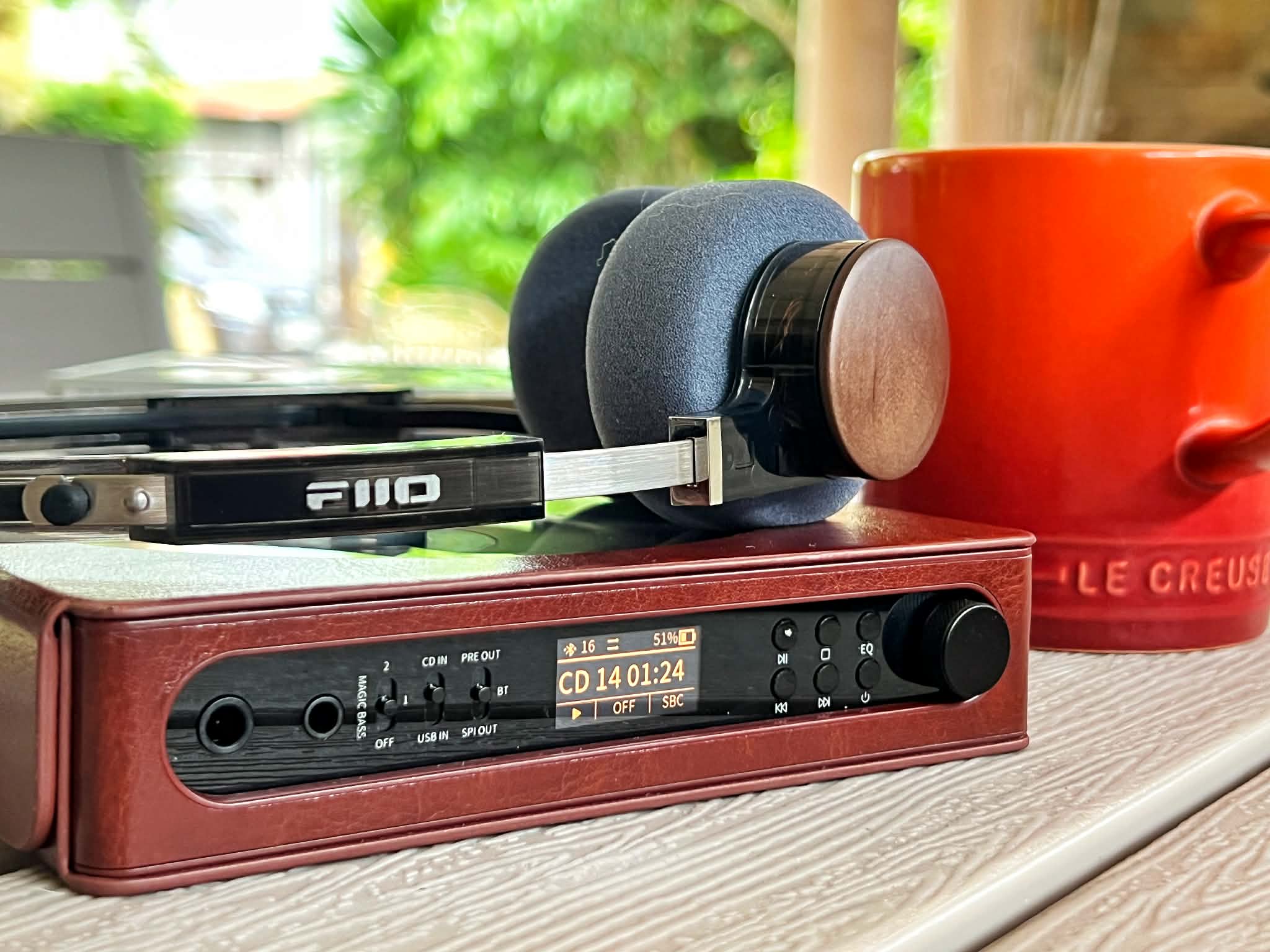
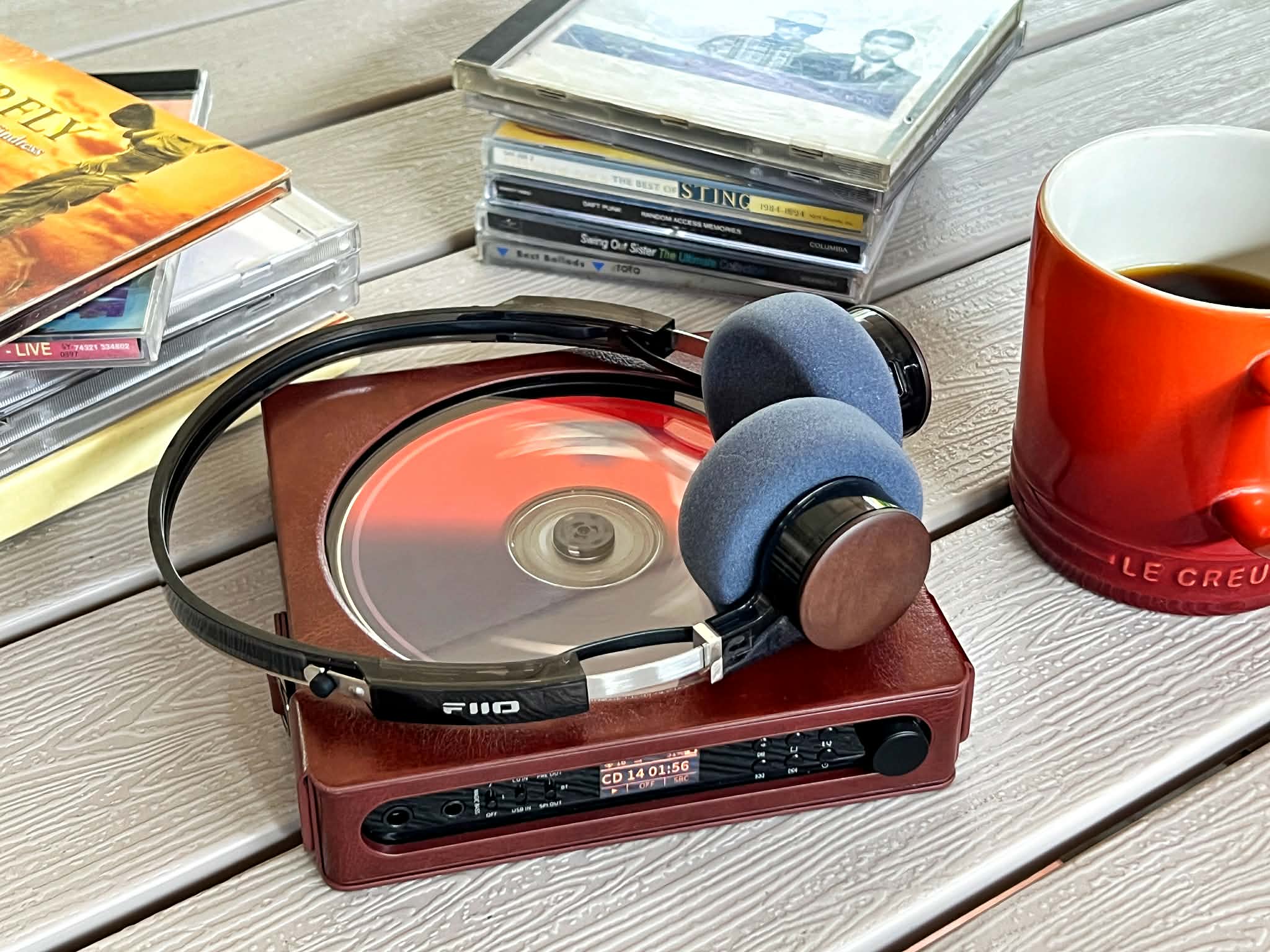
I’ll say it straight up. The FiiO DM15 R2R is, to my ears, the best compact disc player FiiO has put out so far. More than that, it’s the best sounding portable CD player I’ve personally spent time with. That’s not something I say lightly, especially as someone who grew up in the Discman era and has owned, modded, and abused more than a few portable CD players over the years.
Back in the late 80s and early 90s, long before factory head units, touchscreens, and CarPlay were even a concept, I was running a Sony D-145 Discman mounted on a very questionable gooseneck holder bolted straight to the floor of my car. That little grey box was the heart of the system, feeding an external amp, a full set of Alpine 3-way speakers, Alpine amps, and a Cerwin Vega sub absolutely abusing the trunk.
It was wildly impractical and, looking back now, probably a safety nightmare. No fancy MOSFETs, no proper safety fuses, just good old direct jumpers done by yours truly and a lot of confidence. But the sound? Honestly, it was glorious. Raw, dynamic, and alive in a way that made every drive feel like an event.
Those were the days when a good portable CD player felt like serious audio gear, not a compromise.
Fast forward to today. We’re drowning in lossless streaming, DAPs that rival desktops, and dongle DACs small enough to lose in your pocket. And yet, CDs are somehow having a real comeback. Not as nostalgia props, but as a legit way to sit down and listen. The DM15 R2R taps directly into that feeling. It looks and operates like a classic disc player, but under the hood it’s very much a modern FiiO product. Clean power delivery, a proper R2R implementation, and tuning that prioritizes musicality over sterile measurement chasing.
What really stands out is how intentional the DM15 feels. This is not a gimmick or a “retro for retro’s sake” device. It respects the format, embraces its limitations, and elevates it with today’s engineering. Drop in a well-mastered CD, hit play, and you’re reminded why physical media still matters. The DM15 doesn’t try to replace streaming or your DAP. It just does one thing really well, and does it with character. For anyone who grew up with spinning discs, this thing feels less like a product and more like a quiet reminder of why we fell in love with audio in the first place.
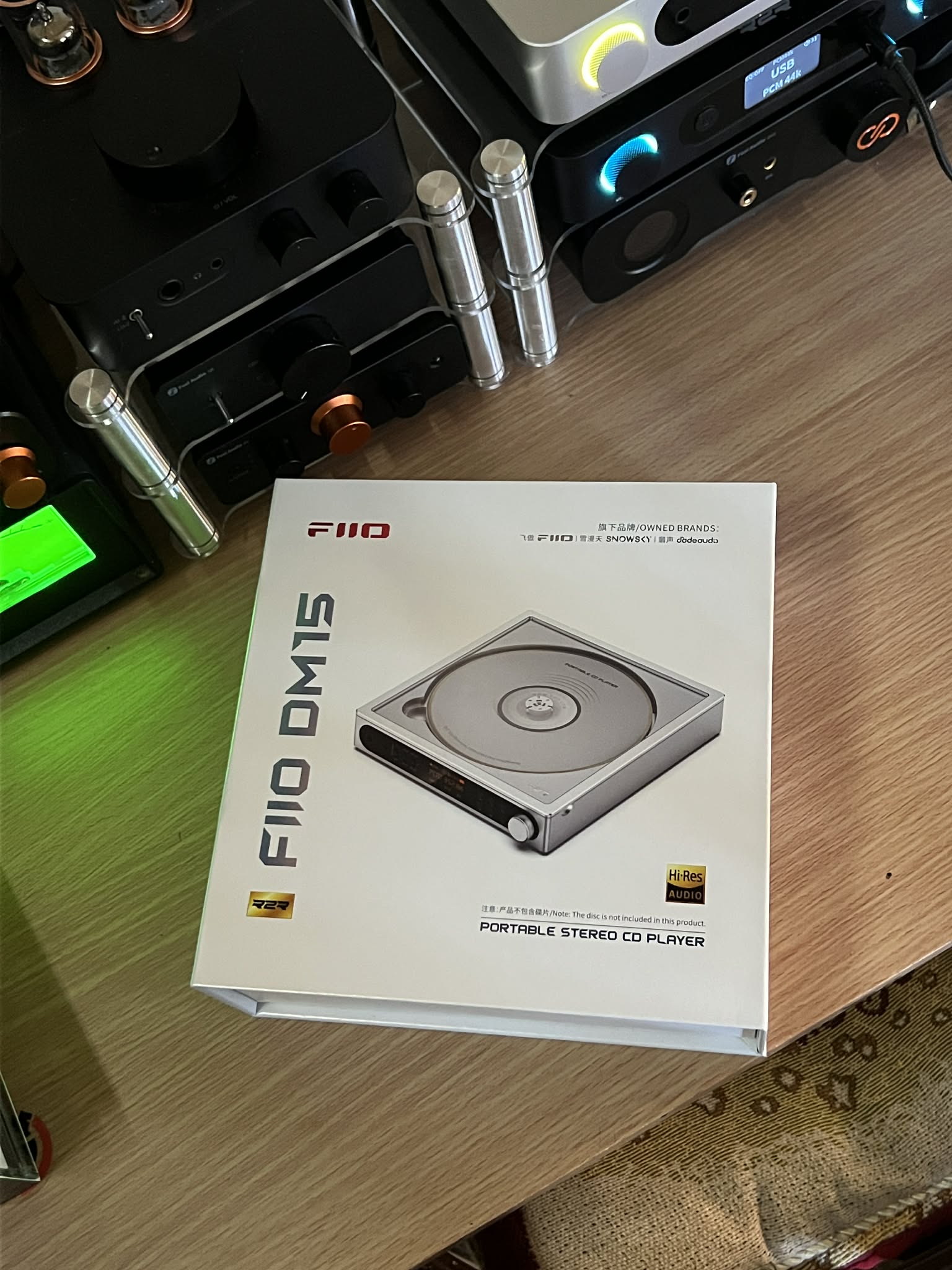
Whats in the box? checkout my short unboxing video of the DM15 R2R.
Build quality and design
The first thing that really hits you with the DM15 is just how far it is from the old-school Discman formula. If you grew up with portable CD players from the 90s, you probably remember lots of plastic, creaky lids, and the constant fear of cracking something if you tossed it into a bag. The DM15 goes in the complete opposite direction. This is a modern, no-nonsense build, and it feels that way the moment you pick it up.
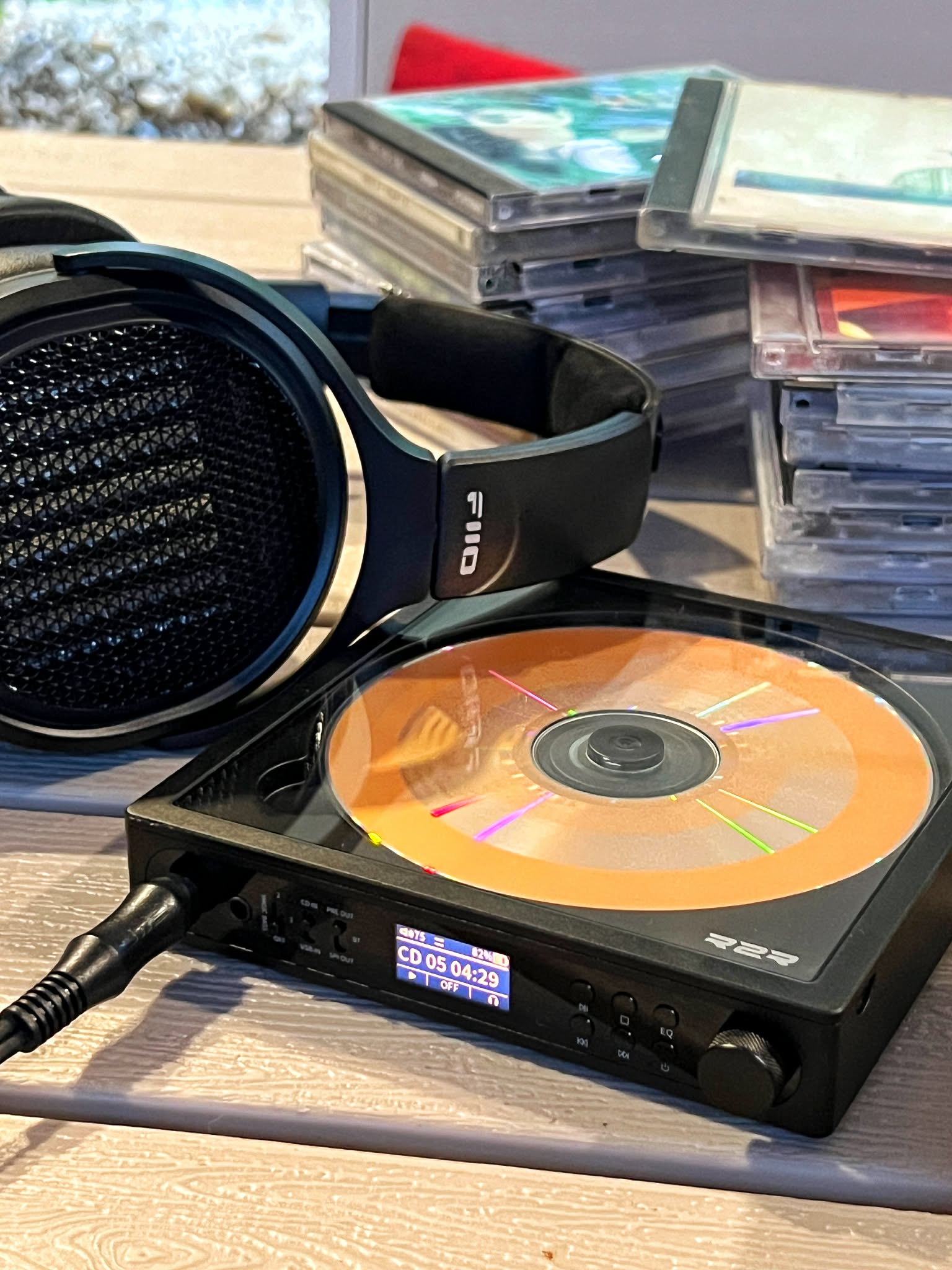
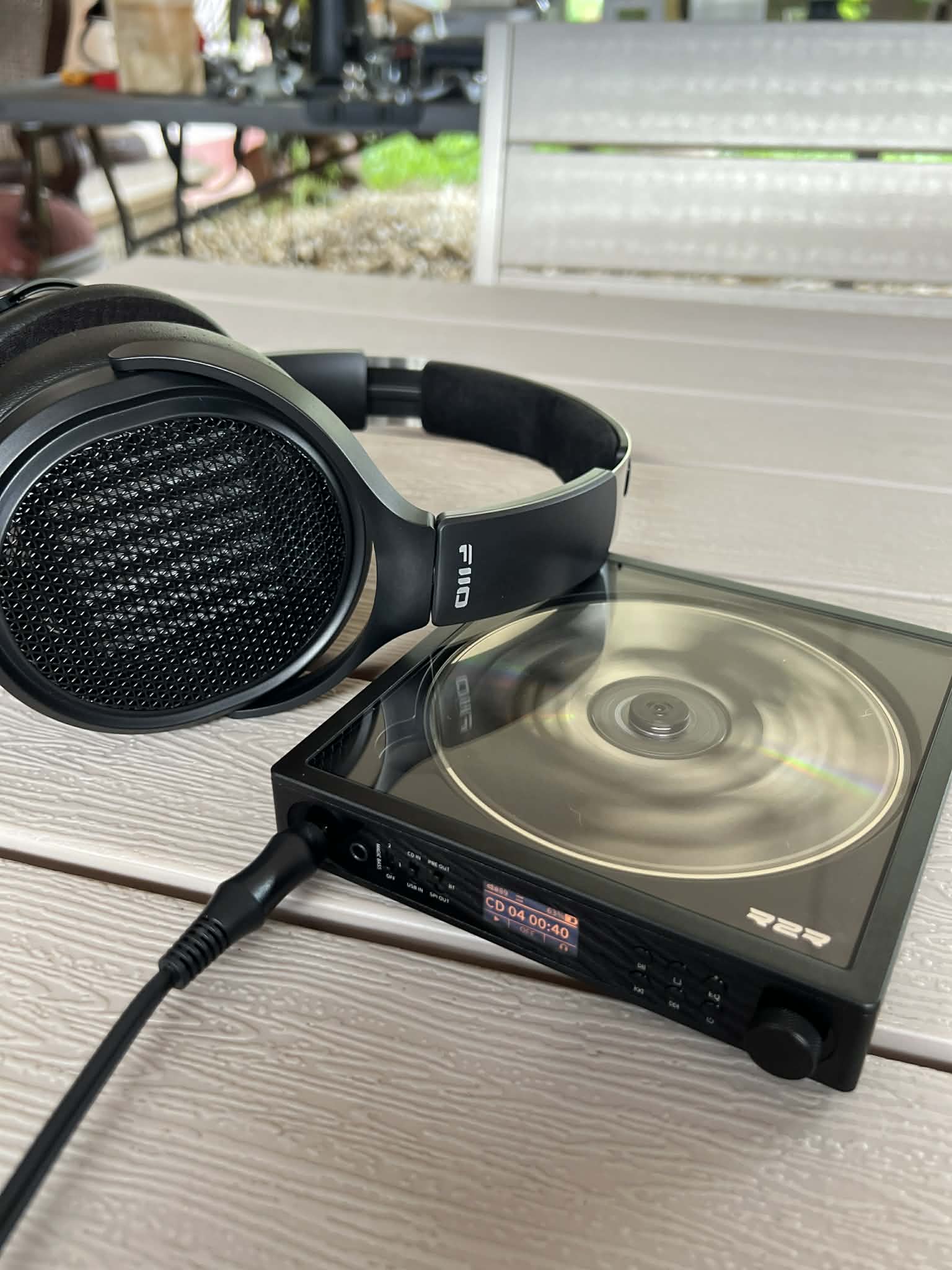
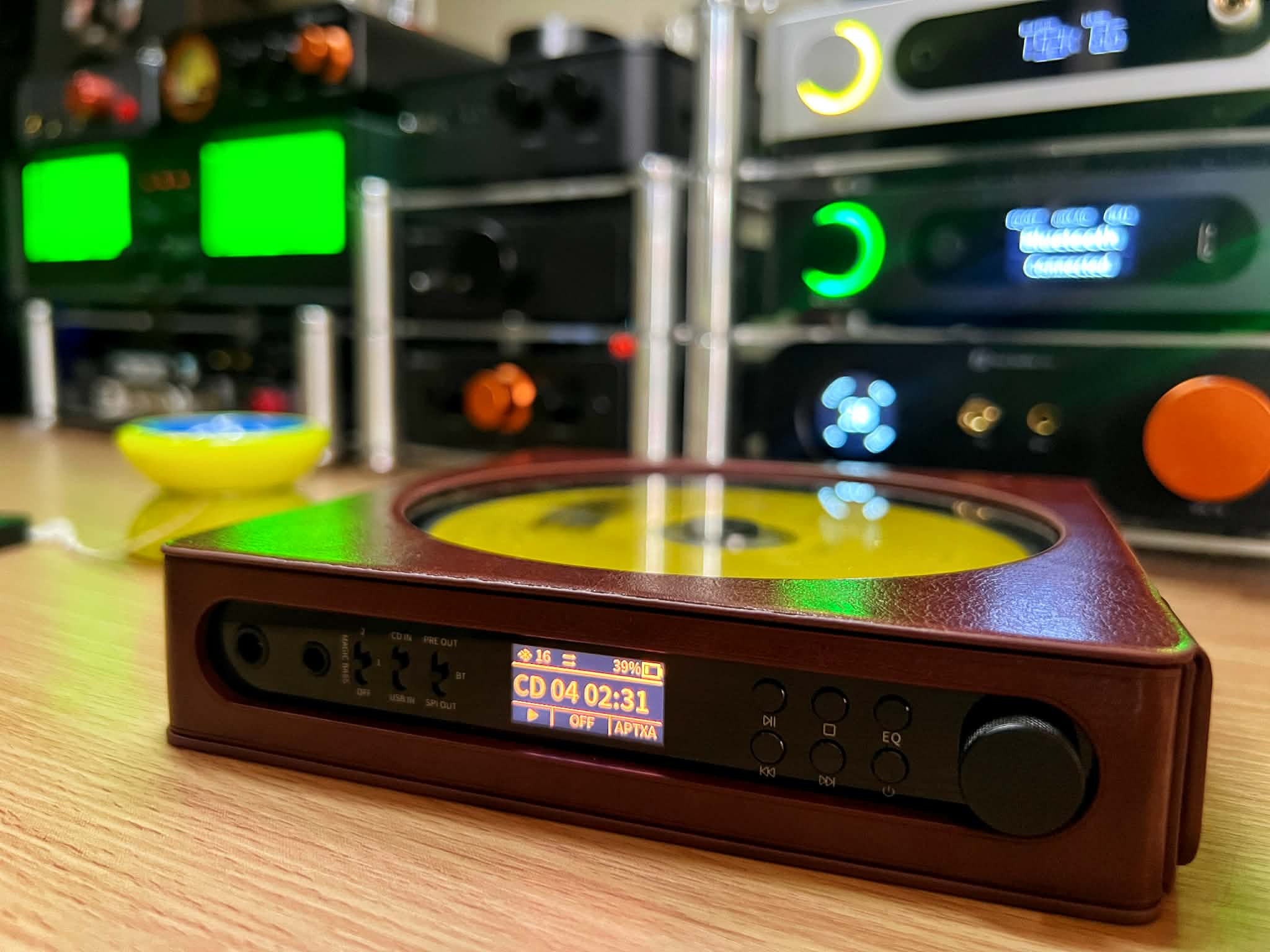
The chassis is made from thick, solid aluminum with clean, understated lines. Nothing flashy, nothing trying too hard. It looks purposeful and grown-up. The top cover is finished with a tempered glass window, which lets you watch the disc spin while it plays. It sounds like a small detail, but it adds a lot to the overall experience. There’s something quietly satisfying about seeing physical media in motion, especially in a device this well built.
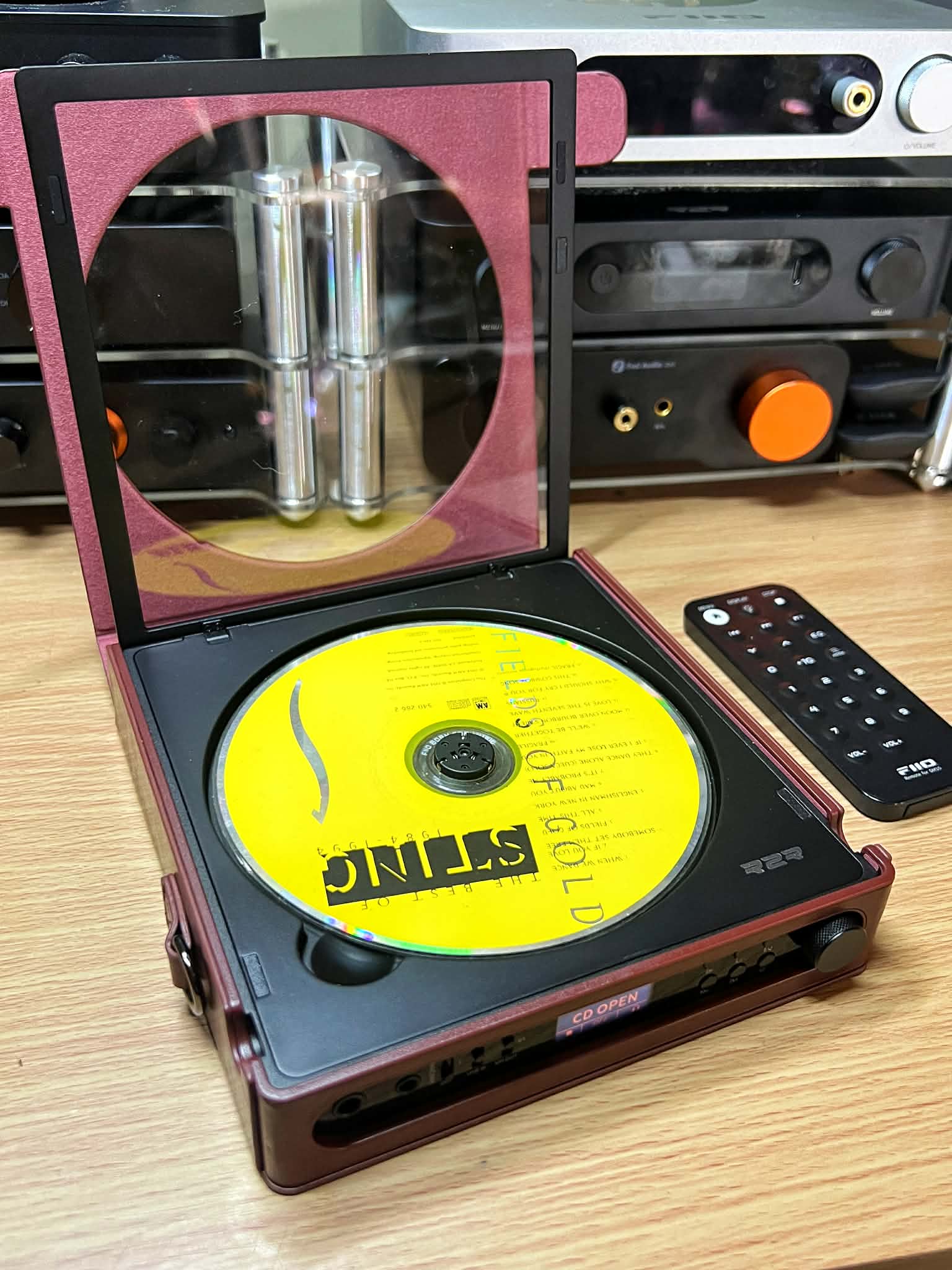
Instead of a traditional latch, FiiO uses a magnetic system to secure the lid. Open and close it a few times and you’ll immediately notice how deliberate it feels. The magnets are strong, the alignment is precise, and the action is smooth. It locks into place confidently, with none of that flimsy snap you’d expect from older portable players. It’s one of those design choices that feels over-engineered in a good way.
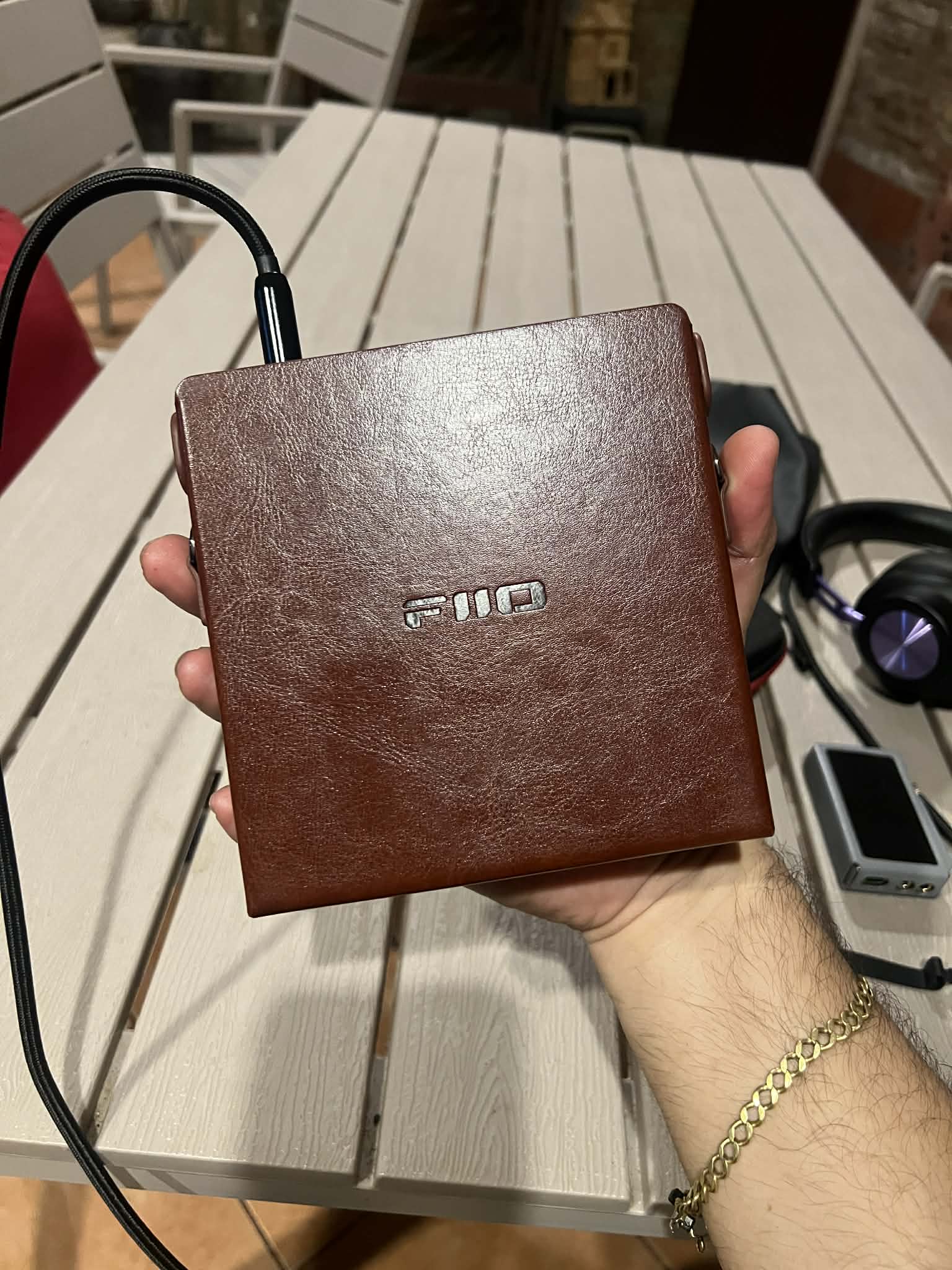
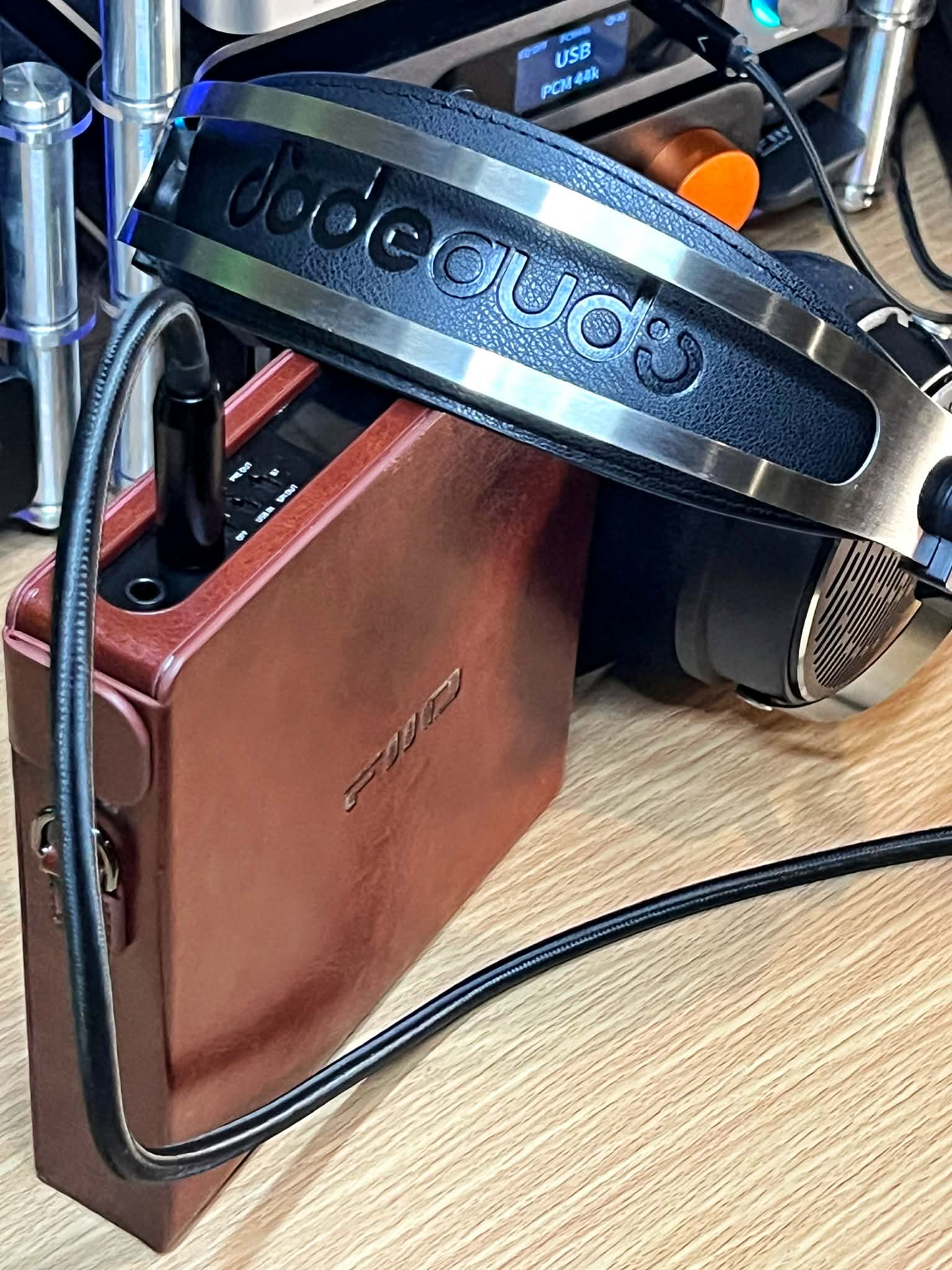
In hand, the DM15 feels premium straight away. There’s real weight here, and that weight translates into confidence rather than inconvenience. Among all the portable CD players I’ve owned or tested, this is easily the most solid and substantial. Yes, it’s heavier than a classic Discman, but it also feels dramatically more durable and far less disposable. This feels like something built to last, not something meant to survive a single school year in a backpack.
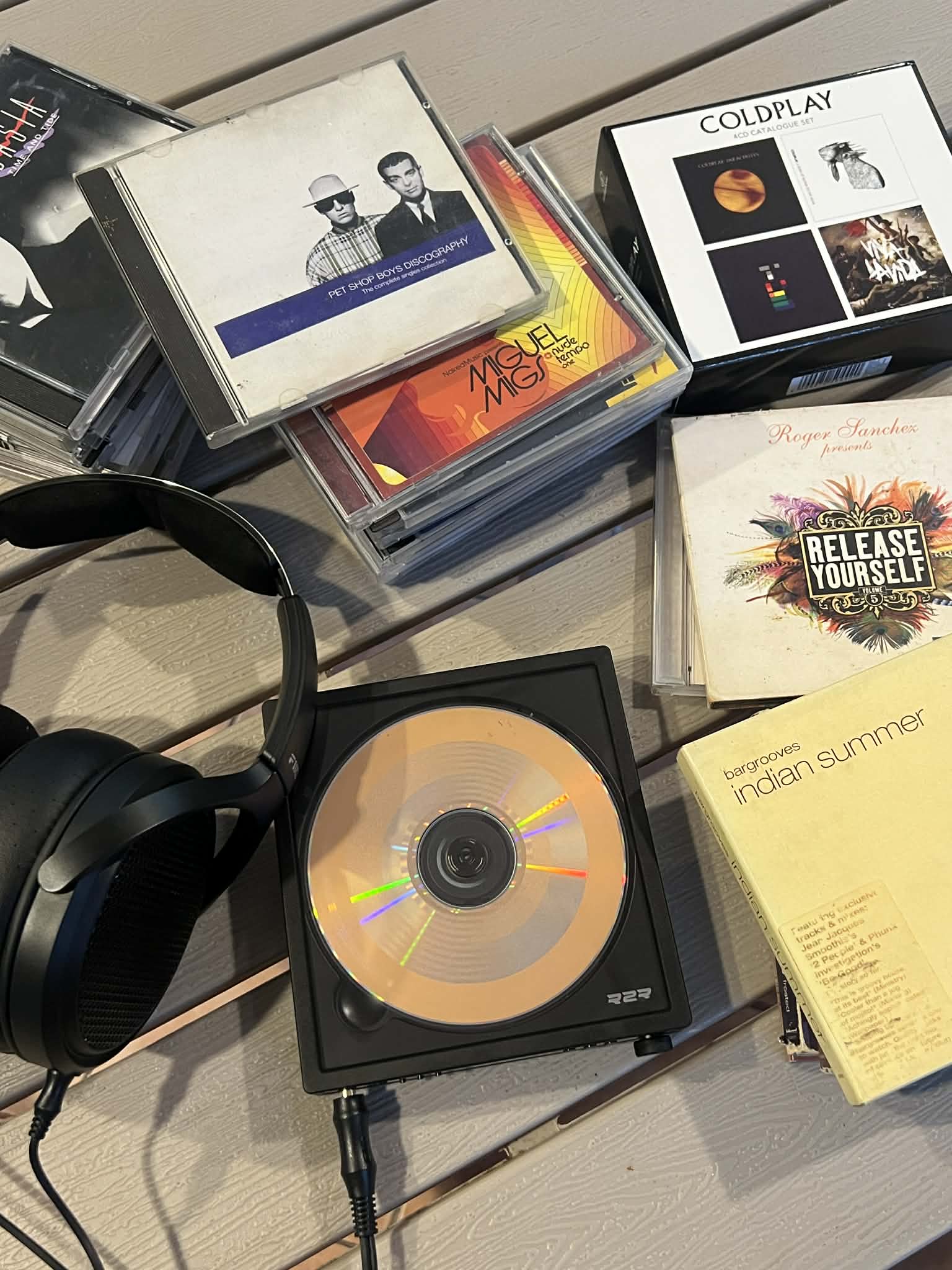
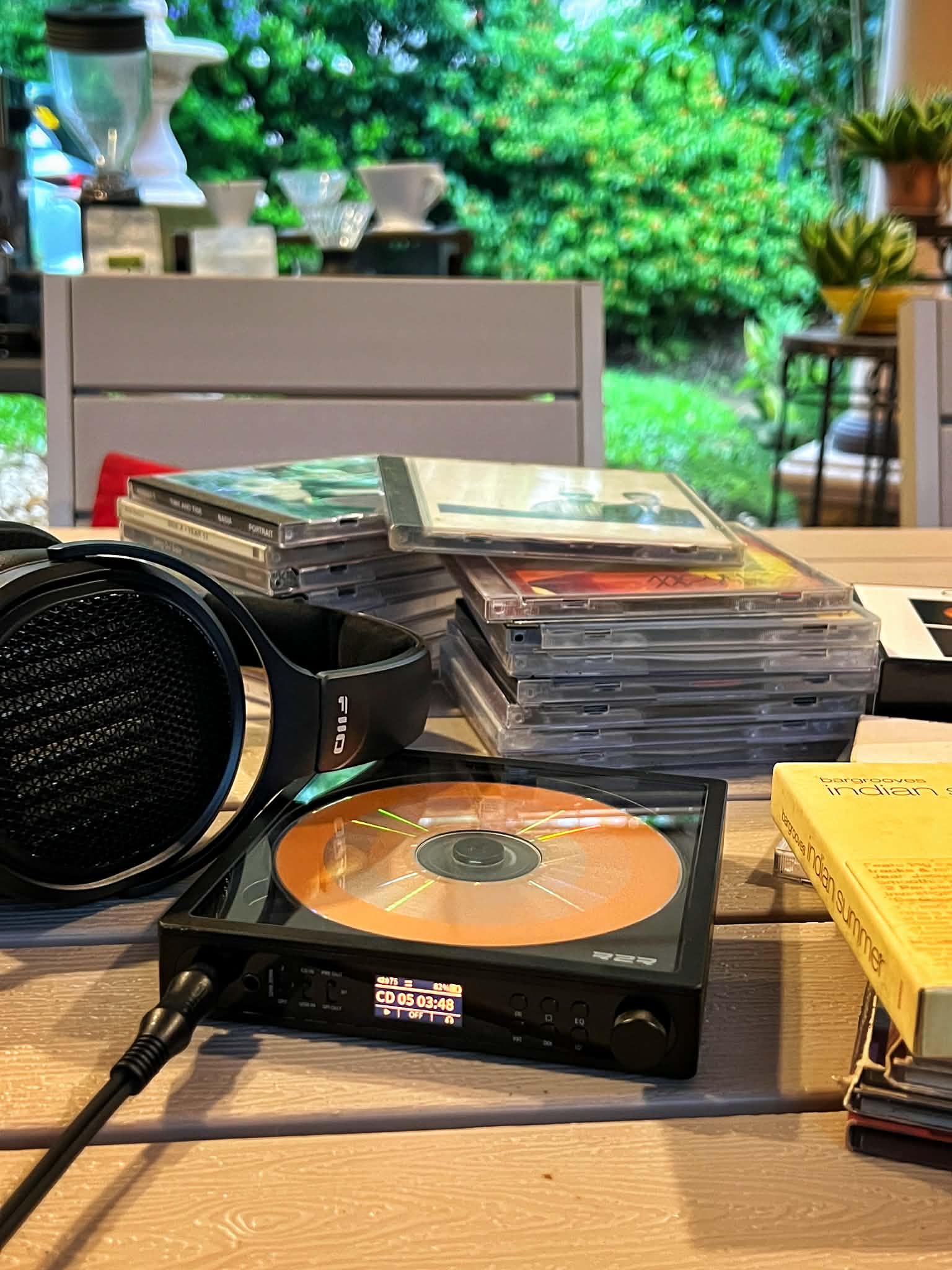
Size-wise, it’s still very reasonable. It’s only slightly larger than a standard CD case, so it keeps the spirit of portability intact. You can place it your bag without worrying about flex or damage, and it never feels fragile or toy-like. Overall, the DM15’s build and design strike a great balance between modern refinement and old-school charm, and it sets the tone for the kind of serious audio device this player really is.
Controls and the surprisingly useful remote
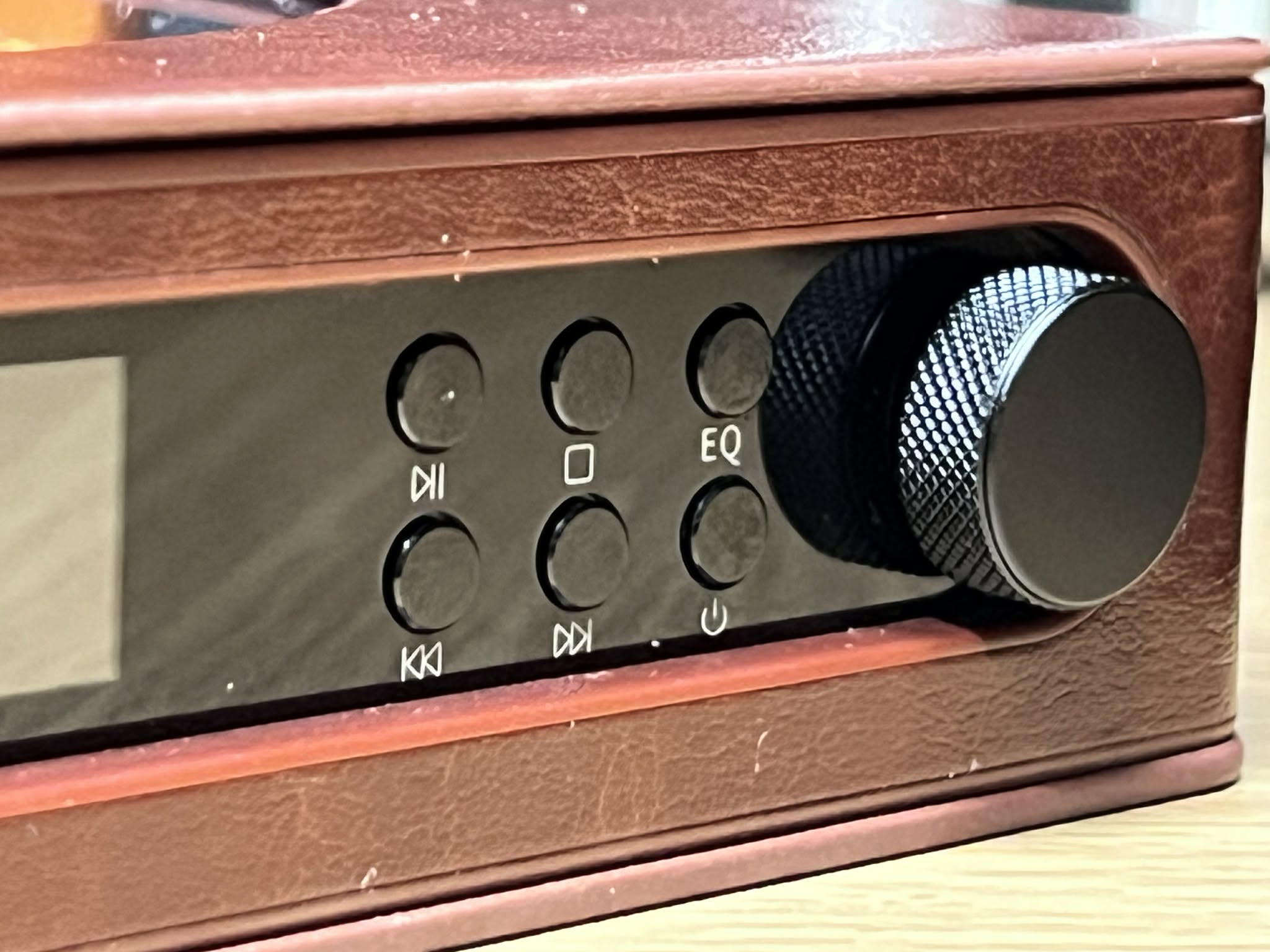
The front panel controls on the DM15 are clean, minimal, and logically laid out. Everything is where you expect it to be, and once you’re familiar with the layout, basic operation is straightforward. That said, the buttons themselves are on the smaller side. And I’ll be honest here. With giant hands and not exactly precision fingertips, hitting the right button every time isn’t always the most graceful experience.
This is where the included IR remote quietly becomes one of the most underrated parts of the package. I went in thinking it would be something I’d use once or twice and then forget about. In reality, I ended up using it constantly. I’m the kind of listener who skips tracks often, goes back and forth between songs, and tweaks volume more than I probably should. Having the remote nearby just makes all of that effortless.
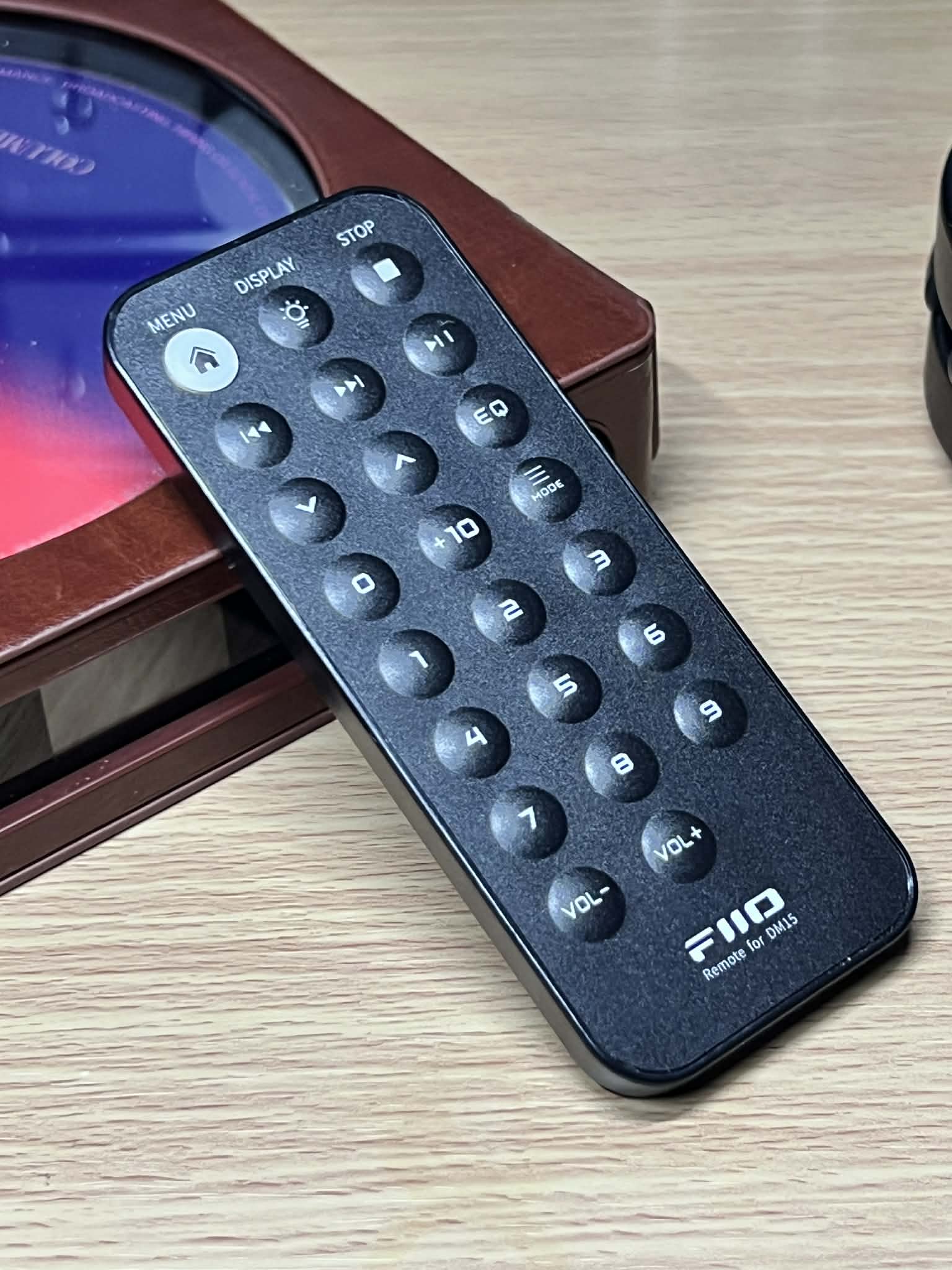
When the DM15 is sitting on a table and I’m leaned back in a chair, the remote changes the whole flow of listening. No need to get up, lean forward, or interrupt the moment just to skip a track or adjust volume. It keeps the experience relaxed and uninterrupted, which is exactly how listening should feel.
It might sound like a small convenience, but in daily use, it adds up quickly. The remote turns the DM15 from something you actively manage into something you simply enjoy. For a player that often ends up used on a desk or paired with speakers or an external amp, that hands-off control makes a real difference.
Versatility: more than just a CD player
Calling the DM15 a portable CD player almost undersells it. It’s really a portable digital hub that just happens to spin discs.
You get:
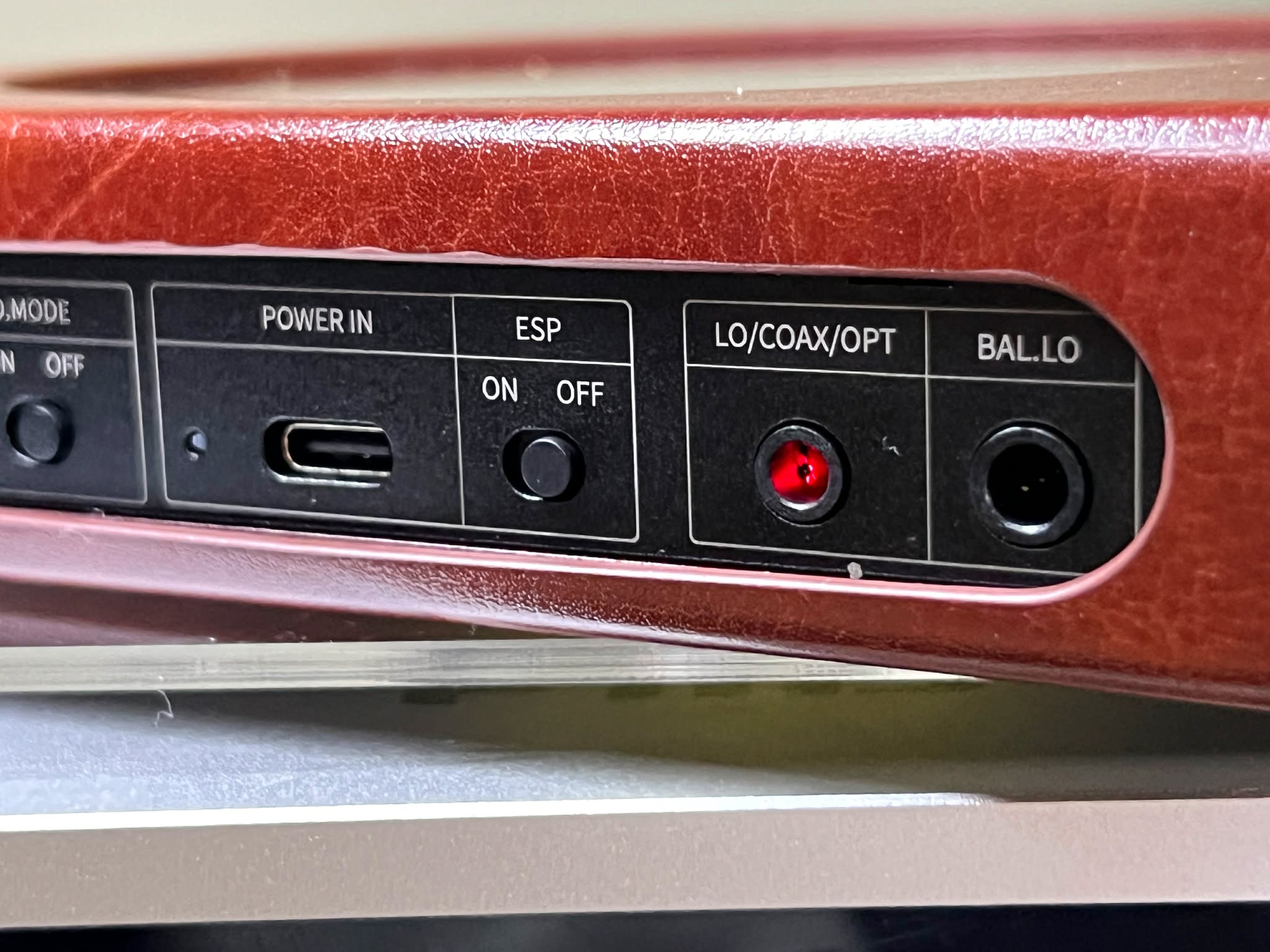
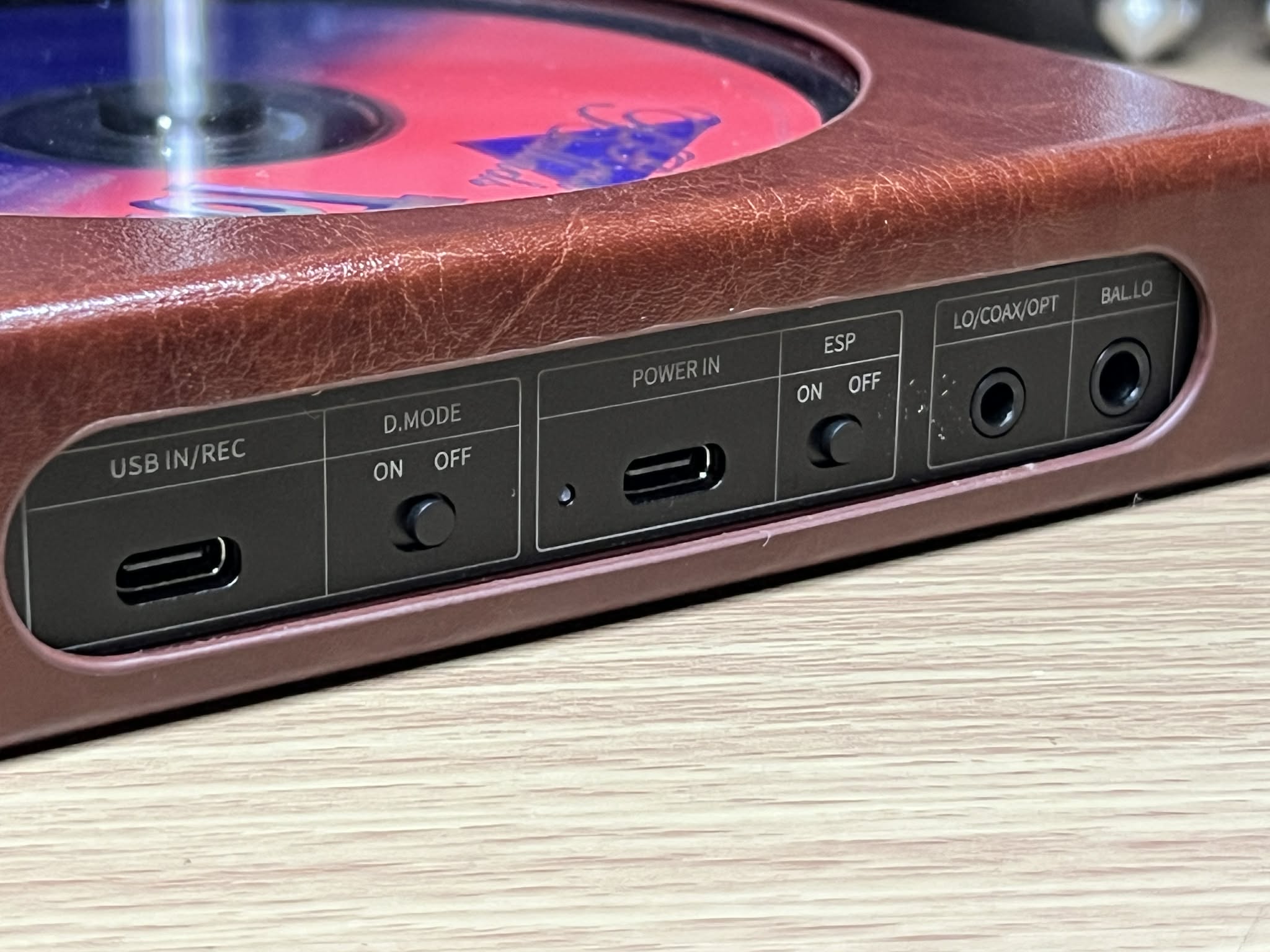
• 3.5mm single-ended and 4.4mm fully-balanced headphone outputs
• 3.5mm and 4.4mm line-out modes
• USB DAC mode
• Bluetooth transmit mode with aptX/aptX-HD/aptX-LL/aptX-Adaptive
• Optical and coaxial digital outputs
• ESP anti-vibration switch
• Desktop mode support
• Supports CD-R formats: FLAC/WAV/WMA/AAC/MP3
• Rip CDs directly to a usb thumb drive ( works only with 32gb)
• Approx. 7-hour battery life
• Fast-charging support via PD3.0
That level of flexibility is rare even in dedicated desktop gear, let alone a battery-powered CD player.
SPECS:
• Colors: White, Black, Red, Silver
• Dimensions: 5.67 × 5.39 × 1 in (144 × 137 × 25.5mm)
• Weight: 1.04lbs (471.5g)
• Operating modes: CD play / USB DAC / Bluetooth transmit / Optical out / Coaxial out
• Headphone outputs: 3.5mm single-ended, 4.4mm balanced
• Line outputs: 3.5mm LO/COAX/OPT (3-in-1), 4.4mm balanced LO
• Supported CD-R formats: FLAC, WAV, WMA, AAC, MP3
• DAC chip: Fiio self-developed R2R DAC
• Headphone amplifier chips: SGM8262 × 2
• Bluetooth chip: QCC3095
• USB chip: SPV5048
• Display: 0.96-inch LCD
• Battery capacity: 4700mAh
• Battery life: ≥7 hours
• Rated input: 5V 2A (USB-C)
• Charging: Supports PD2.0 and PD3.0 fast charging
• Charging time: ~2 hours (PD3.0)
• USB DAC: 384kHz/32bit, DSD256 (Native)
• Coaxial output: 192kHz/24bit
• Optical output: 96kHz/24bit
• Single-ended headphone power (desktop): ≥315mW + 315mW (32Ω, THD+N <1%)
• Single-ended headphone power (portable): ≥220mW + 220mW (32Ω, THD+N <1%)
• Balanced headphone power (desktop): ≥1150mW + 1150mW (32Ω, THD+N <1%)
• Balanced headphone power (portable): ≥815mW + 815mW (32Ω, THD+N <1%)
• Single-ended line-out 1: 3.3Vrms + 3.3Vrms (desktop)
• Single-ended line-out 2: 2.8Vrms + 2.8Vrms (portable)
• Balanced line-out 3: 6.5Vrms + 6.5Vrms (desktop)
• Balanced line-out 4: 5.4Vrms + 5.4Vrms (portable)
• Signal-to-noise ratio: ≥112dB (A-weighted)
• Background noise: PO <8.5uV, BAL <15.8uV (A-weighted)
• THD+N: <0.030% (1kHz / 0dB @ 32Ω)
Bluetooth performance
I spent a good chunk of an afternoon focusing specifically on the Bluetooth side of the DM15, pairing it with the FiiO BR15 to see how well it holds up as a wireless source. On paper, the DM15 doesn’t support LDAC, but in real-world use that turned out to be far less of an issue than some might assume. With aptX HD and aptX Adaptive on board, it’s actually very well covered for practical, everyday listening.
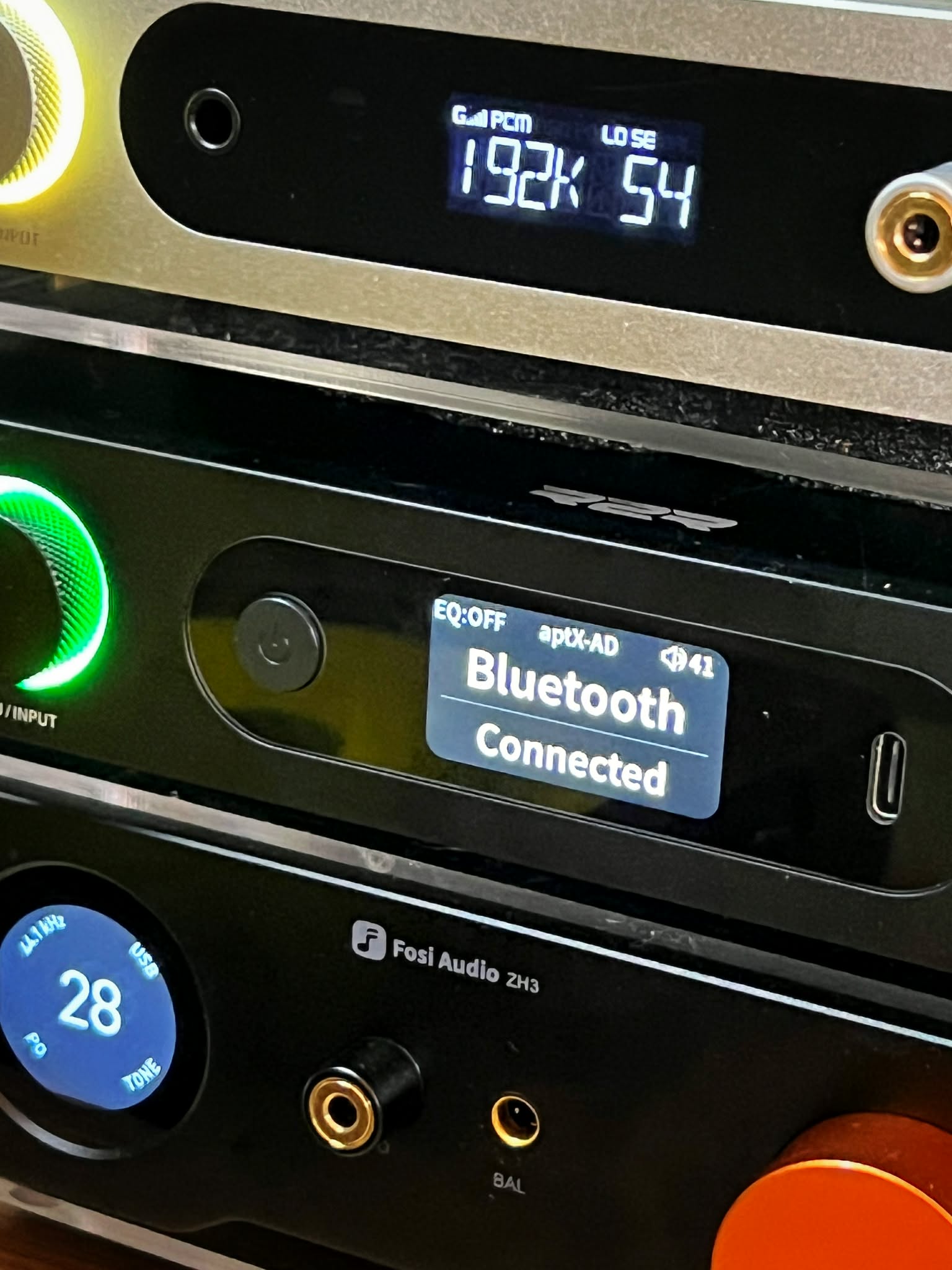
Connection stability was excellent throughout my testing. No dropouts, no random hiccups, and none of those odd digital artifacts that sometimes show up with portable Bluetooth setups. Once paired, it stayed paired, even with the DM15 moving around a bit. That alone already puts it ahead of many Bluetooth implementations I’ve tried.
Sound-wise, the character of the DM15 still comes through. You can clearly hear that R2R flavor even over Bluetooth. There’s a smoothness to the presentation, a slightly organic flow that keeps things easy on the ears. Yes, you do lose a bit of ultimate resolution and micro-detail compared to a wired connection, but that’s expected with any wireless link. What matters is that it doesn’t collapse or turn flat. The sound remains coherent, musical, and engaging.
For casual listening, it works extremely well. This is the kind of Bluetooth implementation where you don’t feel like you’re settling or compromising too much just to go wireless. Whether you’re moving around the room, sitting back on the couch, or just wanting a cleaner setup without cables everywhere, the DM15 handles Bluetooth in a way that feels intentional and well executed rather than an afterthought.
Coaxial and optical as a transport
Using the included 3.5mm to coax adapter, I ran the DM15 into my FiiO K13 R2R to see how it behaves purely as a digital transport. Short answer: exactly how you’d hope. The signal was clean and stable, with solid timing and no audible hiccups, dropouts, or strange behavior. It locks in quickly and just stays locked, which is really what you want from a transport.
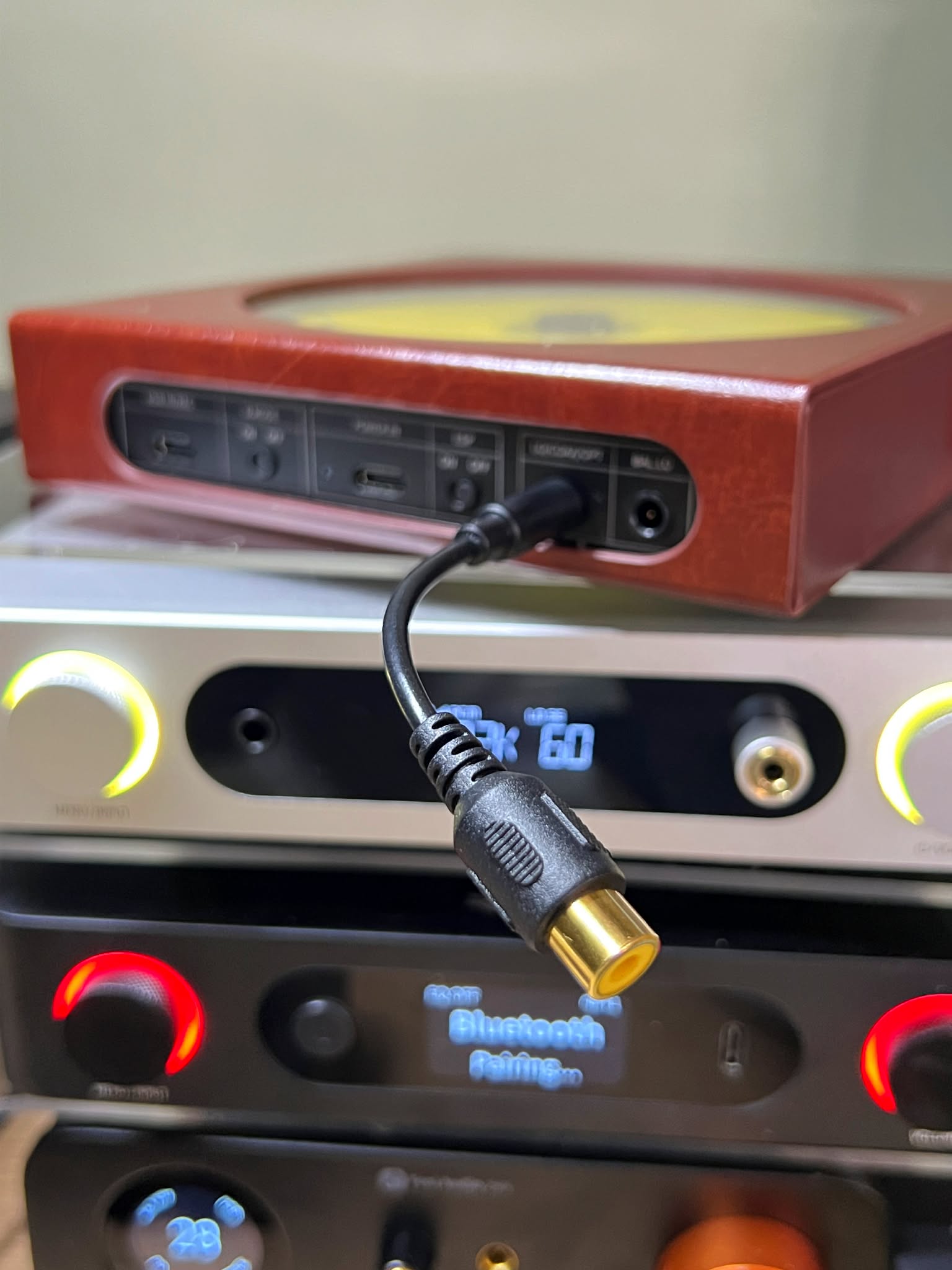
In this role, the DM15 stops feeling like just a portable CD player and starts behaving like a proper hi-fi source. It essentially becomes a high-quality portable CD transport, something that’s surprisingly rare these days. If you already have a DAC you love, whether that’s a desktop unit or a portable R2R stack, the DM15 slides right in without drama.
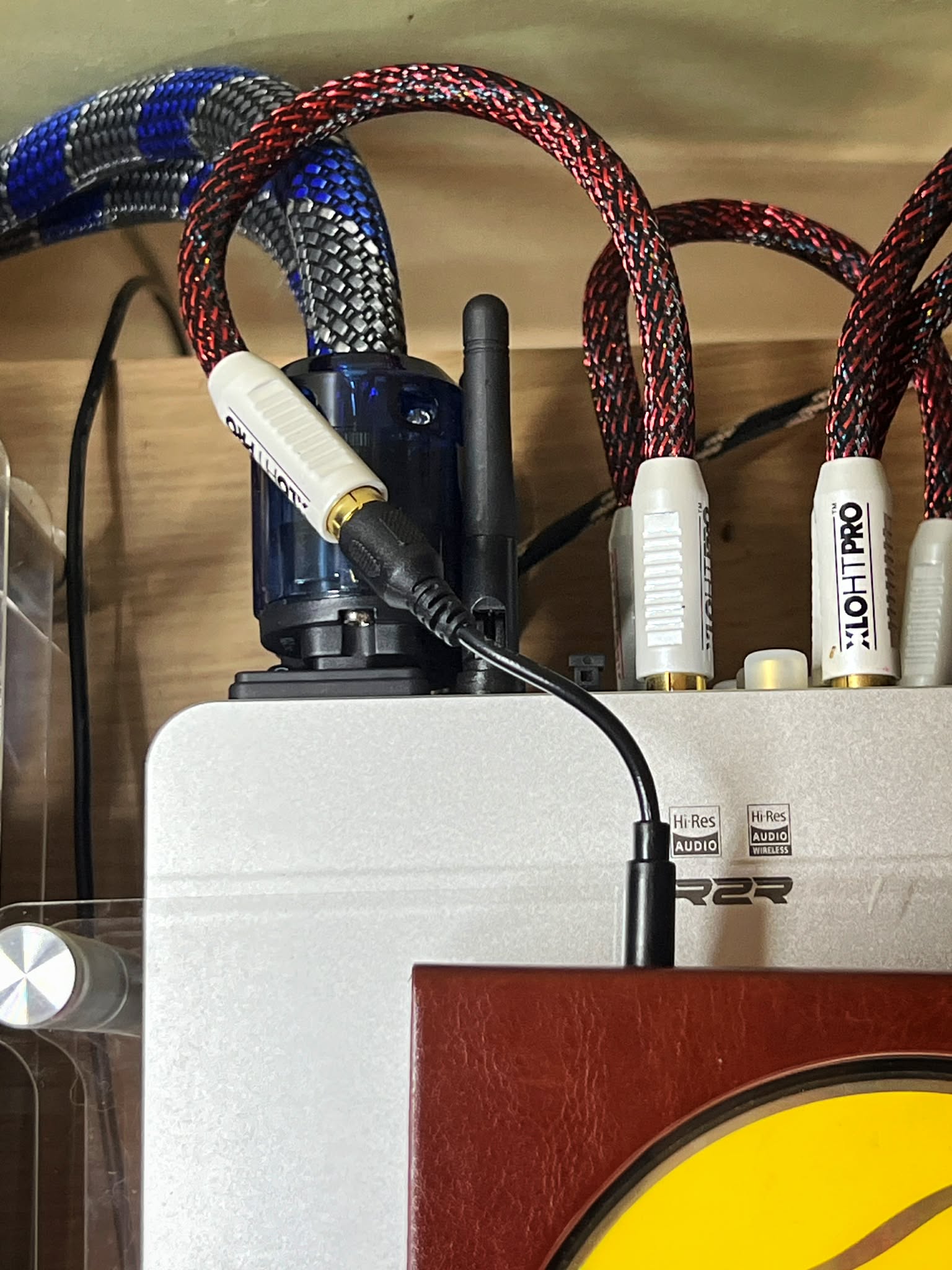
What I appreciate most is how flexible this makes the whole setup. You can use the DM15’s internal R2R DAC when you want an all-in-one solution, then switch to coaxial or optical and let an external DAC handle conversion when you’re at your desk. Add USB into the mix, and the DM15 becomes a true multi-role device. Player, transport, and DAC, all in one box.
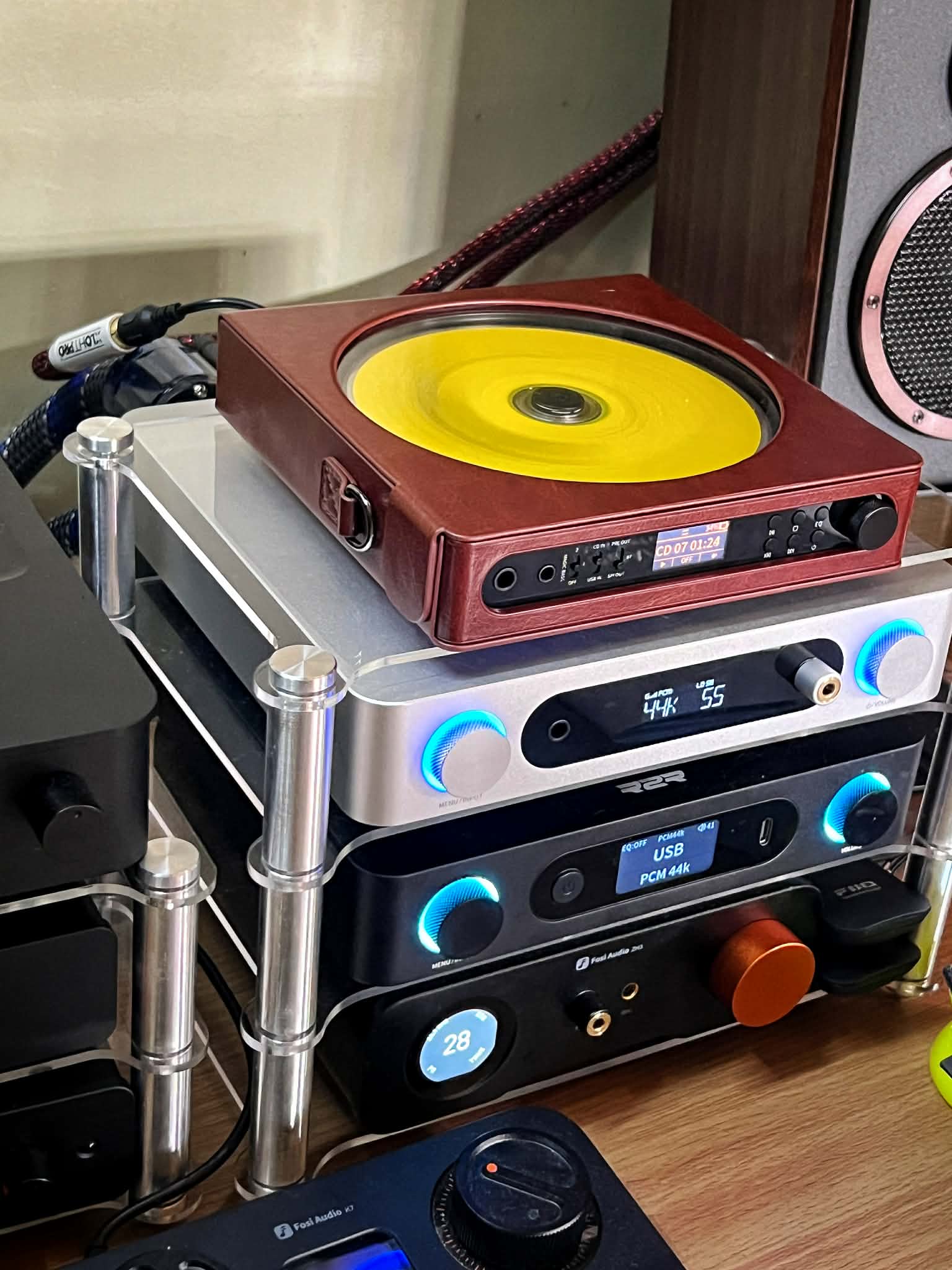
Practically speaking, this means fewer boxes, fewer cables, and less swapping gear around. Drop a disc in, choose your output, and you’re good to go. For anyone who still enjoys physical media but doesn’t want to give up modern flexibility, the DM15’s performance as a digital transport is a genuinely strong selling point.
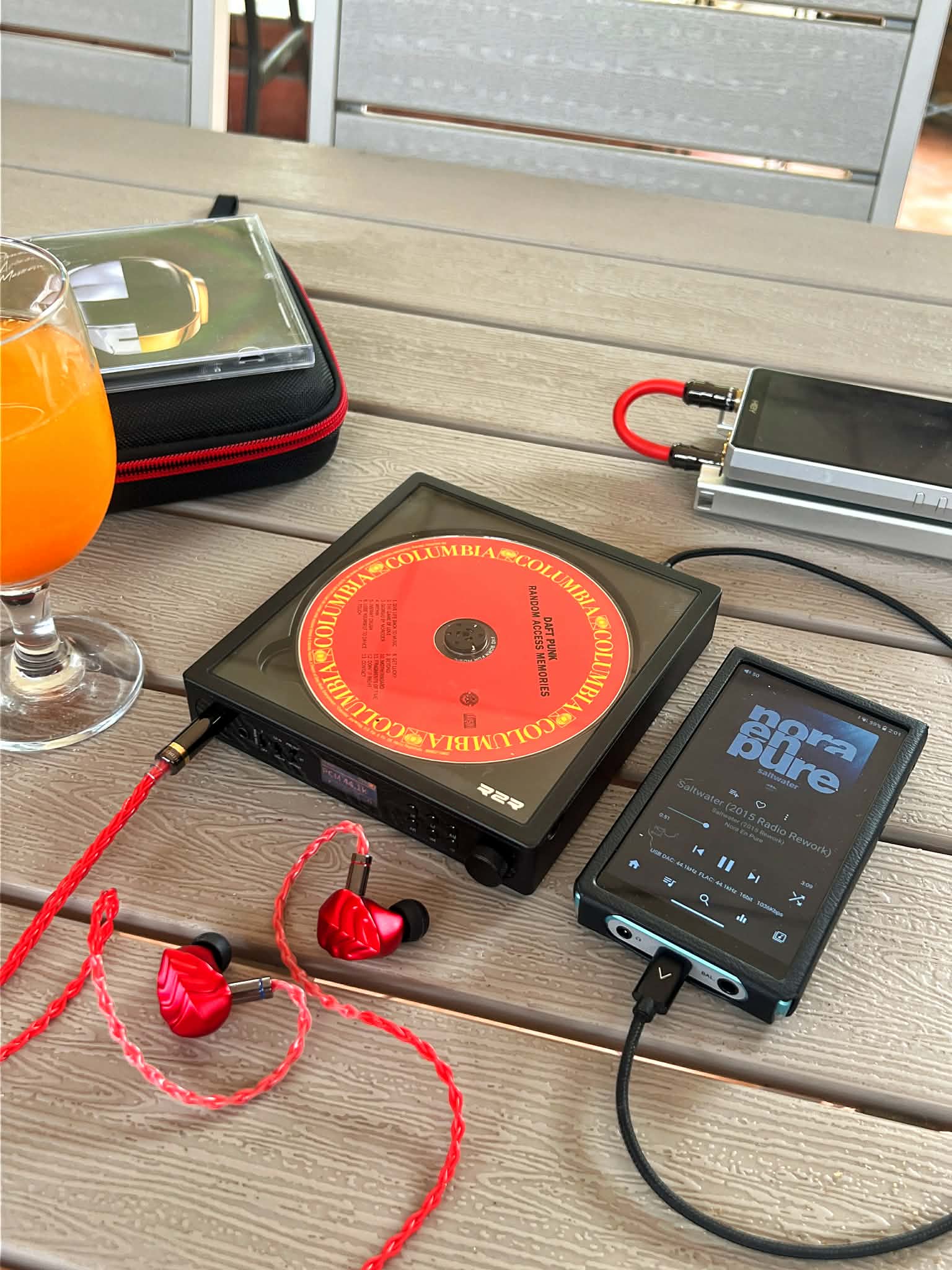
USB DAC mode
Trying the DM15 in USB DAC mode was one of those moments where you immediately think, oh… I know this sound. If you’ve spent time with the K11 R2R, the resemblance is obvious right away. The DM15 carries over that same R2R character almost intact. Dense note weight, natural decay, and a slightly textured presentation that gives music a sense of body and flow rather than a hyper-polished, clinical edge.
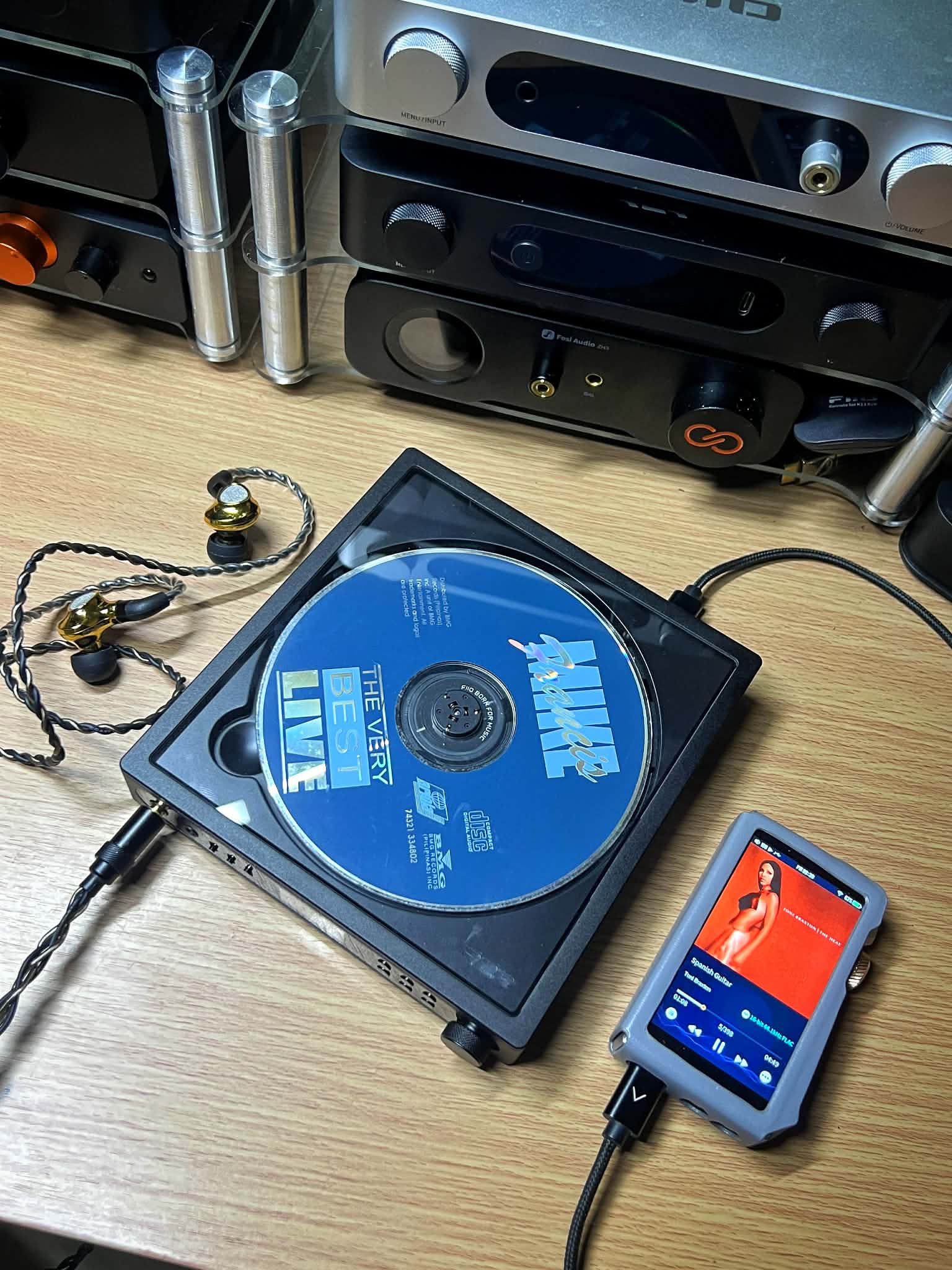
What really surprised me is how little it feels compromised given the size and the fact that this is also a portable CD player running on battery power. It doesn’t sound thin, lightweight, or scaled down in a way that makes you feel like you’re missing something. The midrange stays smooth and organic, with vocals coming through naturally and without that glassy sheen some compact DACs can have. Acoustic instruments, in particular, benefit from the realistic timbre and believable decay, which is where R2R tends to shine.
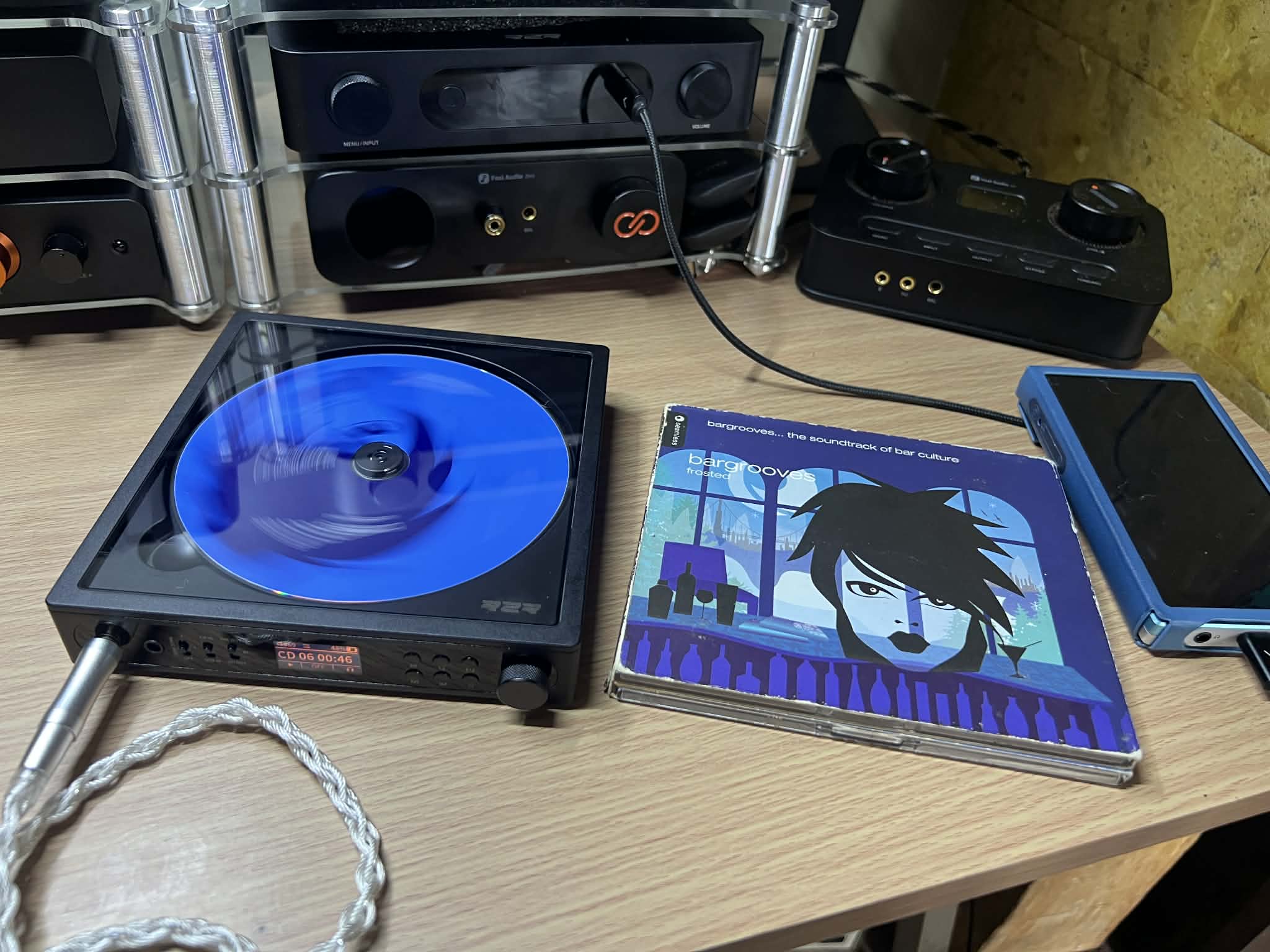
There’s also a sense of ease to the presentation. Nothing feels forced or over-etched. Detail is there, but it’s delivered in a relaxed, confident way. You can listen for long stretches without fatigue, which makes a lot of sense if you’re using it as a desktop DAC during the day and a portable player later on.
In practical use, it’s very plug-and-play. Connect it to a laptop, phone, or DAP via USB, and it just works. No fuss, no weird behavior. It locks in, plays music, and gets out of the way. The fact that it’s battery-powered also helps keep noise low and performance consistent, even when paired with less-than-ideal USB sources.
Taken as a whole, USB DAC mode is one of the DM15’s strongest features. It genuinely feels like having a portable K11 R2R in your bag, with the added bonus that it can also spin CDs whenever you feel like going physical. That kind of flexibility is hard to overstate, and it’s a big part of why the DM15 feels more like a serious all-in-one audio device than a novelty portable CD player.
Sound impressions
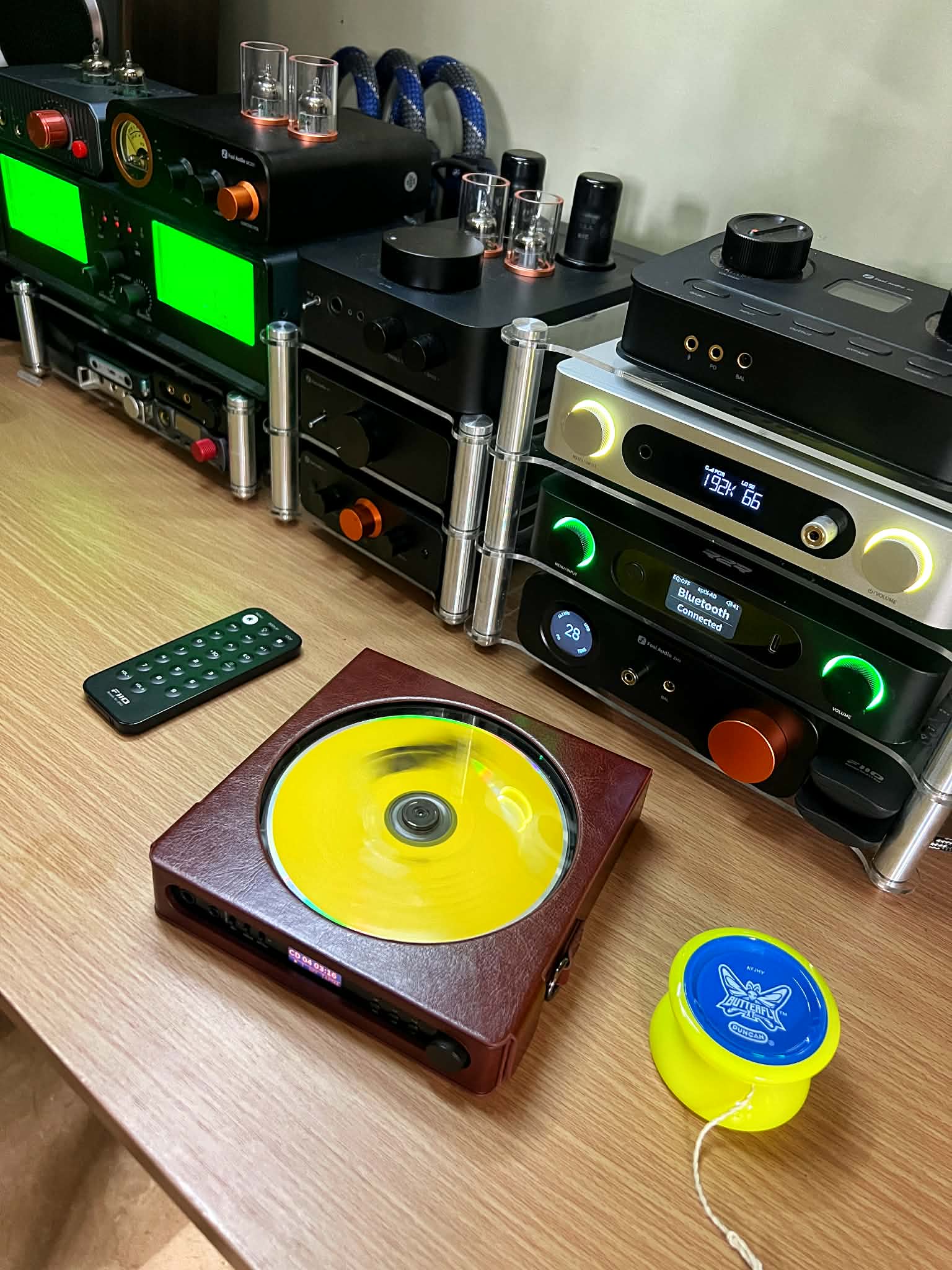
Sound-wise, the DM15 feels immediately familiar if you’ve spent time with the FiiO K11 R2R or K13 R2R. The overall tuning carries that same R2R personality. There’s a natural warmth and an easy, analog-like flow to the presentation, but it never drifts into sounding soft, dull, or overly romantic. FiiO did a good job walking that fine line here. It’s musical and slightly forgiving, yet still clean, controlled, and properly resolving.
What stands out most is the note weight and decay. Notes have body and texture, especially in the mids, without sounding thick or sluggish. Vocals come through with a natural tone and realistic presence, while acoustic instruments benefit from that organic timbre R2R DACs tend to do so well. At the same time, detail retrieval is solid. You don’t feel like information is being smoothed over or masked. It just presents details in a relaxed, non-fatiguing way rather than shoving them forward.
Dynamics are also better than you’d expect from a portable CD player. There’s enough punch and contrast to keep things engaging, whether it’s the snap of a snare, the weight of a bass line, or the rise and fall of orchestral passages. Soundstage isn’t artificially wide, but it’s well-proportioned, with good separation and stable imaging that makes longer listening sessions easy on the ears.
Power is another strong point. Output levels are essentially on par with the K11 R2R, which means the DM15 has no trouble driving a wide range of headphones and IEMs. Through the balanced output especially, it feels confident and composed. It never comes across as strained or running out of steam, whether you’re using it portably or in desktop mode. Even moderately demanding headphones feel well controlled, with good grip in the low end and clean transients.
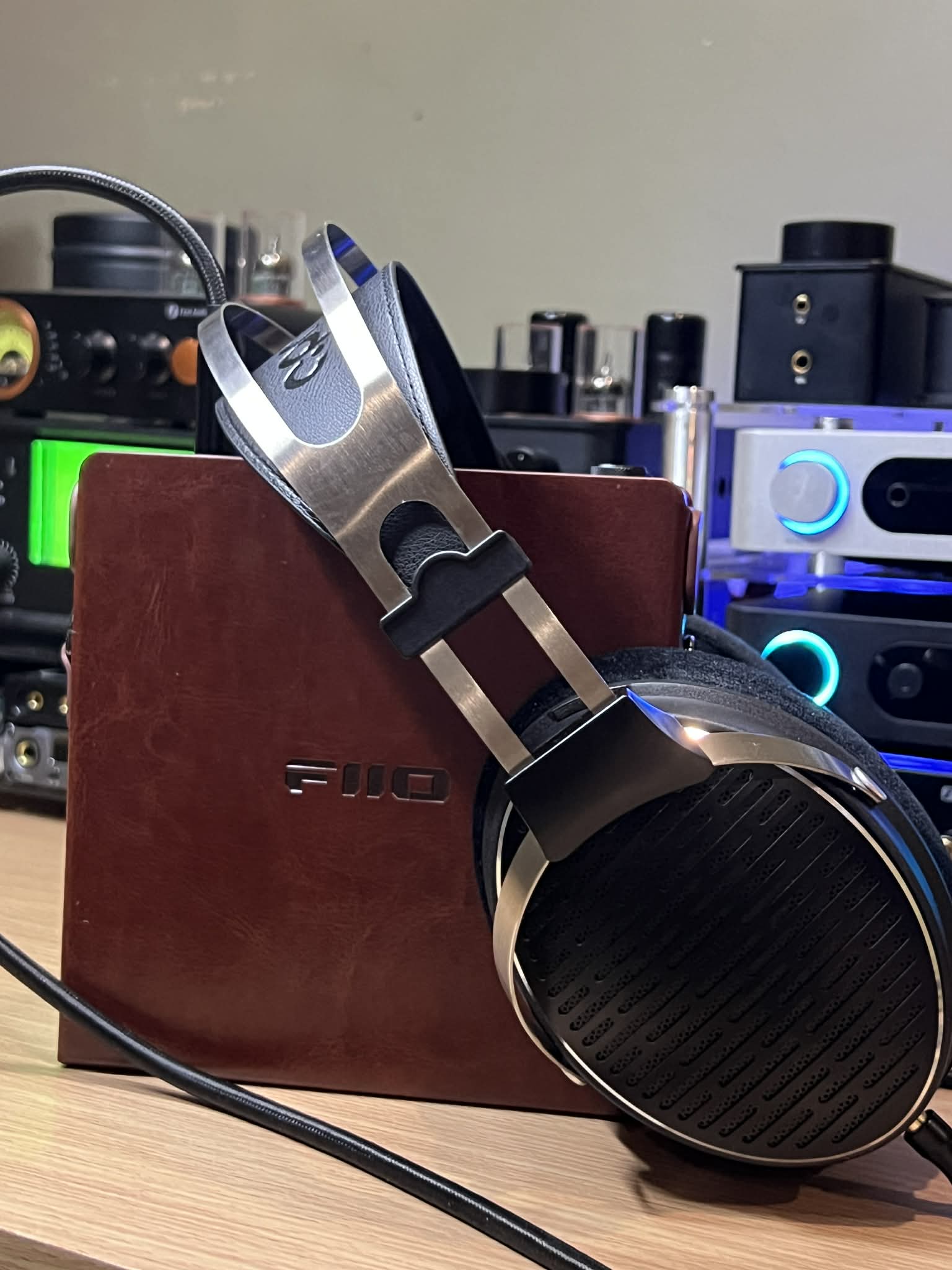
The EQ options and preset filters are also worth mentioning. They’re straightforward, easy to access, and genuinely useful. This doesn’t feel like a box-ticking feature. Being able to quickly fine-tune the sound depending on the headphones you’re using or your listening mood adds real value. Small adjustments can make a noticeable difference without breaking the core character of the DM15, which is exactly how EQ should be implemented on a device like this.
EQ, Magic Bass, and tuning options
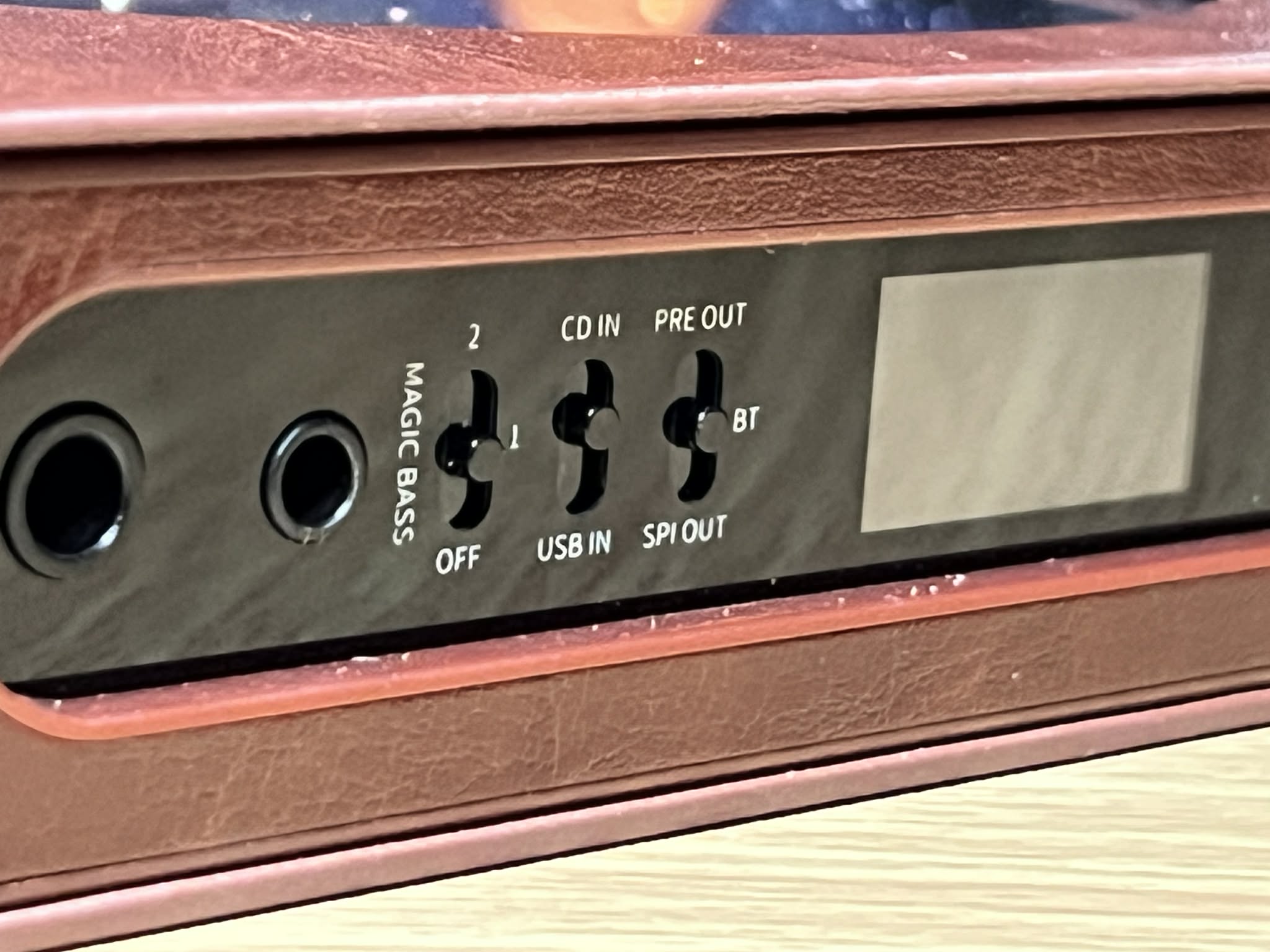
FiiO gives you plenty of room to shape the sound, and thankfully it’s done in a way that feels practical rather than gimmicky. The Magic Bass switch is the headline feature here, offering three settings: Off, 1, and 2. Off keeps the tuning clean and honest, which is how I did most of my listening. Engaging Magic Bass 1 adds a gentle lift to the low end, just enough to give bass a bit more body without turning the presentation thick or bloated. Magic Bass 2 is the heavier hand, clearly aimed at listeners who want more slam and weight, or for headphones and recordings that sound a little lean out of the box.
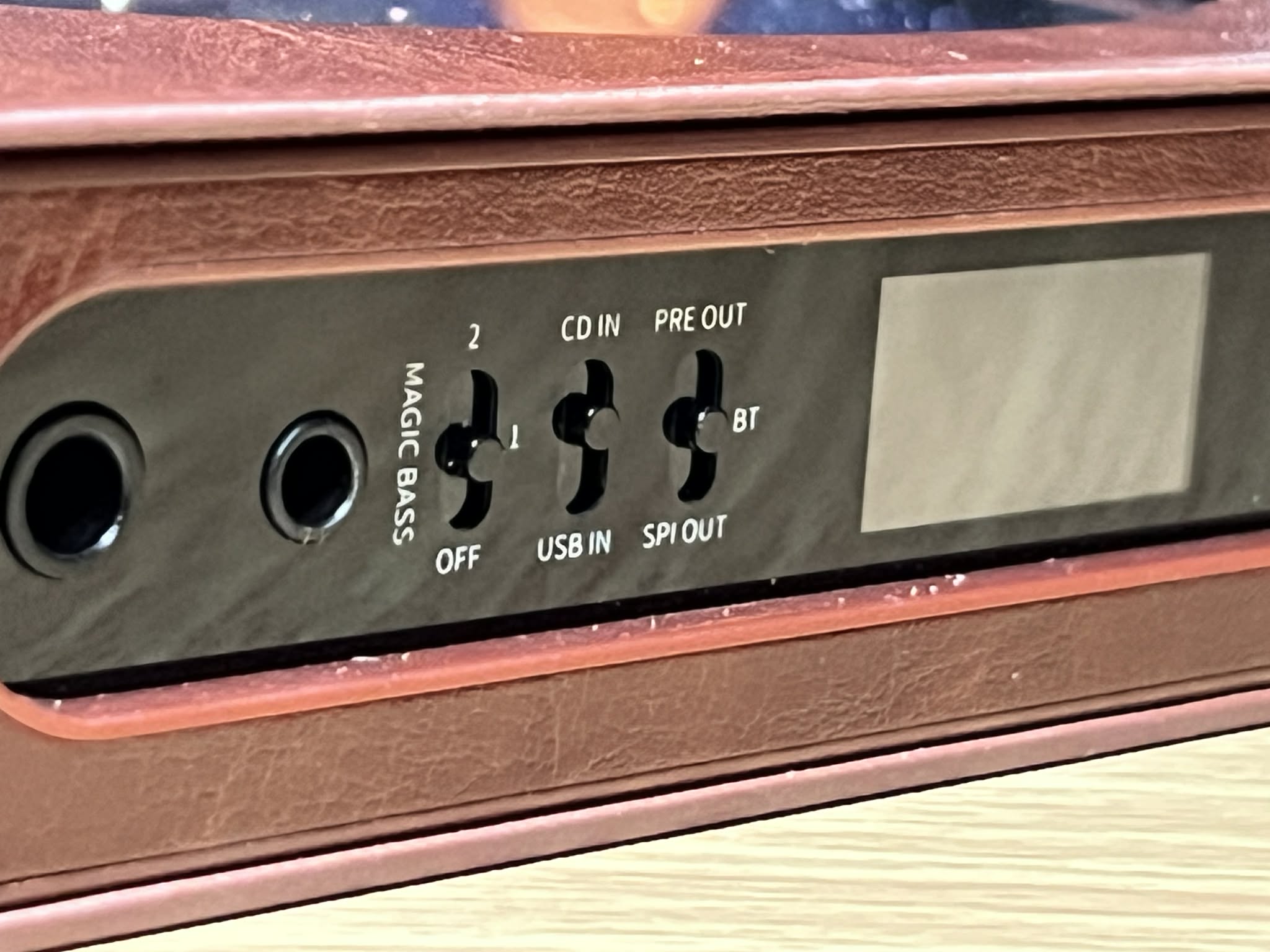
That said, as with most bass-boost circuits, pushing the low end does subtly nudge the rest of the spectrum. The mids get a touch warmer and the highs lose a bit of air, which is expected. It’s not a dealbreaker, but it’s why I generally preferred leaving Magic Bass off and letting the DM15’s natural tuning do its thing. Still, for older CDs, bass-light masters, or certain headphones that appreciate extra low-end presence, it’s a genuinely useful tool rather than a throwaway feature.
Beyond Magic Bass, you also get seven EQ presets: Jazz, Pop, Rock, Dance, Classic, Hip Hop, and Retro. They’re easy to access and quick to switch between, which makes casual experimenting painless. None of these presets felt extreme or poorly judged. Instead, they’re subtle enough to fine-tune the flavor depending on the genre or your mood, without completely reshaping the character of the player.
Overall, the tuning options strike a nice balance. You can leave everything flat and enjoy the DM15 as-is, or you can tweak things just enough to suit different recordings and headphones. It’s flexible, user-friendly, and well thought out, which pretty much sums up FiiO’s approach with the DM15 as a whole.
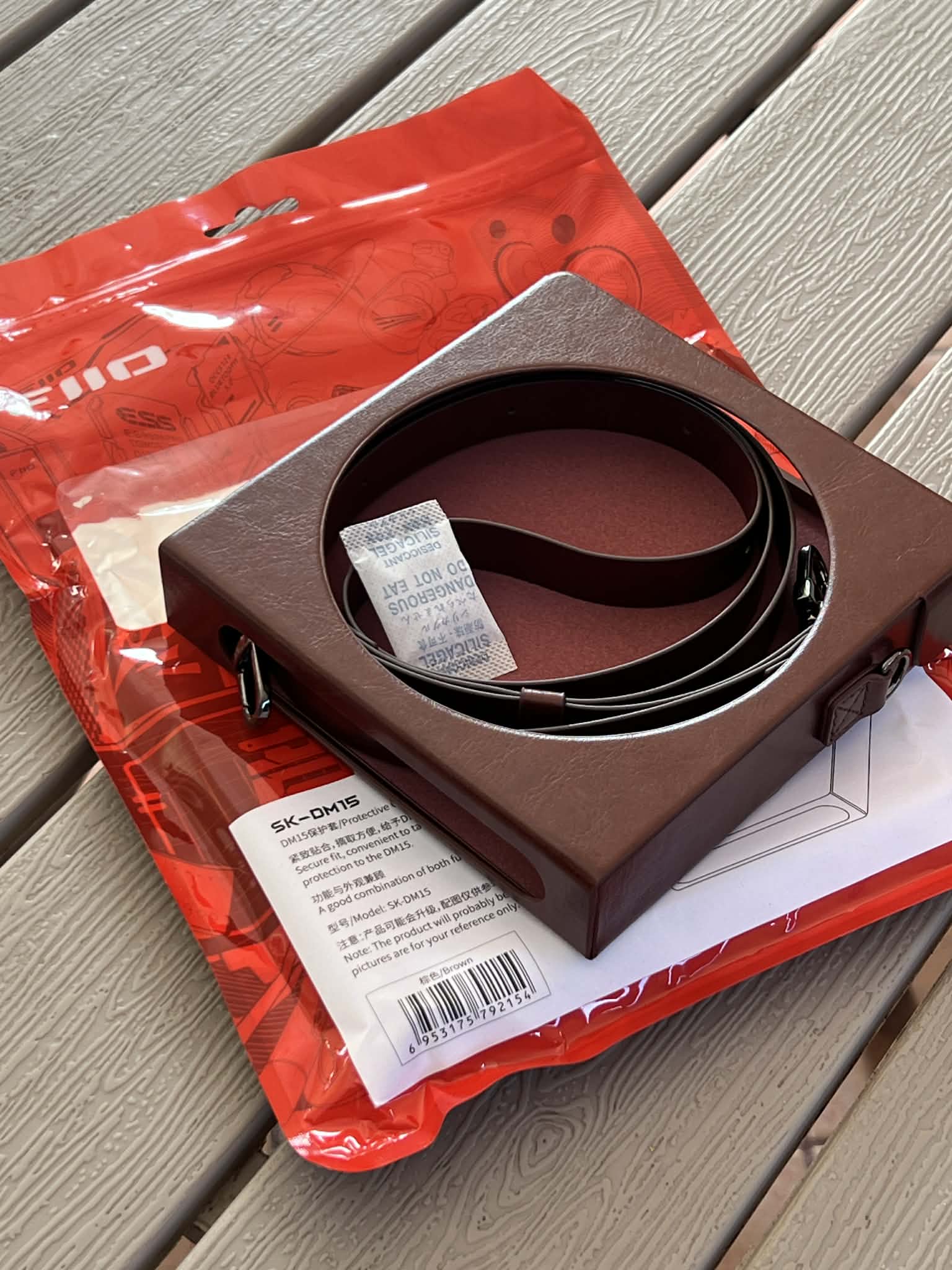
The SK-DM15 leather case
I also picked up the FiiO SK-DM15 PU leather case in brown, the same familiar shade FiiO uses on their DAP cases, and visually it’s a great match. It looks right at home with the DM15 and keeps that classic FiiO aesthetic intact. Fit and finish are excellent. The case hugs the player properly with no gaps, loose edges, or odd pressure points. Nothing feels rushed or afterthought-level here.
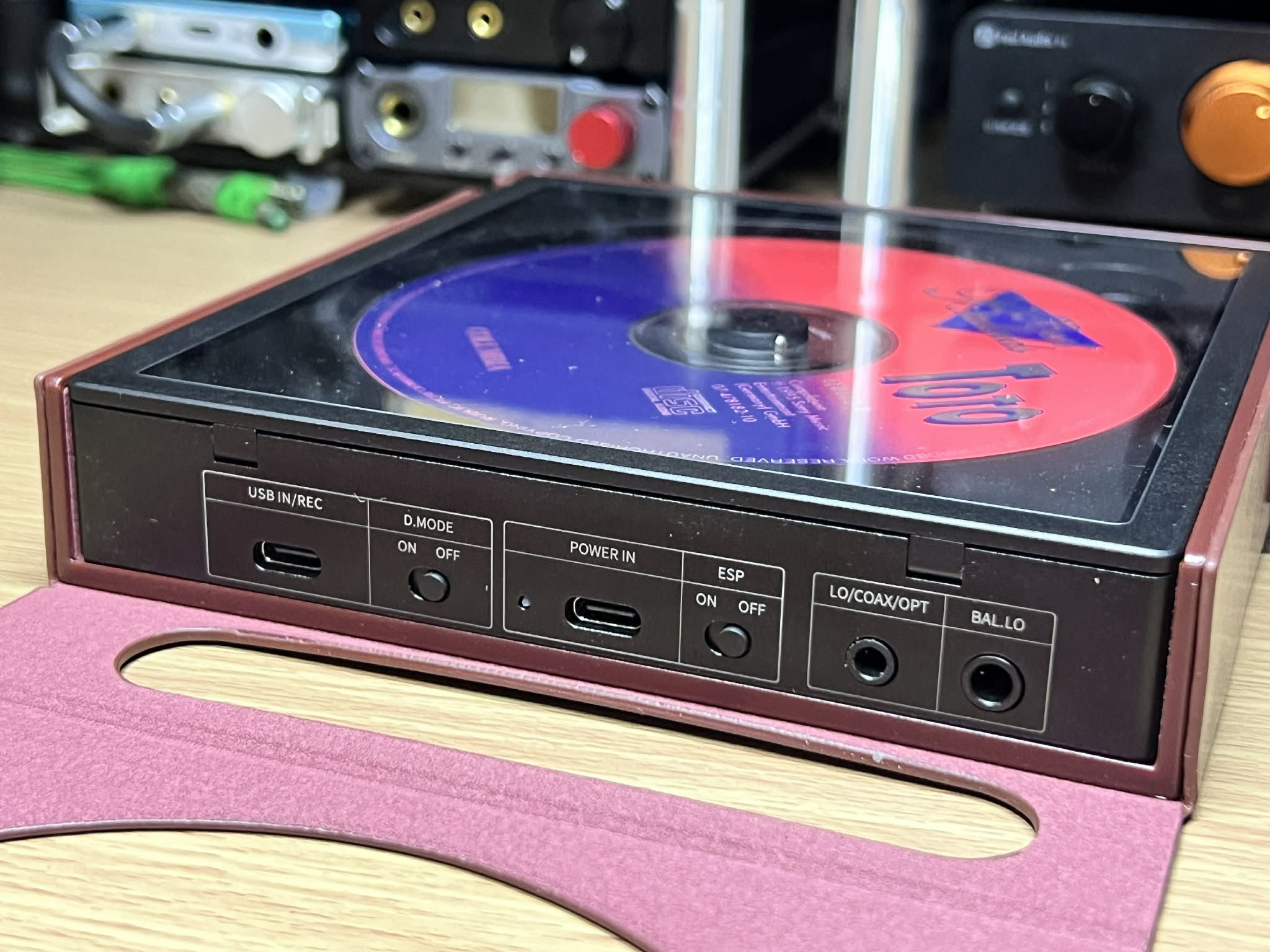
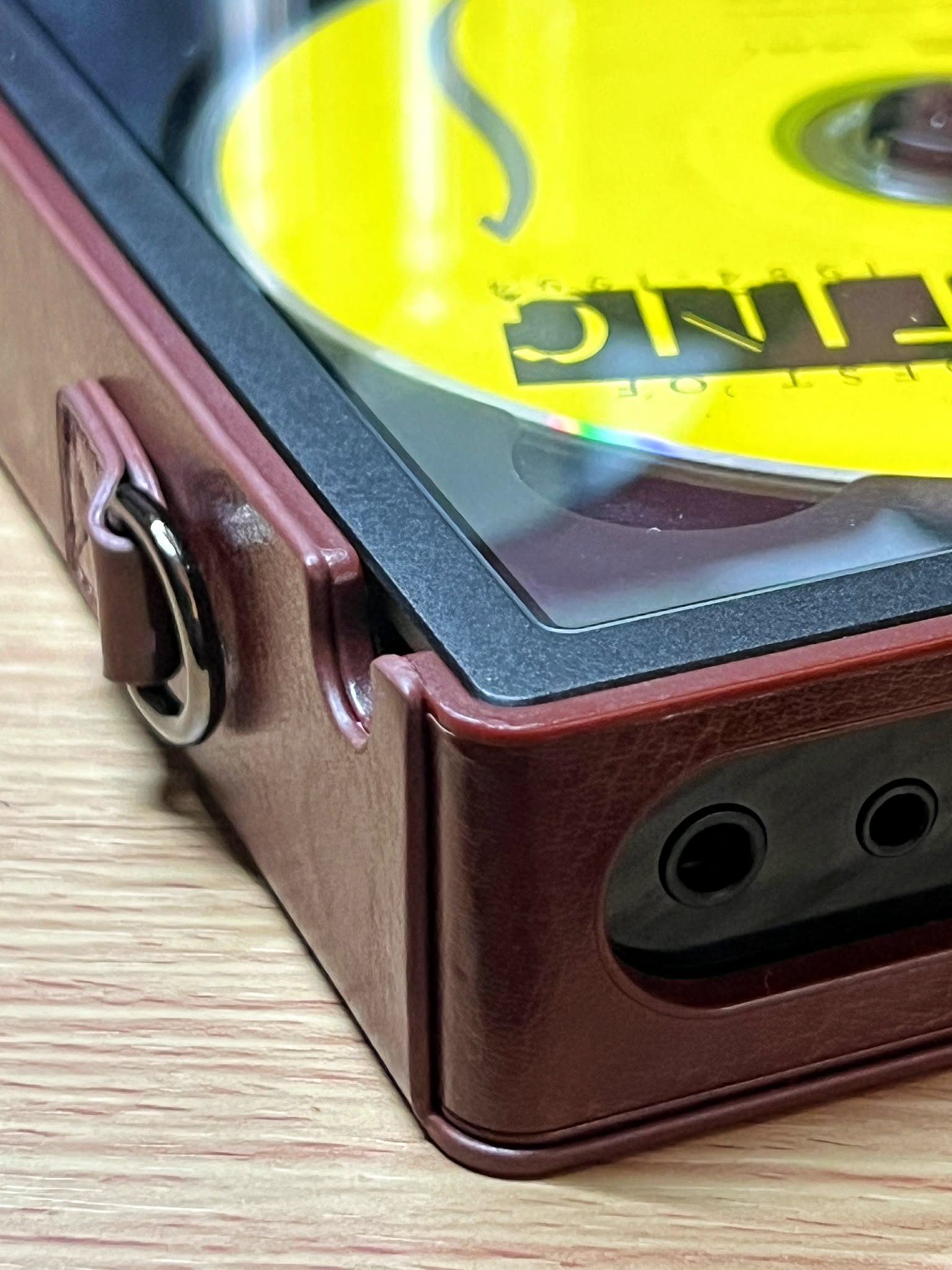
What really stands out is how thoughtfully it’s put together. The DM15 is held in place magnetically, and it works better than I expected. It snaps in securely and stays put, even when moving the player around. The top flap also uses a magnetic closure, which feels solid and reassuring without being stiff or annoying to open. Everything lines up cleanly, and the magnets are strong enough to inspire confidence but not so strong that they get in the way of daily use.
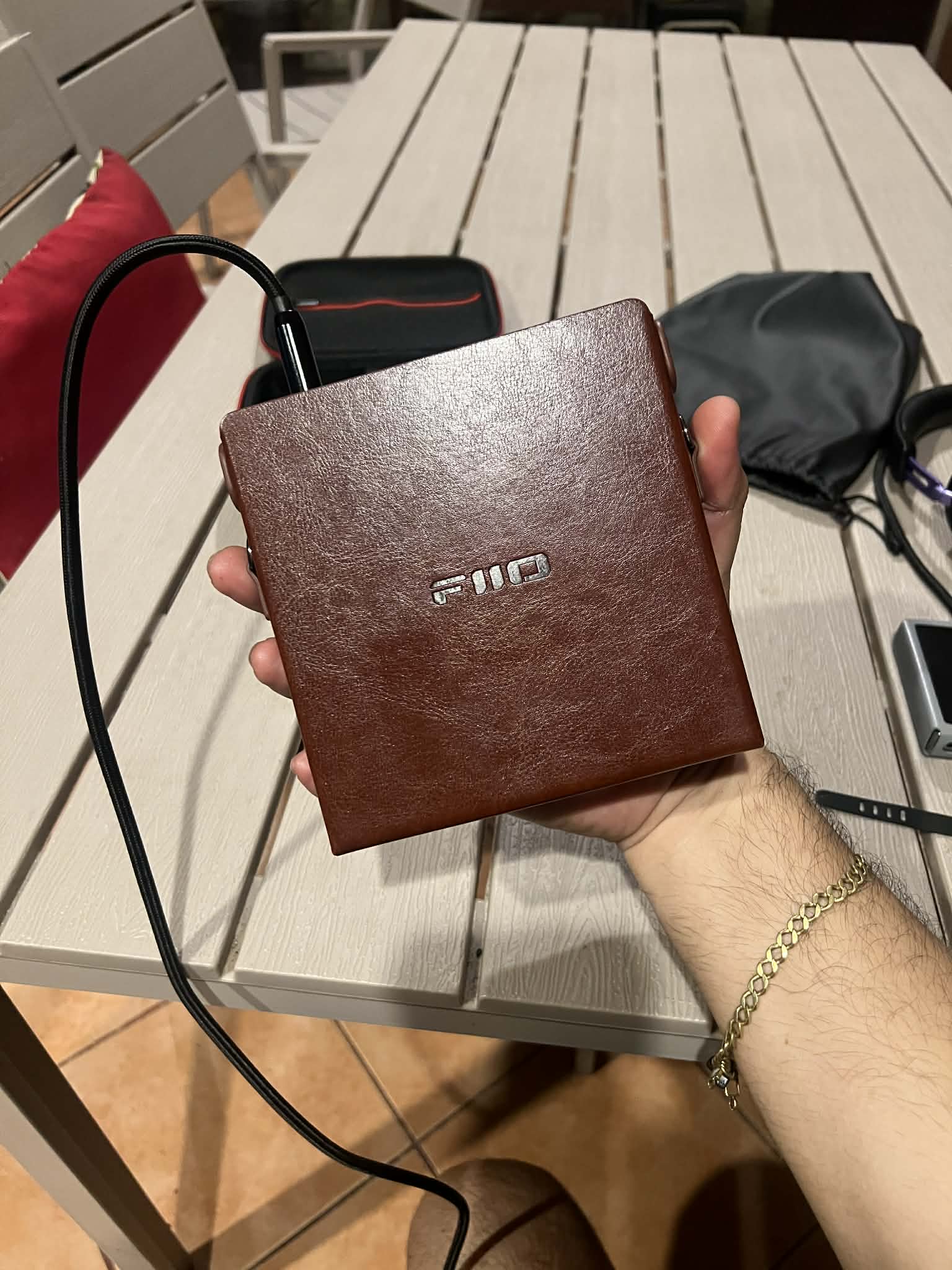
In hand, the DM15 actually feels better with the case on. It adds grip, a bit of cushion, and that extra sense of protection, all without turning the player into a brick. Weight and bulk are kept in check, which matters for something meant to be portable. My only real nitpick is coverage. The exposed glass looks nice, no question, but for a portable CD player that’s meant to travel, I would have loved a full-cover option for extra peace of mind. Still, that’s more a preference than a flaw.
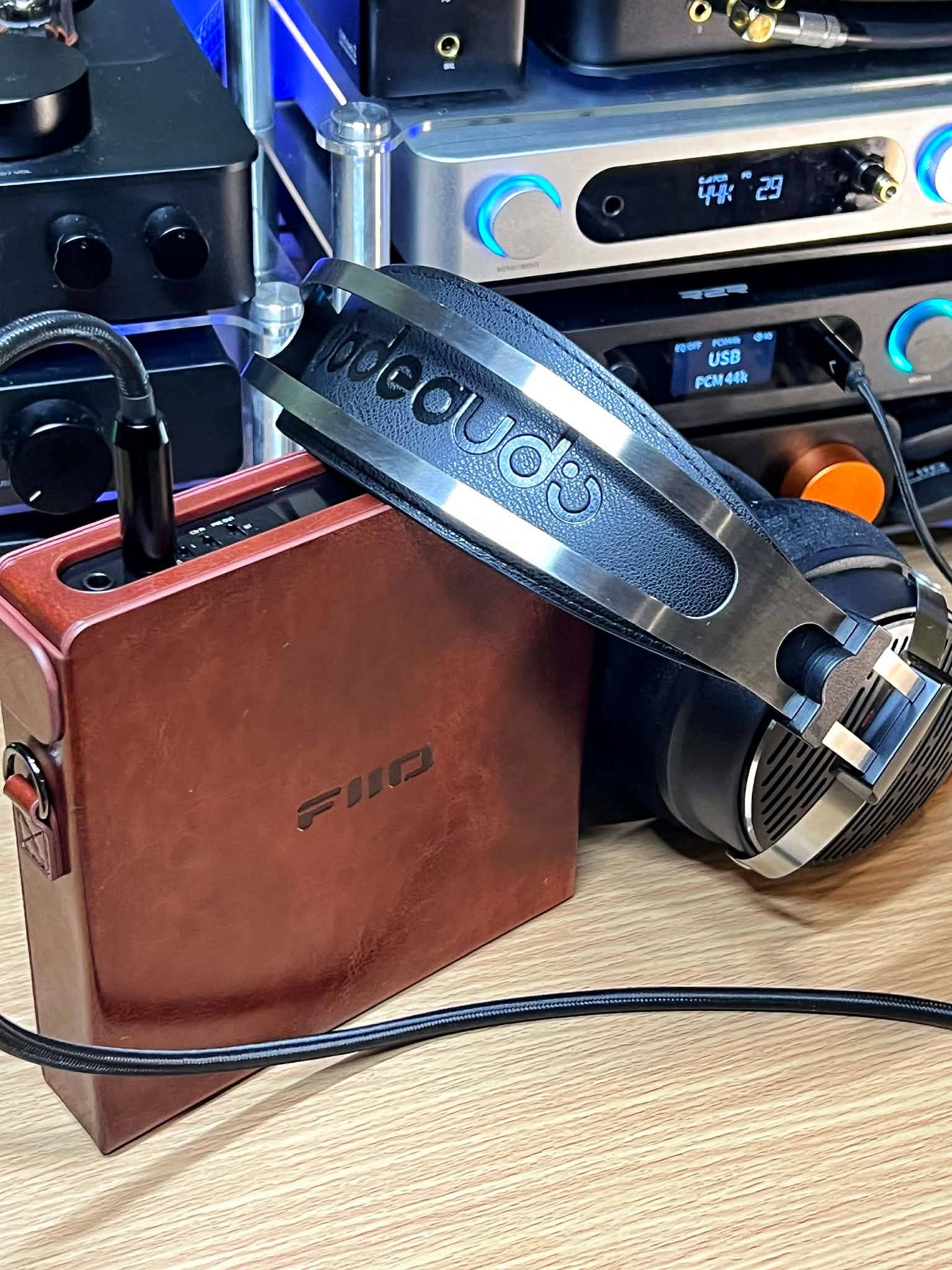
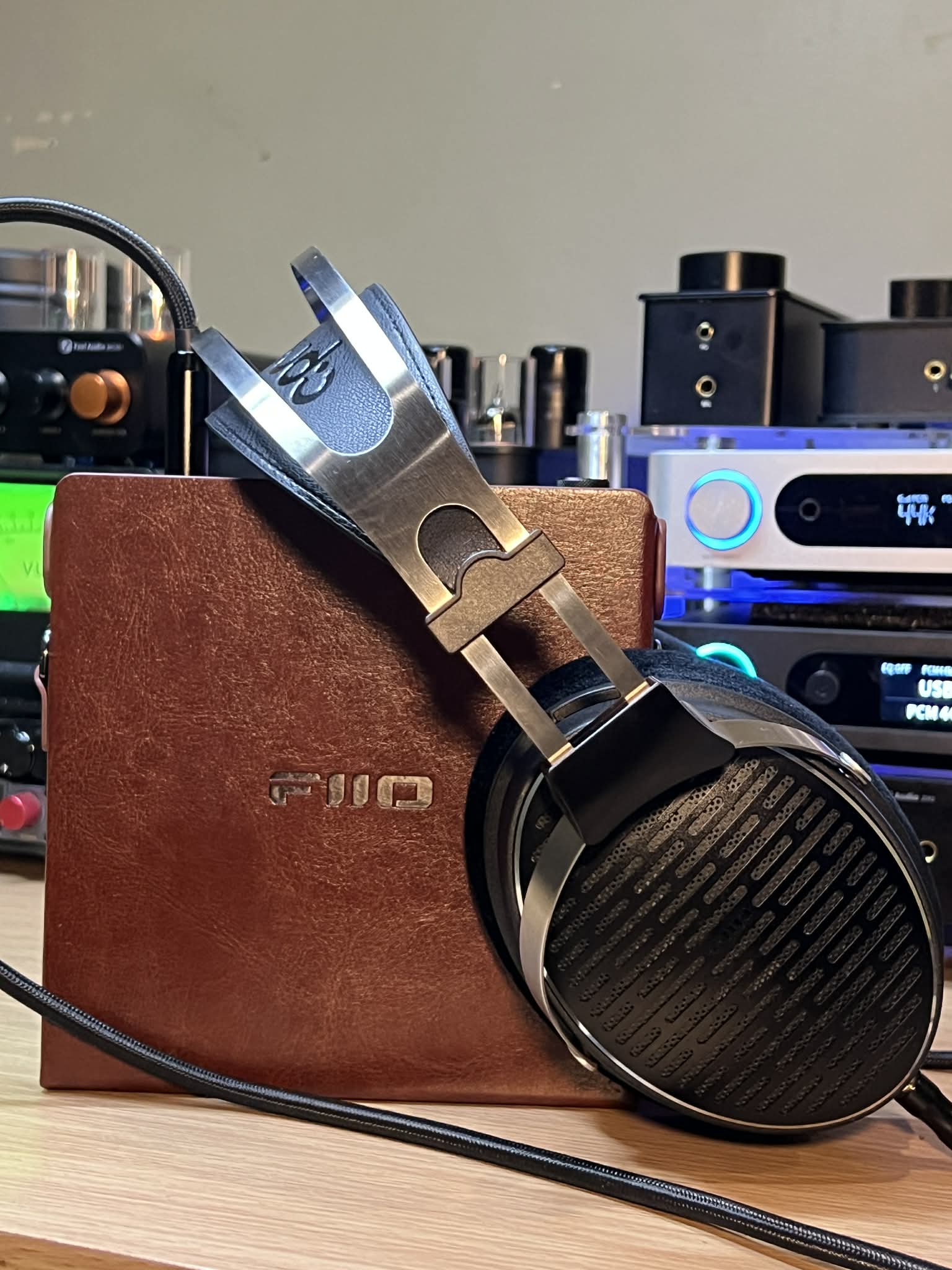
Overall, as far as accessories go, this is one of the better leather cases FiiO has made. It’s well-fitted, thoughtfully designed, and genuinely improves the day-to-day feel of using the DM15. If you’re already invested in the player, this case makes a lot of sense.
Final thoughts
The FiiO DM15 R2R is not just a nostalgia play or a novelty aimed at collectors. This is a genuinely serious audio device that simply happens to spin CDs. Under the hood, it’s doing real audiophile work. The R2R DAC gives it a natural, textured presentation that feels intentional rather than romanticized, and the amplification stage has enough authority to drive a wide range of headphones without feeling strained or thin. This is not a “plug it in and hope for the best” kind of player. It’s confident, composed, and properly engineered.
What really elevates the DM15 is how versatile it is. Beyond CD playback, you get a full suite of inputs and outputs, proper line-out options, USB DAC functionality, and Bluetooth transmit for when cables are not convenient. Build quality is excellent, with a reassuring weight and solid controls that make it feel like a real piece of hi-fi gear, not a toy or a throwback gimmick. FiiO clearly treated this as a modern audio component first, and a CD player second.
In a time where everything is dominated by streaming, playlists, and background listening, the DM15 quietly makes a strong argument for keeping physical media in rotation. There’s something grounding about dropping in a disc, pressing play, and committing to an album. No notifications, no algorithm, just music. And when it sounds this good, that experience feels relevant again, not outdated.
For me, this isn’t just the best portable CD player FiiO has made so far. It feels like a reset point. The DM15 sets a new benchmark for what a modern disc player can and should be, blending old-school format loyalty with modern audio performance in a way that actually makes sense today.
The FiiO DM15 R2R is not just a nostalgia play or a novelty aimed at collectors. This is a genuinely serious audio device that simply happens to spin CDs. Under the hood, it’s doing real audiophile work. The R2R DAC gives it a natural, textured presentation that feels intentional rather than romanticized, and the amplification stage has enough authority to drive a wide range of headphones without feeling strained or thin. This is not a “plug it in and hope for the best” kind of player. It’s confident, composed, and properly engineered.
What really elevates the DM15 is how versatile it is. Beyond CD playback, you get a full suite of inputs and outputs, proper line-out options, USB DAC functionality, and Bluetooth transmit for when cables are not convenient. Build quality is excellent, with a reassuring weight and solid controls that make it feel like a real piece of hi-fi gear, not a toy or a throwback gimmick. FiiO clearly treated this as a modern audio component first, and a CD player second.
In a time where everything is dominated by streaming, playlists, and background listening, the DM15 quietly makes a strong argument for keeping physical media in rotation. There’s something grounding about dropping in a disc, pressing play, and committing to an album. No notifications, no algorithm, just music. And when it sounds this good, that experience feels relevant again, not outdated.
For me, this isn’t just the best portable CD player FiiO has made so far. It feels like a reset point. The DM15 sets a new benchmark for what a modern disc player can and should be, blending old-school format loyalty with modern audio performance in a way that actually makes sense today.
- Get link
- X
- Other Apps
- Get link
- X
- Other Apps
Comments
Post a Comment