Pros:
• Fun, musical tuning with excellent bass physicality
• Deep, controlled subbass with punchy midbass
• Warm, natural and textured midrange
• Energetic but smooth and extended treble
• Good soundstage, imaging and layering
• Impressive technical performance for a single DD
• Natural timbre and strong dynamics
• Easy to drive
• Excellent build quality, fit and stock accessories
• Very cohesive and engaging presentation
Cons:
• Bass-heavy tuning won't suit those looking for strict neutrality
• Warmth can slightly soften overall clarity compared with brighter/reference sets
• Treble is smooth rather than highly incisive or analytical
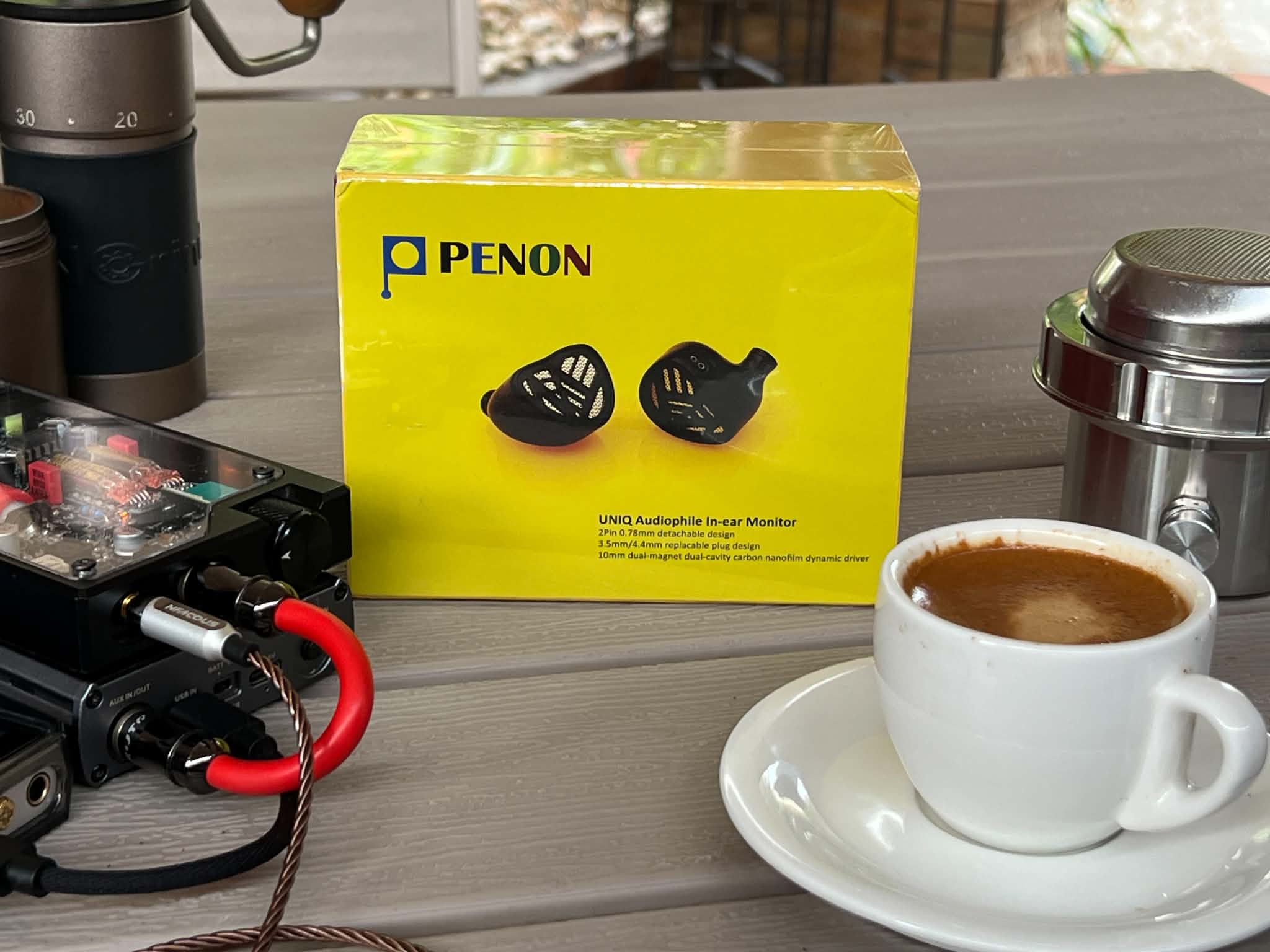
I had just finished pulling a perfect shot of espresso when an unexpected mail call arrived.
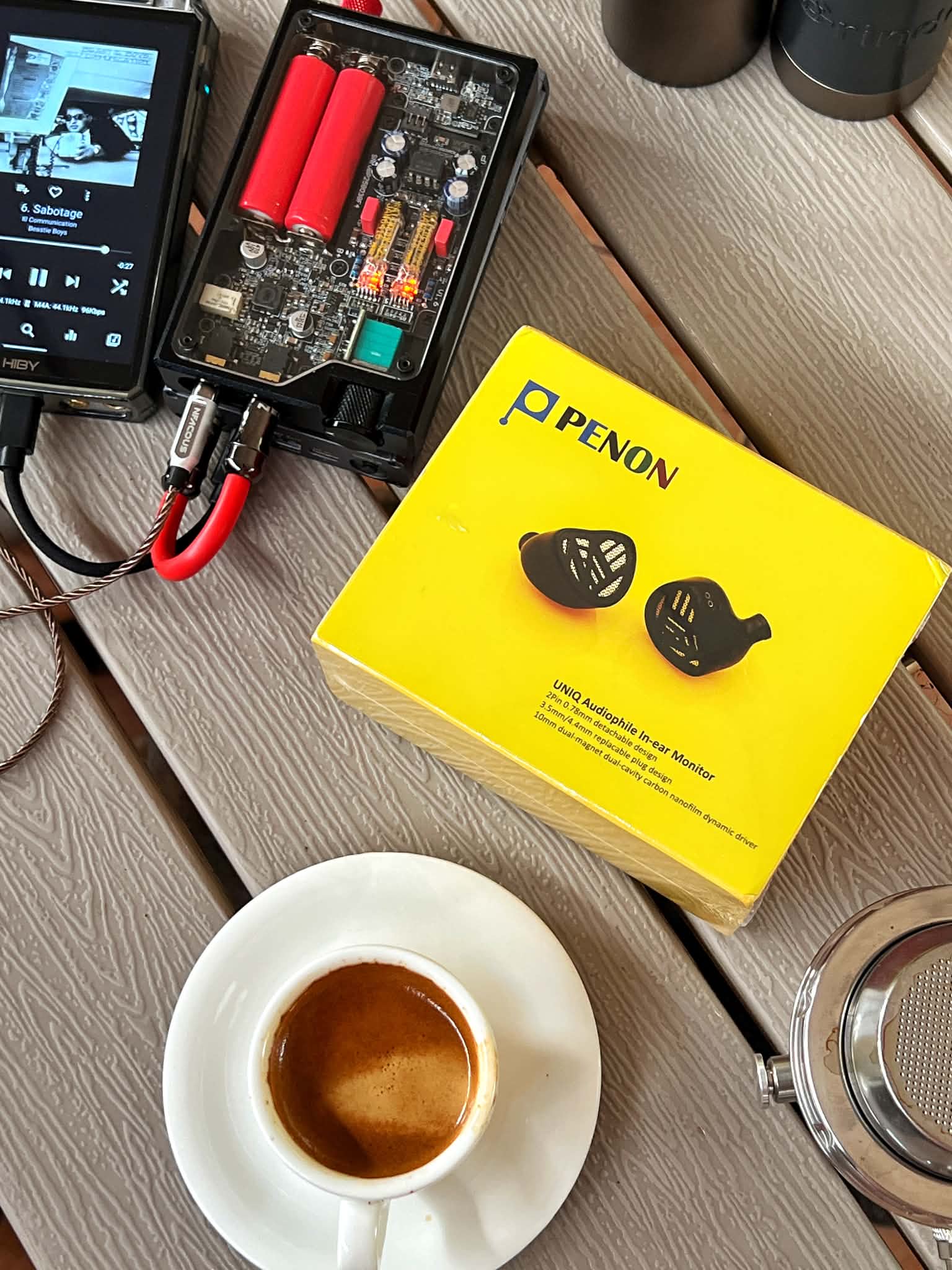
And this was a good one.
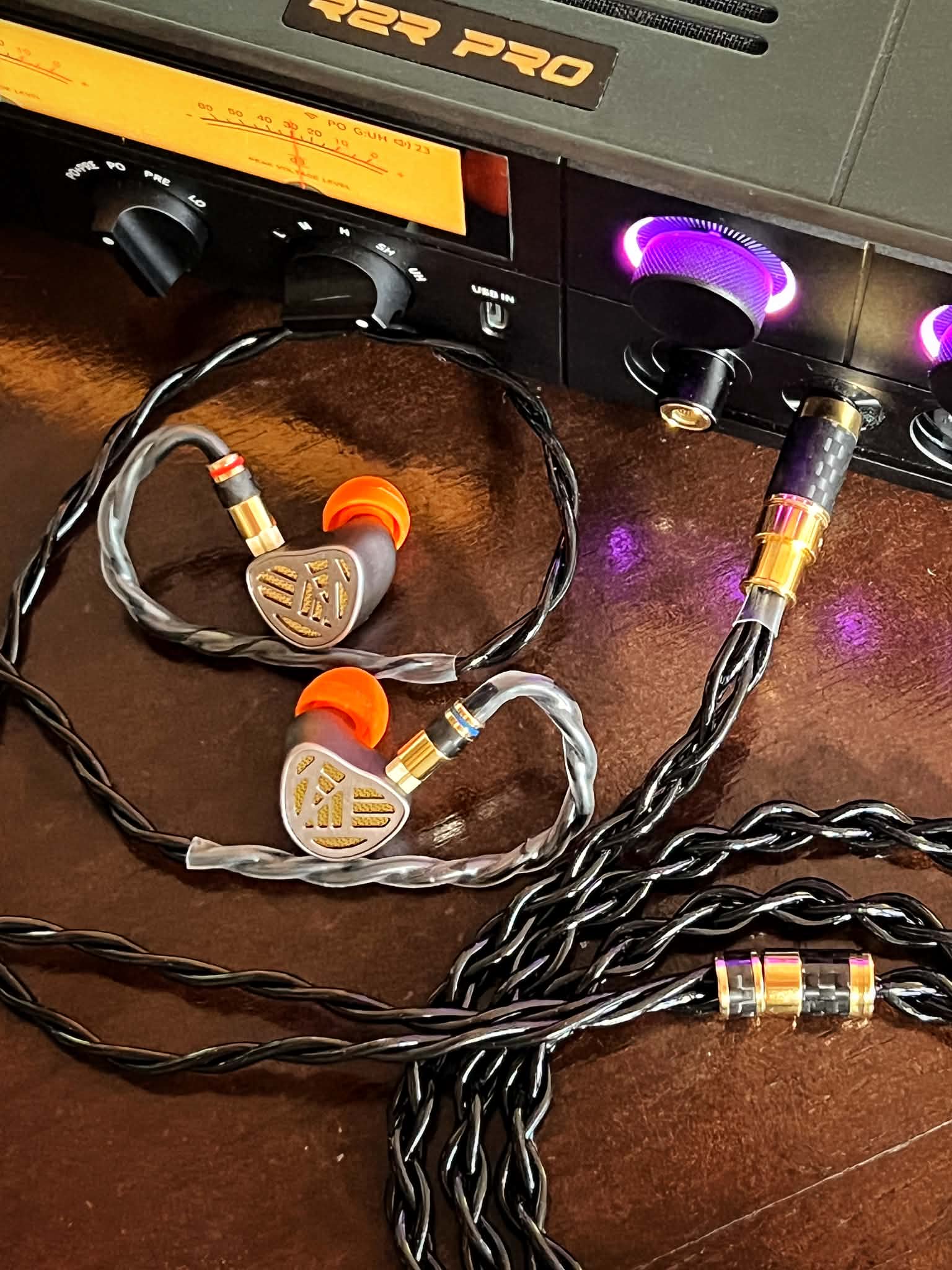
Inside was the Penon UNIQ, and my first reaction was pretty simple: this thing looks seriously good.
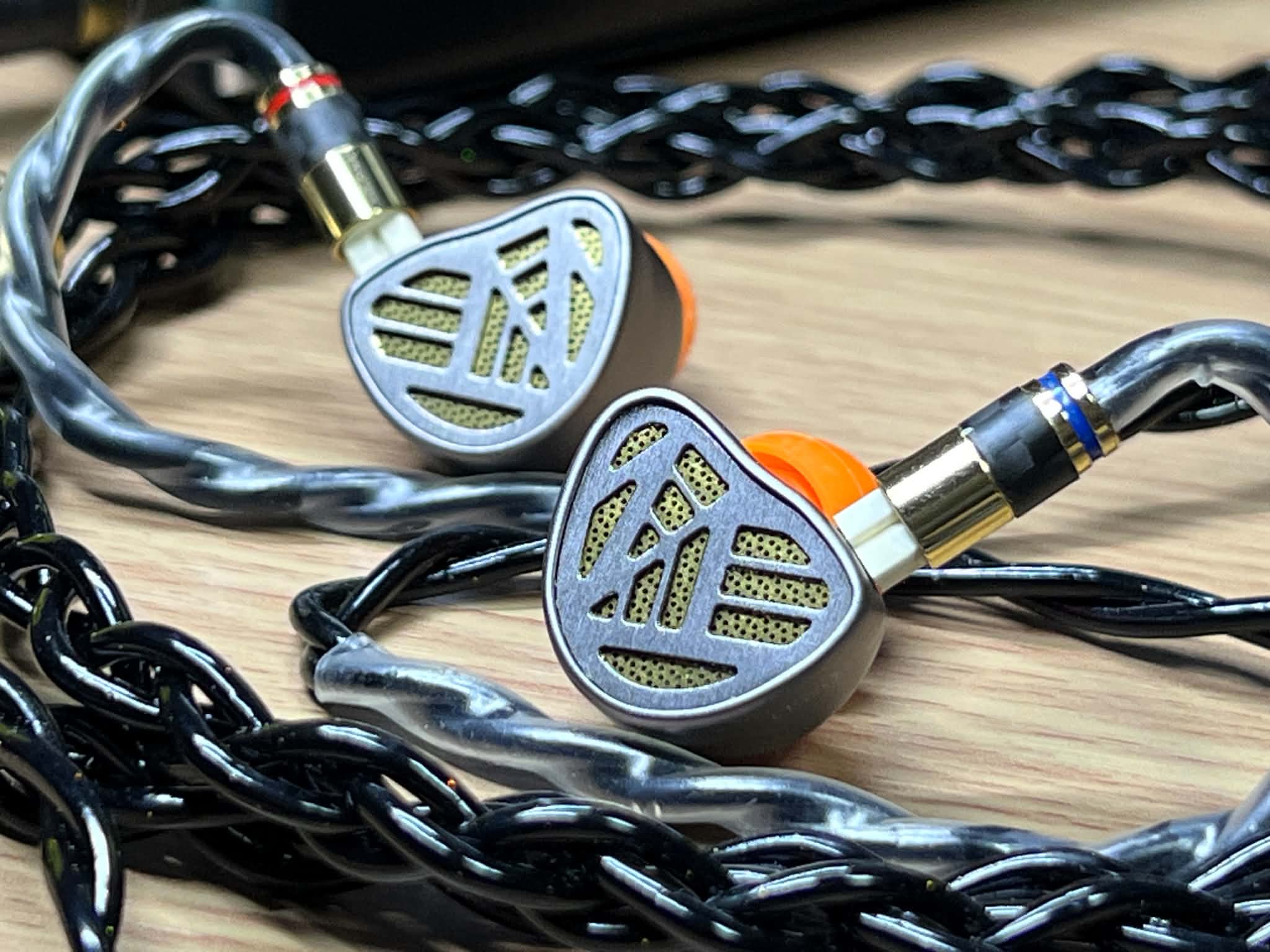
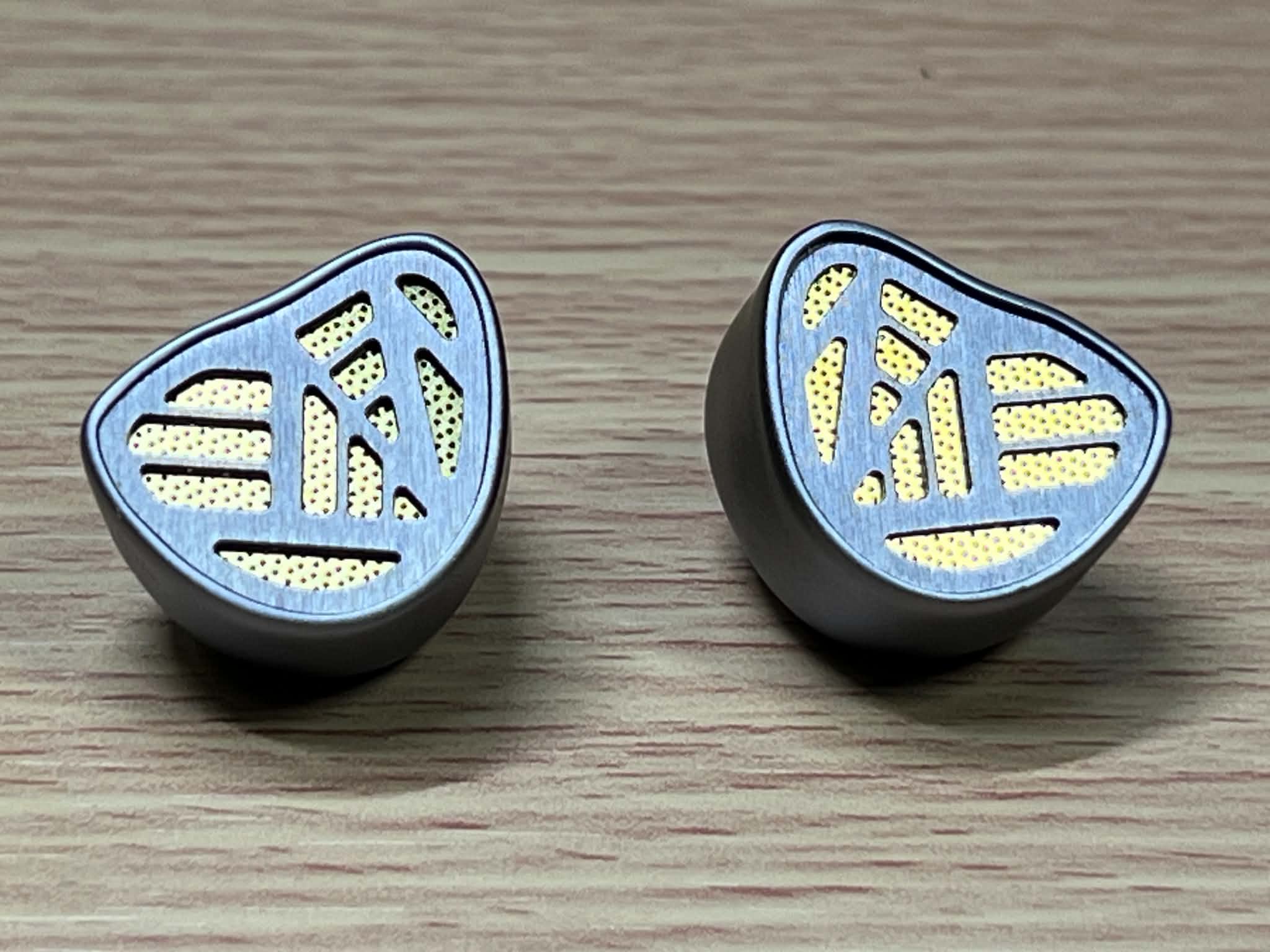
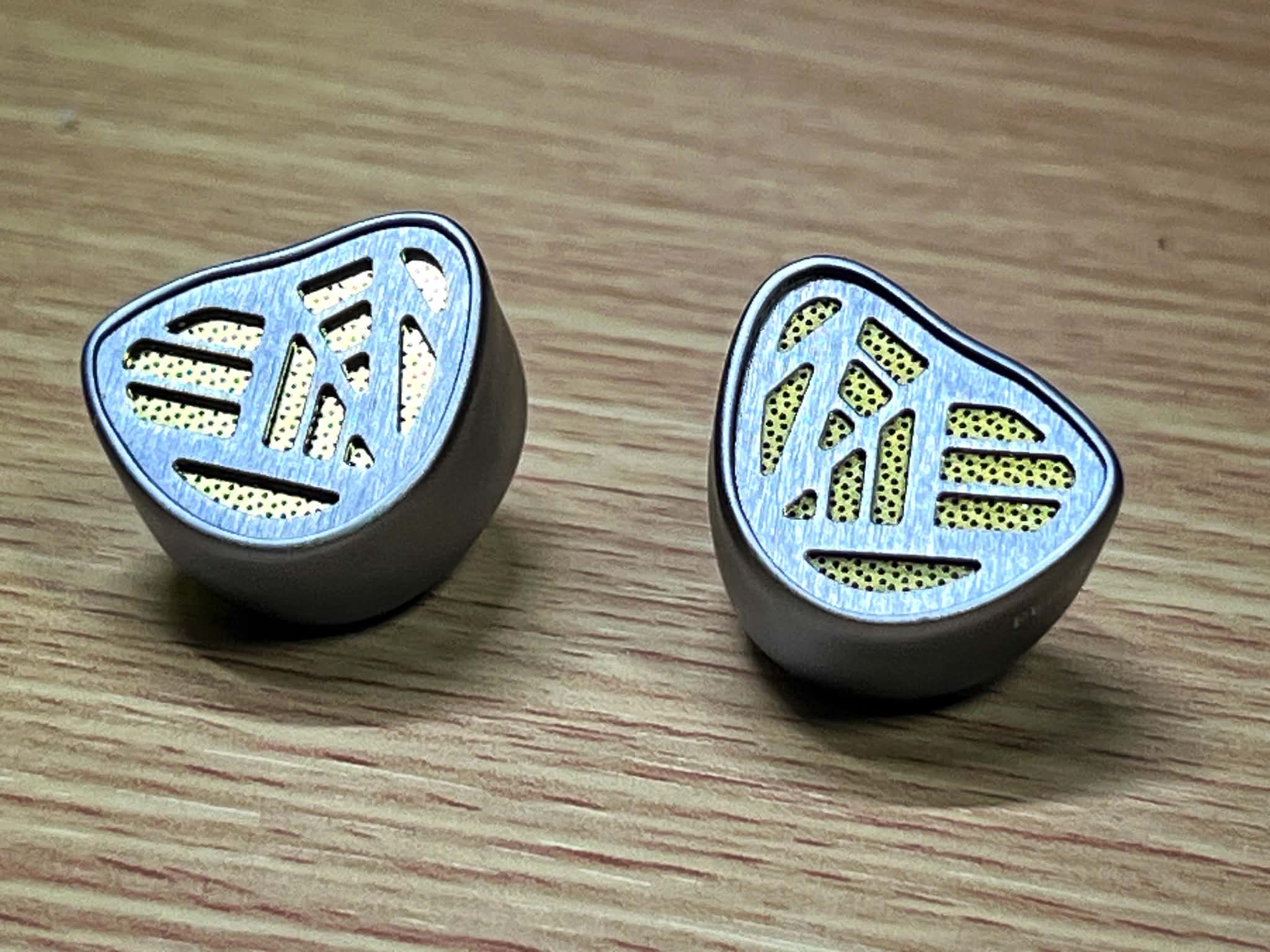
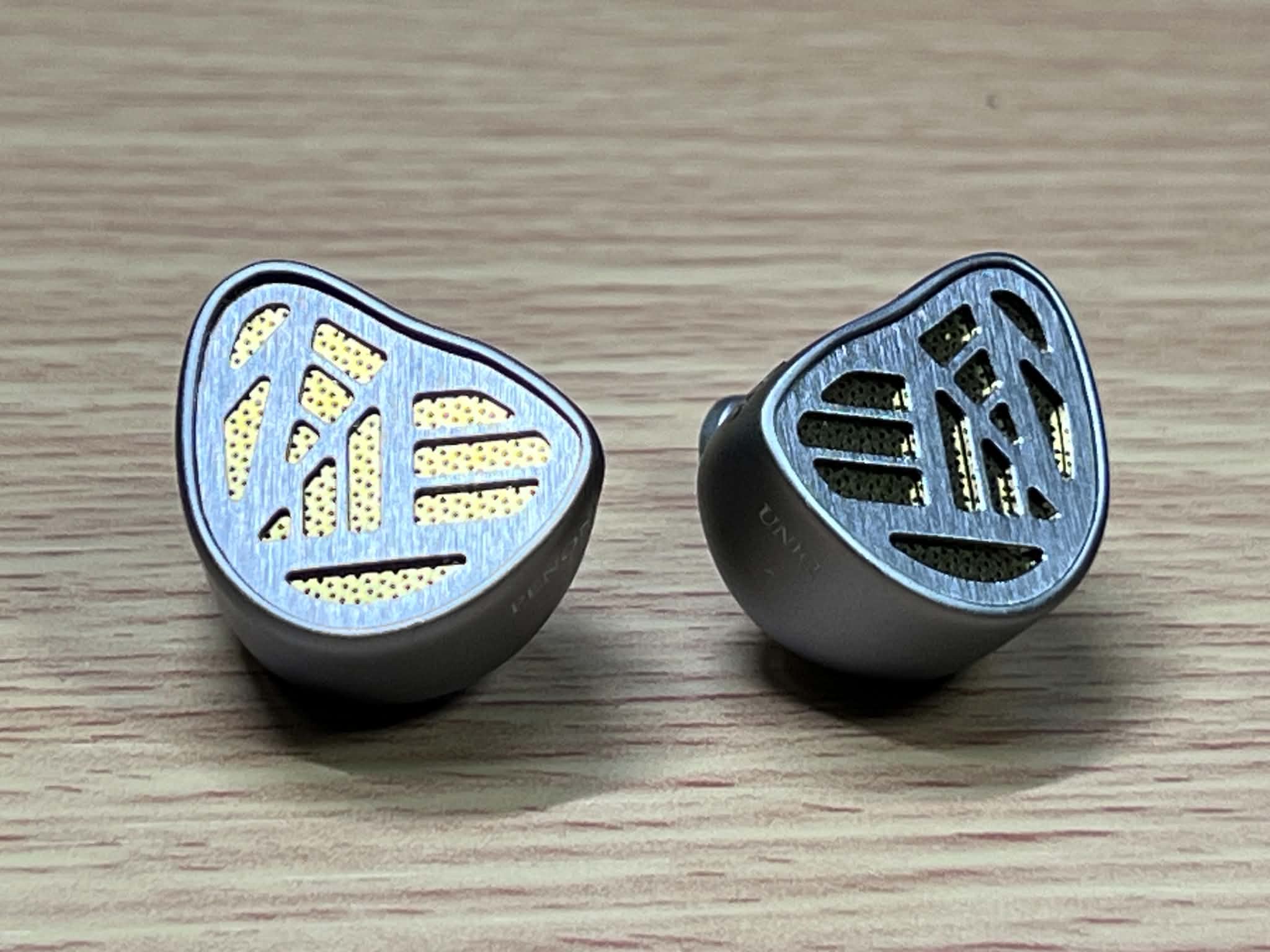
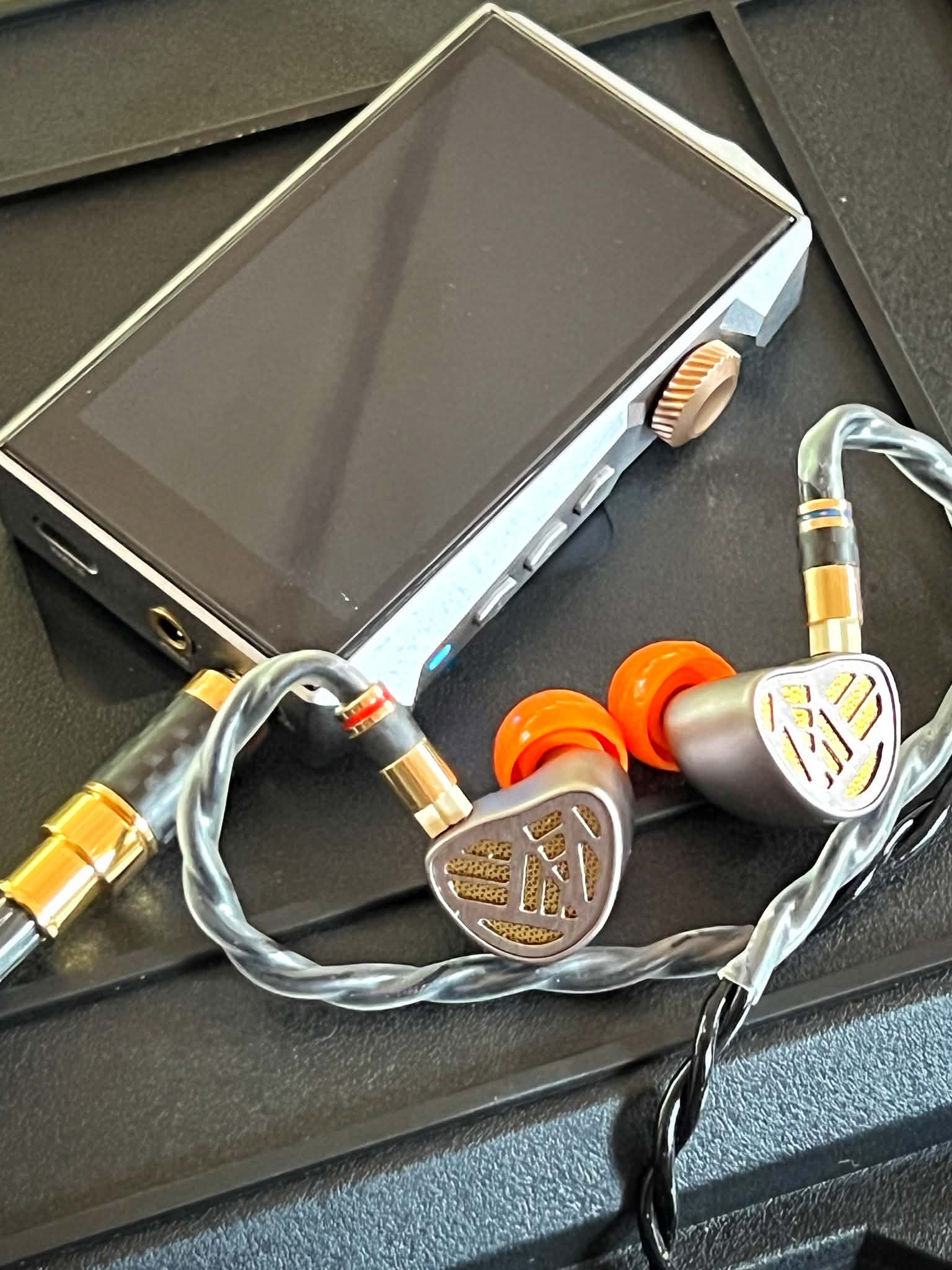
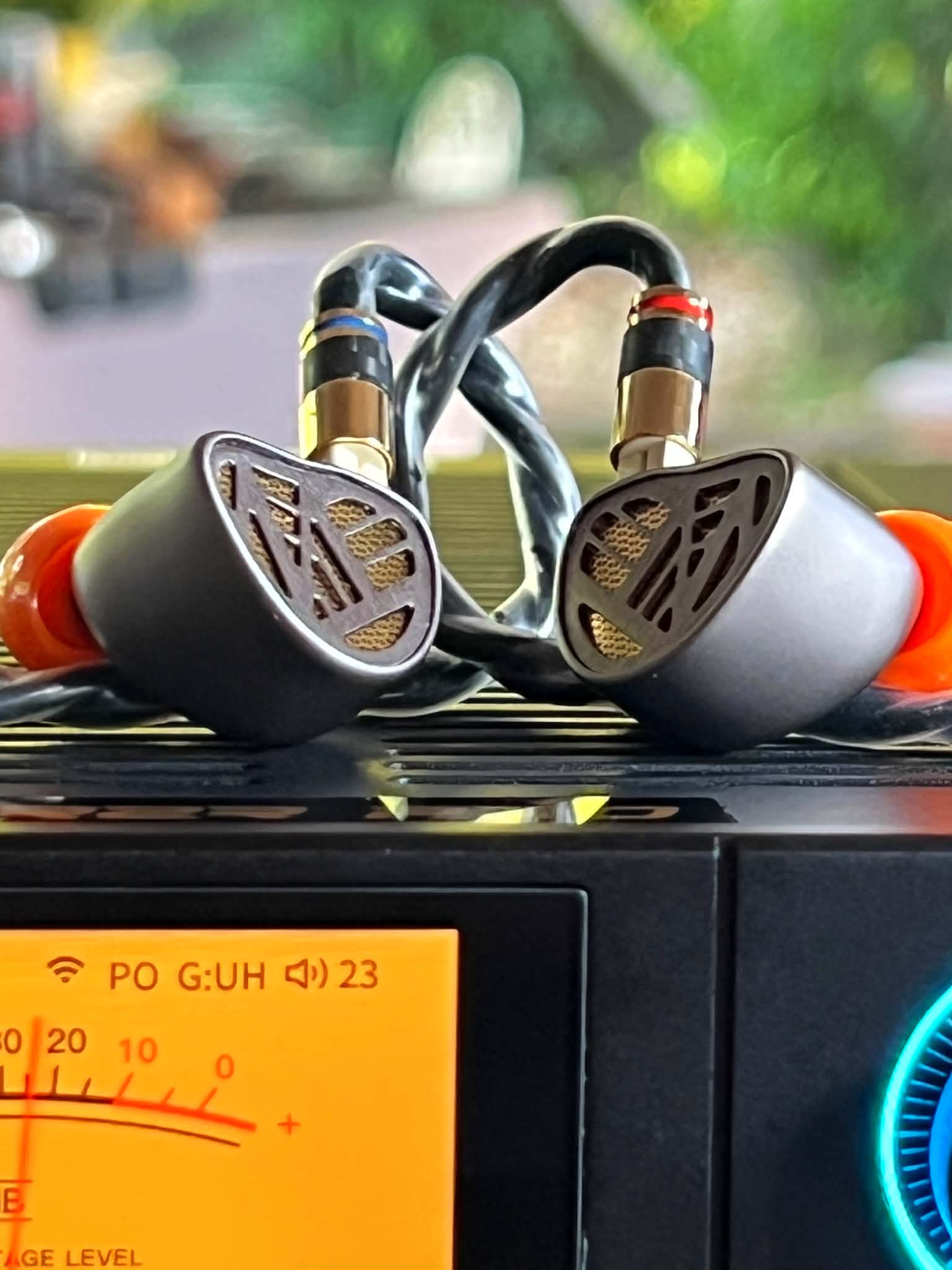
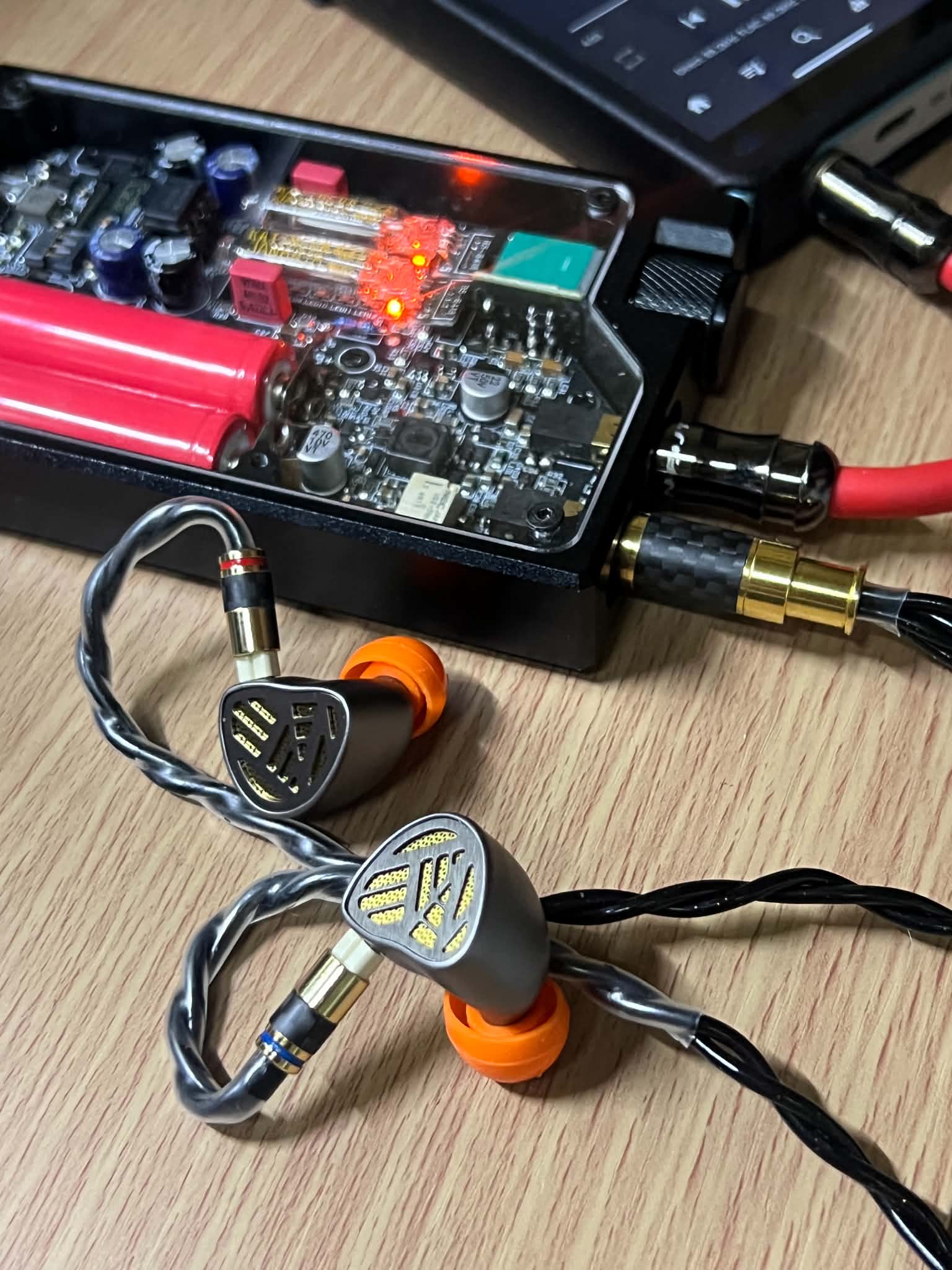
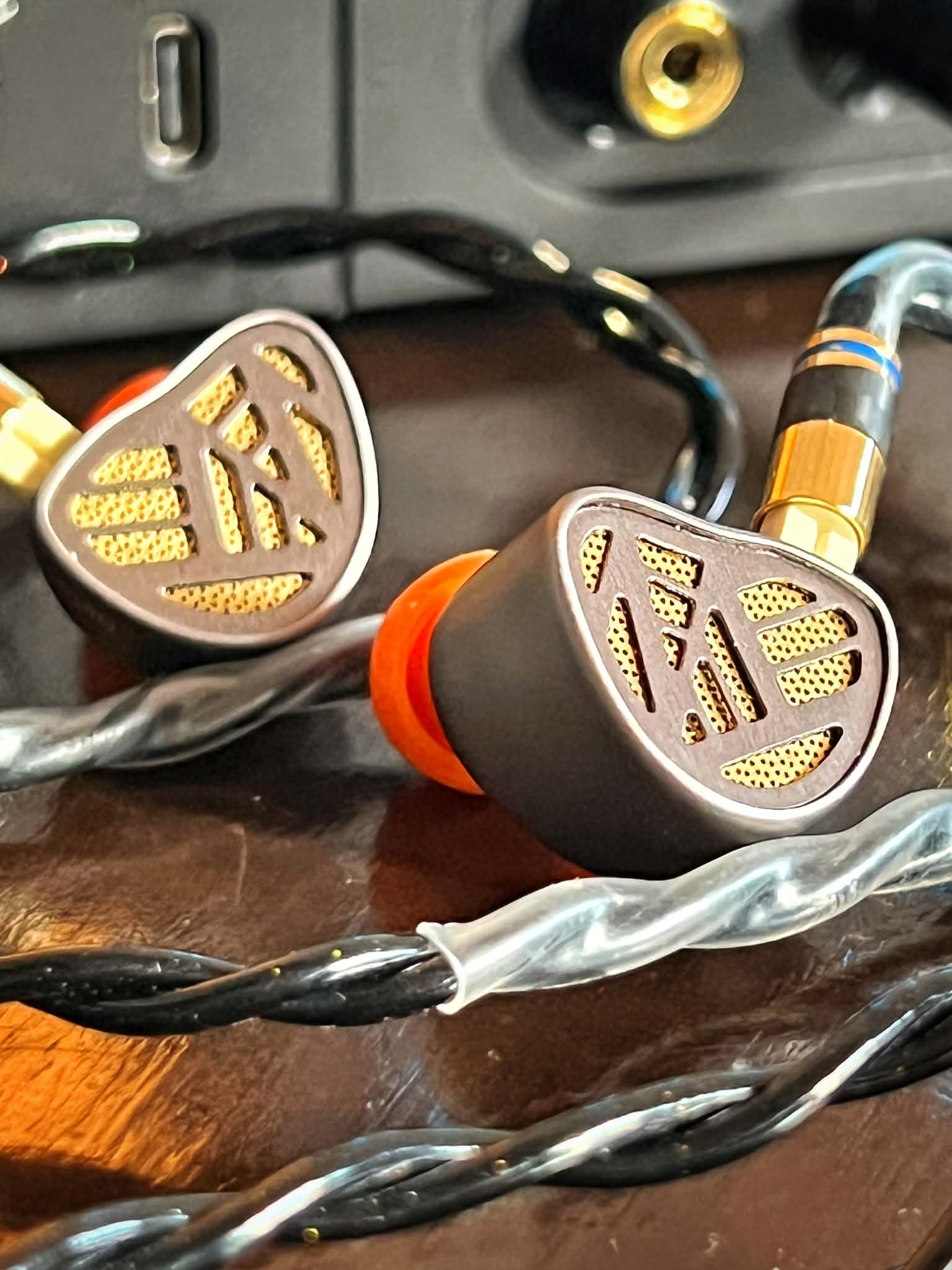
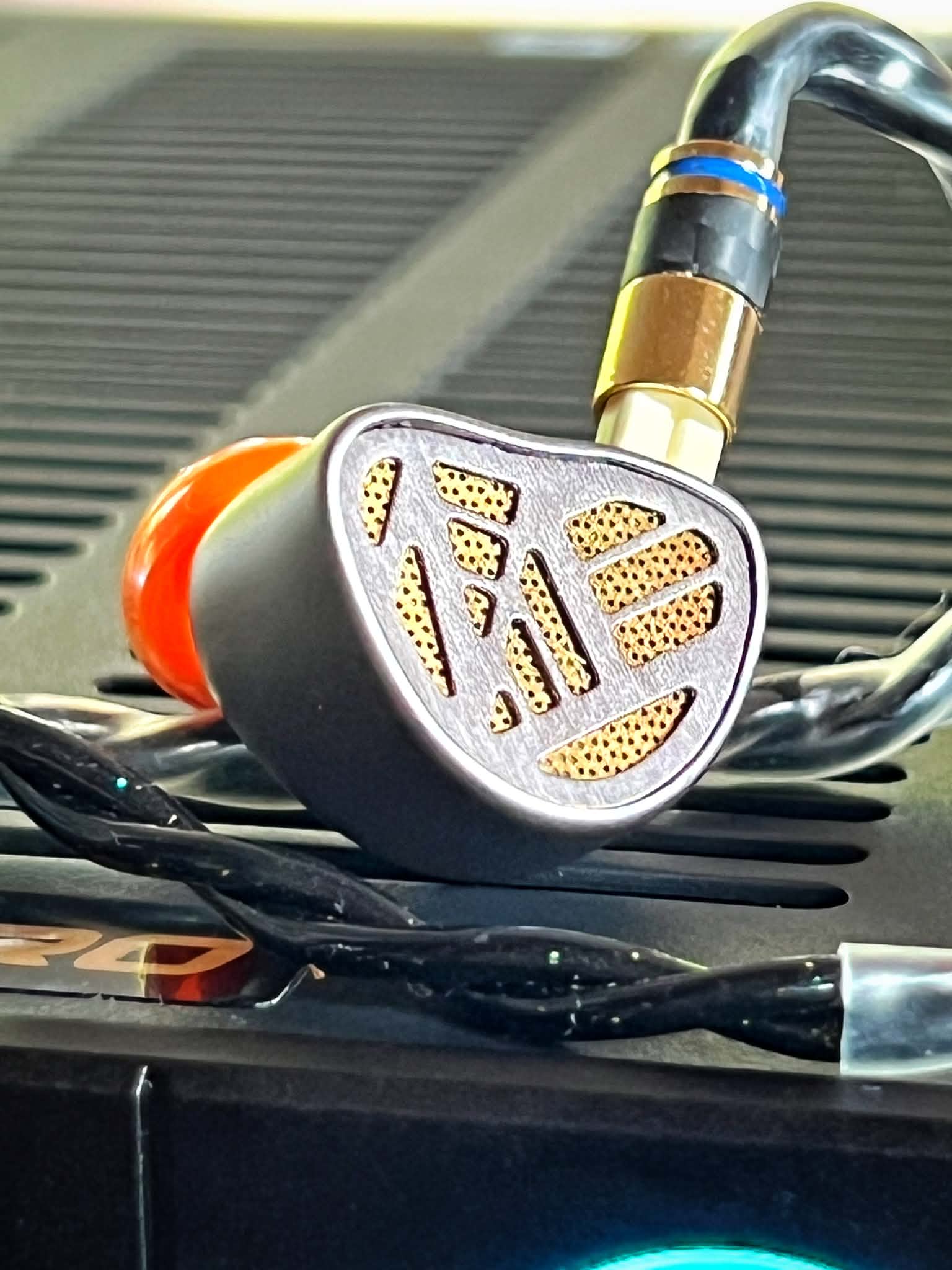
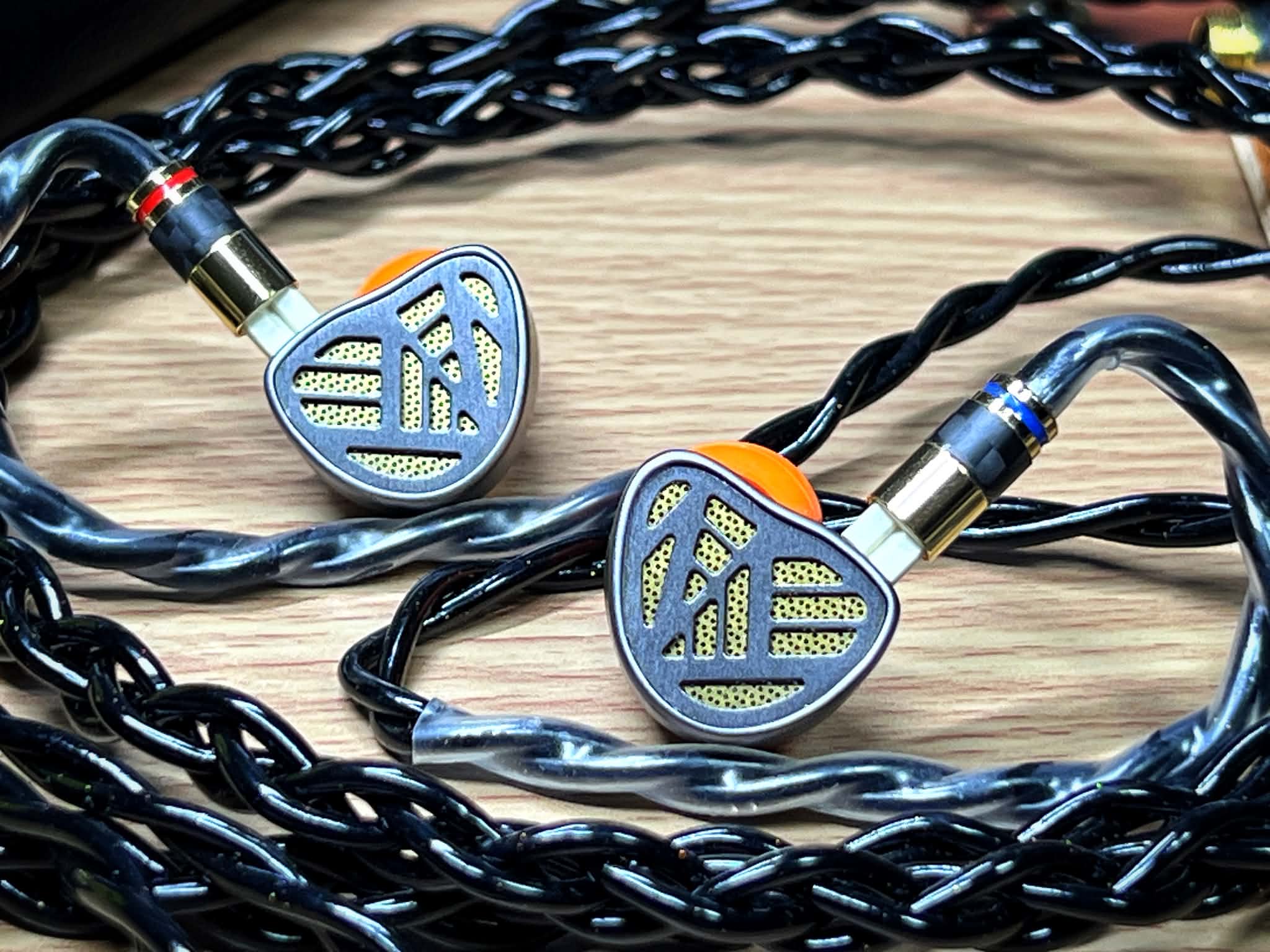
I wasn't expecting the UNIQ to have quite this much presence in person. Photos don't really do the shell justice. The combination of the matte silver body, brushed aluminum faceplate and gold accents gives it a very classy almost brutalist look. It's one of those designs that looks more expensive than it needs to.
The shell is CNC-machined from aluminum alloy, so it has that very solid, precise feel when you pick it up. There's no sense of a thin or hollow metal shell here. At the same time, Penon managed to keep the weight reasonable, so once it's actually in my ears, I don't feel like I'm carrying two little pieces of metal around all afternoon.
The faceplate is probably the most interesting part of the design.
That hollowed-out section immediately caught my attention because, at first glance, it almost looks like Penon has gone for an open-back IEM. You can see the mesh-like structure underneath, and it gives the faceplate a lot more visual depth than a conventional solid panel.
It's a really nice detail.
Looking closer, though, it appears to be more of a mesh-style treatment integrated into the faceplate rather than a conventional open acoustic chamber. So while it certainly gives the UNIQ an open-back kind of appearance, I wouldn't automatically assume you're getting the same acoustic behavior as an actual open-back design.
Either way, I like it.
It gives the UNIQ some personality without going overboard.
And the more I handle it, the more I appreciate how well everything is put together. The brushed aluminum has a nice texture, the edges are clean, and the matte silver-and-gold finish gives it that slightly understated luxury look. It's the kind of IEM that I find myself picking up from the desk even when I'm not actually listening to it.
More importantly, the shell shape works really well for me.
This is only my third Penon IEM, but one thing I've noticed with all three is how naturally Penon seems to get the ergonomics right. Their shells don't feel like they're forcing themselves into my ears. The UNIQ follows the contours of my ears nicely, and once I have the right tips installed, the fit is secure without putting excessive pressure on any particular part of my ear.
That's something I value more and more these days.
After going through well over 200 IEMs, I've learned that I can forgive a lot of things about an IEM, but a bad fit will eventually ruin the experience. You can have the best driver, the best tuning and the most impressive technical performance in the world, but if I'm constantly adjusting the shell or thinking about pressure points, I'm not going to enjoy listening to it.
The UNIQ doesn't give me that problem.
Once I put it in and get the seal right, it pretty much disappears.
And that's always a good start.
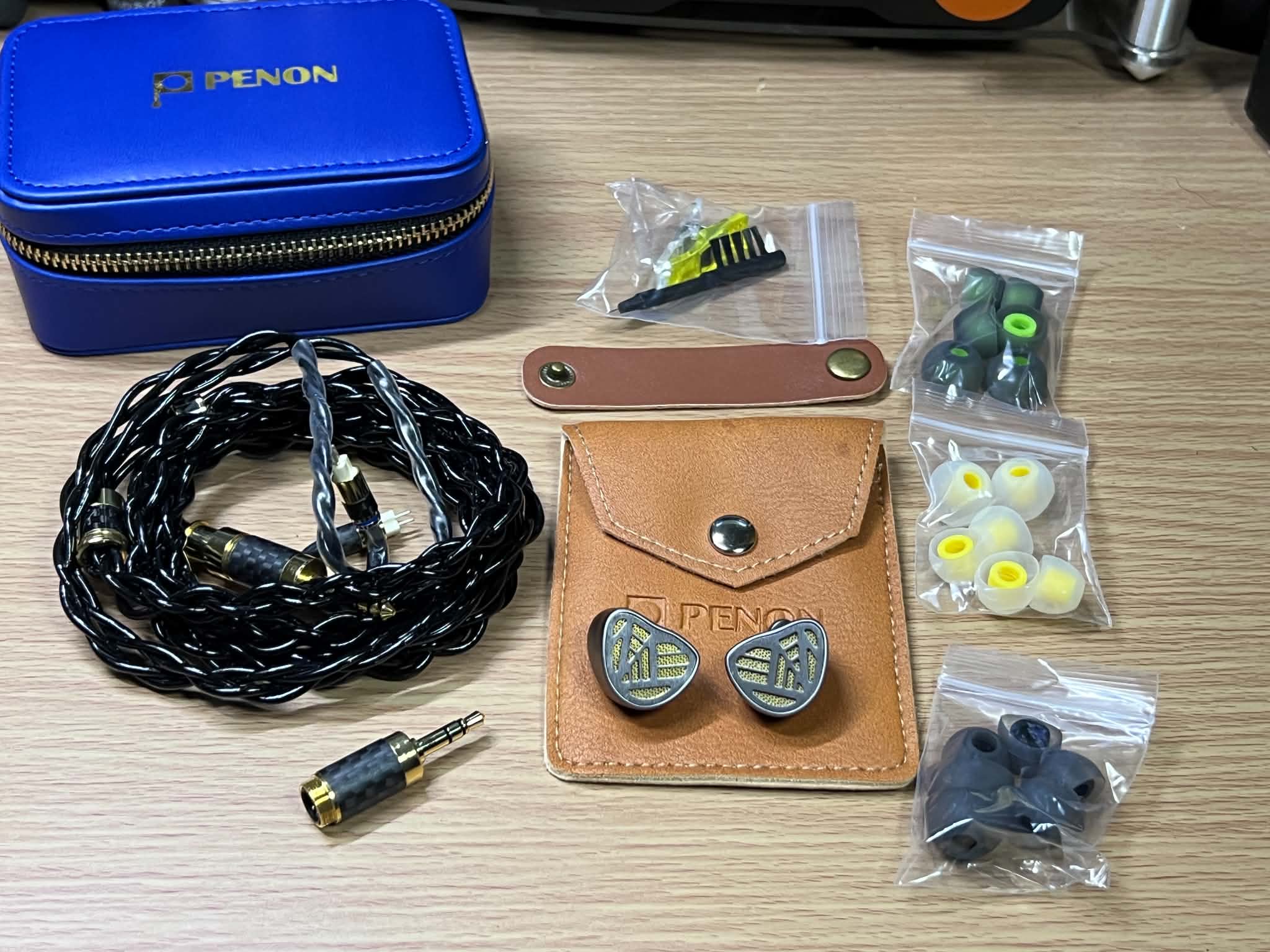
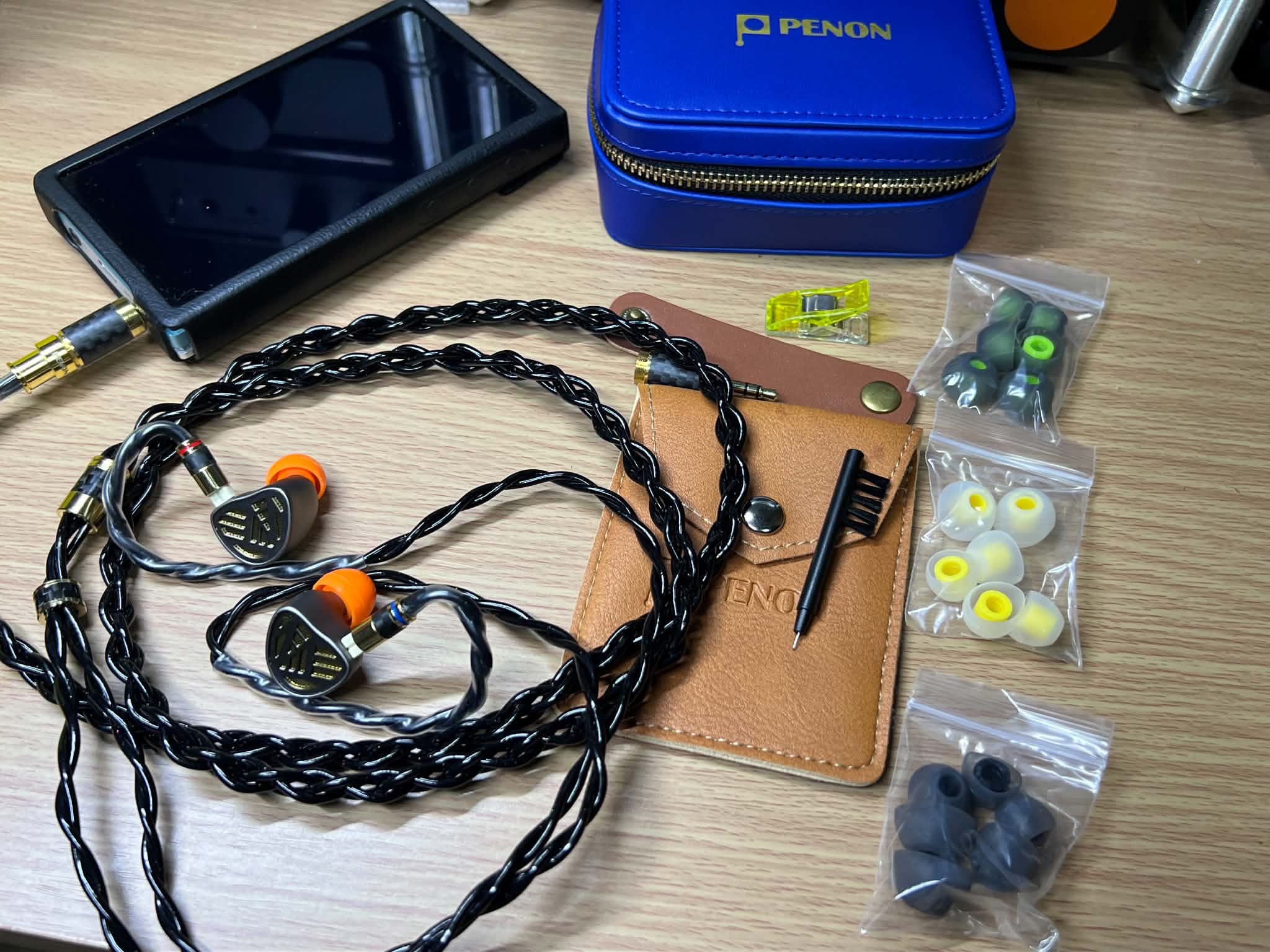
Whats inside the box? checkout my quick unboxing video and take a closer look at the Penon Uniq.
The Driver
The UNIQ uses a 10mm dual-magnet, dual-cavity carbon nanofilm dynamic driver.
I'm always interested when a manufacturer puts this much effort into a single dynamic driver because, for me, a really good DD still has something special about it. There's a physical quality to the way a good dynamic driver produces bass and handles note density that I find difficult to completely replicate with some more complicated multi-driver configurations.
The carbon nanofilm diaphragm is particularly interesting.
The idea behind using a nanofilm diaphragm is to achieve a combination of low mass and high rigidity. A lighter diaphragm can respond quickly to changes in the electrical signal, while greater rigidity helps the diaphragm maintain its shape as it moves.
In practical terms, that's important because you want the driver to start and stop cleanly.
You don't want the diaphragm continuing to flex unnecessarily after the signal has changed, particularly when you're dealing with fast bass lines, percussion or complex transient information.
The UNIQ also uses a dual-magnet motor system, which is designed to provide stronger and more controlled electromagnetic force over the diaphragm. The goal is better driver control, particularly during larger excursions.
Then you have the dual-cavity acoustic architecture.
The acoustic chamber behind and around a dynamic driver plays a much bigger role than people sometimes realize. Chamber volume, internal geometry, pressure and venting all affect how the driver behaves, especially down in the bass.
A carefully controlled cavity can help shape the driver's low-frequency response and manage resonances, while also allowing the diaphragm to operate against a more predictable acoustic load.
So although the UNIQ is "just" a single 10mm dynamic driver on paper, there's quite a bit going on in the actual driver system.
And I think that becomes apparent once you start listening.
The thing that immediately stood out to me wasn't simply that it has a lot of bass. It's that the bass has physicality while the driver still feels relatively quick.
That's a combination I really like.
You get the visceral quality that I associate with a good DD, but without the sense that the driver is struggling to keep up when the music becomes busy.
On paper, the UNIQ is rated at 23Ω impedance and 108dB sensitivity, so it's also extremely easy to drive.
I've never felt that I needed a powerful amplifier just to get the UNIQ moving. A decent dongle or DAP has more than enough power to get it to proper listening levels.
That doesn't mean source quality becomes irrelevant, though.
With a stronger source, I generally prefer the additional headroom. Not because the UNIQ needs huge amounts of power, but because I like having plenty of reserve available for dynamic peaks rather than running a source close to its limits.
It also gives me more flexibility when I'm switching between my different sources.
The stated frequency range is 10Hz to 40kHz, although, as always, I care much more about how the IEM actually behaves within the audible range than what the theoretical extension numbers look like on paper.
And thankfully, the UNIQ gives me plenty to talk about there.
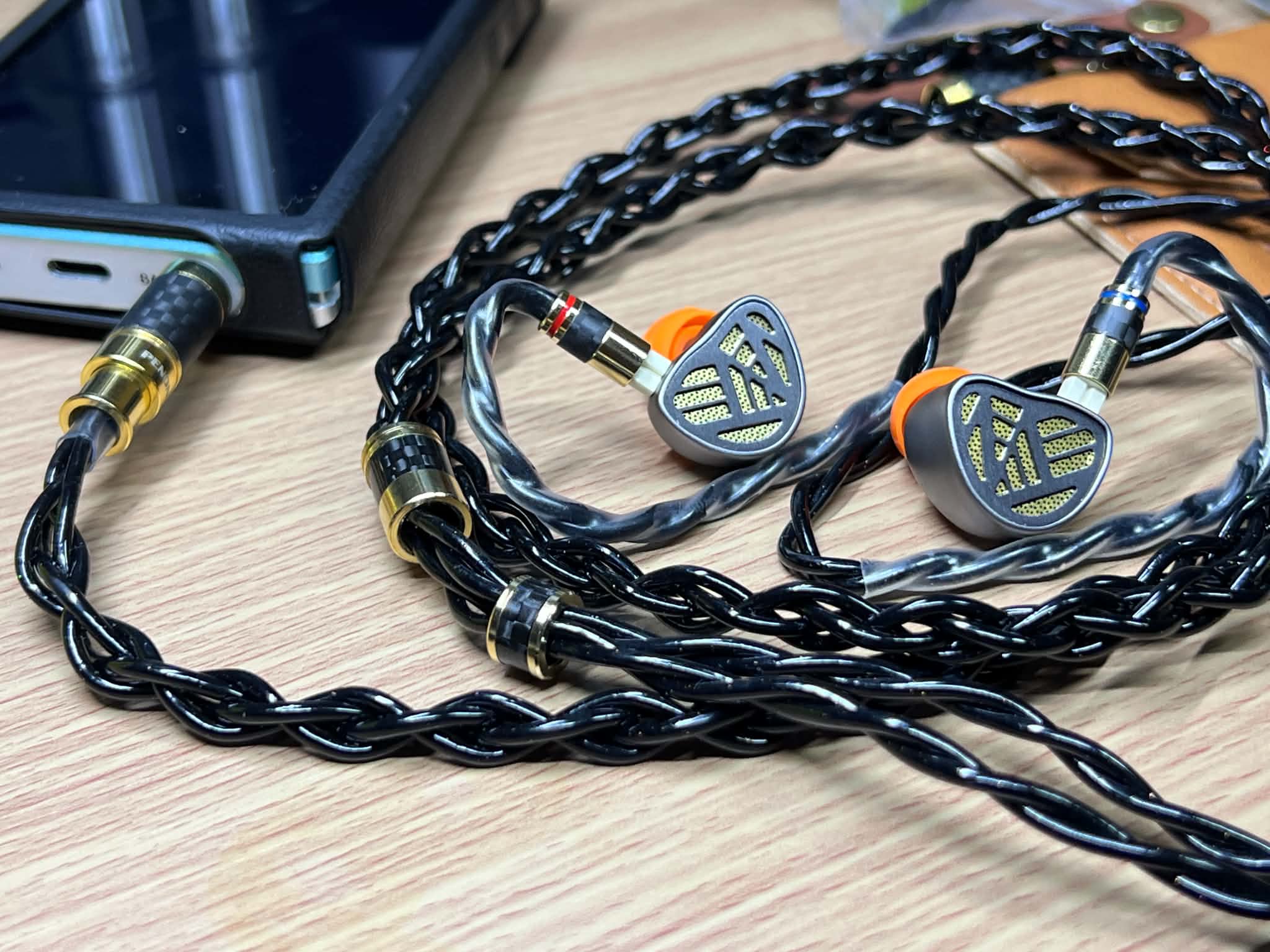
The Cable
The included cable is another pleasant surprise.
It uses four strands of 119-core single-crystal copper per strand, with silver plating, and is terminated with Penon's interchangeable 3.5mm and 4.4mm gold-plated copper plug system.
I really like the interchangeable plug arrangement because I regularly move between portable and desktop sources.
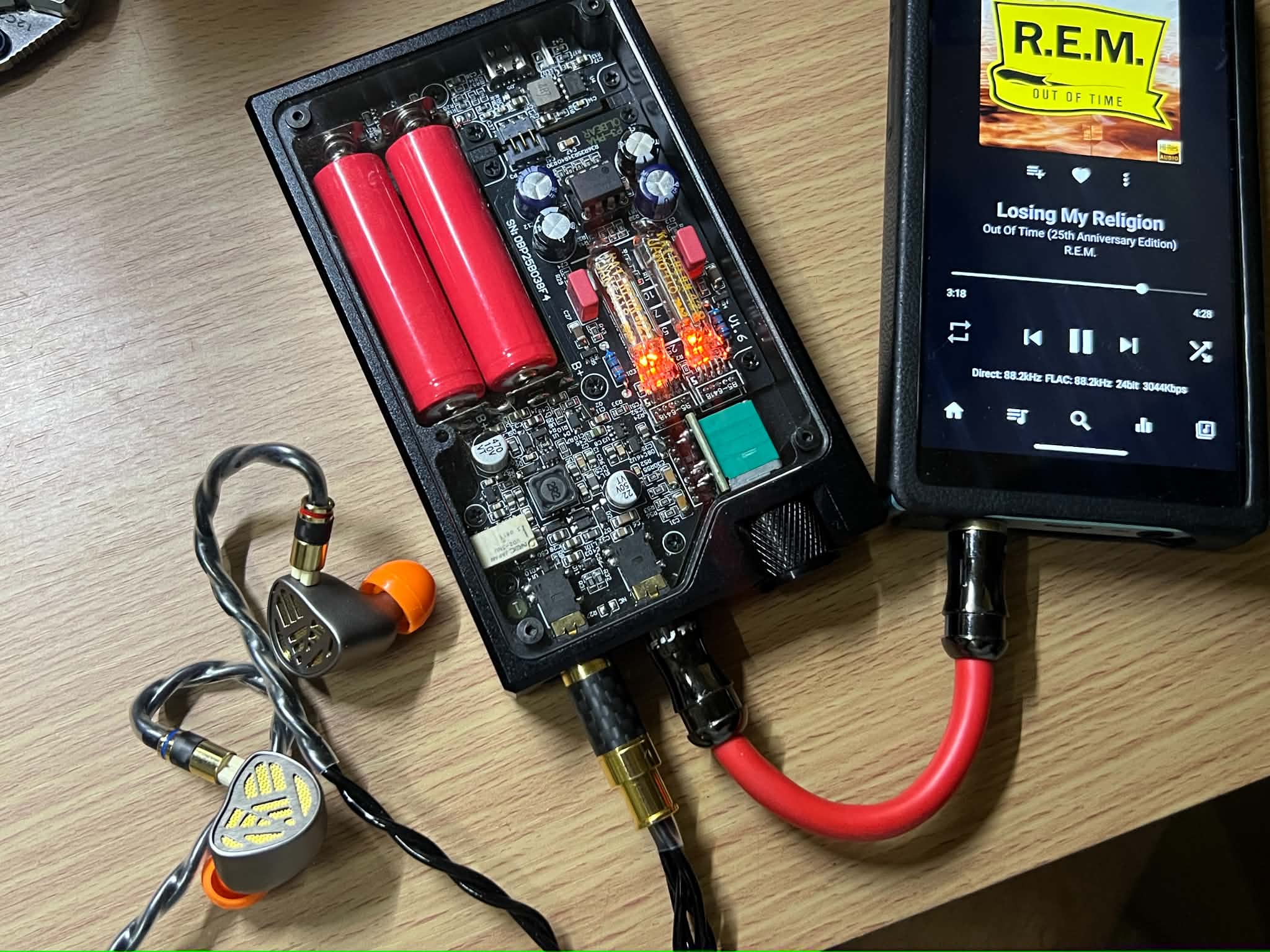
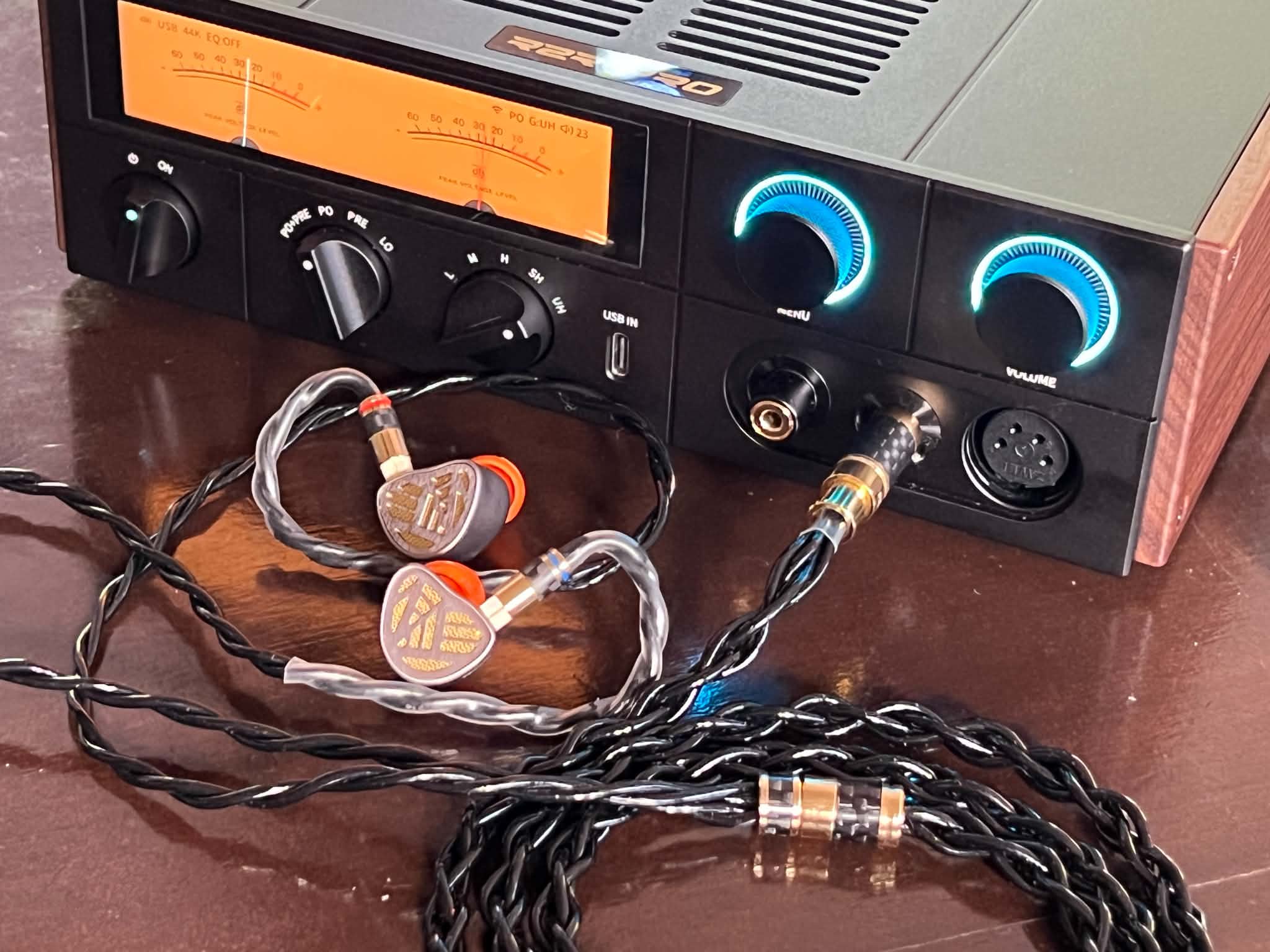
One minute I'm listening from a DAP, the next I'm sitting at the desk with a 4.4mm output. Being able to change the termination without replacing the entire cable is genuinely useful.
And this isn't one of those cables that immediately gives me the impression that Penon included it simply because they had to put something in the box.
It looks and feels like a proper part of the package.
The hardware is nicely finished, the cable has a good amount of flexibility, and it complements the UNIQ rather than looking like an afterthought.
The rest of the accessories are equally impressive.
Calling them "stock accessories" almost feels wrong.
Penon has always been one of those companies where I don't immediately feel the urge to start replacing everything that comes in the box.
That's actually becoming more important to me as I've accumulated more and more gear.
I don't want to spend the first week with a new IEM wondering which cable I need to buy, which tips I need to order, or what accessory I need to replace before I can properly enjoy it.
With the UNIQ, I can basically open the box, find a good-fitting set of tips, plug it into one of my sources and start listening.
First Impression
After getting the fit sorted, I sat down with the UNIQ and started going through some of my usual tracks.
At this point, I'm deliberately not trying to judge it based on the specification sheet.
I want to hear what the driver actually does.
The first thing that grabs me is the bass.
There's real physical movement down low. The subbass reaches deep, while the midbass has enough punch and density to give kick drums and bass lines some actual physical presence.
But what surprised me was how quickly it responds.
It doesn't have that sluggish, overly rounded character that some warm dynamic-driver IEMs can develop.
The bass hits, but it gets out of the way.
Then the mids come through with a nice amount of warmth and body, giving vocals and instruments a natural, slightly rich character.
There's enough presence to keep vocals engaging without pushing them too far forward.
And then the treble gives the whole thing some breathing room.
There is energy and sparkle up top, but it doesn't immediately turn into that aggressive, bright presentation that makes me reach for the volume knob.
Instead, the whole thing comes across as cohesive.
That was probably my first real clue that the UNIQ was going to be something I enjoyed.
Because the more I listened, the less I was thinking about the individual frequency ranges.
I was just listening to music.
And for me, that's where the interesting part of the UNIQ begins.
The hardware is impressive, the driver technology is interesting, and the accessories are genuinely good.
But none of that matters if I don't actually want to keep the thing in my ears.
After spending some serious time with the UNIQ, I can say that the hardware is only half the story.
The other half is what happens when the music starts.
The Tuning
For me, it is tuned around one simple idea: maximum musical enjoyment.
I've always been a music-first, gear-second kind of listener. After reviewing more than 200 IEMs, I've heard just about every type of tuning imaginable. I appreciate neutral and reference sets, highly technical IEMs, and sets that can pull tiny details out of a recording.
But when I'm done reviewing and simply want to sit down, grab a coffee, press play, and disappear into the music, I usually reach for something more musical.
For me, that means physical bass, some warmth and coloration through the mids, convincing timbre, good dynamics, and treble that has enough energy and sparkle to keep things interesting without becoming aggressive.
That is where the UNIQ really works for me.
My personal benchmark for a great IEM has never been how many micro-details it can throw at me. It's whether it can make me forget that I'm listening to a piece of gear.
I want the music to take over.
Those are the sessions where you suddenly realize you've been listening for two hours, the coffee is already cold, and you haven't checked the time once.
The UNIQ gives me that feeling.
Bass
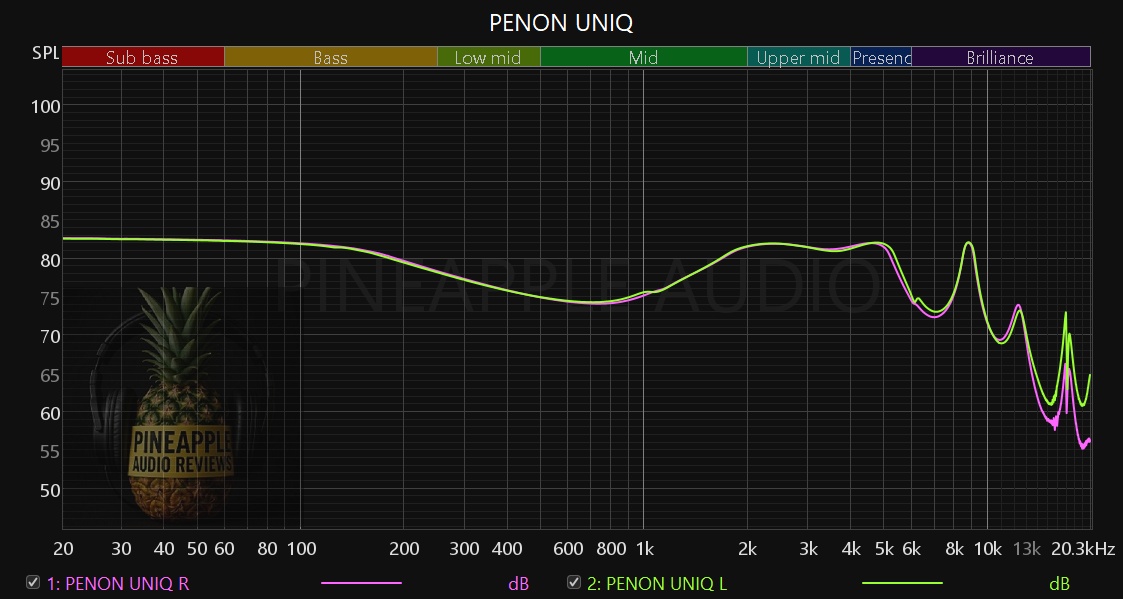
The bass is probably the first thing you’ll notice with the UNIQ, and honestly, it is one of the main reasons I kept coming back to it.
This is definitely a fun bass tuning, but importantly, it isn't simply a case of Penon adding a big boost down low and calling it a day.
There is quite a bit more going on here. The UNIQ has a 10mm dual-magnet, dual-cavity carbon nanofilm dynamic driver, and you can hear the benefits of that driver architecture in the way the low end behaves. It has weight, physicality and extension, but there is also a surprisingly good level of control for a single dynamic driver.
The first thing that caught my attention was the subbass.
The UNIQ reaches genuinely deep, and when a recording has information down there, you can hear and, depending on the track and volume, almost physically feel that low-frequency energy. It isn't just a midbass-heavy IEM giving you the impression of bass because everything around 100Hz is elevated. There is actual subbass extension underneath it.
Put on a track with a deep synthesized bass line or one of those electronic recordings with sustained low-frequency content and the UNIQ digs down and gives you that low-end foundation. The rumble is noticeable, but it doesn't feel like the driver is struggling to reproduce it.
That distinction matters to me.
I like bass that has physicality, but I don't enjoy bass that simply turns everything into a constant low-frequency cloud. The UNIQ manages to keep the subbass relatively composed. There is weight and warmth, but the bass doesn't become loose or pillowy.
Then you have the midbass, which is where the UNIQ really starts having fun.
There is a healthy amount of midbass punch that gives kick drums a proper sense of impact. Bass guitars have body and texture, and electronic kick drums have that satisfying physical hit rather than sounding like a soft thump. I particularly like the relationship between the subbass and midbass here because they don't completely blur into each other.
The subbass gives you the depth and rumble, while the midbass supplies the punch and physical impact.
That separation between the two is one of the reasons the UNIQ's bass sounds much more controlled than its overall bass quantity might suggest.
With deep house and techno, this thing is an absolute blast. Tracks built around a repeating kick and bass line have the kind of physical drive that makes it very easy to get carried away. The kick has a defined initial impact, followed by enough low-frequency body to make the bass line feel substantial. On older house recordings, where the bass is often relatively simple but rhythmically important, the UNIQ gives the low end enough presence to make the entire groove feel more alive.
It also works extremely well with EDM.
Those deep synthesized drops have real weight behind them, and the driver can move enough air to give those moments a physical character that I personally enjoy. The UNIQ doesn't just reproduce the note. It gives you some sense of the pressure and movement behind the note.
Hip-hop is another obvious match.
808s have depth, kick drums have weight, and bass lines have enough texture that they don't simply turn into one continuous low-frequency thump. Put on something from N.W.A., 2Pac or Cypress Hill and there is plenty of low-end authority, but the bass still has enough definition for you to follow the rhythm.
What surprised me most, though, is how quickly the bass responds.
This is still a single dynamic driver with a warm and physical presentation, so I wasn't expecting it to behave like an ultra-clean, tightly damped reference monitor. But it doesn't have that slow, overly relaxed quality that some bass-heavy dynamic-driver IEMs can develop.
The attack is reasonably quick, and more importantly, the decay doesn't hang around longer than it needs to.
That helps quite a bit when the music gets busy.
On dense electronic tracks, for example, you can have a kick drum, synthesized bass, percussion and other low-frequency effects all happening at the same time. A slower driver can allow those elements to smear together, making the bass sound impressive at first but eventually tiring because everything starts occupying the same space.
The UNIQ avoids most of that.
There is still some natural warmth and fullness around the low end, which is part of its character, but individual bass notes remain recognizable. You get the impact of the kick, the sustained weight of the bass line and the deeper subbass information underneath without everything collapsing into one big blob.
I also appreciate that the bass doesn't constantly fight the midrange for attention.
The UNIQ is clearly bass-forward compared with a neutral or reference-tuned IEM, but the elevation feels intentional. It gives the presentation some warmth and physicality without completely swallowing vocals or instruments sitting above it.
This is also where I think the carbon nanofilm diaphragm makes sense from a technical perspective. A diaphragm with a good combination of low mass and rigidity can respond quickly to changes in the electrical signal while resisting unwanted flexing. Of course, the final sound isn't determined by the diaphragm material alone. The motor strength, suspension, acoustic chamber, venting and overall tuning all contribute. But with the UNIQ, the end result is a dynamic driver that can deliver a fairly substantial amount of bass without sounding sluggish.
And that's probably the best way I can describe the UNIQ's low end: big, physical and fun, but surprisingly disciplined.
It isn't bass for the sake of showing off.
It is bass that makes the music more physical.
I've had the UNIQ on while listening to electronic tracks and caught myself reaching for the volume knob more than once. Usually that's a pretty good sign for me. When the bass has that combination of extension, punch and texture, I don't find myself analyzing it anymore. I'm just listening to the music and enjoying the groove.
And that's exactly what I want from a fun single-DD IEM.
Give me the subbass rumble, give me the kick, give me that little bit of chesty physicality, but keep the driver fast enough that the whole thing still feels like music rather than a bass demonstration.
The UNIQ gets that balance surprisingly well.
Midrange
The midrange follows the same musical philosophy as the bass. There is warmth and body here, but the UNIQ doesn't cross over into sounding excessively thick, dark, or overly colored.
For me, this is one of the most important parts of the UNIQ's tuning because it gives the IEM its personality.
The first thing I noticed when I started listening to vocals was the amount of natural body. Voices don't sound thin or overly polished. There is some weight behind them, particularly through the lower mids, which gives male vocals that chesty quality that makes them feel more physical and believable.
Put on a good recording of a male vocalist and you can hear the texture in the voice rather than just the fundamental notes. There is that slight roughness around the edges of the vocal, the chest resonance, and the little variations in intensity that make a voice sound like an actual person rather than a perfectly clean recording.
At the same time, the UNIQ doesn't overdo the warmth.
That's something I appreciate because it would have been very easy for a bass-forward single DD like this to push too much energy into the lower midrange and end up sounding congested. Thankfully, that isn't what I'm hearing. There is enough separation between the bass and the mids that the added low-end warmth gives the midrange some richness rather than simply making everything thicker.
Guitars benefit from this as well.
Electric guitars have enough density and texture to sound convincing, while acoustic guitars retain that woody character and the subtle sense of string vibration. Plucked notes have a satisfying amount of body, but there is still enough leading-edge definition to tell when a note is being picked, struck or allowed to decay naturally.
This is where I think the UNIQ's dynamic-driver character works particularly well.
There is a nice combination of physicality and speed. Notes have substance, but they don't feel excessively rounded or softened. The driver gives instruments some physical weight while still maintaining enough transient definition to keep the presentation lively.
That balance is not always easy to get.
Some warm-tuned dynamic-driver IEMs can make everything sound pleasant but slightly blurred. Others go in the opposite direction and sharpen the upper mids and presence region to create the impression of detail, but the result can become aggressive after a while.
The UNIQ sits somewhere in between those two approaches.
Vocals are positioned at a comfortable distance from me. They aren't shoved right up against my face, but they also don't feel recessed behind the instruments. I would describe the presentation as intimate enough to maintain emotional connection while still giving the vocals some breathing room.
That becomes especially noticeable with recordings that have layered instrumentation.
Instead of having the vocalist sitting on top of the mix, the voice feels like another element within the arrangement. I can follow the vocal clearly while still being aware of the instruments around it. There is enough space between the different elements that the presentation doesn't feel cramped, even with the UNIQ's warmer overall tonality.
Male vocals are probably where I hear the warmth most clearly.
There is enough lower-midrange energy to give deeper voices proper chest and authority. Baritones have that rich, resonant quality I like, and voices with a naturally rougher texture retain some of that character instead of being cleaned up into something overly smooth.
But female vocals don't get lost underneath that warmth.
There is enough presence through the upper-midrange to bring female vocals forward naturally. Higher-pitched voices have articulation and clarity, and there is enough energy around the presence region to give vocals their shape without turning them shouty.
This is an important distinction for me because I am fairly sensitive to upper-midrange glare. I don't mind an IEM having presence and bite. In fact, I want some of it because otherwise vocals and guitars can sound flat. What I don't want is that constant sensation of upper-midrange energy being pushed directly into my ears.
The UNIQ avoids that.
There is enough upper-midrange presence to give vocals articulation, but it remains connected to the warmer lower midrange. The transition feels fairly natural, so the vocal doesn't suddenly change character when it moves into a higher register.
You also get a nice sense of texture.
When listening to acoustic recordings, I can hear the difference between a string being plucked and the resonance that follows it. Piano notes have enough body in the lower registers while retaining enough attack in the upper harmonics. Percussion has that little bit of initial snap before the note settles into its decay.
These aren't things I have to actively hunt for.
They're simply there when I pay attention.
And that brings me to one of the things I appreciate most about the UNIQ's midrange: it doesn't try to manufacture detail.
There are IEMs that create an immediate impression of resolution by pushing the upper mids and lower treble forward. You put them on and suddenly every breath, lip movement, string scrape and tiny recording artifact jumps out at you.
That can sound impressive for the first few minutes.
But after a while, I'm no longer listening to the music. I'm listening to the IEM.
The UNIQ takes a different approach.
Its detail retrieval comes more from the combination of driver control, transient response, separation and overall resolution rather than simply boosting the frequencies where detail is most noticeable. Small recording information is still there. I can hear finger movement on strings, subtle vocal breaths, room ambience, reverberation tails and background instruments when I focus on them.
But they stay in their proper place.
That's a big deal for me.
I don't need an IEM to constantly remind me how resolving it is. If I'm listening to a jazz recording, I want to hear the room around the musicians, the texture of the instruments and the interaction between them. If I'm listening to a vocal track, I want to get lost in the performance rather than analyzing every little artifact around the singer.
The UNIQ does a good job of keeping those details integrated into the presentation.
And because the midrange isn't overly dry or clinical, there is a nice sense of continuity between the bass, mids and treble. Nothing sounds like it was tuned in isolation. The warmth from the low end carries naturally into the lower mids, the upper mids provide enough articulation and presence, and the treble takes over without making the presentation suddenly sound brighter or more analytical.
That cohesion is one of the reasons the UNIQ sounds so easy to listen to for long periods.
I've spent quite a few sessions with it where I wasn't thinking about the midrange at all. I was just listening. Then a particular vocal, guitar passage or acoustic recording would make me stop and realize just how much texture the UNIQ was actually giving me.
For me, that's a much more meaningful kind of detail.
The midrange doesn't shout for attention. It simply gives the music enough body, texture, clarity and space to feel natural.
And that's really the character of the UNIQ in a nutshell: musical first, technical when you need it.
It doesn't sacrifice resolution to achieve its warmer and more engaging tuning, but it also doesn't sacrifice musicality just to prove that it can resolve tiny details.
That's exactly the balance I personally enjoy.
Treble
The treble is energetic, extended and nicely airy.
There is enough upper-frequency information to prevent the UNIQ from sounding overly warm or congested, particularly considering the amount of bass it carries.
Cymbals have good shimmer, percussion has definition, and there is enough upper-end extension to give the presentation some air.
What I like most is the balance between energy and smoothness.
The UNIQ doesn't sound like it's trying to impress you by throwing treble directly at your face.
There is sparkle, but it remains controlled.
For someone like me who is sensitive to aggressive upper-mid and treble energy, this matters quite a bit. I can listen to the UNIQ for extended periods without constantly waiting for that one badly recorded vocal peak or cymbal hit to punish me.
Sibilance is also reasonably controlled.
Obviously, recordings themselves still matter.
Feed it a poorly mastered track and the UNIQ isn't going to magically fix it. But with well-recorded material, the treble has enough refinement that I don't feel the need to reach for the volume knob because the upper frequencies are becoming irritating.
It gives the tuning the energy it needs without sacrificing long-session comfort.
Technicalities
Soundstage
The UNIQ has a surprisingly spacious presentation considering its overall warm and musical character.
I wouldn't call the stage artificially huge or exaggerated, but there is a good sense of width and, more importantly for me, enough depth to prevent everything from sounding compressed into a single horizontal plane.
One track I keep coming back to for this is D'Sound's “Smooth Escape.” The production has plenty going on, with vocals, percussion, bass and electronic elements occupying different parts of the mix. With the UNIQ, the presentation doesn't feel cramped even with the added low-end weight. There is enough lateral space for the different elements to spread out, while the vocals remain anchored naturally in the center.
The treble contributes quite a bit to this impression. Because the upper frequencies have good extension and aren't overly rolled off, there is enough high-frequency information to give the presentation some openness. The bass provides the physical foundation, while the treble keeps the upper part of the stage breathing.
I also noticed this with jazz recordings.
On Dave Brubeck's “Take Five,” the UNIQ gives the drum kit enough room to occupy its own space while the saxophone remains clearly positioned within the arrangement. The presentation isn't trying to make the quartet sound like they're playing in a cathedral. Instead, there is enough depth and air to preserve the feeling of a real recording space.
That's the kind of soundstage I personally prefer.
A huge stage isn't automatically a good stage. If everything is simply pushed farther away, you end up with a big presentation without much realism.
The UNIQ gives me enough space to breathe while maintaining the intimacy and engagement that fit its tuning.
Imaging
Imaging is another area where the UNIQ performs better than I initially expected.
The positioning of individual sounds within the stage is quite precise. I can generally follow where instruments are placed without having to concentrate too hard.
“Old Devil Moon” is one of the tracks I like using for this because there is enough information in the vocal, accompanying instruments and percussion to get a good sense of positioning and depth.
With the UNIQ, the vocalist stays firmly anchored while the accompanying instruments occupy their own positions around the vocal. There is enough separation between them that I can mentally picture the arrangement rather than simply hearing a wall of sound.
The same thing happens with electronic music.
On a good Joey Negro or Frankie Knuckles house track, there are often synthesizers, percussion and effects moving around the stereo field. The UNIQ does a good job following those positional cues. Elements don't just appear vaguely to the left or right. There is enough precision to make the movement convincing.
What I like is that the imaging doesn't feel artificially sharpened.
Some highly technical IEMs create extremely precise images by making everything sound razor-edged and hyper-separated. That's impressive during a short listening session, but sometimes it doesn't sound particularly natural.
The UNIQ has a slightly softer and more organic presentation around the edges because of its musical tuning, but the actual placement remains accurate.
For me, that's a better compromise.
I can still visualize the arrangement without feeling like the music has been dissected.
Separation and Layering
This is where I expected the UNIQ to give up a little ground because of its bass-forward tuning.
Surprisingly, it doesn't.
Take something like Carl Cox or Sven Väth, where there can be a lot of low-frequency energy, layered synthesizers, percussion and atmospheric effects happening simultaneously. The UNIQ maintains enough separation that I can still follow the individual elements.
The kick has its own identity. The bass line remains distinguishable underneath it. Synth layers sit above the low end, while percussion and effects occupy the upper portion of the mix.
The bass has weight, but it doesn't completely wash over everything else.
That is important because a warm tuning can easily become congested when the arrangement gets complicated.
I hear the same thing with rock.
On Concrete Blonde's “Joey,” the UNIQ gives the bass and drums plenty of body, but the guitar and vocals don't disappear behind them. The slightly warmer presentation actually works well with the recording because it gives the instruments some density while maintaining enough treble energy for the guitars and percussion to remain articulate.
Layering is also quite good.
Different elements have different positions in the depth of the stage instead of everything sitting at the same distance from me. This is particularly enjoyable with jazz recordings where there is a clear interaction between instruments.
I can listen to the drummer, bass and horns individually if I want to, but they still sound like musicians playing together.
That's the kind of technical performance I value.
I'm not looking for maximum separation at the expense of cohesion. I want enough separation to understand the arrangement while still feeling like I'm listening to a performance.
Detail Retrieval and Resolution
The UNIQ isn't tuned as a microscope, and honestly, I'm glad it isn't.
Its resolution is good enough that there is plenty of information available when I pay attention, but it doesn't constantly shove that information into my face.
This becomes obvious with recordings I know very well.
With “Smooth Escape,” for example, I can pick up the small vocal nuances, background elements and subtle ambience when I deliberately listen for them. But they don't suddenly jump forward and become the main attraction.
The same goes for “Old Devil Moon.”
There is enough resolution to hear vocal texture, subtle breaths, the attack of instruments and the decay around notes. The UNIQ doesn't hide those details behind its warmth.
But it also doesn't exaggerate them.
This is something I've become increasingly conscious of after reviewing more than 200 IEMs.
There is a difference between hearing detail and having detail presented aggressively.
The UNIQ does the former.
I can hear finger movement on strings, subtle vocal breaths, room ambience, reverberation tails and background instruments when I focus on them. But those details remain integrated into the music.
If I'm listening casually, they sit in the background where they belong.
If I deliberately focus on them, they're still there.
That's a much more natural presentation to my ears.
Timbre
Timbre is one of the areas where I really enjoy the UNIQ's single dynamic-driver character.
There is a natural continuity to notes that I find difficult to replicate with some highly segmented multi-driver designs.
Chet Baker is particularly useful here because his recordings depend so much on the texture and character of the trumpet and vocals. With the UNIQ, the trumpet has enough body and bite without becoming metallic or overly sharp, while the vocal retains that intimate, slightly textured character.
Piano recordings also benefit from the UNIQ's balance.
The lower notes have body, while the higher notes retain enough attack and harmonic information to avoid sounding overly soft. Acoustic guitars have a similar quality. I can hear the initial string attack followed by the body and resonance of the instrument.
It isn't perfectly neutral.
There is clearly warmth and bass emphasis, and that coloration is part of what makes the UNIQ enjoyable.
But the coloration doesn't completely change the character of the instruments.
That's important to me.
I've always preferred an IEM that is slightly colored but natural over something technically "correct" that leaves me emotionally disconnected from the music.
Dynamics
This is one of the reasons I enjoy the UNIQ so much with electronic music.
The dynamic performance has a good sense of contrast. Quiet sections can pull back naturally, while louder sections have enough impact to make the transition feel meaningful.
On deadmau5, for example, when a track builds gradually and the full bass line and kick finally come back in, the UNIQ gives that transition some physical drama.
The kick doesn't simply become louder.
It hits.
The bass has actual physical weight behind it, and the driver responds quickly enough that the impact doesn't turn into a slow, lingering boom.
I hear something similar with N.W.A., 2Pac and Cypress Hill.
808s and kick drums have the weight I want, but the bass line doesn't simply become an indistinct rumble underneath the vocals. There is enough transient definition to follow the rhythm and enough midbass punch to give the drums their physical character.
This is one of those things that graphs don't communicate particularly well.
You can look at a frequency response and see elevated bass, but you can't really see how satisfying the driver feels when that kick lands.
And that physical quality is a big part of the UNIQ's appeal to me.
Treble and Overall Balance
The treble also plays an important role in keeping all of this from becoming too warm.
With the amount of bass the UNIQ produces, it needs enough upper-frequency energy to maintain clarity.
On D'Sound's “Smooth Escape,” percussion remains crisp enough to keep the rhythm alive, while the vocals retain their articulation.
With jazz, cymbals have enough shimmer and decay to sound natural rather than being reduced to a dull splash in the background.
And with electronic music, the treble provides the sparkle that keeps synthesized effects and percussion engaging.
This is especially important for me because I'm fairly sensitive to aggressive upper-midrange and treble energy.
I don't mind sparkle. I actually want it.
What I don't want is an IEM that constantly reminds me that it has a treble peak.
The UNIQ doesn't do that.
I can listen to it for hours without constantly waiting for the next cymbal strike or vocal peak to become irritating.
That's probably one of the biggest reasons I've been able to use the UNIQ for such long sessions.
Driving the UNIQ
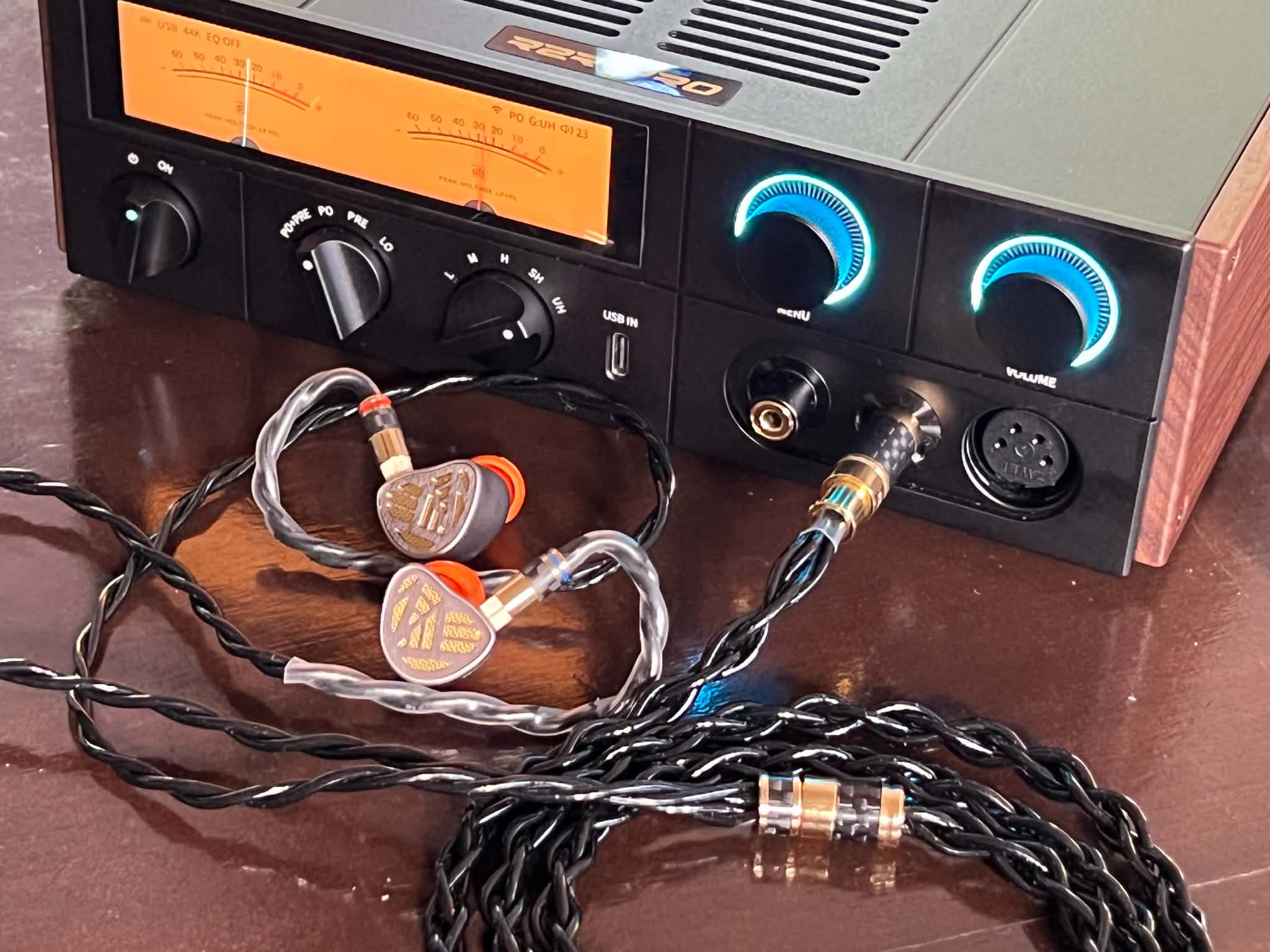
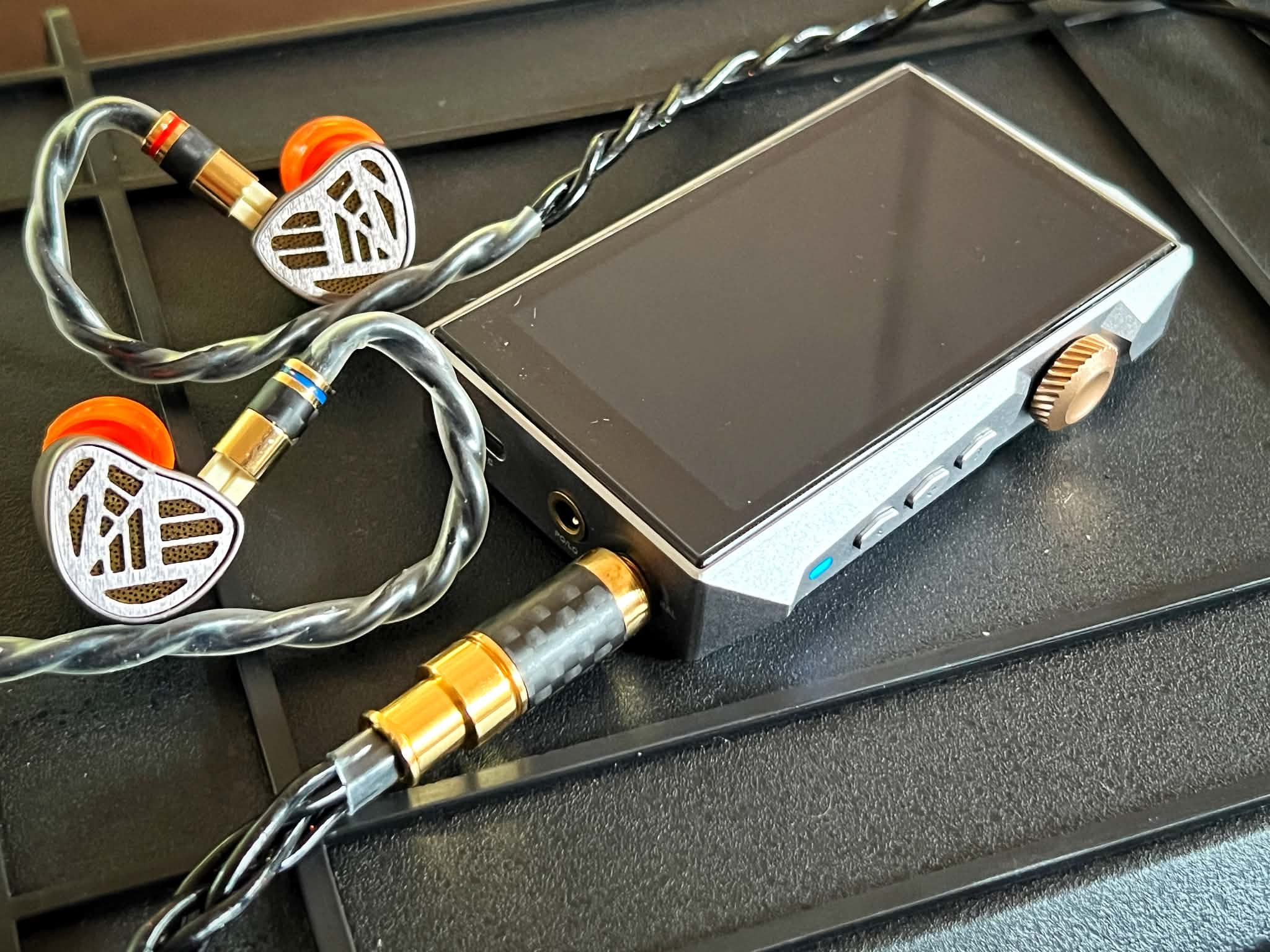
At 23Ω and 108dB sensitivity, the UNIQ is extremely easy to drive.
A decent dongle or DAP has no problem getting it loud.
I've used it from portable sources as well as more powerful desktop gear, and the UNIQ doesn't require a monster amplifier to sound good.
That said, I still prefer having some headroom.
With a stronger source, I can run the amplifier at a more comfortable level, and I tend to appreciate the additional control and dynamic headroom when listening to more demanding recordings.
The interesting thing is that because the UNIQ already has a physical and dynamic character, source matching can subtly change how that character comes across.
A warmer source can make the presentation even more lush and relaxed, while a cleaner source can give the bass a little more definition and make the overall presentation feel slightly more open.
But you don't need an expensive desktop stack to enjoy it.
That's worth emphasizing.
The UNIQ is easy enough to use straight from a portable setup, which makes its combination of physical bass, musical mids and extended treble particularly attractive as an everyday IEM.
What I Keep Coming Back To
After spending quite a bit of time with the UNIQ, I think its biggest strength is not any single technical characteristic.
It's how everything works together.
The bass gives me the physicality I want. The midrange gives vocals and instruments body and texture. The treble adds enough sparkle and air to keep everything open. Imaging is precise, separation is good enough for complicated arrangements, and the dynamic response gives the music some physical movement.
But none of those things dominates the presentation.
They work together.
I've had “Smooth Escape,” “Old Devil Moon,” “Joey,” jazz recordings, old-school hip-hop and electronic tracks playing through the UNIQ, and I keep getting the same reaction.
I stop reviewing.
I just listen.
And that is actually unusual for me.
After reviewing more than 200 IEMs, I tend to switch sets constantly. I'll listen for five minutes, change tips, change sources, grab another IEM, go back to the first one, check a particular track, look at the graph, and repeat the whole process.
With the UNIQ, I've caught myself doing something completely different.
I put it in, press play, and then realize an hour has passed.
That's probably the most honest compliment I can give it.
The UNIQ isn't trying to be the most analytical IEM on my desk. It isn't trying to turn every recording into a technical demonstration.
It simply makes music enjoyable.
And for me, that's ultimately the point.
Sometimes I want to hear every microscopic detail in a recording. Sometimes I want a reference set that tells me exactly what's happening.
But sometimes I just want the kick drum to hit, the vocals to have some soul, the guitars to sound alive, the cymbals to shimmer, and the whole thing to come together naturally.
That's where the Penon UNIQ makes the most sense to me.
It's technical enough to keep me interested, but musical enough to make me forget I'm reviewing an IEM.
And honestly, after spending days with it, that's exactly why it has become one of my favorite single-DD sets in my current rotation.
Final Thoughts
The Penon UNIQ has quickly become my current favorite single-DD IEM.
And honestly, the biggest compliment I can give it is how much I've actually been using it.
I've had it in my rotation for about a week, and there have been days when I've simply left the UNIQ connected and listened to it for hours.
That's unusual for me.
I'm the kind of person who can change IEMs three times in one afternoon because I'm constantly curious about how another set handles a particular recording.
With the UNIQ, I haven't had that urge as much.
I just keep listening.
And I think that says more about this IEM than any measurement or technical specification could.
The UNIQ isn't trying to be the most analytical IEM I've heard. It's not trying to turn every recording into a microscope session, and it's not chasing that hyper-clean, clinical presentation where every tiny detail becomes the main attraction.
Instead, it takes what I personally enjoy about a dynamic driver and pushes it in a very musical direction.
You get physical bass with good control, warm and natural mids, convincing timbre, energetic but smooth treble, good spatial presentation, precise imaging and strong dynamic contrast.
More importantly, all of those elements work together.
Nothing feels like it's competing for attention.
And that's probably my favorite thing about the UNIQ.
After reviewing more than 200 IEMs, I've learned that technical performance isn't always what makes me want to keep an IEM around.
Sometimes it's the opposite.
Sometimes the IEM that stays connected to my source isn't the one with the most impressive technical specification sheet.
It's the one that makes me want to listen to another album.
Then another.
Then suddenly I realize it's 2 AM and I'm still sitting here with a cup of coffee that went cold an hour ago.
The UNIQ does that for me.
Sometimes you just want to press play, grab a coffee, lean back, and disappear into the music for a while.
For me, that's exactly what the Penon UNIQ is about.
And honestly, that's a pretty damn good reason to listen.
Link: https://penonaudio.com/PENON-UNIQ.html
Comments
Post a Comment