Pros:
• Warm, natural and highly musical tuning
• Deep, clean sub-bass for an open-back planar
• Fast, punchy and well-textured mid-bass
• Excellent note weight and vocal realism
• Strong resolution, dynamics and transient response
• Easier to drive
• Scales well with a powerful amplifier like the GIGAS 1
• Comfortable and practical foldable design
• Includes 4.4 mm balanced cable and hard carrying case
Cons:
• Warm tuning may not suit listeners looking for a strictly neutral or analytical presentation
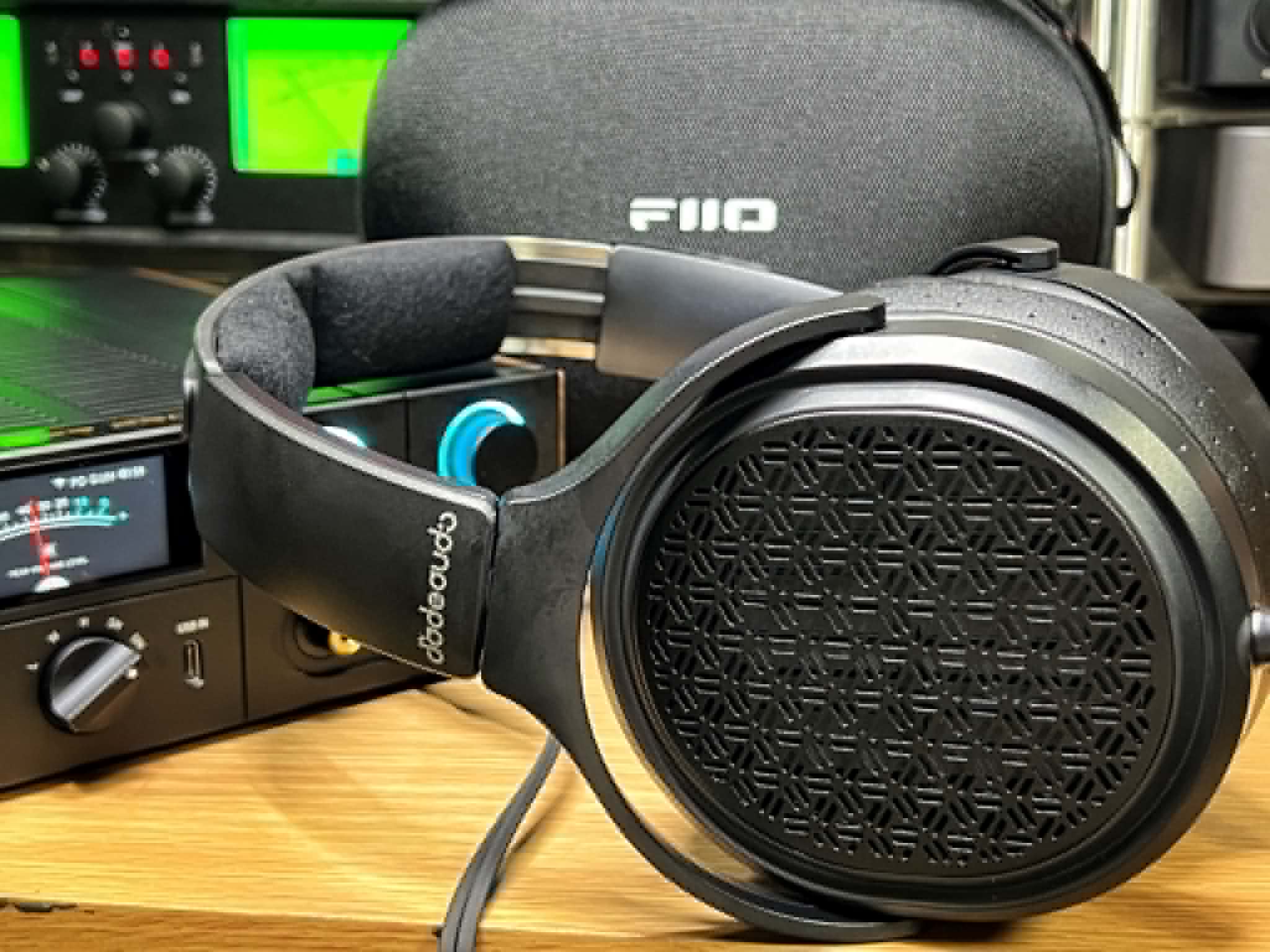
The new FiiO JadeAudio JT9 immediately caught my attention because, at first glance, it feels like an evolutionary continuation of one of my favorite fun planar headphones, the original JT7.
I've always had a soft spot for the JT7. It has a warm, natural presentation that makes it easy to listen to for hours, but it still retains the speed, transient response and general technical behavior I enjoy from a planar magnetic driver.
What really made it stand out to me, though, was its note weight. For an open-back planar in this price range, the JT7 doesn't have that thin or overly lean character you sometimes get from planar headphones. Instruments have body, vocals have substance, and the overall presentation feels musical rather than purely technical.
That's what I liked about it.
The JT7 never sounded like it was trying too hard to impress me with exaggerated detail or an artificially huge soundstage. It wasn't chasing that hyper-analytical presentation. Instead, it had a relatively warm tonal balance, good bass presence and enough planar speed to keep the music clean and engaging.
So when I first got my hands on the JT9, my biggest question wasn't really "Will this sound good?"
I already expected it to.
The real question for me was whether FiiO had actually taken the JT7 platform and improved it, or whether the JT9 was simply going to be another tuning variation with a different personality.
I spent a good part of the afternoon doing exactly what I normally do when I want to understand a headphone properly: I went back and forth between the JT9 and the original JT7.
Same tracks, familiar recordings, and plenty of switching between the two.
And the difference was much bigger than I initially expected.
The JT9 doesn't sound like FiiO simply added a little more bass or changed the treble and called it a new model. The underlying character is still familiar, but the execution feels more mature.
The JT9 has better low-frequency extension, stronger bass control, more dynamic contrast and noticeably better resolution. The transient response feels faster and cleaner, while the separation between individual instruments is more convincing.
What's particularly interesting is that FiiO managed to improve the technical performance without throwing away the musical character that made the JT7 enjoyable in the first place.
The JT9 still has warmth.
It still has good note weight.
It still sounds natural.
But there's more information happening around those fundamentals.
The new 95 × 86 mm planar magnetic driver with its ultra-thin 1 μm diaphragm seems to give the JT9 a different level of responsiveness. FiiO's use of a sapphire and aluminum diaphragm coating and its uniform magnetic-field design are obviously engineering decisions on paper, but what matters to me is how those choices translate into actual listening.
And they do translate.
The JT9 sounds faster and more controlled without becoming sterile. Bass notes have more authority but don't become sluggish. Vocals retain their body while gaining better texture and separation. Treble carries more information and air without becoming aggressively bright.
Even the dynamics feel different.
The JT7 can sound smooth and relaxed, which is part of its appeal. The JT9 has more contrast. Quiet passages feel quieter, loud passages hit harder, and individual transients have more definition. When a recording becomes dense, the JT9 also seems more comfortable keeping everything organized rather than allowing the mix to flatten together.
That's where I think the difference between the two becomes most obvious.
The JT7 is a very enjoyable planar with a warm and musical personality.
The JT9 feels like that same basic philosophy with more technical ability behind it.
It's also considerably easier to drive in my own setup, which makes the JT9 more practical with portable sources. But what's interesting is that despite being easier to drive, it still scales nicely with a proper amplifier, something I'll get into later when I talk about the GIGAS 1 pairing.
After spending that afternoon going back and forth between the two, I came away with a pretty clear impression:
The JT9 is not a sidegrade.
It doesn't feel like FiiO simply changed the flavor of the JT7.
It feels like they took what worked, kept the musical warmth and note weight, then pushed the driver performance, resolution, dynamics and overall control further.
That's exactly what I want from a successor.
The JT7 was already one of my favorite fun planar headphones in this segment. The JT9 doesn't replace its character.
It refines it.
And after hearing them side by side, the JT9 feels less like a completely new direction and more like the JT7 finally growing up.
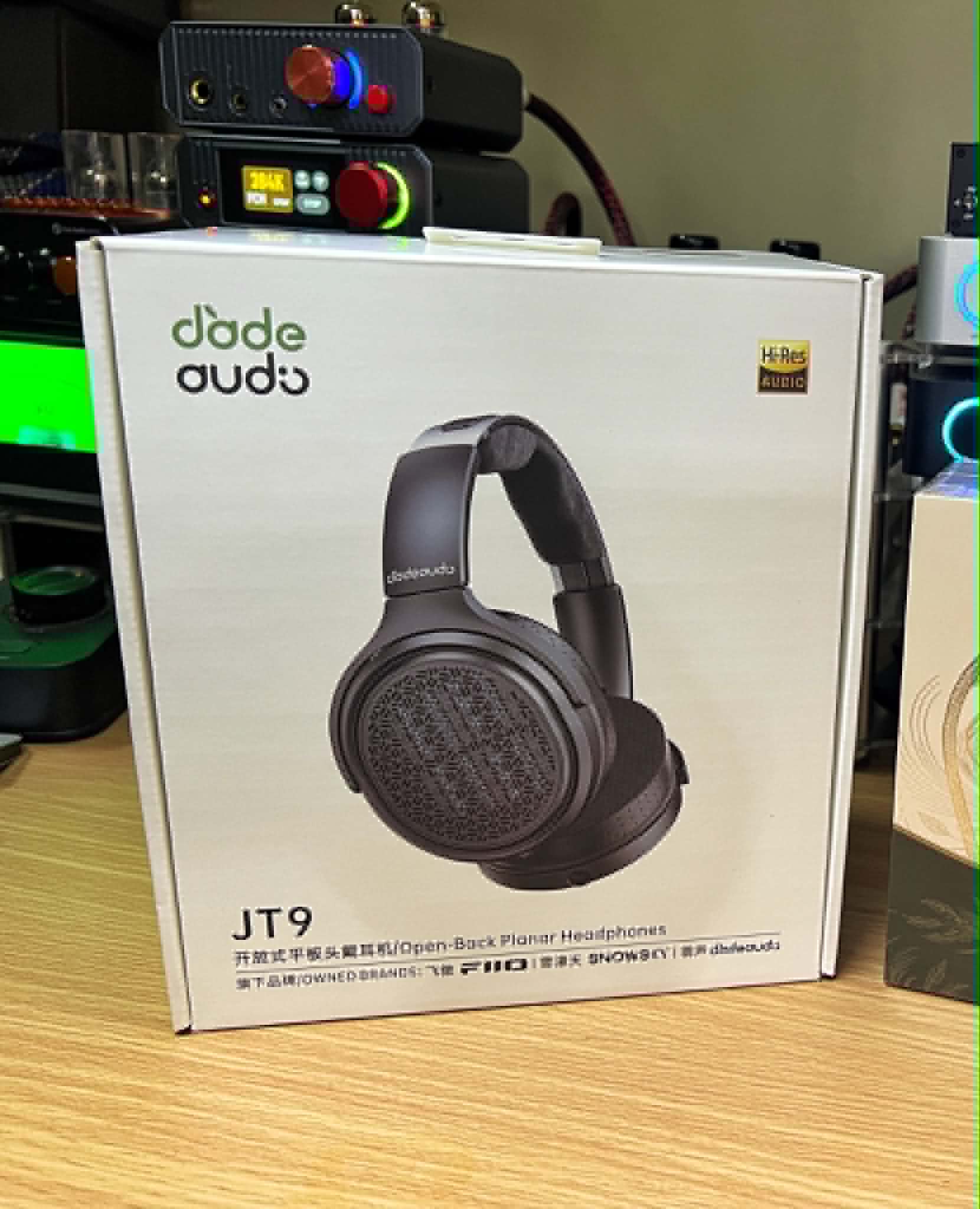
Whats in the box? check out my quick unboxing and lets take a closer look at the JT9.
First Look and Build
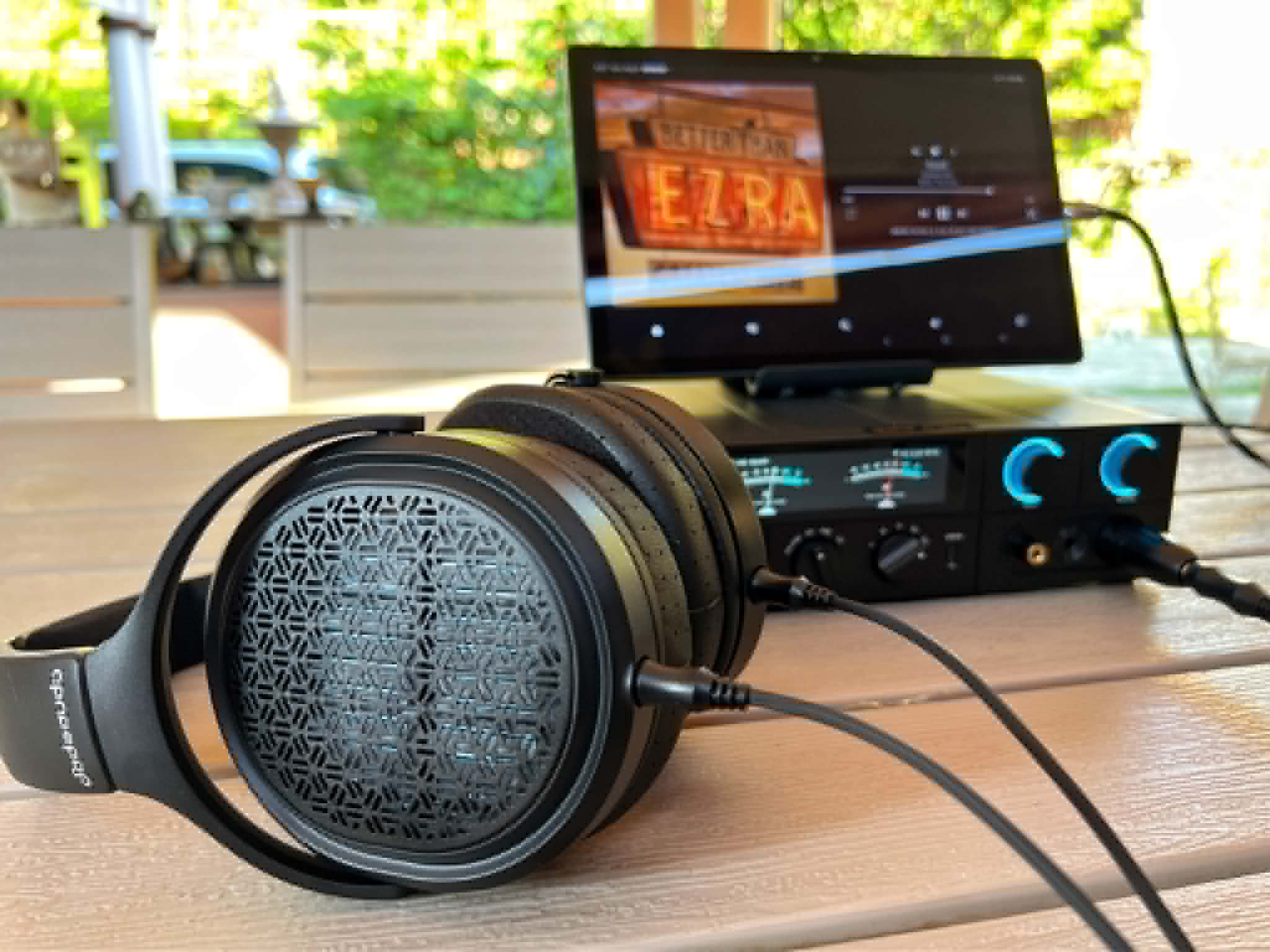
The JT9 retains essentially the same overall design language as the JT7. It's still a large, open-back planar headphone with rotating ear cups and a relatively lightweight construction considering the size of the driver.
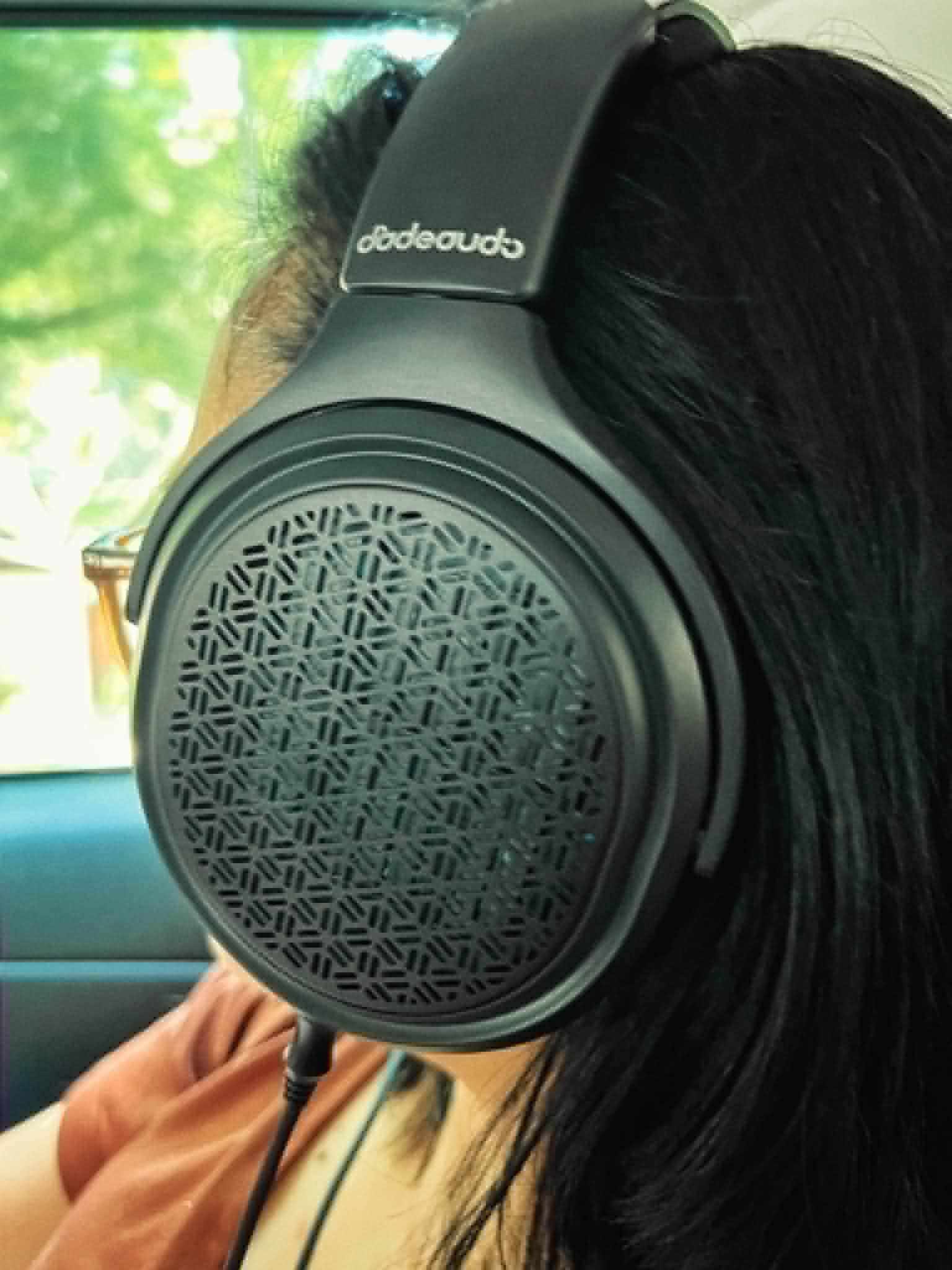
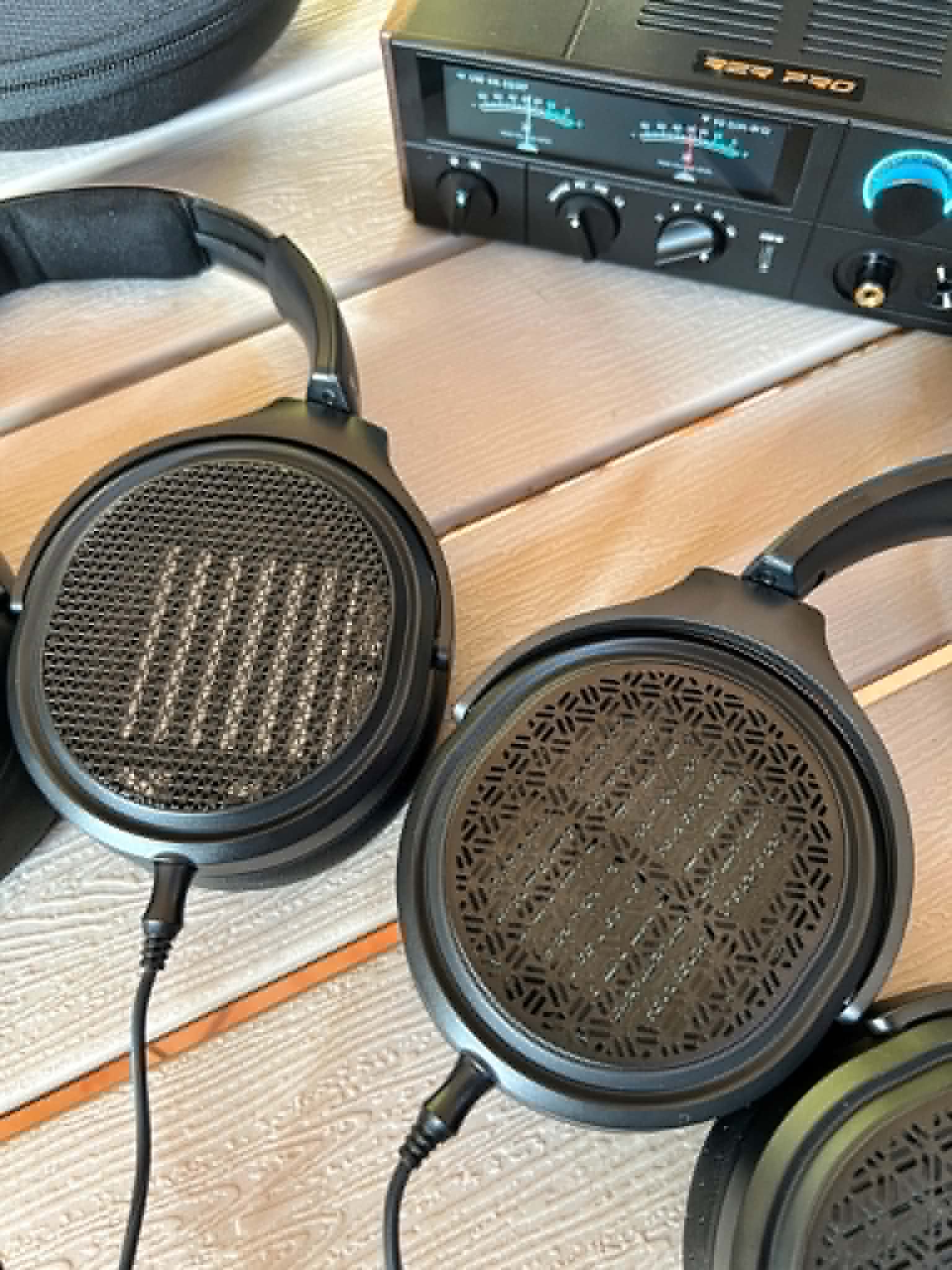
The biggest visual change is the new metal mesh grille. It gives the JT9 a more refined appearance and, more importantly, visually reinforces the fact that this is an open-back design.
Inside those cups is a new 95 × 86 mm planar magnetic driver using an extremely thin 1 μm diaphragm with a dual-layer sapphire and aluminum coating. FiiO also uses its uniform magnetic-field design, along with a semiconductor-grade 28 nm voice-coil manufacturing process.
and that's quite a bit more sophisticated than what you'd normally expect at this price.
The JT9 weighs around 365 grams, so it isn't exactly a featherweight headphone, but the weight distribution is reasonable and I never found it particularly cumbersome during longer listening sessions.
The hybrid pads also work well. The combination of synthetic leather and fabric gives you a good balance between seal, comfort and ventilation. Because it's open-back, heat buildup isn't nearly as problematic as it would be with a closed-back headphone.
And I have to give FiiO credit for the accessories.
The upgraded cable is a nice improvement, and the inclusion of both 3.5 mm single-ended and 4.4 mm balanced cables makes the JT9 much easier to integrate into different setups.
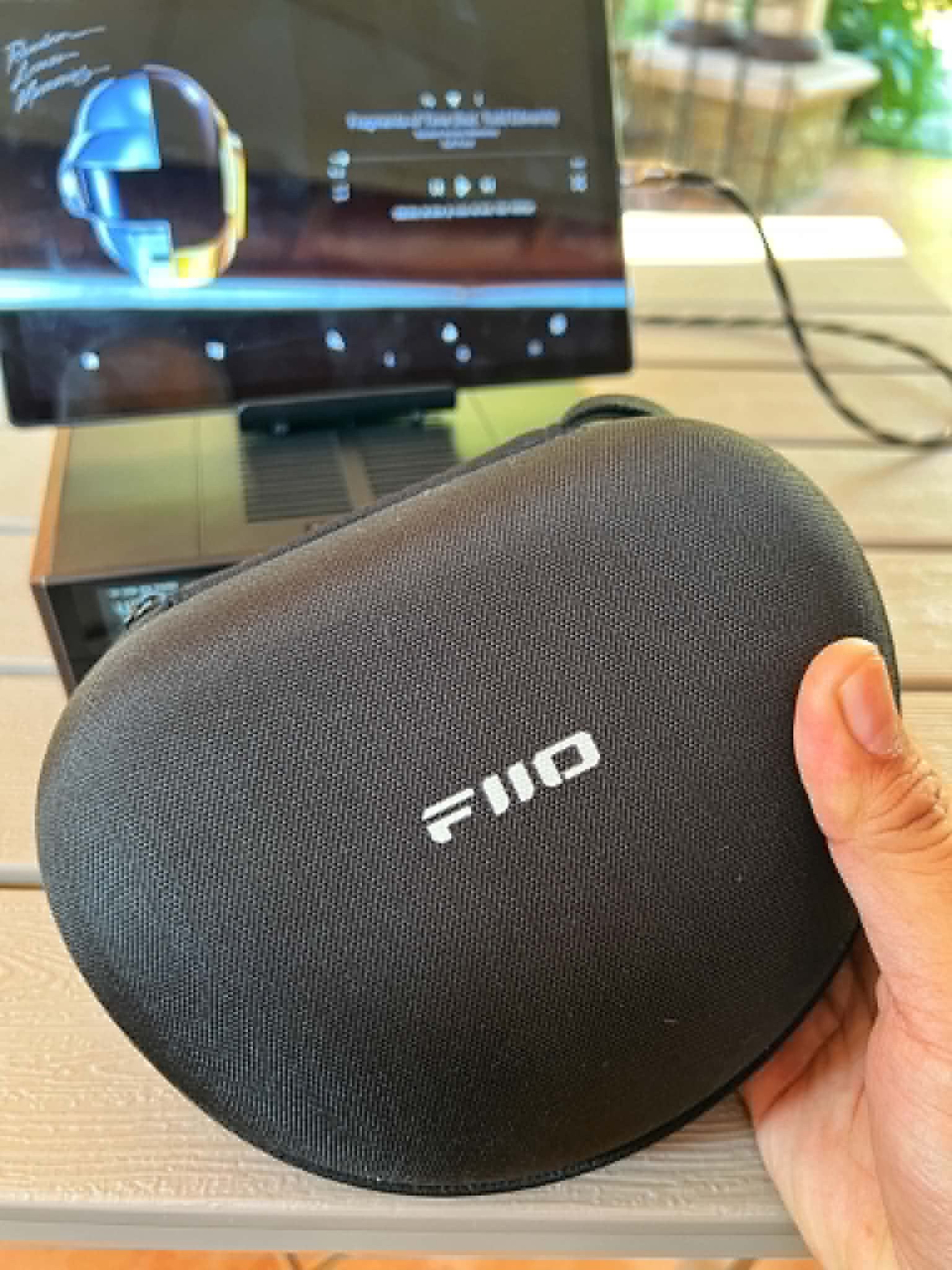
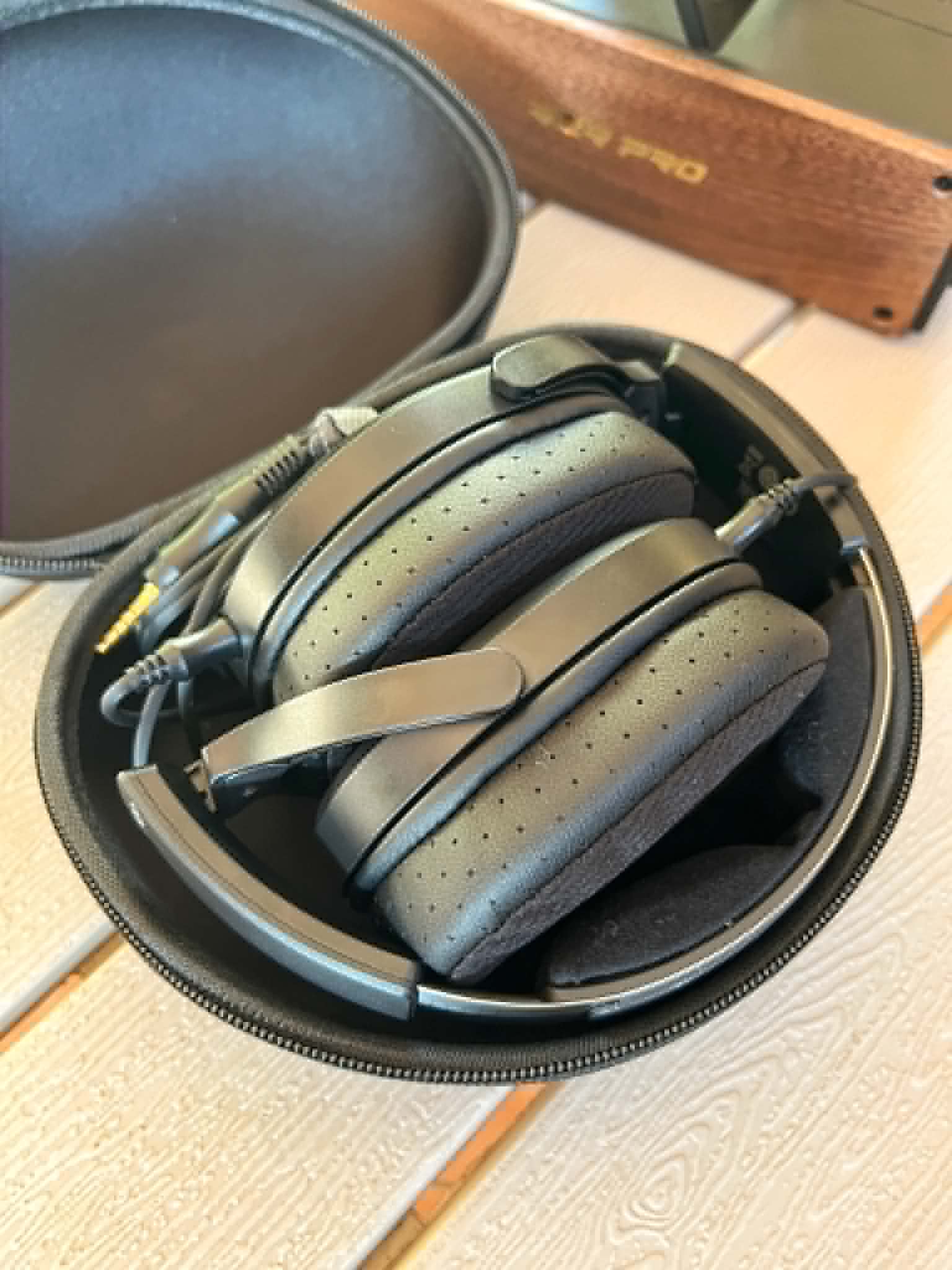
But the accessory I appreciate the most is the FiiO hard case.
The JT7 came with a cloth pouch, so getting a proper protective case with the JT9 feels like a meaningful upgrade rather than something thrown into the box just for the sake of it.
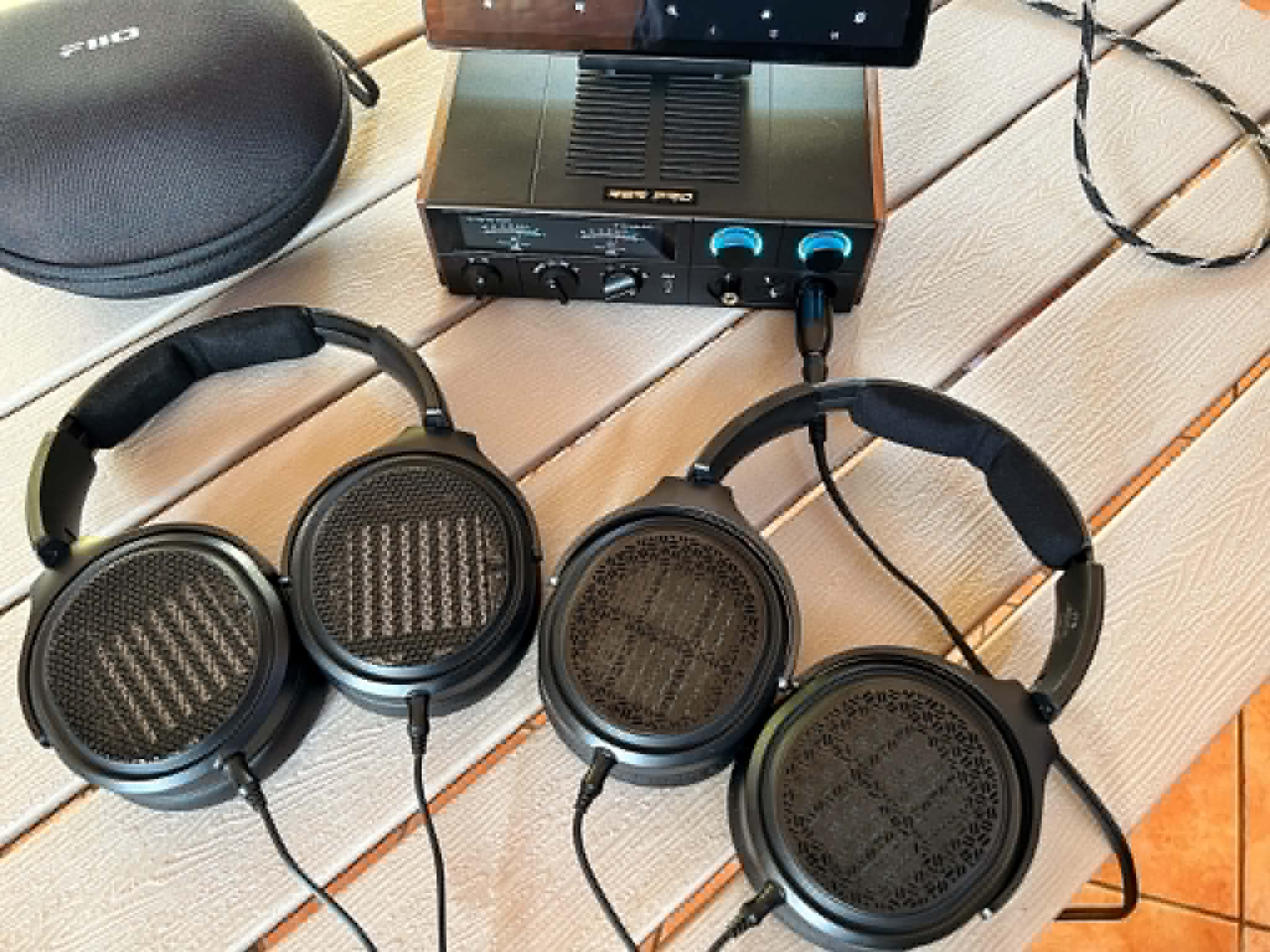
JT9 and JT7
This was probably the most interesting part of the whole review for me.
I spent quite a bit of time doing direct A/B comparisons between the two headphones, using the same source, amplifier, cables where possible, and familiar tracks.
The JT7 and JT9 clearly share some DNA. Both have that warmer, more natural planar presentation, and neither one is trying to be an ultra-bright analytical headphone.
But the JT9 sounds more mature.
The biggest difference isn't one particular frequency range. It's the way the entire presentation comes together.
The JT9 has better dynamics, better bass extension, improved resolution and a more convincing sense of separation. It sounds more effortless and more controlled.
The JT7 still has plenty going for it, but once you switch back and forth between the two, the JT7 starts to sound slightly softer and less resolving.
The JT9 gives you more information without turning the sound clinical.
And that's something I really like.
Bass Performance
The JT9 is a bassy planar, and I mean that in the best possible way.
This isn't the typical open-back planar presentation where the bass sounds clean and technically impressive but somewhat restrained. The JT9 has a genuinely generous amount of low-end energy, and compared directly with the JT7, the increase in bass presence is immediately obvious.
What makes it work for me is that FiiO didn't simply add more bass. They managed to give the JT9 more quantity without sacrificing the speed, texture and control that I expect from a planar driver.
Sub-bass
The sub-bass is probably one of the biggest surprises for me.
The JT9 reaches genuinely deep, and you can actually feel the difference when the recording contains information down in the lowest octaves. On electronic tracks, deep synthesizers and sub-bass drops have real physical weight instead of simply being audible in the background.
For an open-back headphone, that's impressive.
What's even more important is how the JT9 handles that energy. The sub-bass doesn't sound loose, overly soft or artificially boosted. It stays relatively clean and controlled, with very little bleed into the midrange. Even when the track is throwing a lot of low-frequency information at the driver, the bass remains well separated from the rest of the mix.
The open-back design also helps. There is enough room around the low frequencies that the bass doesn't feel trapped inside the ear cups. It has a natural sense of decay and doesn't create that congested, pressurized feeling you can sometimes get from heavily tuned closed-back headphones.
On tracks with proper sub-bass content, the JT9 can sound surprisingly authoritative. You get the rumble, but you also get the texture within that rumble. That's an important distinction. It's not just more low-end quantity. There's enough resolution to hear the character of the bass itself.
Compared directly with the JT7, the difference is quite clear. The JT7 has good bass for an open-back planar, but the JT9 reaches lower and carries considerably more weight in the sub-bass region.
Mid-bass
The mid-bass is where the JT9 really shows what this driver can do.
There's a combination of speed, impact and texture here that I really enjoy. Kick drums have a quick leading edge followed by a solid tactile hit, while bass guitars have enough body to sound natural without becoming thick or sluggish.
What I particularly like is that the mid-bass doesn't have that dry, overly controlled character I've heard from some planar headphones. There is still warmth and physical note weight behind the bass notes.
That's what gives the JT9 its character.
At first listen, the warmth can make the headphone seem relatively relaxed. But once you pay attention to the actual behavior of the driver, you realize how quickly everything is happening underneath that warmth. Bass notes start quickly, hit with authority and decay cleanly without hanging around longer than they should.
That combination of warmth and planar speed is what makes the JT9 so enjoyable to me.
You get some of the natural weight and fullness I normally associate with a good dynamic driver, but you still retain the fast transient response and control of a planar magnetic driver.
On complex bass passages, individual notes remain easy to follow instead of blending into one continuous low-frequency mass. Double kicks stay separated, bass guitar lines remain textured, and electronic bass has that fast, tactile character that makes the JT9 particularly fun with modern recordings.
Compared directly with the JT7, the JT9 sounds fuller, deeper and more authoritative, but at the same time it actually feels cleaner and better controlled.
And that's probably the biggest compliment I can give the JT9's bass.
FiiO didn't just make it bassier.
They made the bass more capable.
Midrange
The JT9's midrange retains much of the JT7's overall character, but it sounds more refined, more dynamic and better resolved. FiiO didn't completely reinvent the midrange tuning, and I think that's a good thing. The natural warmth and note weight that made me enjoy the JT7 are still here, but the JT9 gives everything more energy and definition.
Vocals are one of the strongest parts of the presentation. Male vocals have enough chest and body to sound full and natural without becoming overly thick, while female vocals retain their texture, articulation and upper-frequency energy without crossing into shoutiness.
There's a slight lushness to the midrange, particularly through the lower mids, but I wouldn't describe the JT9 as heavily colored. It's more of a subtle warmth that gives instruments believable physical weight.
Acoustic guitars have body and string texture. Pianos have weight behind the notes instead of sounding thin or overly clean. Snare drums have both the initial snap and the resonance that follows it. These little things make the JT9 sound more convincing to me.
And that natural quality is important.
I've heard plenty of planar headphones that can deliver impressive technical performance, excellent resolution and extremely clean separation, yet still sound somewhat artificial. When the upper mids are pushed too aggressively, you can get that slightly dry or metallic character that makes vocals and instruments feel more like information than actual sounds.
The JT9 avoids that.
It has the technical speed and cleanliness of a planar, but it doesn't sacrifice the organic character that made the JT7 enjoyable in the first place. Compared directly with the JT7, I hear better separation between individual elements and more contrast within the notes themselves. The JT9 doesn't simply make the midrange clearer. It makes it more expressive.
Upper Midrange
The upper midrange gives the JT9 the extra energy it needs to keep its warm tuning from becoming too laid-back.
There's enough presence around vocals, guitars and other midrange instruments to keep the presentation lively, but it never feels like FiiO is pushing the vocals unnaturally close to my face.
This is also where the JT9's planar characteristics become more obvious.
The response is fast and clean, with good separation between instruments and a nice sense of openness around vocals. The open-back design helps here as well, giving the upper mids enough breathing room instead of making everything sound tightly confined inside the ear cups.
What I like most is the balance.
The JT9 has enough upper-mid energy to preserve clarity and articulation, but it doesn't have that aggressive planar glare I've heard from some brighter headphones. There's no constant emphasis around the presence region trying to convince me that the headphone is highly resolving.
Instead, vocals remain expressive and natural.
On well-recorded female vocals, for example, there's enough upper-mid presence to capture breath, texture and emotion, but the sound remains smooth even when the singer gets more intense. Male vocals maintain their chest and density without becoming too dark.
That balance makes a big difference during long listening sessions.
The JT9 gives me the clarity, speed and separation I expect from a planar, while retaining enough warmth and note density to keep the music sounding natural.
For me, that's one of the biggest improvements over the JT7. The basic tonal character is still familiar, but the JT9 sounds more mature. It has better control around the midrange, more dynamic contrast and a cleaner separation between instruments, without losing the musical warmth that made the original JT7 so enjoyable.
Treble
Treble is another area where I think FiiO got the balance right with the JT9. It has plenty of detail and extension, but it doesn't resort to an aggressively bright tuning just to create the impression of resolution.
There's a good amount of upper-frequency energy here. Cymbals have proper shimmer and decay, percussion has enough attack and definition, and low-level ambient information is easy to pick up when the recording actually contains it. There's also a nice sense of air around instruments, which works particularly well with the JT9's open-back presentation.
What I like most is how the treble manages to stay detailed without becoming analytical.
You get the fast transient response and microdetail retrieval I expect from a planar driver, but the overall tonal character remains smooth and controlled. It doesn't have that exaggerated upper-treble emphasis where every cymbal hit is pushed forward and every tiny detail is presented like it's trying to impress you.
The JT9 simply lets those details sit naturally within the recording.
And that's important to me.
A headphone doesn't need to constantly announce how resolving it is. I would rather have a tuning where the detail reveals itself naturally as I spend more time with the music. With the JT9, I can hear the texture of cymbals, the decay of percussion, subtle room ambience and small background elements, but they don't pull my attention away from the main performance.
There's also a good balance between attack and decay. Treble notes have enough initial bite to sound crisp and defined, but the decay isn't unnaturally sharp or abruptly cut off. Cymbals have a more believable metallic texture rather than sounding like a thin splash of high-frequency energy.
This is particularly noticeable with acoustic recordings and jazz. Ride cymbals have enough definition to follow the drummer's technique, while the surrounding ambience gives the recording a sense of space. On rock tracks, electric guitars retain their edge and harmonic texture without becoming excessively aggressive.
Treble energy and Long-Term Listening
The JT9 also handles treble energy very well.
There's enough upper-mid and lower-treble energy to keep vocals open, articulate and intelligible, but it stays comfortably below the point where "S" and "T" sounds become distracting.
This is something I appreciate more the longer I listen.
Some headphones can sound incredibly detailed during the first few tracks because of an elevated presence or treble region, but after an hour or two, that extra energy starts to wear you down. The JT9 doesn't give me that feeling.
Even with brighter recordings, the treble remains controlled enough that I can listen for long sessions without constantly reaching for the volume knob.
At the same time, I wouldn't call the JT9 dark or rolled off. There's still plenty of extension and air, so the headphone doesn't lose that sense of openness that makes a good planar enjoyable.
For me, the treble sits in a very comfortable middle ground:
detailed enough to satisfy the technical side of me, but smooth enough to keep the musical side happy.
That's probably the best way I can describe it.
The JT9 gives me the speed, extension and microdetail I expect from a modern planar driver, but it avoids the artificial brightness and fatigue that can sometimes come with chasing technical performance.
It sounds detailed because the driver is capable of resolving detail, not because the tuning is forcing the treble into my face.
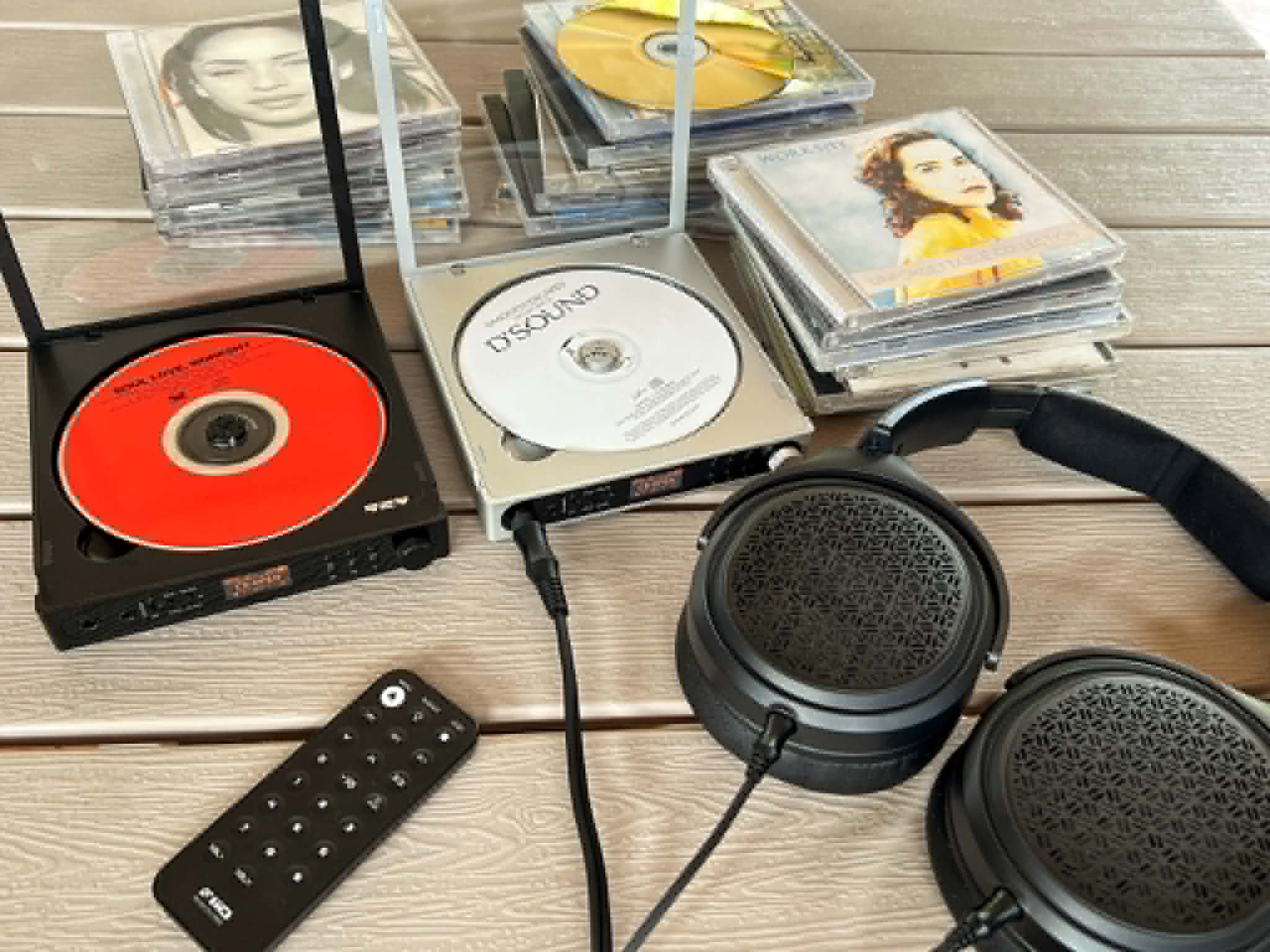
Technicalities.
Resolution and Detail Retrieval
The JT9 is a clear step above the JT7 here.
The resolution isn't just about hearing more tiny details. It's about how clearly individual elements are separated from each other.
On dense recordings, I can follow individual instruments more easily.
Background percussion becomes easier to locate.
Reverb tails are more apparent.
Low-level information doesn't disappear as easily when the mix becomes busy.
At the same time, the JT9 doesn't sound sterile.
This is probably the part of the headphone that impressed me the most.
It manages to give me the resolution I want from a planar without sacrificing the musicality that made the JT7 enjoyable in the first place.
Dynamics
The JT9 is a surprisingly dynamic headphone.
Quiet passages actually sound quiet, and when the recording suddenly gets loud, the JT9 has enough headroom and control to reproduce that transition convincingly.
This is particularly noticeable with orchestral recordings, live performances and tracks with strong drum dynamics.
Kick drums have a defined leading edge.
Snare hits have snap.
Bass guitar has both attack and body.
And when the music drops back down into a quieter passage, the JT9 doesn't flatten everything into the same level of intensity.
Compared directly with the JT7, the JT9 feels more alive.
The JT7 can sound smooth and enjoyable, but the JT9 has more contrast between quiet and loud passages.
Transient Response
This is another area where the planar driver really shows its strengths.
The JT9 is fast.
Notes start quickly and stop cleanly, particularly in the bass and lower midrange.
Percussion has a nice snap to it, and complex passages remain relatively clean even when there's a lot happening simultaneously.
Decay is also well controlled.
It isn't unnaturally dry, though. There is still enough decay and resonance to make instruments sound believable.
That's important because an excessively fast planar can sometimes make music feel almost surgically clean.
The JT9 doesn't go there.
It gives you speed without completely stripping the music of natural decay.
Soundstage
The JT9 doesn't have the largest soundstage I've heard from an open-back planar.
And honestly, I'm glad it doesn't.
I've heard open-back headphones that create enormous, almost artificially expansive spaces.
They can sound impressive during the first few minutes, but sometimes that huge presentation makes the recording feel less realistic.
The JT9 is more intimate.
I would describe it as being closer to a large room or small concert venue rather than a massive hall.
The performers feel like they're in front of you rather than being scattered several meters away.
For vocals and smaller ensembles, I actually prefer this presentation.
It gives me that feeling of sitting relatively close to the stage during an intimate live performance.
So while the JT9 doesn't win a soundstage competition, the stage it creates feels believable.
Imaging and Instrument Separation
Imaging is accurate enough for music and one of the areas where the JT9's resolution becomes apparent.
Individual instruments occupy reasonably defined positions, and there is enough separation to prevent the presentation from collapsing when the recording becomes dense.
The image isn't hyper-surgical, though.
Again, I think that's intentional.
This isn't a headphone designed around extreme positional precision.
For music, however, the imaging works very well.
For gaming, I wouldn't consider the JT9 my first choice if competitive positional accuracy is the primary goal. It can certainly be used for gaming, but its strengths are much more obvious with music.
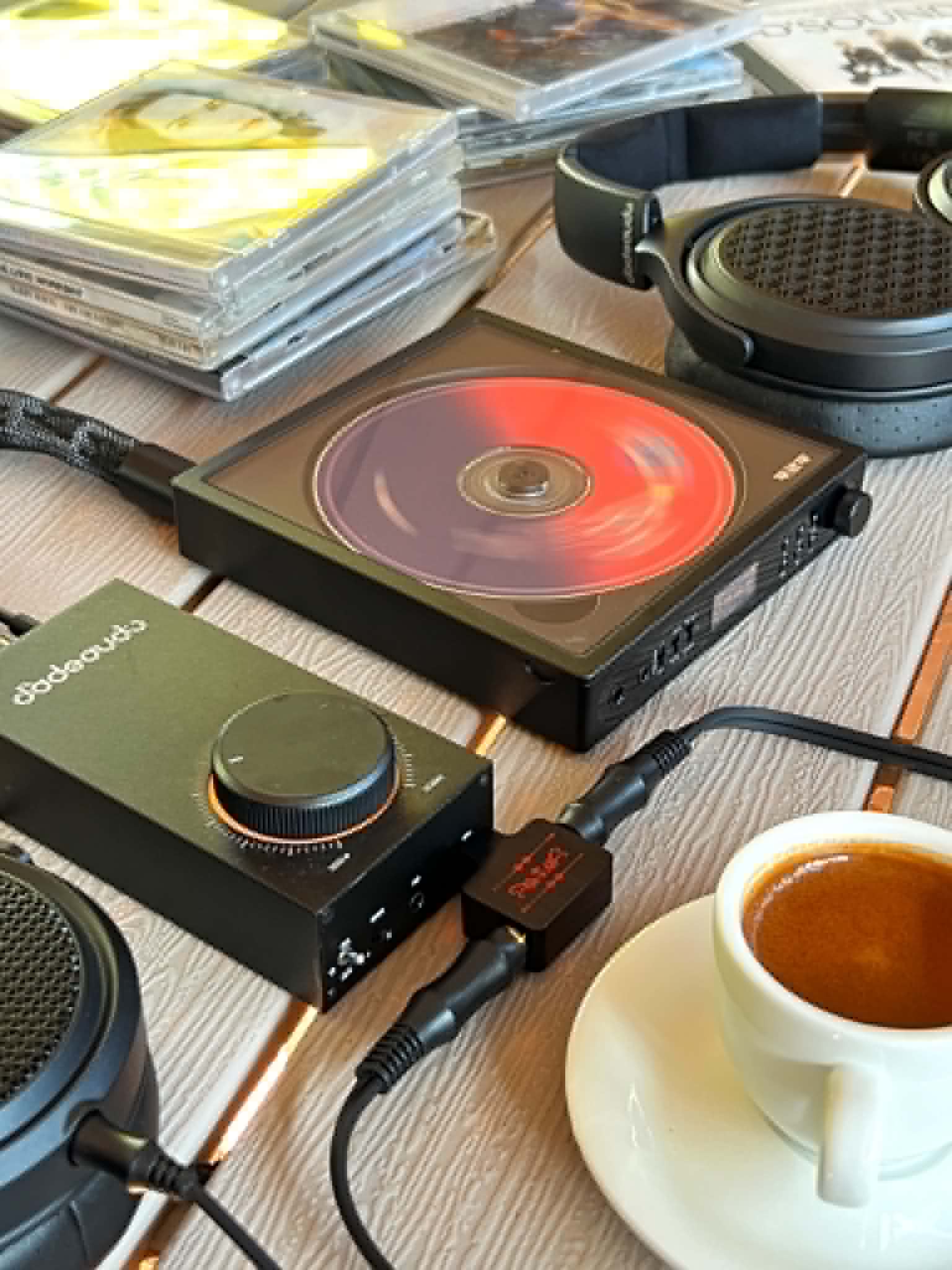
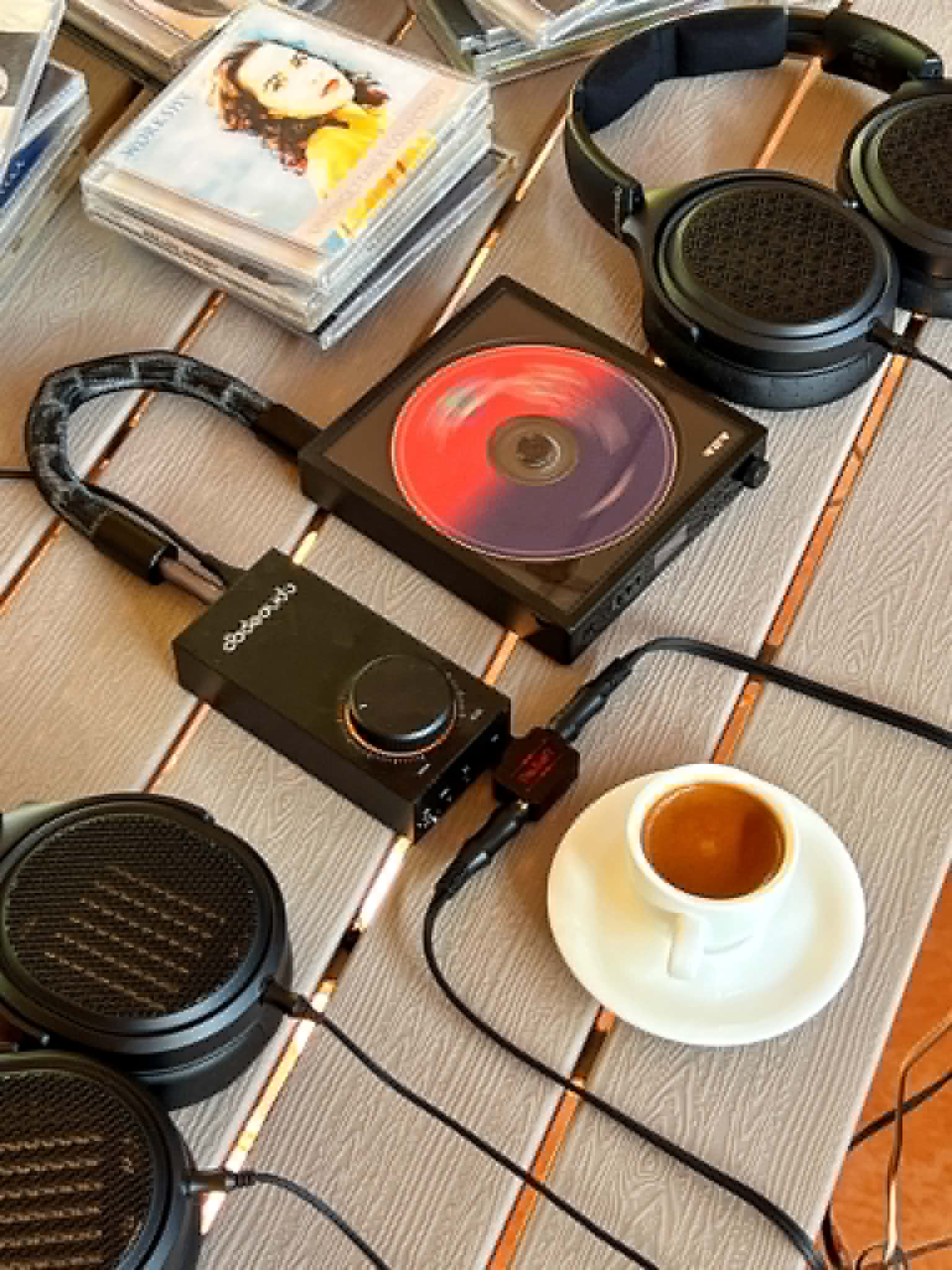
Pairing With the JadeAudio GIGAS 1
This is where things get particularly interesting for me. The JT9 is noticeably easier to drive than the JT7. In my own setup, I'd estimate it feels roughly 40% easier to drive, which is a pretty significant improvement for a full-size planar headphone. A capable DAP or dongle DAC can get the JT9 to a comfortable listening level with plenty of headroom, so you don't necessarily need a powerful desktop amplifier to enjoy it.
But this is also a good example of why driveability and scalability are two different things.
A headphone can be easy to drive and still respond positively to better amplification. That's exactly what I hear with the JT9.
When I connected it to the JadeAudio GIGAS 1, things got noticeably more interesting.
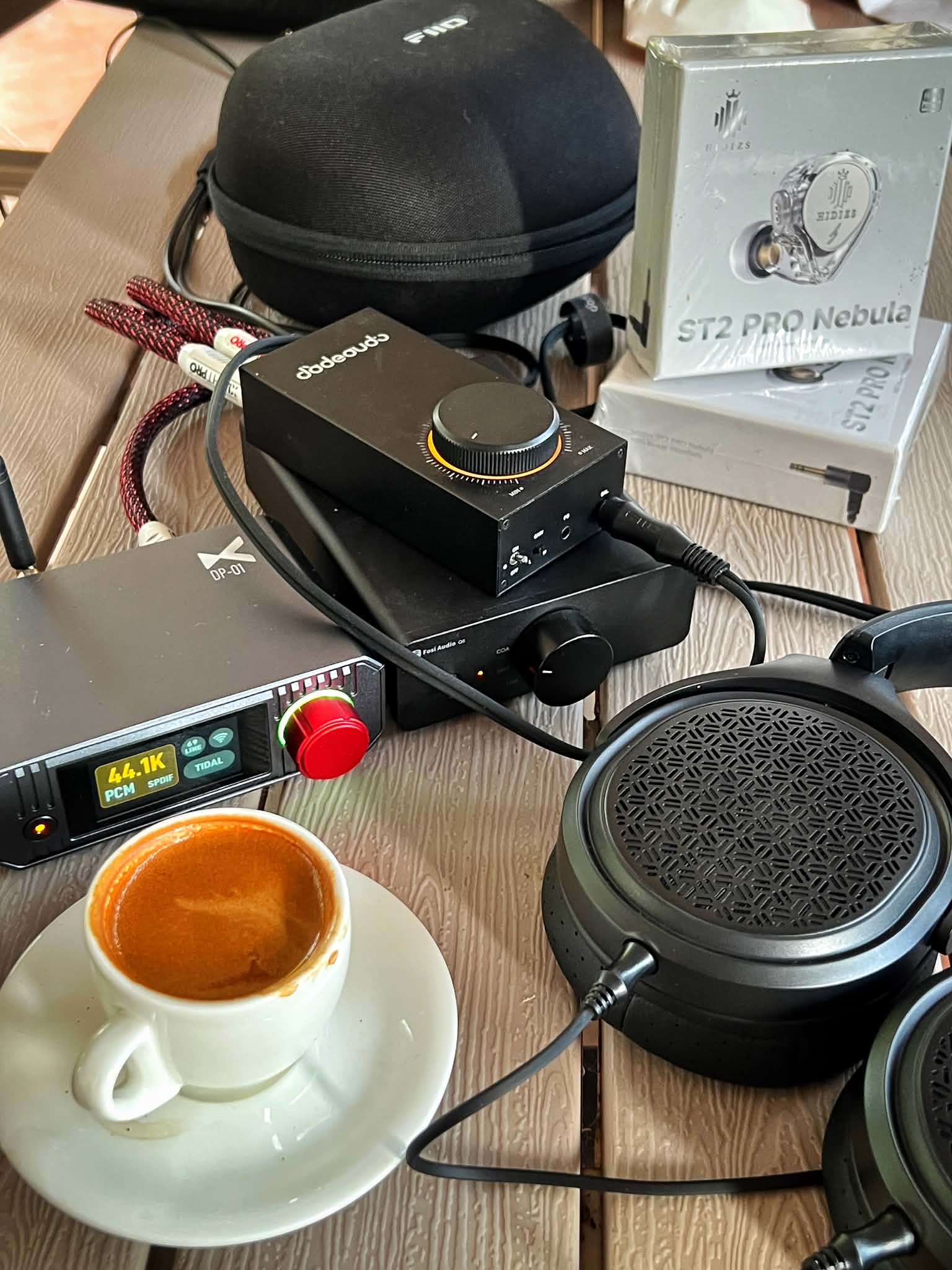
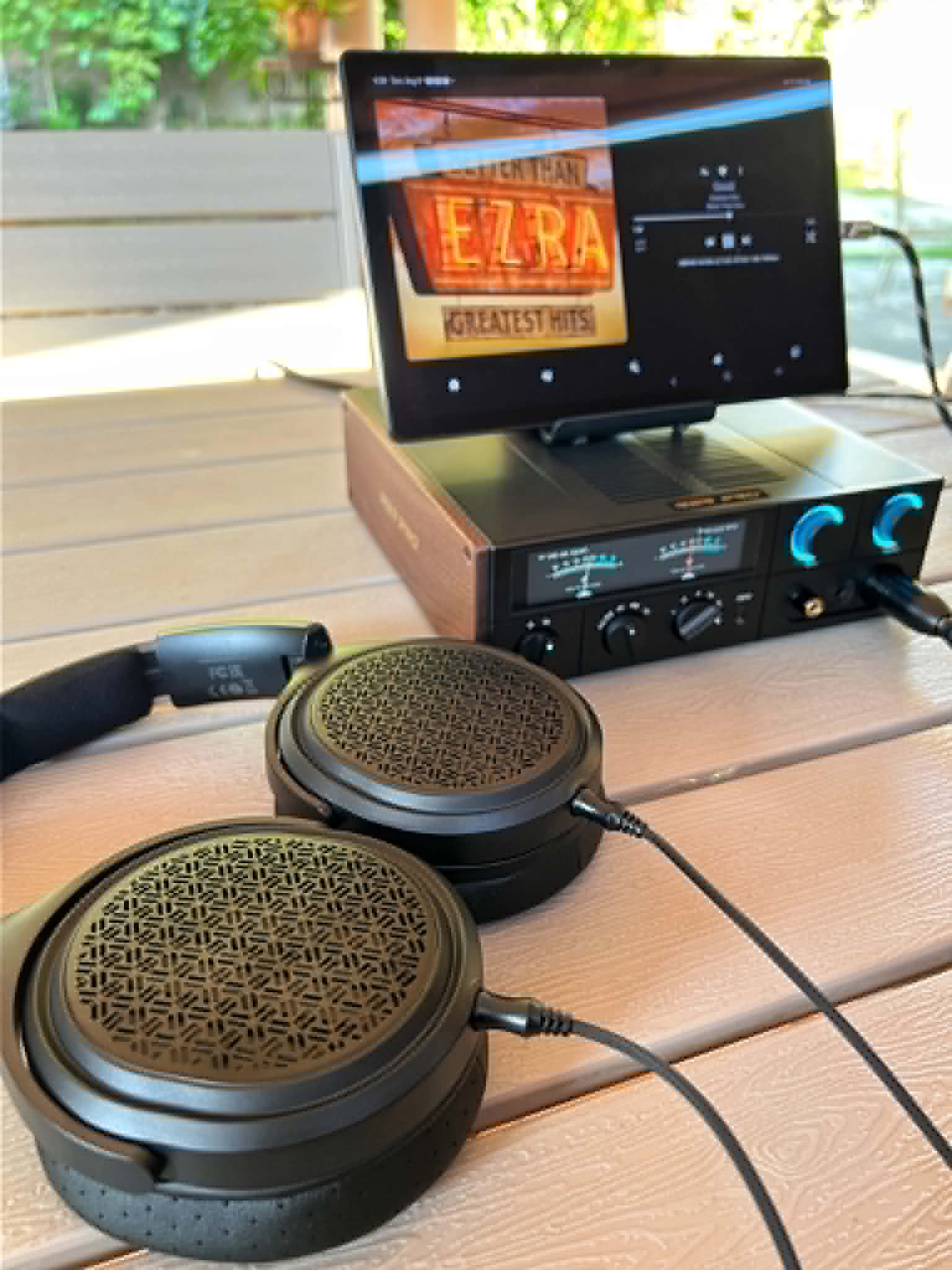
The GIGAS 1 is a bit of a pocket monster. It's a discrete Class AB amplifier capable of up to 4,600 mW of balanced output, so there is obviously an enormous amount of power available compared with what the JT9 actually needs.
I'm not using that power simply to make the headphone louder. In fact, volume isn't the interesting part of this pairing at all. What I'm listening for is the effect of the amplifier's additional headroom and current delivery on the planar driver's control, dynamics and transient behavior.
And the difference is audible.
With the GIGAS 1, the JT9 sounds more controlled, more dynamic and more authoritative.
The bass is the first thing I notice. The JT9 already has impressive bass control from a good DAP, but the GIGAS 1 gives the driver a firmer sense of grip. Sub-bass feels more solid and controlled, while mid-bass hits with greater authority.
Kick drums have a stronger initial impact, and the transition from attack to decay feels cleaner.
Bass guitar also benefits because individual notes remain better defined when the arrangement gets busy.
This is where I think amplification makes the biggest difference with the JT9. I'm not hearing dramatically more bass. I'm hearing better-controlled bass.
The driver seems to have more authority over its movement. Bass notes start quickly, hit with more physical impact and stop cleanly without lingering into the next note.
The same thing happens with percussion.
Snare hits have a sharper leading edge, cymbals have a little more immediacy, and fast transient information comes through with greater confidence. When a recording suddenly goes from a quiet passage into something much more dynamic, the JT9 feels less restrained and more effortless.
That's probably the best way I can describe the effect of the GIGAS 1.
It doesn't make the JT9 louder. It makes it feel more capable.
I also notice a subtle improvement in spatial presentation. The JT9 doesn't suddenly develop some enormous soundstage, and the basic character of its imaging remains the same, but the presentation feels a little more open and better separated. There's slightly more space around individual instruments, particularly on recordings with good channel separation and dynamic contrast.
I suspect part of that perception comes from the improved control and separation rather than an actual dramatic change in frequency response. When bass is tighter and transient information is cleaner, the rest of the mix has more room to breathe.
And that's an important point about this pairing.
The GIGAS 1 doesn't fundamentally alter the JT9's tonal balance.
The bass doesn't suddenly become exaggerated. The midrange doesn't shift forward. The treble doesn't become noticeably brighter.
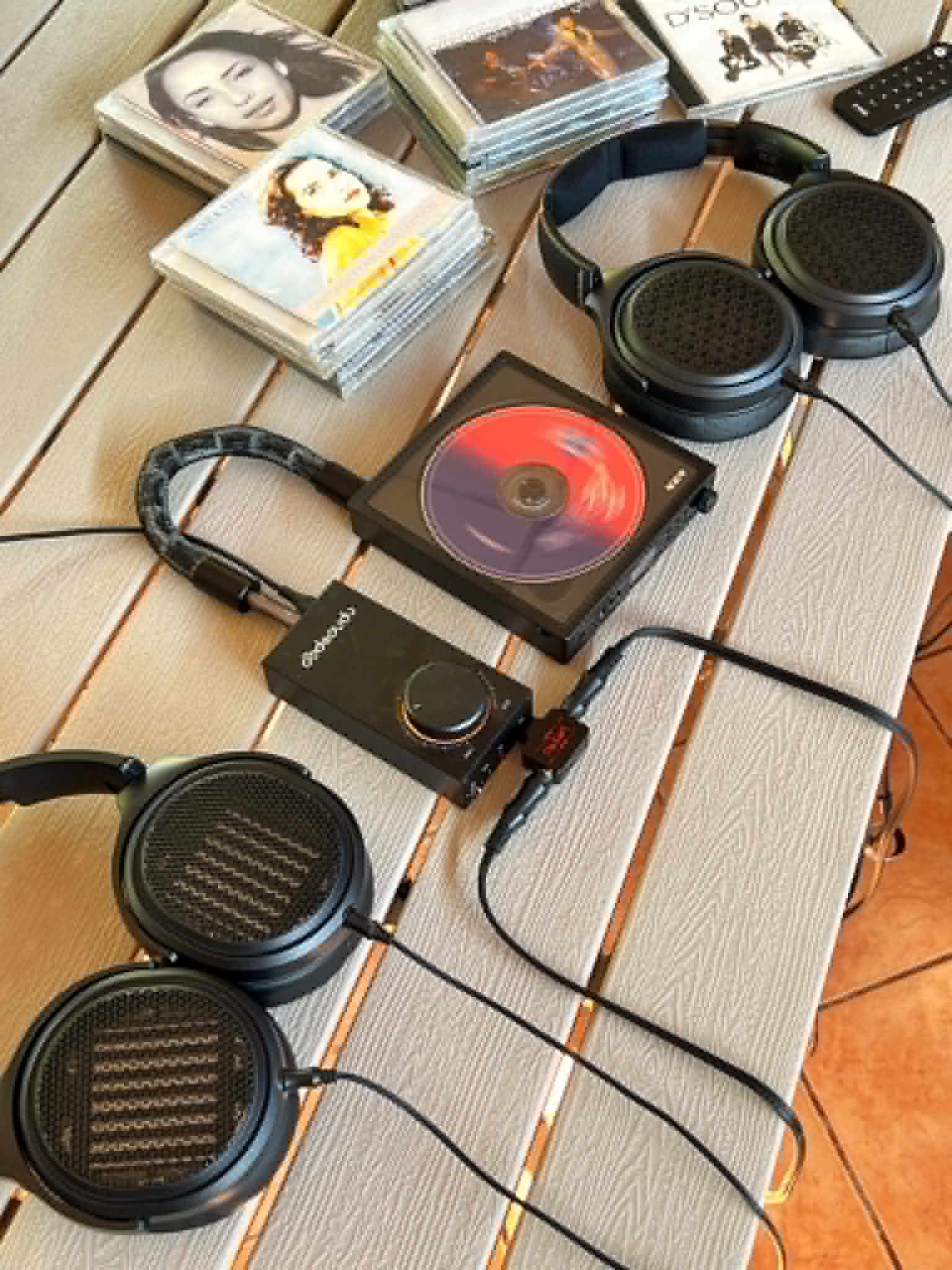
The JT9 still sounds like the JT9.
What changes is the level of control behind that sound.
The GIGAS 1 gives the planar driver more headroom and a stronger grip, which becomes most obvious when the music gets demanding. Dense rock mixes, electronic tracks with deep sub-bass, large dynamic swings and complex instrumental passages all sound more composed.
This is also why I wouldn't make the usual statement that "the JT9 is easy to drive, so it doesn't need an amplifier."
Technically, that's true. You absolutely can run it from a capable DAP or dongle and get a very good result.
But not needing a powerful amplifier doesn't mean it can't benefit from one.
That's the distinction I hear with the JT9.
Straight from a good DAP, the JT9 already gives me the bass, warmth, detail and planar speed I enjoy. Add the GIGAS 1, and the presentation becomes more authoritative, with better bass grip, stronger dynamics, cleaner transient control and a slightly more open sense of space.
For my own listening, that's where the JT9 really comes alive.
The GIGAS 1 isn't necessary to make the JT9 work.
It simply lets me hear what this planar can do when it has a lot more amplifier headroom behind it.
And honestly, I really like that combination. The JT9 gives me the musicality and low-end energy, while the GIGAS 1 gives it the control and authority to make those qualities even more convincing.
JT9 and JT7: Where the Upgrade Really Happens
If I had to summarize the differences between the two, this is how I hear them:
Area----------------------JT7-------------------------------JT9
Overall tuning------Warm, natural--------------Warm, natural but more refined
Bass quantity-------Moderate/full--------------Fuller, deeper
Sub-bass------------Good----------------------Noticeably deeper
Mid-bass------------Warm, smooth------------Faster, punchier, more textured
Midrange----------Natural, slightly relaxed---More dynamic and resolving
Vocals------------Smooth, natural-------------Fuller, more textured and focused
Treble-------------Smooth----------------------More detailed and airy
Resolution----------Good-----------------------Clearly improved
Dynamics-----------Good------------------------Excellent
Transients------------Fast------------------------Faster and cleaner
Soundstage---------Moderate------------Moderate, but more open/organized
Imaging-------------Good-----------------------More precise
Driveability--------More demanding-----------Significantly easier
Amplification------Benefits from power--------Scales very well with power
The biggest difference isn't that FiiO changed the JT7's character completely.
They didn't.
And I'm glad they didn't.
Instead, they took the basic recipe and improved almost every part of its execution.
The JT9 Sound in One Sentence
If I had to describe the JT9 in one sentence:
It's a warm and musical planar with surprisingly deep bass, excellent note weight, fast transients, smooth detailed treble and enough technical ability to keep the presentation genuinely engaging.
That's a pretty good combination.
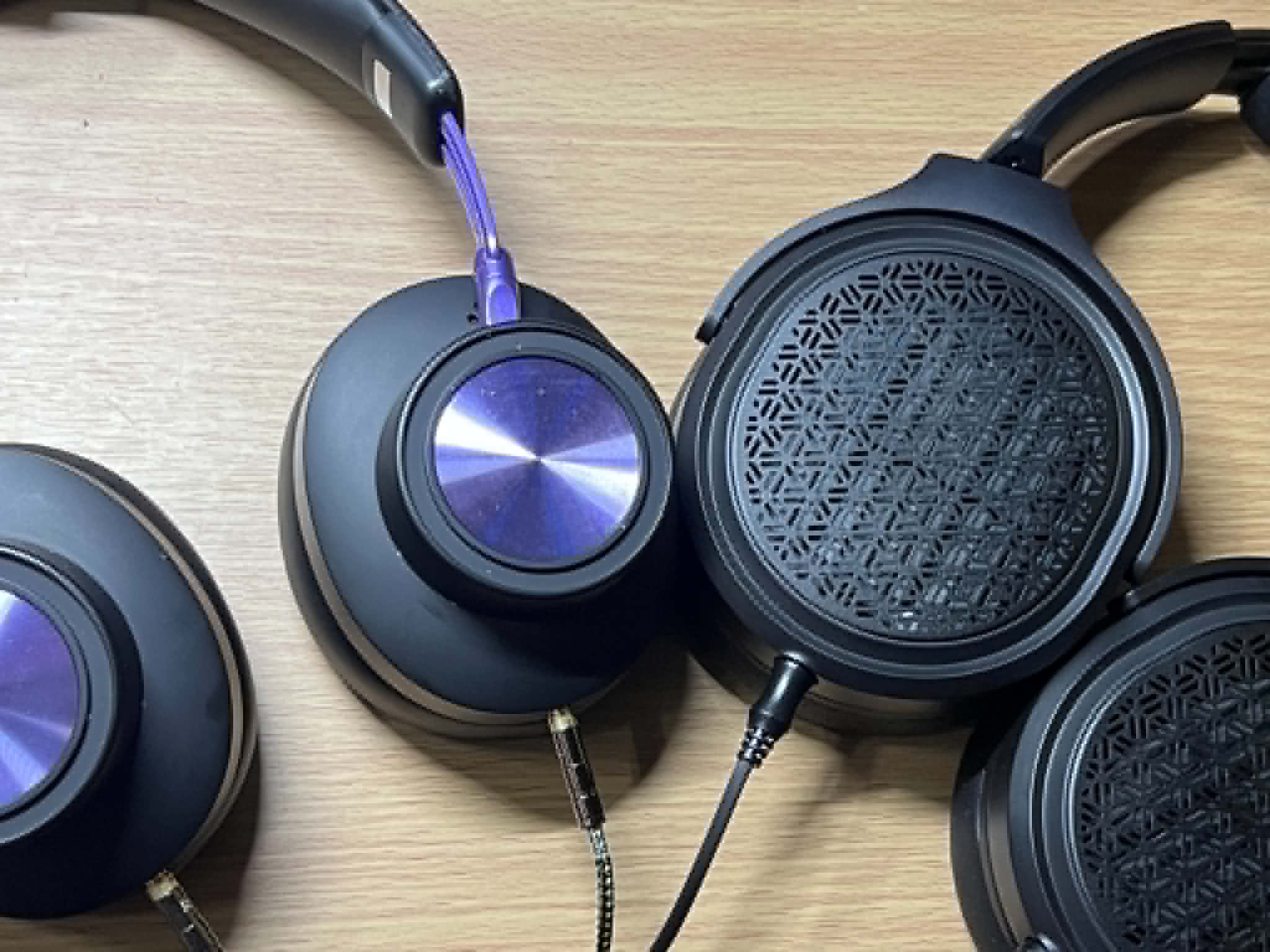
JadeAudio JT9 vs Kiwi Ears Serene
I've spent quite a bit of time going back and forth between the JadeAudio JT9 and Kiwi Ears Serene, and for me, this comparison isn't really about deciding which one is simply "better." They are both good planar headphones, but they approach the sound very differently.
The JT9 is the one I reach for when I want to sit down with my coffee, fire up the GIGAS 1 and actually get lost in the music. The Serene is more of a sit-back-and-relax headphone. It's closed-back, more intimate, darker and smoother, and it gives me a level of isolation that the JT9 obviously can't provide.
And that's what makes this comparison interesting.
Despite both using planar magnetic drivers, they don't sound like variations of the same headphone. They have distinctly different acoustic presentations, and you can hear that difference almost immediately.
The Fundamental Difference
If I had to reduce their personalities to a few words:
JT9: open, warm, energetic, dynamic and spacious.
Serene: closed, warm, dark, smooth and relaxed.
The JT9 uses FiiO's large 95 × 86 mm planar magnetic driver in an open-back enclosure. The open grille allows the driver to interact more freely with the surrounding air, and that contributes to the JT9's more open presentation, greater sense of air and more natural spatial separation.
The Serene takes the opposite approach. Kiwi Ears uses a 72 × 89 mm planar driver inside a closed-back enclosure with acoustic damping. That closed architecture naturally changes the way the headphone presents the low frequencies, ambience and spatial information.
And I think that's the first thing you notice when switching between them.
The JT9 sounds like it has more room to breathe.
The Serene sounds more enclosed and intimate.
Neither approach is inherently better. They simply create different listening experiences.
The JT9's open-back design gives me a stronger sense of space around the instruments. There's more air between elements of the mix, and the presentation feels less confined to the ear cups. It also contributes to the headphone's more energetic character, particularly through the upper midrange and treble.
The Serene feels more focused inward. Its closed-back construction gives the presentation a denser, warmer character, with more emphasis on the body of the music rather than the surrounding acoustic space.
This is particularly noticeable with bass.
The Serene's low end feels thicker and more intimate, while the JT9 gives me a deeper and more expansive low-frequency presentation. The JT9's sub-bass has more room to develop, while its planar driver maintains the speed and control I expect from it.
The difference isn't just frequency response, either. It's the way the headphones present the entire recording.
With the JT9, I get more of that feeling of sitting in front of a small stage with the performers occupying a real space in front of me.
With the Serene, I'm closer to the music. The presentation is more enclosed, warmer and more relaxed.
And that's actually where I think both headphones make the most sense.
If I'm listening to jazz, acoustic recordings, rock or anything where I want to hear the interaction between instruments and the surrounding space, I naturally reach for the JT9.
If I'm listening late at night, working, reading or simply wanting something smooth and forgiving, the Serene becomes very appealing.
The JT9 is more engaging.
The Serene is more relaxing.
What surprised me most is that neither headphone really feels like it's trying to imitate the other. The JT9 embraces the strengths of an open-back planar, giving me speed, dynamics, bass extension, air and separation while keeping that warm and musical character I enjoy.
The Serene takes the planar driver and puts it into a much more intimate acoustic environment, resulting in a darker, smoother and more relaxed presentation.
So before even getting into the individual frequency ranges, I think this is the most important thing to understand about these two headphones:
The JT9 is designed to make me listen to the recording.
The Serene is designed to make me relax into the recording.
Bass
The JT9 has the advantage in sub-bass. It reaches deeper and gives me more of that low-end rumble you don't normally expect from an open-back planar.
The bass is also faster and more textured. Kick drums have better attack, bass guitar notes are easier to follow, and electronic tracks have more physical impact without sounding bloated.
The Serene has a warmer, thicker mid-bass presentation. It's smoother and more relaxed and can get muddy on busy tracks and quite as tight or dynamic as the JT9.
JT9: deeper, faster and more tactile.
Serene: warmer, thicker and more relaxed.
Midrange
The Serene has a darker, softer midrange. Vocals are smooth and warm but sit further back in the mix.
The JT9 has more energy and focus. Vocals have better texture and note weight, while instruments sound more open and dynamic. Male vocals have good body, while female vocals retain more presence and air.
For me, the JT9 sounds more natural and expressive.
Treble and Detail
This is another clear advantage for the JT9.
The JT9 has more treble extension, air and microdetail without becoming harsh. Cymbals have more shimmer, percussion has better definition, and small details are easier to pick out.
The Serene is noticeably darker and smoother.
That's great for relaxed listening, but it gives up some of the sparkle and resolution of the JT9.
Dynamics and Transients
The JT9 sounds faster and more dynamic.
Drums have more snap, bass notes start and stop more cleanly, and quiet-to-loud transitions are more noticeable.
The Serene is still reasonably fast for a planar, but its tuning makes it feel softer and more relaxed.
Soundstage and Imaging
The JT9 naturally has the wider and more open presentation thanks to its open-back design.
I wouldn't call its soundstage huge. To me, it sounds more like a large room or intimate concert rather than an artificially massive space. Instruments have good separation and imaging is more precise.
The Serene has a surprisingly spacious presentation for a closed-back headphone, but it remains more intimate than the JT9.
Amplification
The JT9 is much easier to drive and works very well from a capable DAP or dongle.
But pairing it with the JadeAudio GIGAS 1 takes it another step. I'm not talking about volume. The JT9 already gets plenty loud. What I hear from the GIGAS 1 is better bass control, stronger dynamics and a more effortless presentation. It even gives me the impression of slightly more soundstage width.
The Serene needs proper amplification, it has low sensitivity and needs a lot of juice to really open it up, get muddy on low volume. the JT9 scales particularly well with the GIGAS 1.
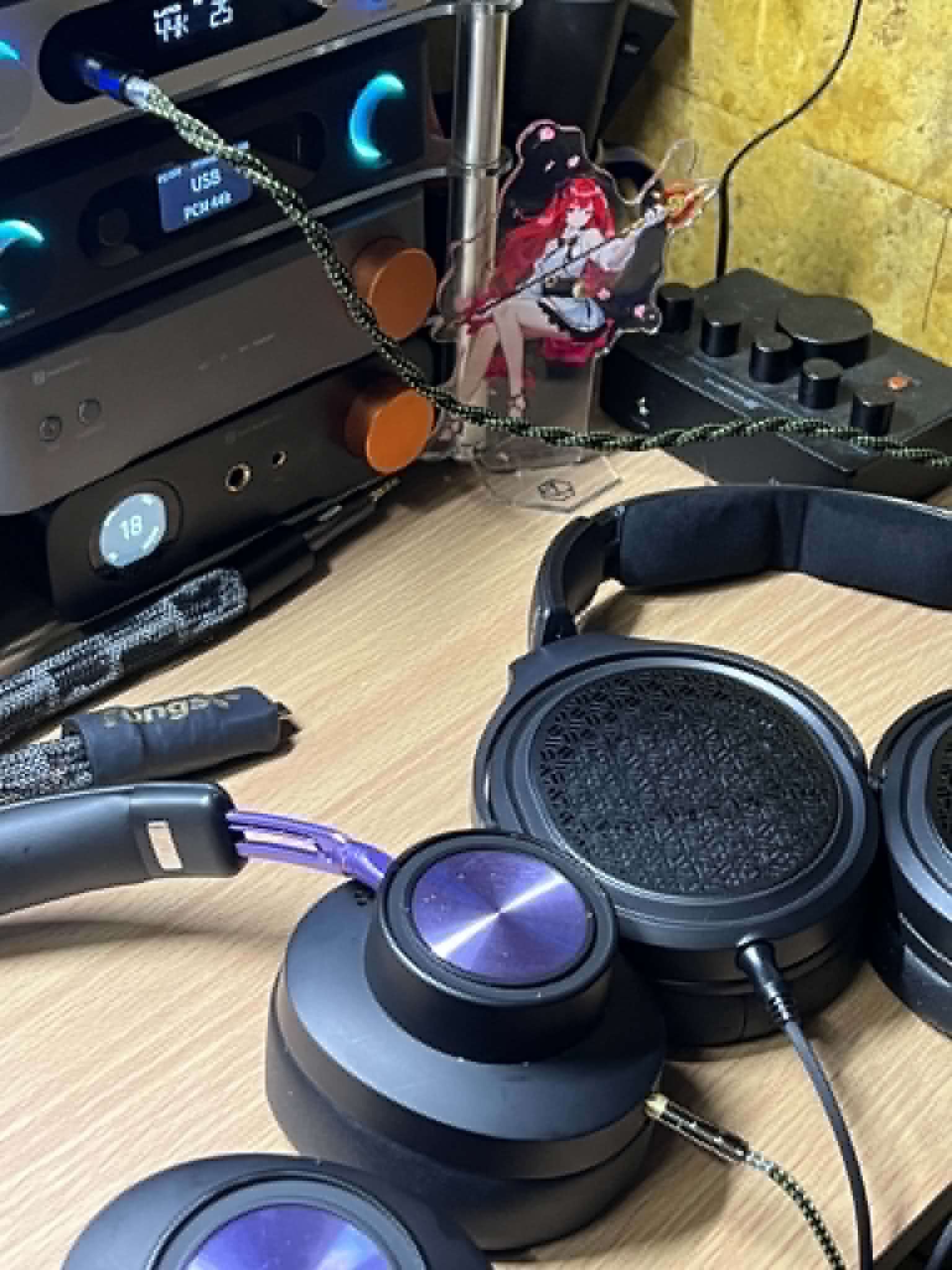
Final Take
For me, the difference is pretty simple:
JT9 = deeper bass, faster transients, better dynamics, more detail and a more open presentation.
Serene = warmer, darker, smoother and more relaxed.
The Serene is the headphone I'd pick when I want to sit back and just chill with some music.
The JT9 is the one I'd grab when I actually want to sit down and listen.
Both have their place, but personally, the JT9 is the more exciting and technically capable headphone, especially when paired with the GIGAS 1.
Final Thoughts
The FiiO JadeAudio JT9 ended up being more interesting to me than I initially expected.
Going into this comparison, I was genuinely curious whether it would simply be another variation of the JT7.
After spending hours switching between the two, I don't think it is.
The JT7 remains a very enjoyable headphone, especially if you like its warm, relaxed and natural character. But the JT9 takes that same basic philosophy and pushes it considerably further.
You get more bass, particularly deeper sub-bass.
You get faster and more textured bass response.
You get better dynamics.
You get improved resolution.
You get more precise imaging.
You get more treble information and air without the aggressive brightness.
And most importantly for me, you don't lose the musicality.
That's probably my favorite thing about the JT9.
It doesn't sound like FiiO took the JT7 and simply made it more analytical.
Instead, it sounds like they made it better.
The JT9 still has that natural warmth and note weight that made me enjoy the JT7, but now there's more speed, control, resolution and energy underneath it.
And then there's the GIGAS 1.
The fact that the JT9 is relatively easy to drive makes it a very practical headphone. You can run it from a good DAP or dongle and get a very satisfying result. But give it something like the GIGAS 1 and it rewards you with better control, stronger dynamics and a more authoritative presentation.
For me, that's the sign of a good planar headphone.
It doesn't need a giant amplifier just to make noise.
But when you give it better amplification, it gives you something back.
The JT9 is still spending more time on my desk, so I'm going to put more hours on it before giving my final verdict. But based on this first extended listening session, I'm already comfortable saying that FiiO has done something I always like to see from a successor:
They didn't just make another headphone.
They took one of their more enjoyable designs, kept what worked, fixed what needed fixing, and pushed the performance forward.
The JT7 was one of my favorite fun planar headphones in this price range.
The JT9 might have just taken its seat.
FiiO JadeAudio JT9 at a glance
Type: Open-back, over-ear planar magnetic
Driver: 95 × 86 mm planar magnetic
Diaphragm: 1 μm
Diaphragm coating: Sapphire + aluminum
Sensitivity: 95 dB/mW @ 1 kHz
Weight: Approximately 365 g
Connector: Dual 3.5 mm
Cables: 3.5 mm single-ended + 4.4 mm balanced
Included: 6.35 mm adapter and hard carrying case
Best character: Warm, musical, bassy, dynamic, detailed and smooth
My preferred pairing: JadeAudio GIGAS 1 + 4.4 mm balanced
My current take: If you liked the JT7 but wanted deeper bass, better technical performance, more dynamics and easier drivability without losing that warm, natural character, the JT9 feels like exactly the upgrade I'd been hoping for.
Link:
https://www.amazon.com/stores/FiiO/page/09C6D6C0-71E3-4540-968D-1F76CDBC4444
https://www.aliexpress.com/store/1103837960
https://aliexpress.com/store/1103841972
Comments
Post a Comment