Pros:
• Excellent build quality with an all-metal chassis and tempered-glass lid
• Dual AK4493S DACs deliver a smooth, musical and resolving sound
• Powerful headphone amplification with plenty of headroom
• Surprisingly strong drive for many full-size headphones and planars
• 4.4mm balanced and 3.5mm headphone and line outputs
• aptX Lossless Bluetooth support
• Optical and coaxial digital outputs
• CD ripping to WAV
• Compact all-in-one design
• Improved larger buttons and soft-closing CD lid
Cons:
• Higher-capacity USB drives above 32GB are not supported for CD ripping.

There’s something oddly satisfying about putting a physical CD into a player, closing the lid, and just listening. No scrolling through albums, no endless playlist hopping, no notifications. Just the disc spinning and the music playing.
That’s exactly why I enjoyed the FiiO DM15 R2R so much. It became my go-to CD player whenever I wanted to slow down and enjoy my physical collection. So when FiiO sent me the DM15 AKM Edition, I already had a pretty high bar for comparison.
The AKM version shares around 90% of its physical design with the R2R model, but internally and sonically, it takes a different approach. Instead of the R2R DAC architecture, FiiO went with a dual AKM AK4493S configuration, combined with dual OPA1642 low-pass filters and dual SGM8262 amplifiers.
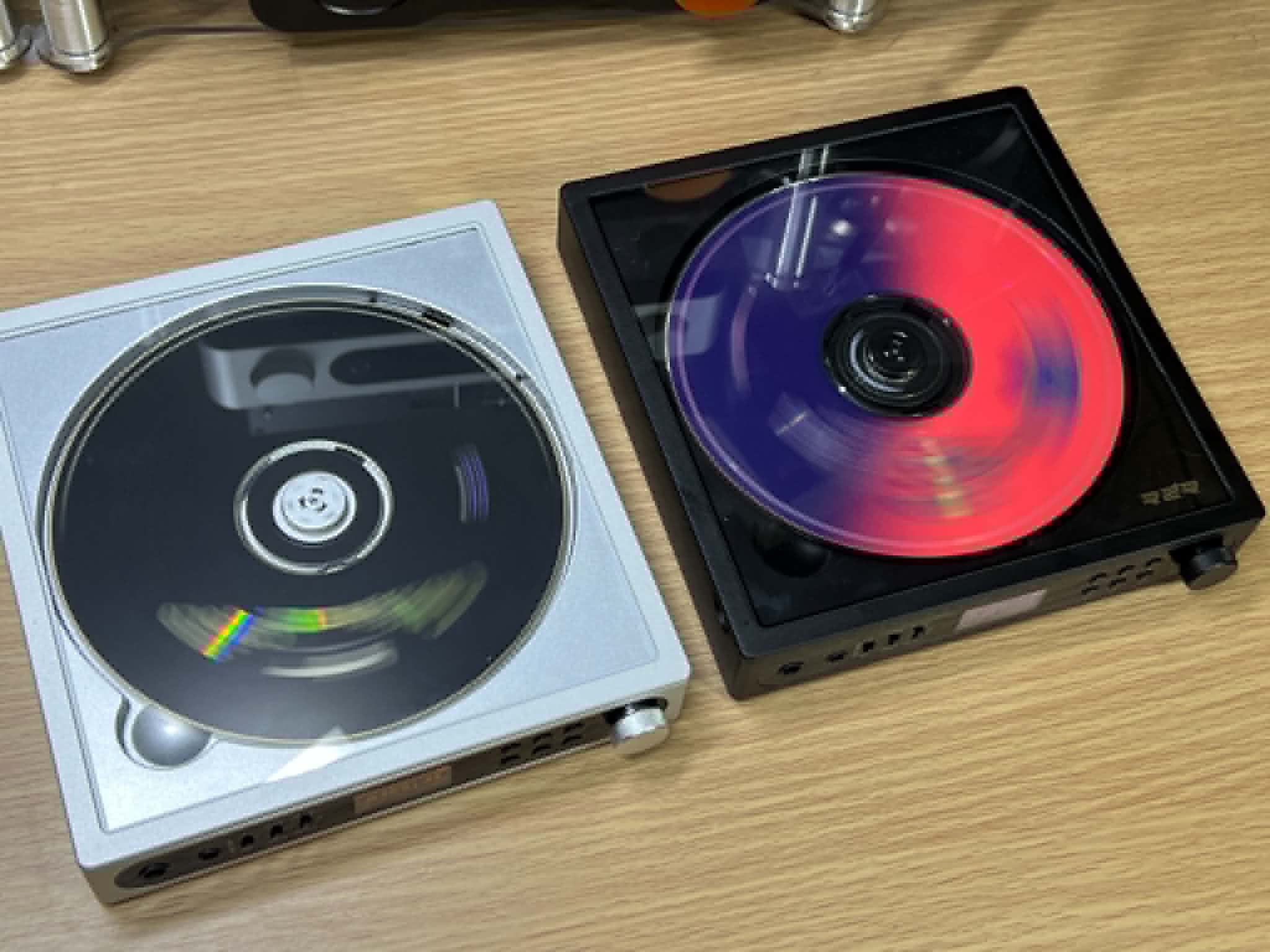
Whats inside the box? checkout my quick unbox video of the DM15 AKM and take a closer look.
First, the build.
Honestly, this is probably the most premium and solidly built portable CD player I’ve personally tried.
The DM15 is compact, but it’s slightly larger than a standard CD jewel case, so it still feels genuinely portable without feeling like FiiO tried to cram too much hardware into something ridiculously small.
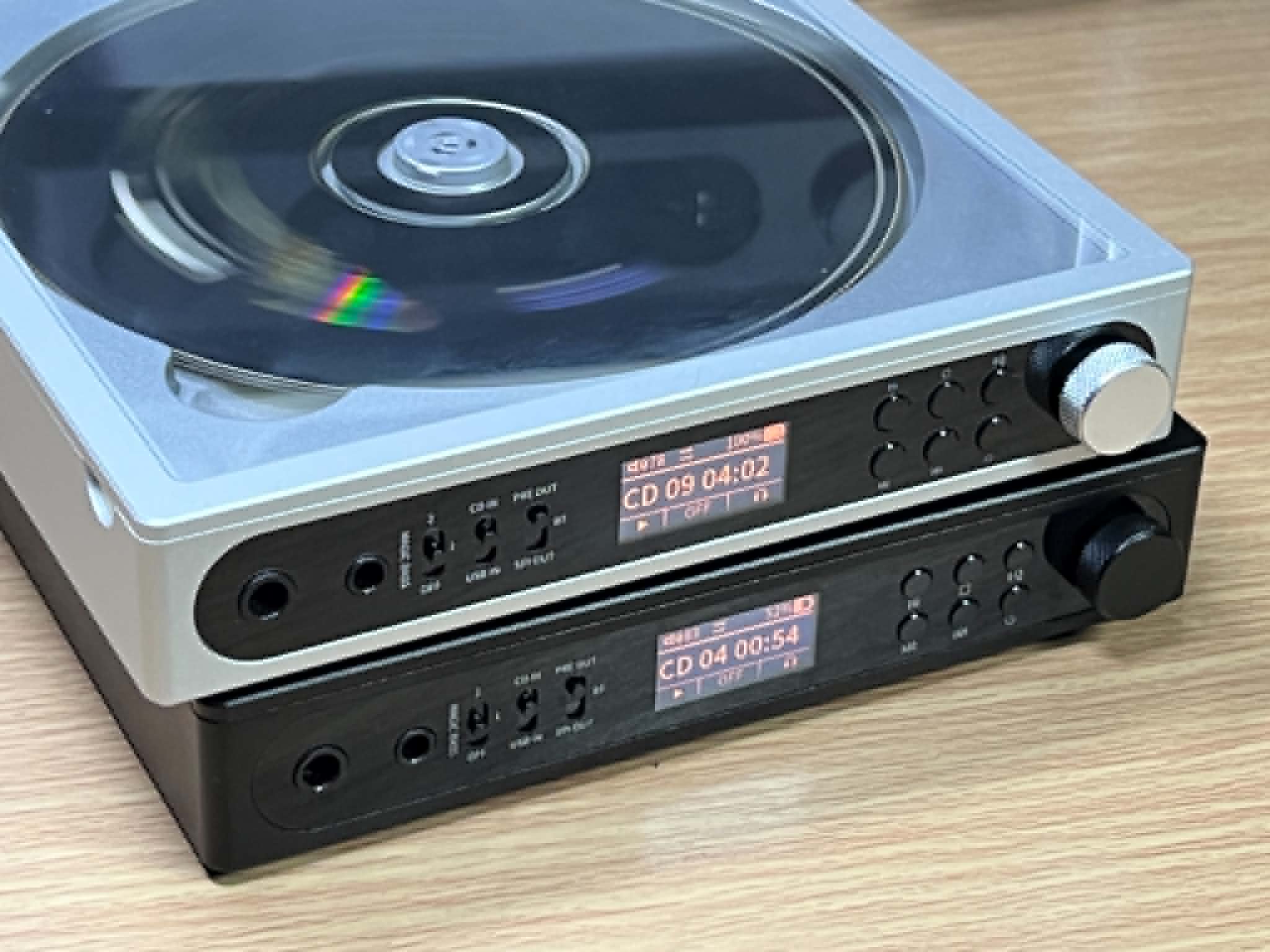
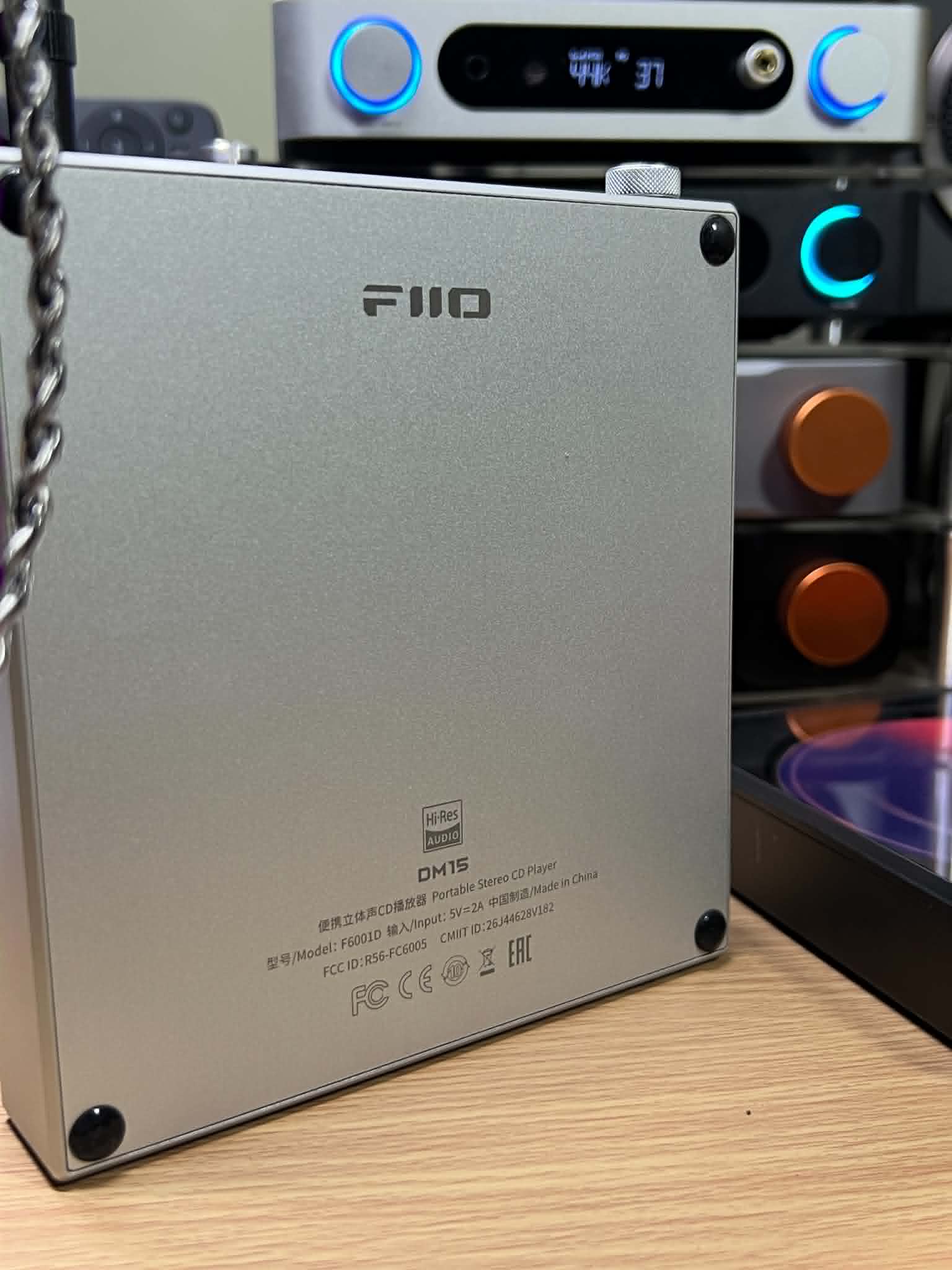
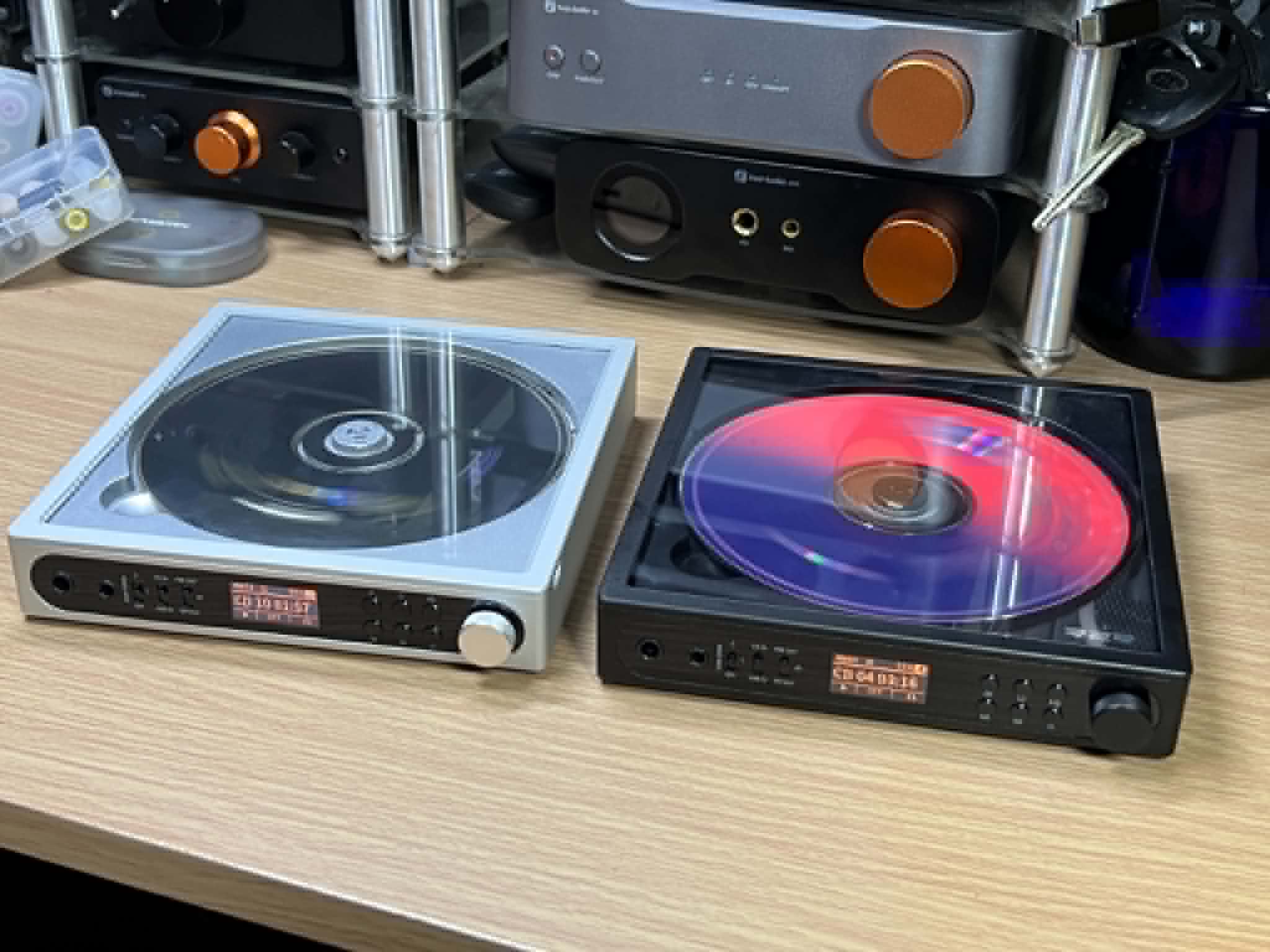
The chassis is constructed from aluminum alloy with a tempered glass top, and there are no cheap-feeling plastic parts in the main construction. You can feel the difference the moment you pick it up. It has that reassuring density and solidity that makes it feel more like a serious piece of Hi-Fi equipment than a portable CD player.
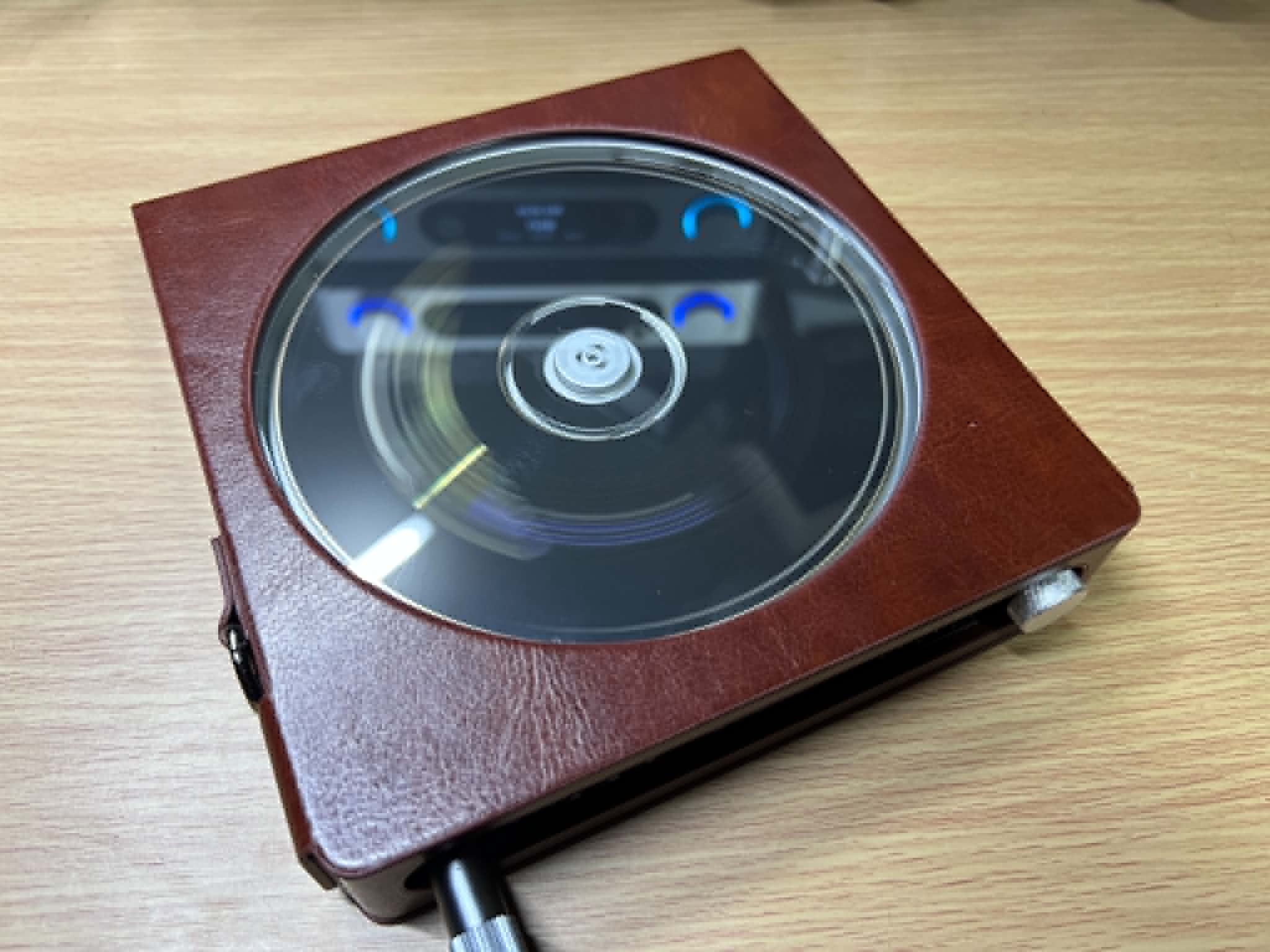
The transparent glass lid is particularly nice. You can actually watch the disc spinning, which adds a bit of that old-school mechanical charm that makes the DM15 fun to use.
FiiO also made a couple of small but meaningful changes compared with the R2R version.
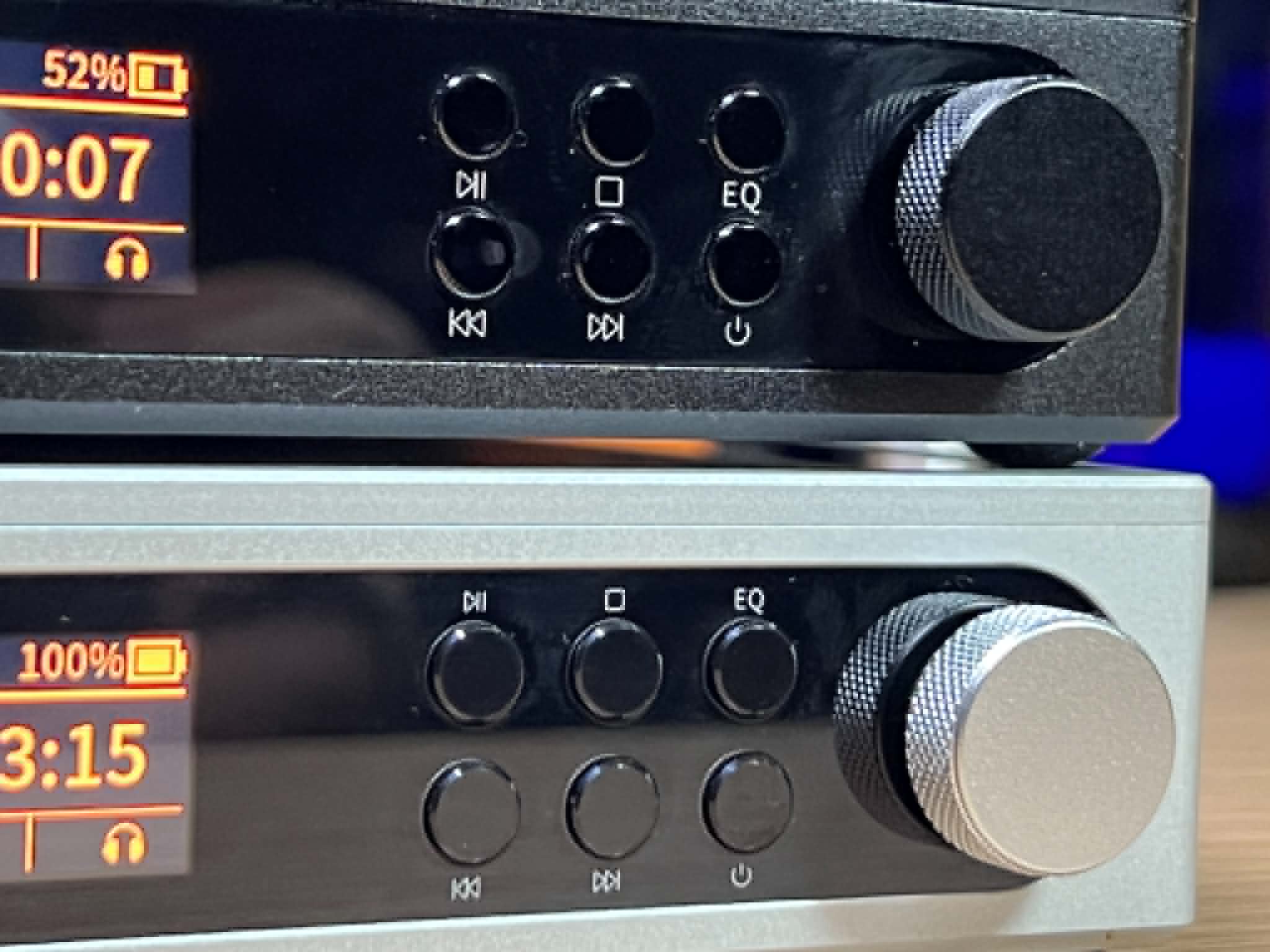
The first one I immediately noticed was the larger physical buttons. This might sound insignificant, but for someone with big hands and fat fingers like me, it makes a real difference.
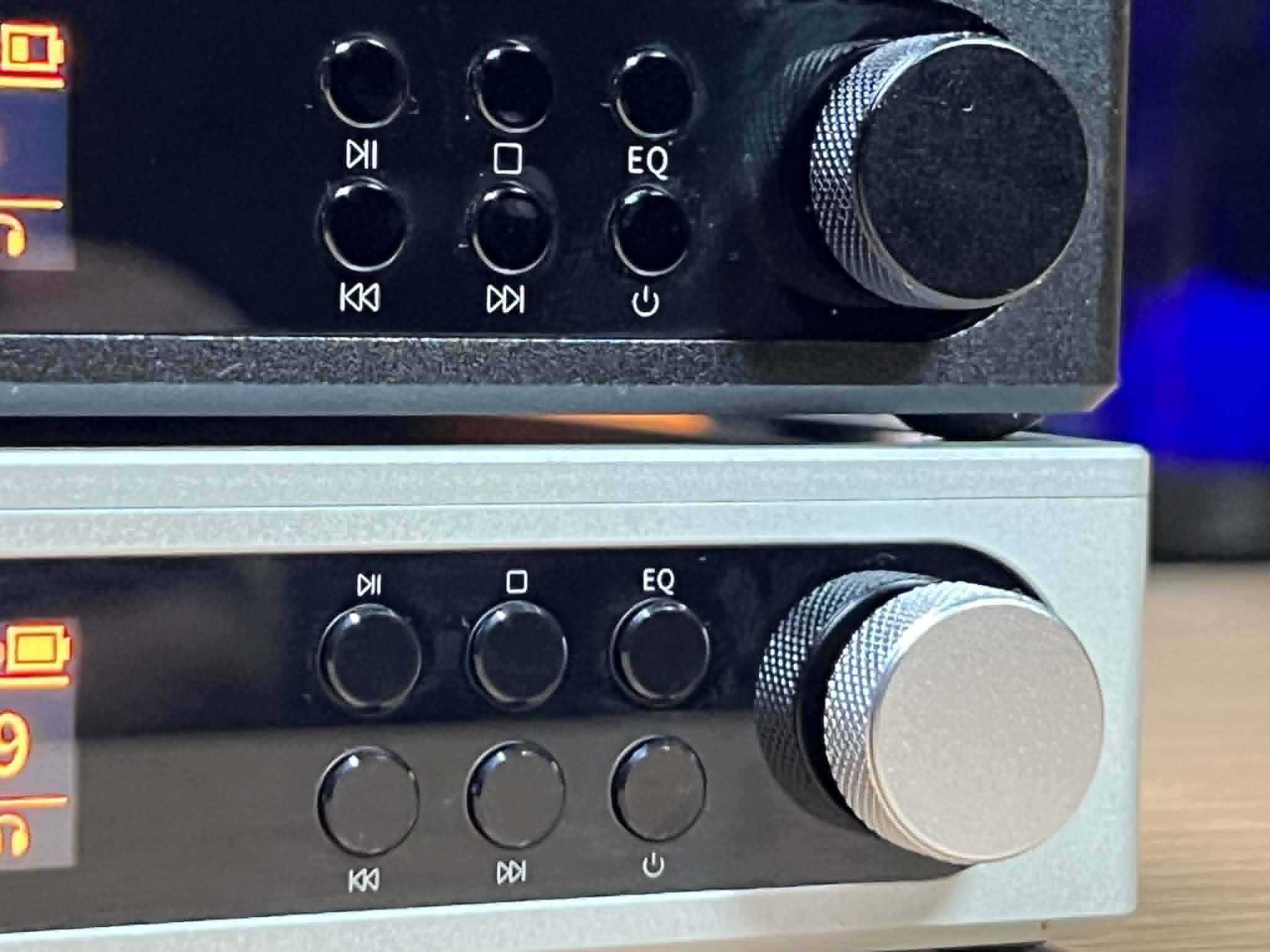
On the R2R version, I often used the remote because the smaller buttons weren't always the easiest to hit accurately. With the AKM version, I find myself using the physical controls much more often because they're simply easier to operate.
The other improvement I really like is the soft-closing CD lid.
The R2R's lid can drop down rather quickly if you let go of it. On the AKM version, FiiO added a little friction to the hinge mechanism. Because the lid itself is metal and glass and has some weight to it, this makes a noticeable difference.
Let go of the lid and it gently lowers itself instead of BAM! slamming shut.
It's a small refinement, but it's exactly the kind of thing that makes a product feel more polished.
The Hardware
Inside, the DM15 AKM is built around a dual AKM AK4493S DAC configuration, and this is one of the biggest differences between this version and the DM15 R2R.
The AK4493S is a Delta-Sigma DAC architecture, and for me, this is where the character of the AKM version starts to make sense. AKM DACs are known for combining strong technical performance with a smoother, more natural presentation. You get excellent dynamic range, low noise and good resolution, but without that overly clinical or aggressively analytical character that some highly technical DAC implementations can have.
FiiO did not just drop two AK4493S chips into the DM15 and call it a day either. The DAC section is supported by dual OPA1642 low-pass filter stages and dual SGM8262 amplifiers, giving the DM15 a proper analog output stage rather than treating the DAC as the entire audio circuit.
And I think that's important because the DAC chip itself is only one part of the equation. The implementation around it, including the filtering, amplification, power supply and signal path, ultimately determines how the whole thing sounds.
The DM15 uses a five-core architecture, with dedicated processing handling different parts of the system, including CD control, digital signal processing, DAC conversion, amplification and system management. This keeps the different functions from all fighting for the same processing resources and helps the DM15 operate as a fairly sophisticated digital audio platform rather than just a CD mechanism with a DAC attached.
And that's really the thing with the DM15.
Calling this simply a portable CD player doesn't quite do it justice.
The CD mechanism is actually just one part of what this thing can do.
More Than a CD Player..
The DM15 AKM can function as a CD player, USB DAC, headphone amplifier, line-level source, digital transport and Bluetooth device.
As a USB DAC, it supports up to 32-bit/384kHz PCM and native DSD256. So you can connect it to a PC or laptop and use the DM15 as your main DAC and headphone amplifier without needing another box.
I also like that FiiO didn't limit the digital connectivity.
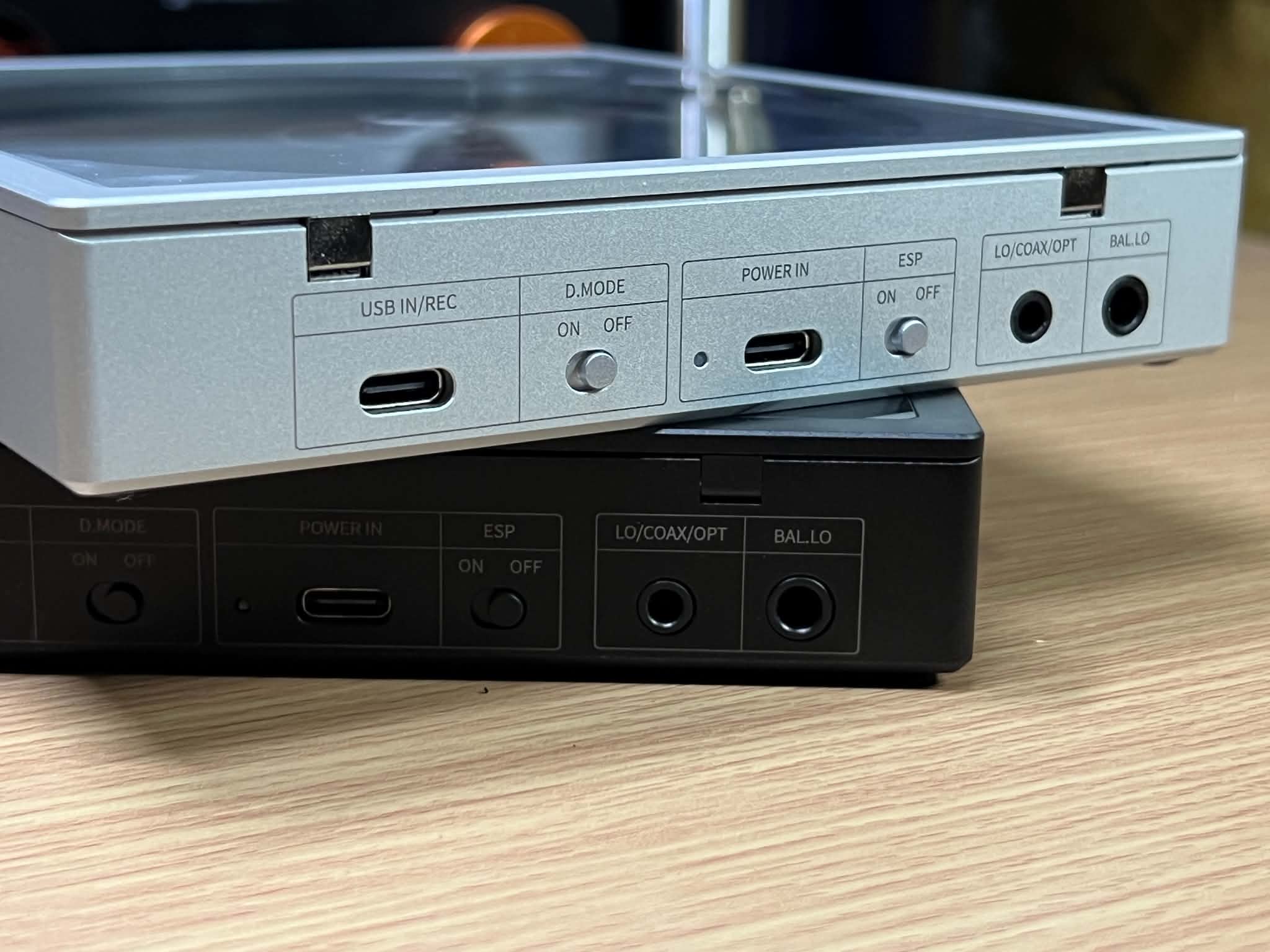
You have both optical and coaxial digital outputs, which means the DM15 can also be used as a digital transport into another DAC or amplifier. If you prefer to let another DAC handle the conversion, you can simply take the digital signal out of the DM15 and feed it into your existing system.
Then you have Bluetooth, including aptX Lossless support, which adds another layer of flexibility.
For me, this makes the DM15 particularly interesting as a desktop system. You can have a physical CD playing one moment, switch to your computer as a USB source, or use Bluetooth when you just want something convenient.
And you don't have to change the entire system around it.
Plenty of Analog Outputs
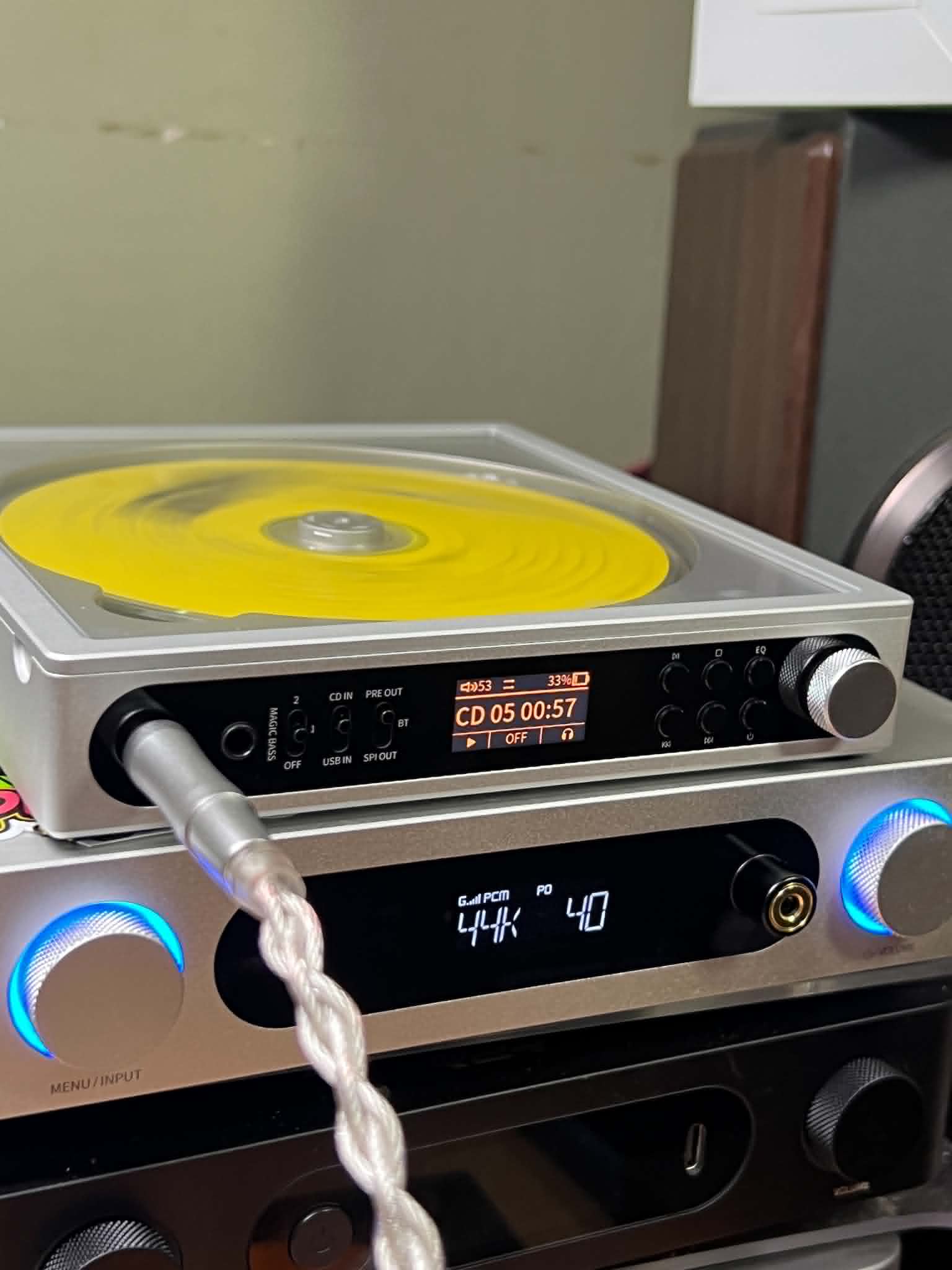
FiiO also gives you a surprisingly complete selection of analog outputs.
For headphones, you get both 4.4mm balanced and 3.5mm single-ended outputs.
The same goes for line-level connectivity, with dedicated 4.4mm balanced and 3.5mm single-ended line outputs.
This is something I appreciate because it means the DM15 isn't locked into headphone use. You can connect it directly to an amplifier, powered speakers or another analog system and use the DM15 as a proper source component.
The 4.4mm balanced output is particularly useful if you're building a compact desktop system. You can take the balanced line-out into a separate amplifier and keep the signal path clean without needing another DAC.
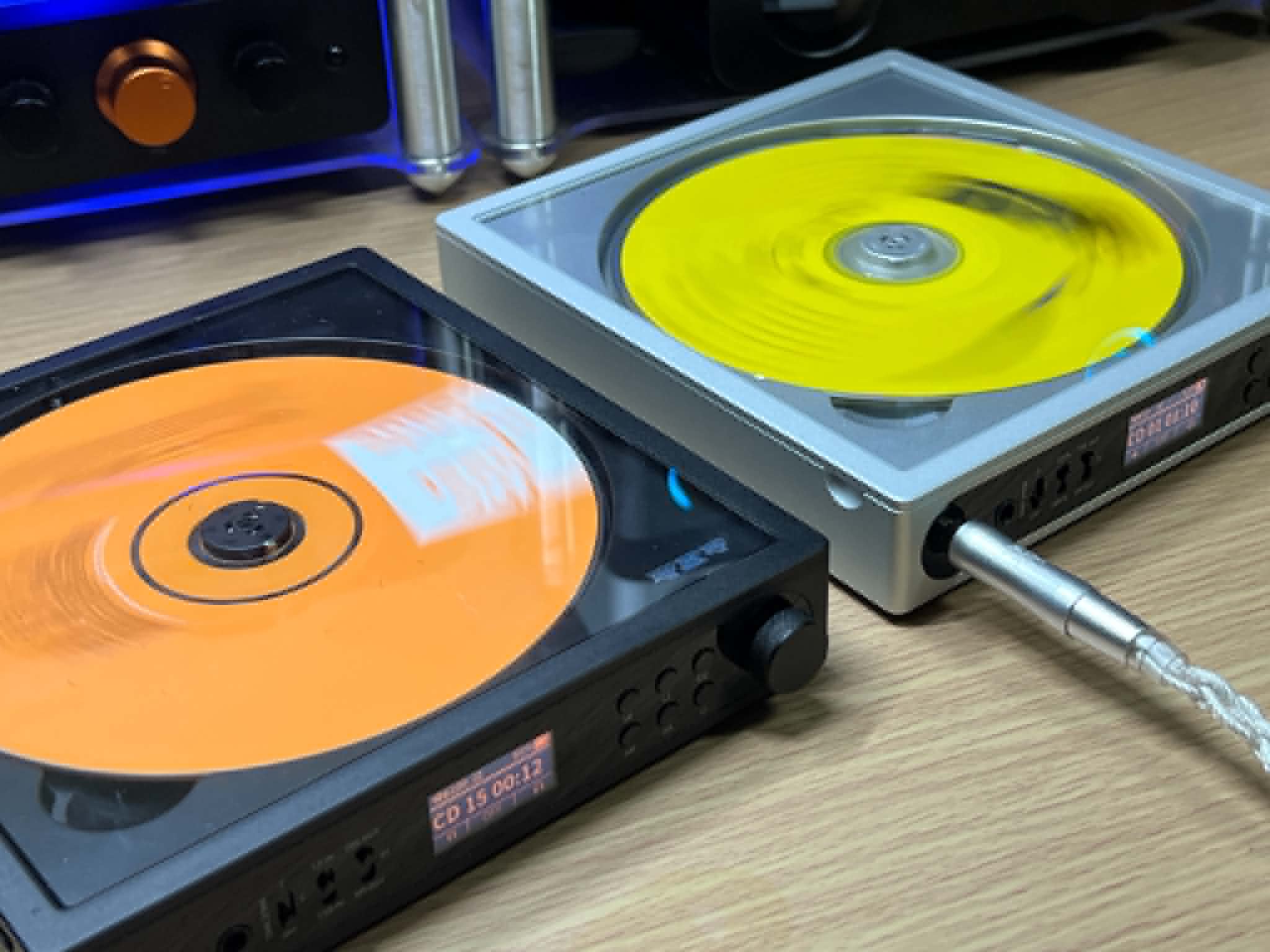
So depending on how you want to use it, the DM15 can be the source, the DAC, the headphone amp, or simply the transport.
That's a lot of flexibility for something this compact.
CD Ripping
Another feature I actually find pretty useful is CD ripping.
The DM15 can rip your CDs directly to a USB thumb drive and save them as WAV files. This is a nice touch if you have a physical CD collection but also want to build a digital library.
There is one important limitation, though.
The DM15 is compatible with 32GB USB thumb drives, and higher-capacity drives will not work. So if you're planning to use the ripping function, don't grab a 128GB or 256GB drive thinking bigger is automatically better.
Stick with 32GB.
And honestly, for CD ripping, 32GB is already more than enough for the intended use. You're not going to fill that thing overnight unless you're trying to archive your entire collection in one sitting.
The Point of the DM15
What I like about the DM15 AKM is that none of these features feel like they're there simply to pad the specification sheet.
The dual AKM DACs give it a proper high-quality conversion stage.
The OPA1642 low-pass filters and SGM8262 amplification stages give it a serious analog section.
The five-core architecture handles the different functions of the player.
The USB input turns it into a high-resolution DAC.
The balanced and single-ended outputs let you integrate it into different systems.
The optical and coaxial outputs let you use it as a digital transport.
Bluetooth gives you a convenient wireless option.
And, of course, there's still the CD mechanism at the heart of it.
That's why I think the DM15 AKM is better described as a compact all-in-one Hi-Fi source rather than simply a portable CD player.
You can build an entire listening setup around it, or you can drop it into an existing system and let it handle whatever job you need.
And considering the size of the DM15, that's pretty damn impressive.
It's basically a little Hi-Fi Swiss Army knife with a CD spinning inside it.

Headphone Amplification and Power
I was really surprised about the volume output of the DM15 AKM, because looking at the specifications alone, I wasn't expecting it to sound quite this powerful.
FiiO rates the DM15 AKM at up to 1100mW per channel, which is already a pretty serious amount of power for something that is essentially a portable CD player. But as we all know, numbers on a spec sheet only tell part of the story. What really matters is how that power translates when you actually plug headphones into it and start listening.
And this is where things got interesting.
Interestingly, FiiO's published specifications suggest that the DM15 R2R actually has the higher rated output power, so going into this comparison, I expected the R2R to at least match or possibly outperform the AKM in terms of sheer volume and drive.
But that isn't what I experienced at all.
When I put the two side by side and used the same headphones and similar volume settings, the DM15 AKM was noticeably louder. And I'm not talking about one of those differences where you have to stare at the volume indicator and convince yourself that you're hearing something. The difference was immediately obvious.
At around 60% volume on the R2R, I would describe the level as comfortably loud for normal listening. Switch to the AKM, leave the volume at roughly the same percentage, and suddenly we're talking about a very different situation. The AKM was significantly louder, to the point where some headphones were already getting into the "okay, that's enough" territory.
Of course, volume isn't the same thing as driving power. Maximum SPL is influenced by headphone sensitivity, impedance, gain structure and the efficiency of the particular headphone. So I'm not going to simply say, "The AKM is more powerful than the R2R" based purely on volume.
But from a practical listening standpoint, the AKM certainly gives me the impression of having more aggressive gain and plenty of usable power on tap.
And more importantly, it doesn't just get loud. It sounds like it has the current and voltage reserves to maintain control when the headphone becomes more demanding.
I tried the DM15 AKM with a variety of IEMs and headphones, including some of the more demanding full-size models I have around, and I never really got the feeling that the amplifier was struggling.
With easier-to-drive headphones and IEMs, there's obviously an enormous amount of headroom. In fact, with sensitive IEMs, you need to be a little careful with the volume because the DM15 can get loud very quickly. I found myself making much smaller volume adjustments than I normally would.
With full-size headphones, however, the extra power becomes much more interesting.
The amplifier has enough authority to give the low end proper grip rather than simply making the headphone louder. Bass notes have weight and control, transients remain clean, and dynamic swings don't feel compressed when the music suddenly gets busy.
This is particularly noticeable with planar headphones.
Planars can be a little deceptive because impedance alone doesn't tell you how difficult a headphone is to drive. Sensitivity and the amount of voltage and current the driver really needs are equally important. Some planars are relatively easy to drive, while others can benefit substantially from a stronger desktop amplifier.
So I wouldn't make the blanket statement that the DM15 AKM will drive every planar to its full potential.
But with the planars I've tried, the DM15 AKM has been surprisingly capable.
It doesn't sound like a portable device desperately trying to imitate a desktop amplifier. It actually has enough grunt to make a number of full-size planars sound properly alive without immediately reaching for another amp.
And that's where I think the DM15 becomes much more interesting.
Because you can look at this thing and think, "Okay, it's a CD player with a headphone output."
But that's underselling what FiiO has actually built here.
The headphone amplifier is good enough that the DM15 can genuinely function as a self-contained listening system.
You don't necessarily need a separate DAC.
You don't necessarily need a separate headphone amplifier.
You don't need a stack of boxes sitting on your desk.
You can literally take the DM15, put a CD in it, plug your headphones into the 4.4mm balanced output and start listening.
CD in. Headphones out. Done.
And I really like that.
There is also a difference in the way the AKM version handles dynamics compared with simply using a small dongle DAC. With the DM15, there's a greater sense of authority behind the headphone. When a recording goes from a quiet passage into a big drum hit or orchestral swell, the amplifier has enough headroom to reproduce that change without sounding like it's suddenly running out of breath.
The low end is particularly telling. A weaker amplifier can make a demanding headphone sound technically loud but still somewhat flat or restrained. The DM15 AKM doesn't have that problem with the headphones I've tested. There is a better sense of grip and physicality, especially through the balanced output.
And this is one reason I prefer using the 4.4mm balanced output whenever the headphone or IEM allows it. You get the full capability of the amplifier section, and the DM15 feels particularly confident driving headphones this way.
At the same time, I wouldn't overlook the 3.5mm output. For IEMs and efficient headphones, it is more than enough, and honestly, I often don't need anywhere near the available power.
If anything, the opposite is true.
With sensitive IEMs, the DM15 AKM has so much available volume that I have to be more deliberate with the volume control. You definitely don't want to put on a sensitive IEM and casually jump straight to the volume level you might normally use with a demanding headphone.
One other thing I appreciate is that the DM15 doesn't sound like it's simply chasing maximum loudness. There's still a sense of composure to the amplifier.
It can get loud, but it doesn't become obviously strained as you push it. The presentation remains relatively clean and controlled, with good separation and stable imaging.
That matters more to me than simply being able to blow my eardrums off.
Ultimately, the amplifier section is one of the reasons I think the DM15 AKM is much more than a portable CD player.
It's a genuinely capable headphone source that happens to have a CD mechanism built into it.
And considering the size of the unit, that's pretty impressive.
You have a dual-AKM DAC, a serious analog stage, a powerful balanced headphone amplifier, USB DAC functionality, digital outputs, line outputs, Bluetooth and a physical CD player, all inside this relatively compact aluminum chassis.
That's a lot of functionality, but the important part is that the headphone output doesn't feel like an afterthought.

For me, that's what makes the DM15 AKM so enjoyable. I can grab a full-size headphone, plug it straight into the player, throw in one of my favorite CDs and just listen. No separate amplifier, no DAC stack, no cables running between multiple boxes.
Just the DM15 and the music.
Sound
Anyone who has followed my reviews for a while probably knows where my personal preferences sit. I tend to gravitate toward the musical, natural, and slightly warmer side of Hi-Fi.
I'm a big fan of tubes, R2R and AKM DACs, and if you look at my desk, that's pretty obvious.
I already loved the DM15 R2R, so I was curious about how the AKM version would sound.
And the answer is: different, but not radically different.
The AKM version still retains the musical character I enjoy, but compared directly with the R2R, it has a cleaner and more distinctly Delta-Sigma presentation.
Tonality
The first thing I noticed is that the AKM version still has that characteristic smoothness I associate with AKM DACs.
It isn't bright, clinical, or aggressively analytical.
Instead, there's a slight warmth and richness to the presentation, but compared with the R2R version, the AKM sounds more precise and focused.
The R2R has that beautiful analog-like flow. Notes seem to connect together naturally, with a slightly softer edge and more organic decay.
The AKM doesn't quite have that same relaxed, almost tape-like presentation.
Instead, it gives me more edge definition and sharper detail retrieval.
There's more contrast around individual notes, and small details are easier to pick out.
The difference becomes especially obvious when switching between the two immediately.
The R2R sounds more analog.
The AKM sounds more precise.
But thankfully, the AKM doesn't sacrifice musicality to get there.
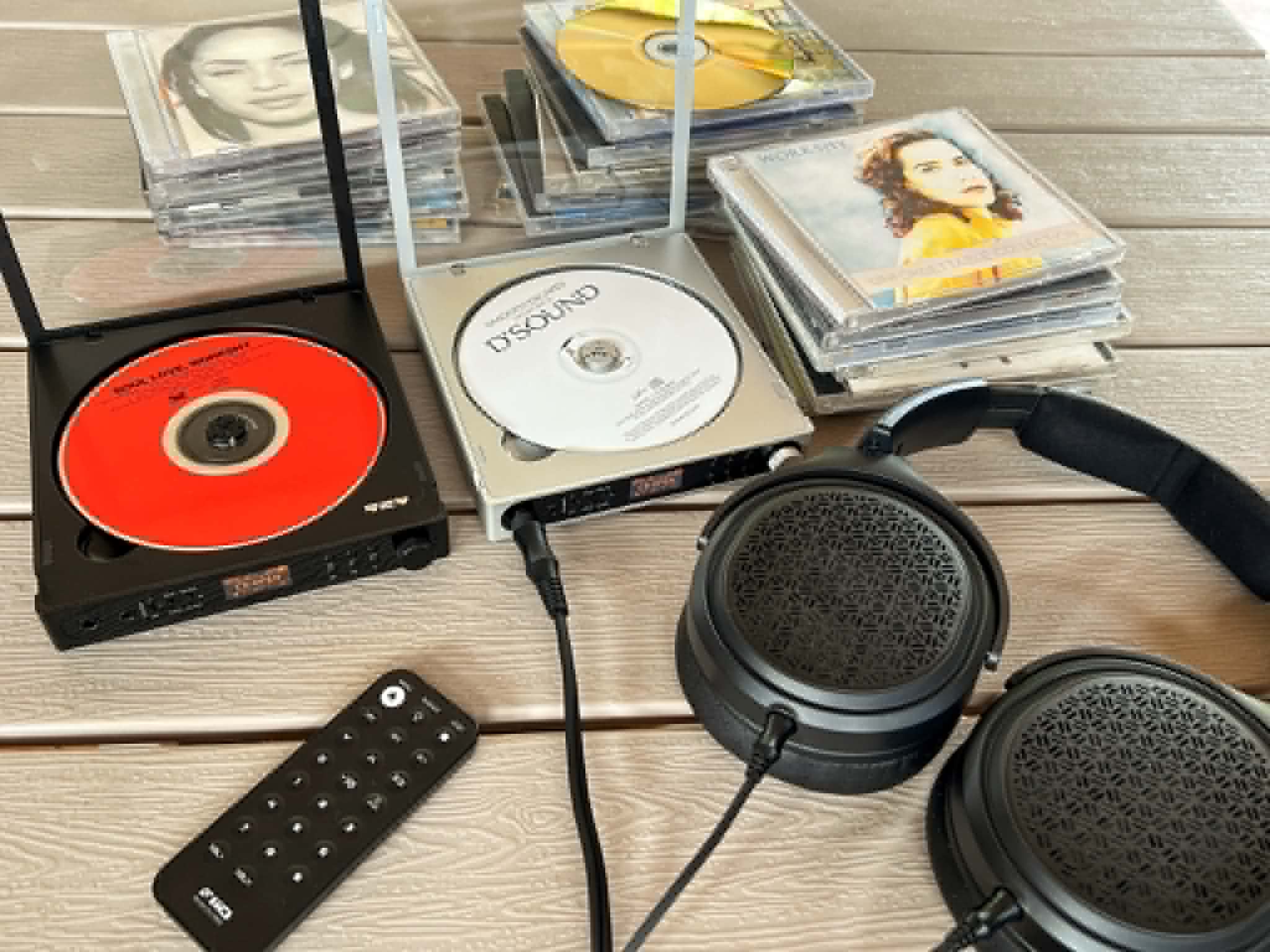
Bass
AKM Bass is deep, controlled and well defined.
The low end has good extension, but it doesn't have that exaggerated modern bass boost that some portable devices use to make things sound immediately impressive.
Kick drums have proper impact and bass guitar lines have good texture.
The R2R version gives bass a slightly thicker and more relaxed character, while the AKM version sounds a little tighter and more controlled.
There is also excellent separation between sub-bass and mid-bass, so busy recordings don't turn into a blob of low-frequency energy.
With electronic music and modern recordings, the AKM's tighter presentation works particularly well.
With acoustic recordings, I sometimes prefer the R2R simply because of that extra sense of body.
Midrange
Vocals have good body and natural tone, but they're not overly thick.
Male vocals have convincing chest resonance, while female vocals retain enough texture and upper-mid presence to sound articulate without becoming shouty.
Acoustic guitars, piano and brass instruments have good harmonic texture.
And this is where the AKM version reminds me why I like AKM DACs.
There's a smoothness to the upper midrange that keeps things from becoming fatiguing, but the presentation is still detailed enough to reveal small nuances in recordings.
Compared directly with the R2R, the AKM has slightly more incisiveness.
The R2R gives you the note.
The AKM gives you the note plus a little more information around its edges.
Treble
Treble is clean, extended and nicely controlled.
There is more perceived detail here compared with the R2R, but I wouldn't describe the AKM as bright.
Cymbals have good metallic texture and decay, and there's enough upper-end energy to keep the presentation open.
This is particularly noticeable with jazz recordings.
Listening to cymbal work from classic jazz recordings, the AKM lets you hear more of the leading edge and decay without turning everything into a wall of treble.
That said, the R2R remains slightly more relaxed.
If you're particularly sensitive to treble, the R2R may still be the safer choice. If you want a little more resolution and articulation while keeping the overall presentation smooth, the AKM is the one I'd pick.
Detail and Resolution
This is where the AKM version pulls ahead for me.
The R2R is technically very resolving, but its relaxed presentation means some details aren't pushed forward.
The AKM has more immediate detail retrieval.
Microdetails are easier to notice, particularly in complex recordings where there are multiple instruments occupying the same frequency range.
I don't mean that the AKM is artificially sharpening everything.
Rather, the separation between individual elements is cleaner.
You can follow the guitar line behind the vocals.
You can hear the decay of percussion.
You can pick up room ambience and recording-space information more easily.
It feels like the AKM version has a slightly cleaner window into the recording.
Soundstage and Imaging
Soundstage is another strong point.
The DM15 AKM doesn't sound artificially wide, but it gives instruments enough space to breathe.
Imaging is precise, with good left-to-right placement and decent depth.
The R2R version gives me a slightly more relaxed and spacious feeling, while the AKM version has sharper image boundaries.
With well-recorded jazz, classical and live recordings, the AKM does a particularly good job of presenting individual instruments in their own space.
It's not a holographic monster of a DAC, obviously, but considering this is a portable CD player with a built-in amplifier, the spatial performance is impressive.
Dynamics
Dynamics are also better than I expected.
The DM15 AKM has enough punch and transient speed to make drums sound convincing, but it doesn't become aggressive.
Bass drum hits have impact, percussion has snap, and quieter passages retain enough contrast to make the music feel alive.
This is another area where the AKM's slightly cleaner presentation works well.
The R2R sounds more relaxed and organic.
The AKM sounds more energetic and immediate.
Neither is better universally. They simply appeal to slightly different moods.
CD Playback
Of course, the whole reason this thing exists is the CD player.
And honestly, FiiO nailed this part.
The CD mechanism feels solid and refined, and playback has been stable during my time with it.
I haven't experienced noticeable lag or stuttering.
The anti-shock system also helps when using it as an actual portable player.
There's something genuinely enjoyable about watching the disc spin underneath that glass lid while the music plays.
It's old-school in the best possible way.
And that's probably why I've enjoyed using the DM15 more than I expected.
We have streaming services capable of giving us practically every album ever recorded, but there is something different about picking an album from your shelf, putting it into the DM15 and just listening to the whole thing.
No algorithm.
No recommendations.
No distractions.
Just the album.
USB DAC Performance
The DM15 is also surprisingly versatile as a USB DAC.
Connect it to a PC, laptop, phone or tablet and you get support for up to 32-bit/384kHz PCM and native DSD256.
The AKM DAC architecture makes a lot of sense here because it gives the DM15 a sound that works equally well with local high-resolution files and CD playback.
So if you're sitting at your desk, you can use the DM15 as a USB DAC and headphone amplifier.
When you want to go old school, pop a CD in.
That dual personality is one of the strongest aspects of the product.
Outputs and Connectivity
Connectivity is another area where FiiO went a little crazy.
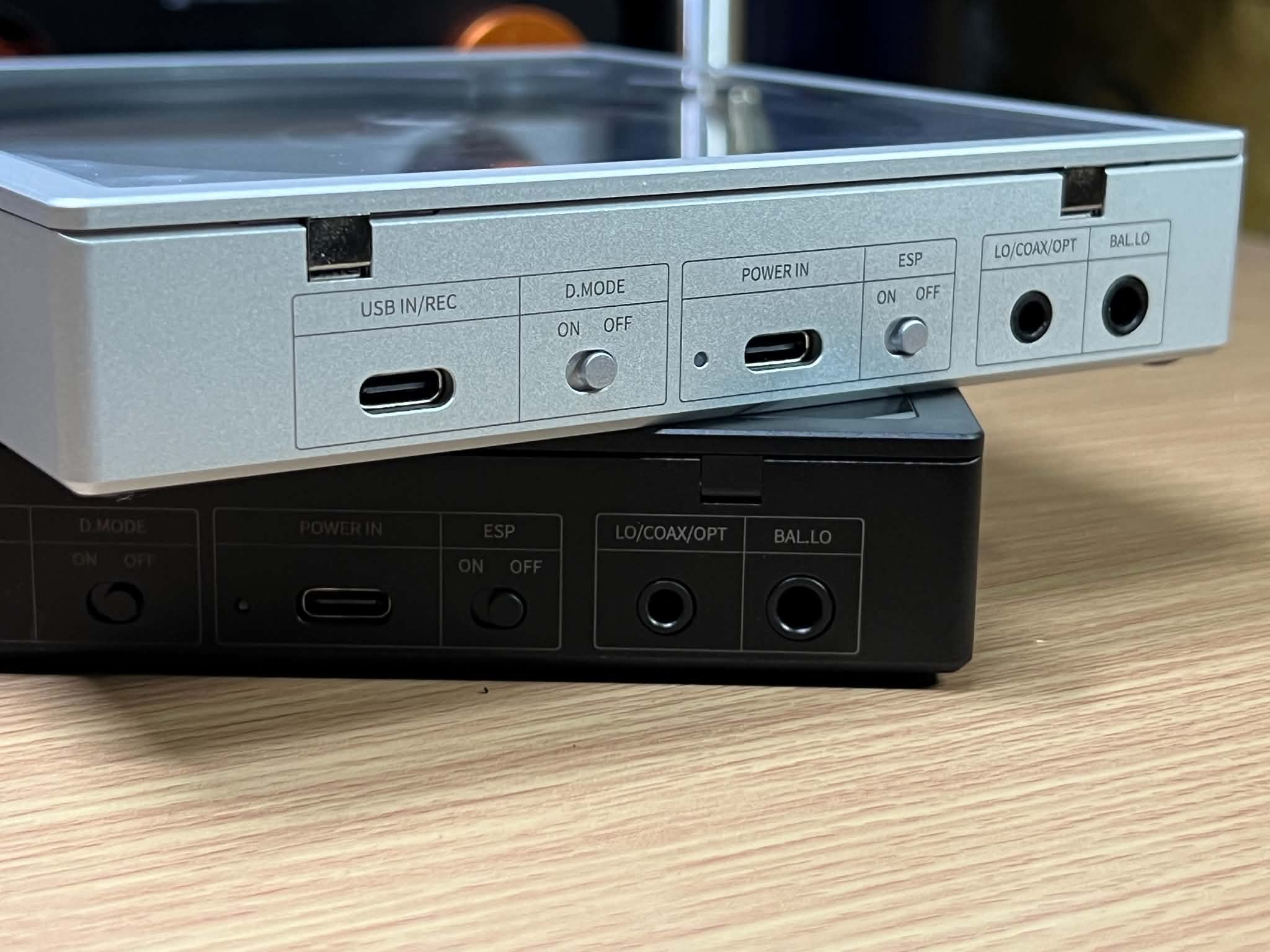
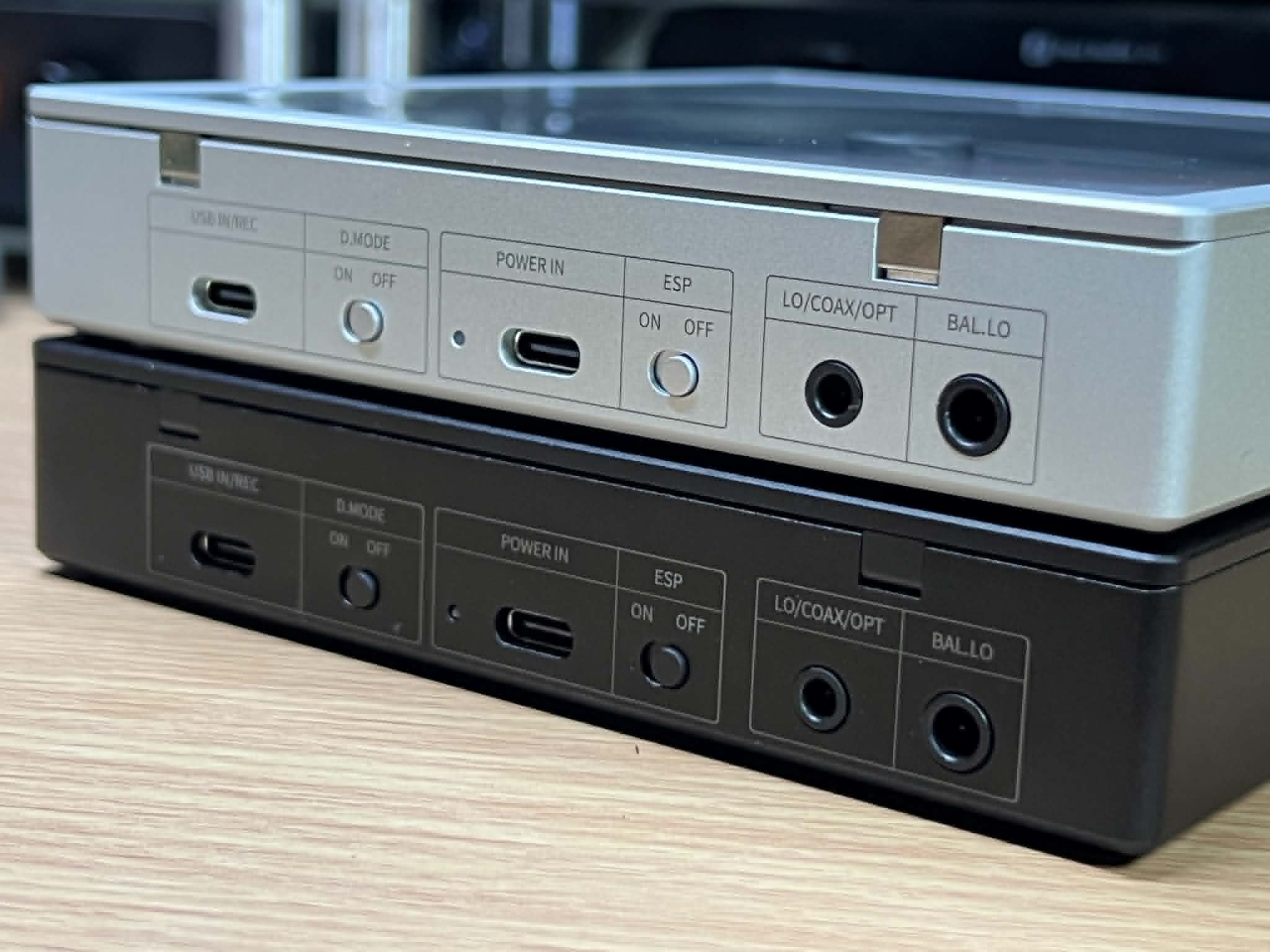
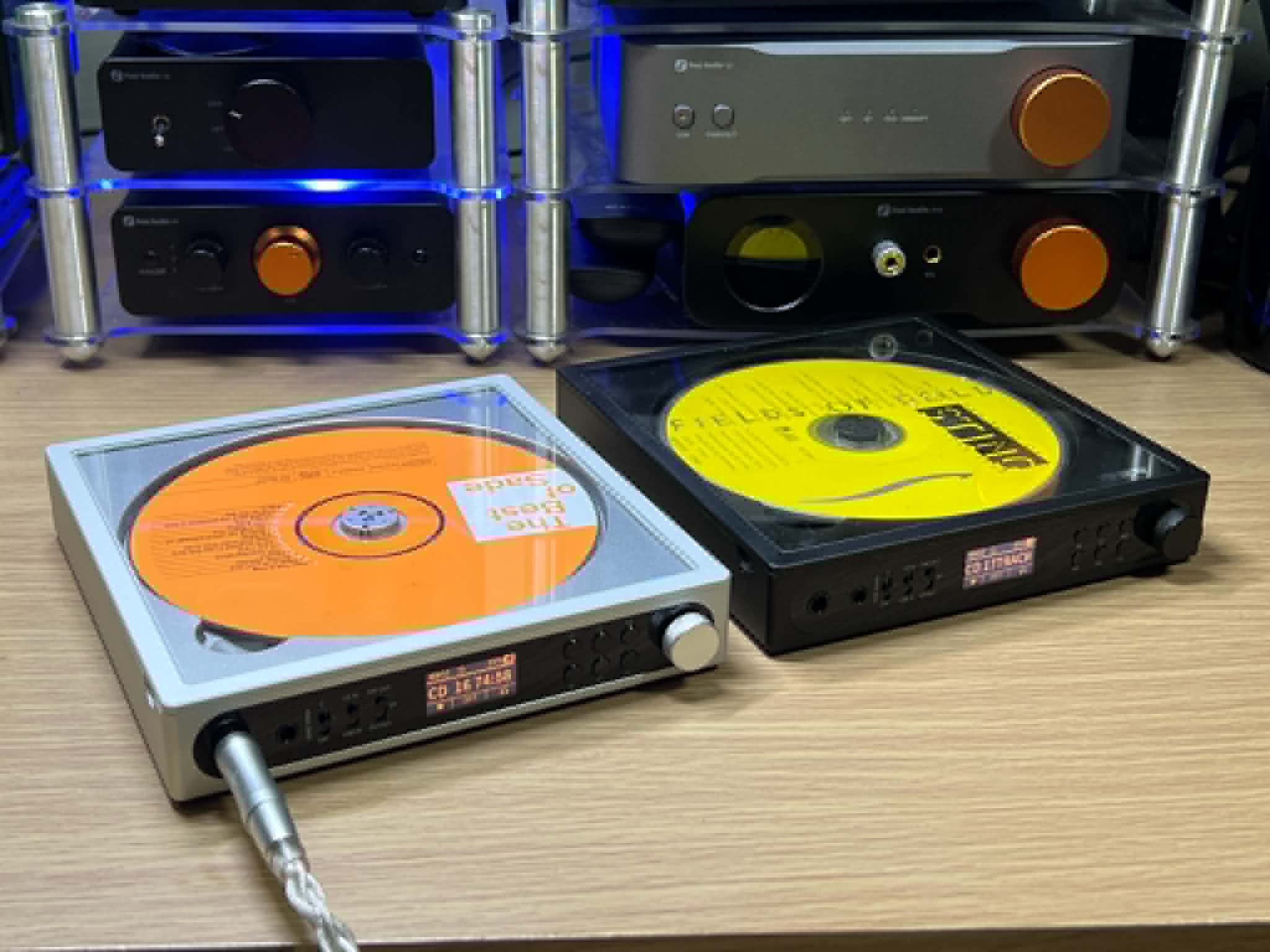
You get:
• 4.4mm balanced headphone output
• 3.5mm single-ended headphone output
• 4.4mm balanced line output
• 3.5mm single-ended line output
• Coaxial digital output
• Optical digital output
• USB DAC functionality
• Bluetooth with aptX Lossless
• USB CD ripping to WAV
This makes the DM15 surprisingly useful in a desktop system.
You could use it as a CD transport, USB DAC, headphone amplifier, analog source or digital transport depending on what you're connecting it to.
It also means the DM15 can easily slot into a larger Hi-Fi setup instead of being limited to headphone use.
Battery Life
The DM15 uses a 4700mAh high-voltage battery, with FiiO rating CD playback at up to around six hours.
Obviously, actual battery life depends on how you're using it, volume levels, output mode and other factors, but for a portable CD player with this much circuitry packed inside, I think the battery capacity is reasonable.
Personally, I see the DM15 more as a portable/desktop hybrid than something I'd carry around all day.
It's portable enough to take with you, but the build quality and connectivity make it equally at home sitting on a desk.
EQ and Sound Effects
FiiO also gives you a pretty extensive selection of DSP options, with 24 sound effects, including three bass levels and eight EQ presets.
I'm generally a "EQ off and just listen" kind of guy, so I did most of my critical listening with the processing disabled.
But having these options is useful.
If you're using the DM15 with a particular headphone that needs some tonal adjustment, you can tailor the sound without needing external software.
For serious listening, though, I prefer the natural presentation of the stock tuning.

Final Thoughts
The FiiO DM15 AKM Edition is an interesting product because it doesn't really fit into one category.
It's a CD player.
It's a USB DAC.
It's a headphone amplifier.
It's a Bluetooth receiver/transmitter.
It's a digital transport.
It can rip CDs.
It has balanced outputs.
And somehow FiiO managed to put all of that into a chassis only slightly larger than a CD case.
More importantly, it doesn't feel like a collection of features thrown together just for the spec sheet.
The hardware feels genuinely premium, the CD mechanism is reliable, the amplification section is powerful, and the AKM DAC gives it a sound that I think will appeal to a lot of audiophiles.
Compared directly with the DM15 R2R, the differences are actually quite interesting.
The R2R is still my choice if I want that extra bit of analog character. It has a beautiful natural warmth, organic note weight and effortless musical flow.
The AKM version, however, gives me more perceived resolution, sharper detail, tighter control and a more precise presentation, while still retaining the smooth and musical character I enjoy from AKM DACs.
And surprisingly, the AKM version also sounds significantly louder in my actual listening tests despite the published output specifications suggesting otherwise.
So if I had to describe the two in the simplest way possible:
DM15 R2R: warmer, more organic, more analog, more relaxed.
DM15 AKM: smoother Delta-Sigma presentation, cleaner, more resolving, sharper detail and more energetic.
For me, I don't think one replaces the other.
They are two different flavors of the same excellent platform.
And that's probably the biggest compliment I can give FiiO here. The DM15 AKM isn't simply an alternative version of the R2R. It gives you a genuinely different listening experience while keeping the same excellent physical platform.
After spending a lot of time with both, I'm honestly happy to have both sitting around.
Because some nights I want the warm, organic sound of R2R.
Other nights I want the cleaner, sharper and more resolving presentation of AKM.
And sometimes I just want to put a CD in, watch it spin through that glass lid, grab a cup of coffee and disappear into the music for a while.
For me, that's what makes the DM15 AKM special.
It's modern Hi-Fi hardware with a very old-school heart.
Link:
https://www.amazon.com/stores/FiiO/page/09C6D6C0-71E3-4540-968D-1F76CDBC4444
https://aliexpress.com/store/1103841972
Comments
Post a Comment