Technical by Nature: A Deep Dive Into the NFACOUS NM25
* Clean, precise, and highly technical tuning
* Fast transients with excellent clarity for a single dynamic driver
* Very good imaging and instrument separation
* Bright, airy treble with strong detail retrieval
* Natural, well-resolved midrange
* Solid all-metal CNC shell with a premium feel
* Soft, lightweight cable that doesn’t tangle easily
* Works well for stage monitoring and critical listening
Cons:
* Bass can sound lean, especially with minimal subbass presence
* Upper mids and treble may be fatiguing for treble-sensitive listeners
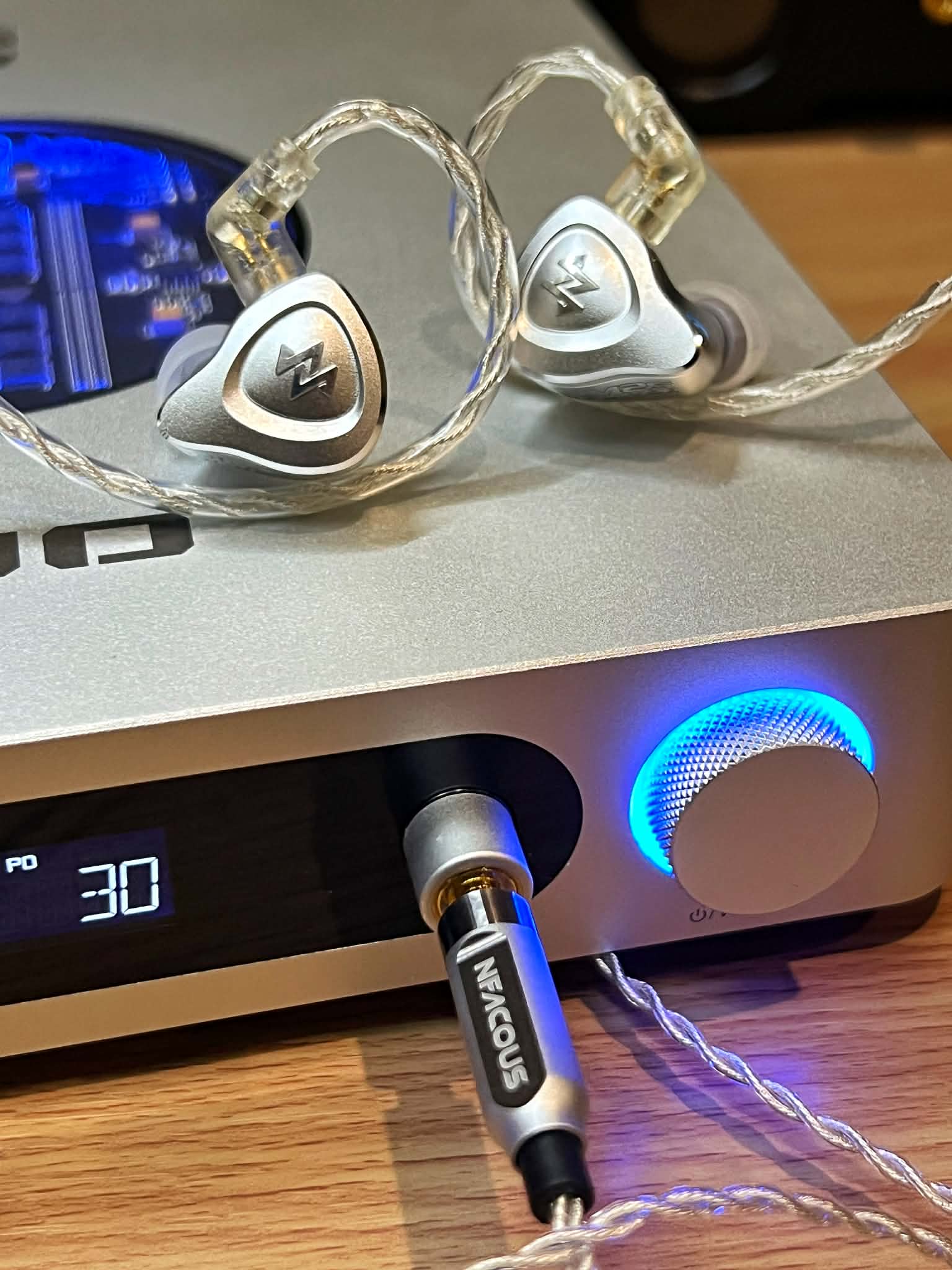
Precision First, Fun Second.
The NFACOUS NM25 comes from their Professional Series. From the first listen, it’s obvious this IEM isn’t chasing current tuning trends or trying to win over bassheads with sheer low-end quantity. Instead, it’s built with a very clear objective: accuracy, speed, and clarity first, with just enough musicality to keep things engaging and not overly dry.
This is the kind of tuning that feels intentional and well thought out. Notes are clean, transients are quick, and the overall presentation is disciplined, but it never crosses into sterile or lifeless territory. There’s still a sense of energy and movement that keeps the NM25 enjoyable, even when you’re listening casually rather than critically.
What impressed me most is how well it balances its dual purpose. As a stage monitor, the NM25 makes a lot of sense. It’s precise, easy to follow, and doesn’t blur details together, which is exactly what you want when you’re relying on it for timing and clarity. At the same time, it doesn’t punish you when you just want to sit back and enjoy music. For a single dynamic driver IEM, that’s not an easy balance to strike, but the NM25 manages it better than I expected.
It’s not a “wow you with bass” kind of IEM, and it doesn’t try to sound overly lush or cozy. Instead, it earns its place by being confident, capable, and focused. If your idea of fun leans more toward hearing everything clearly and accurately, the NM25 gets the job done, and it does it with conviction.
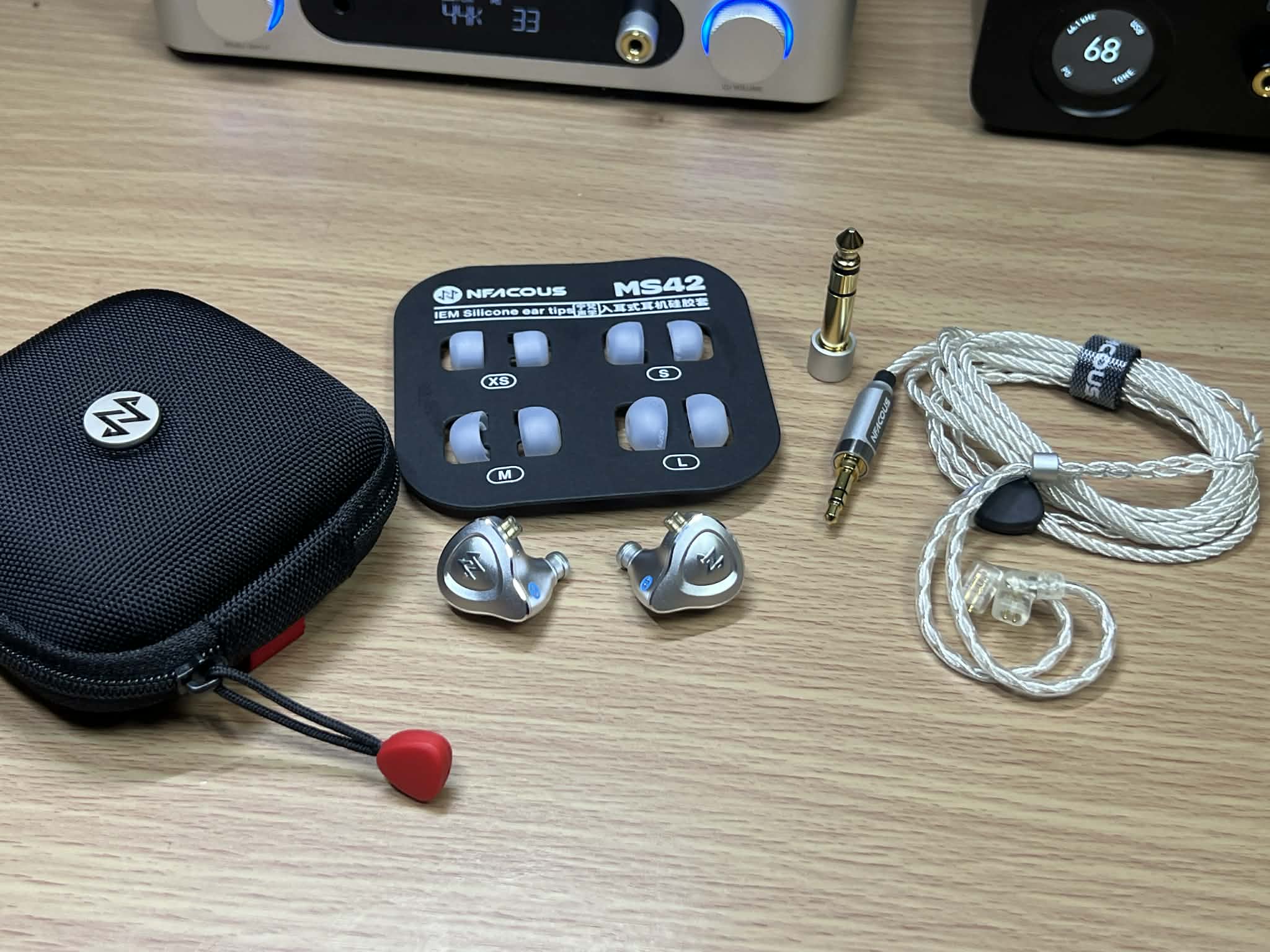
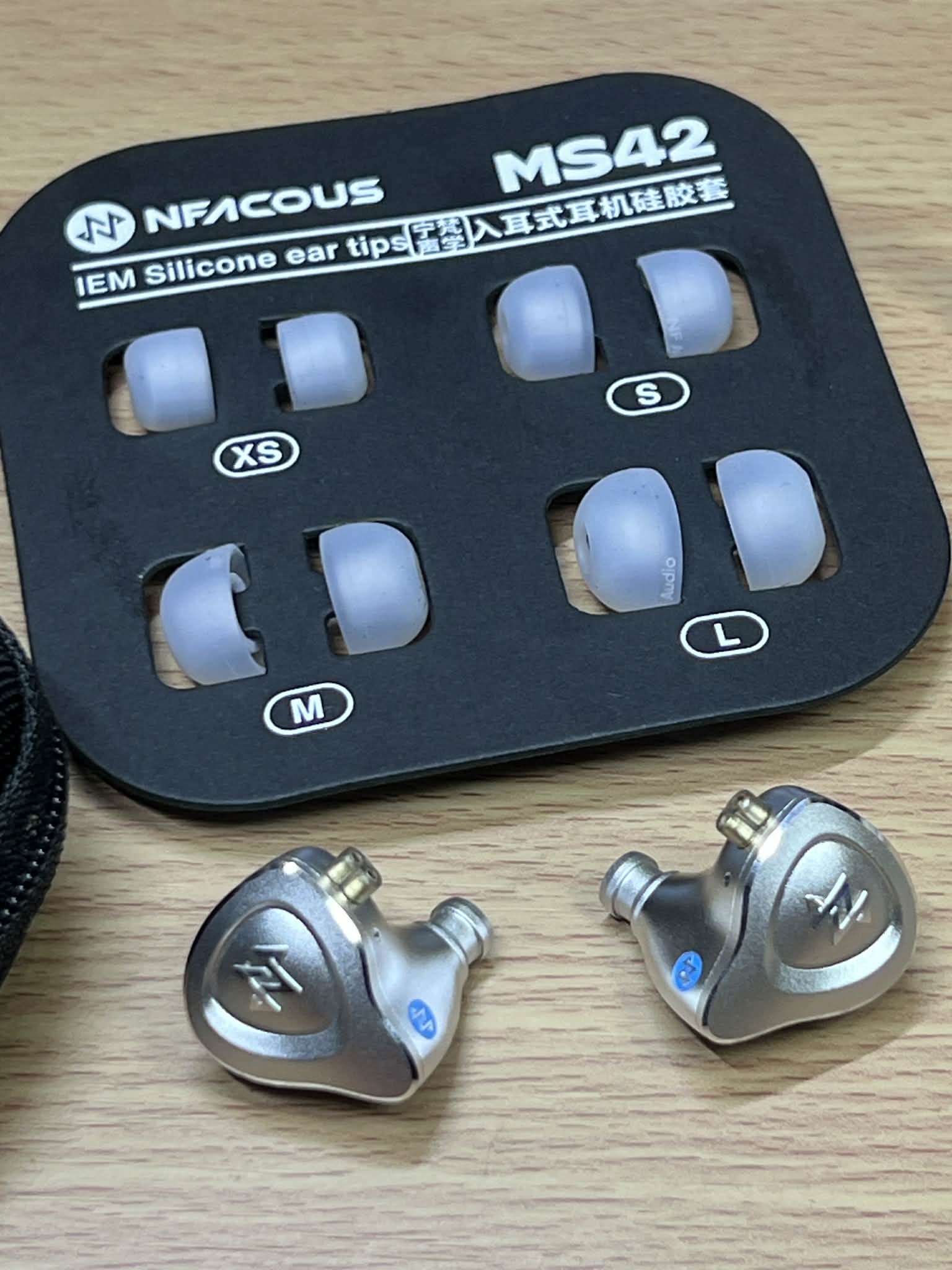
Whats in the box? checkout my short unboxing video.
Build, Design, and Cable
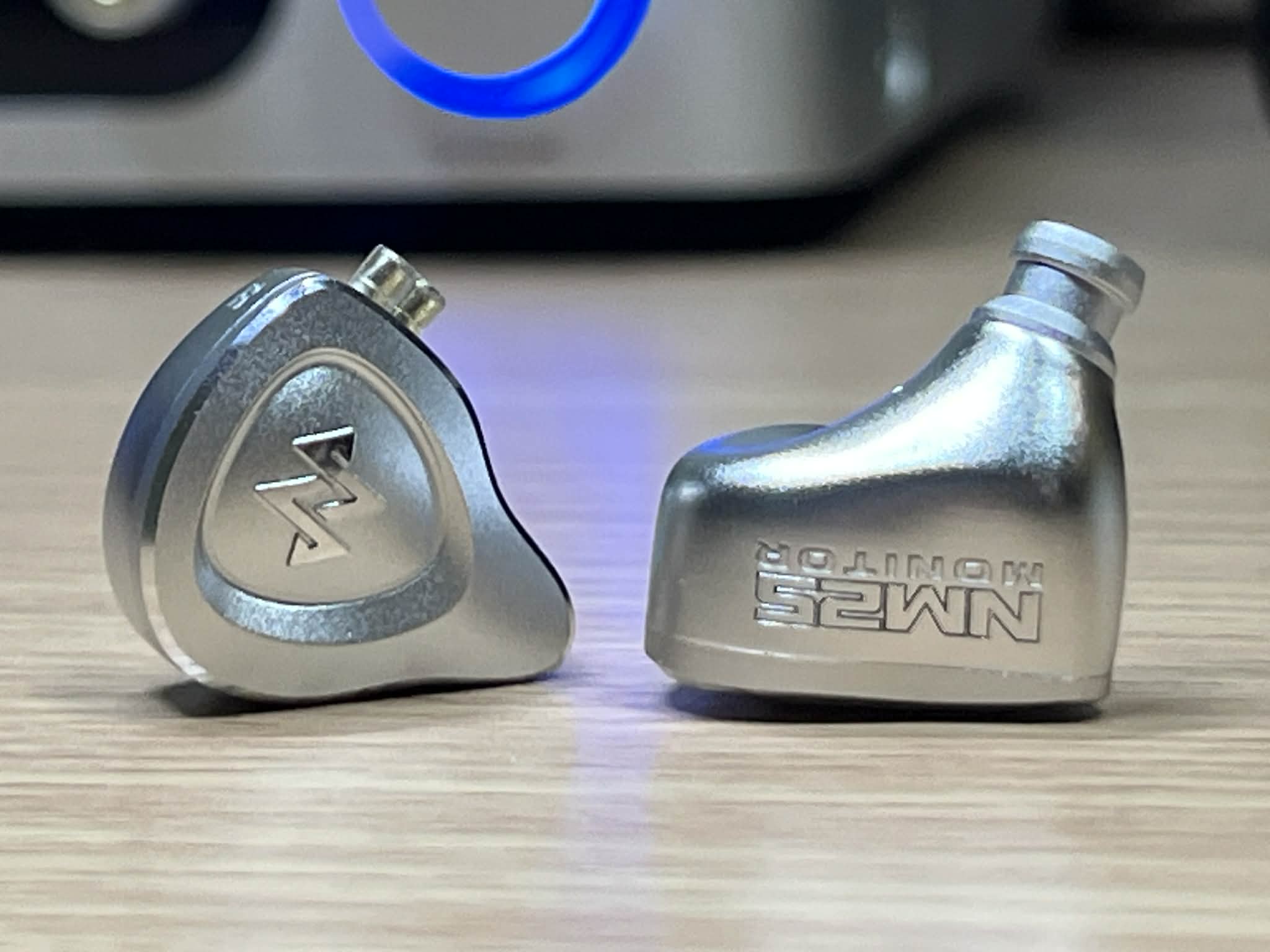
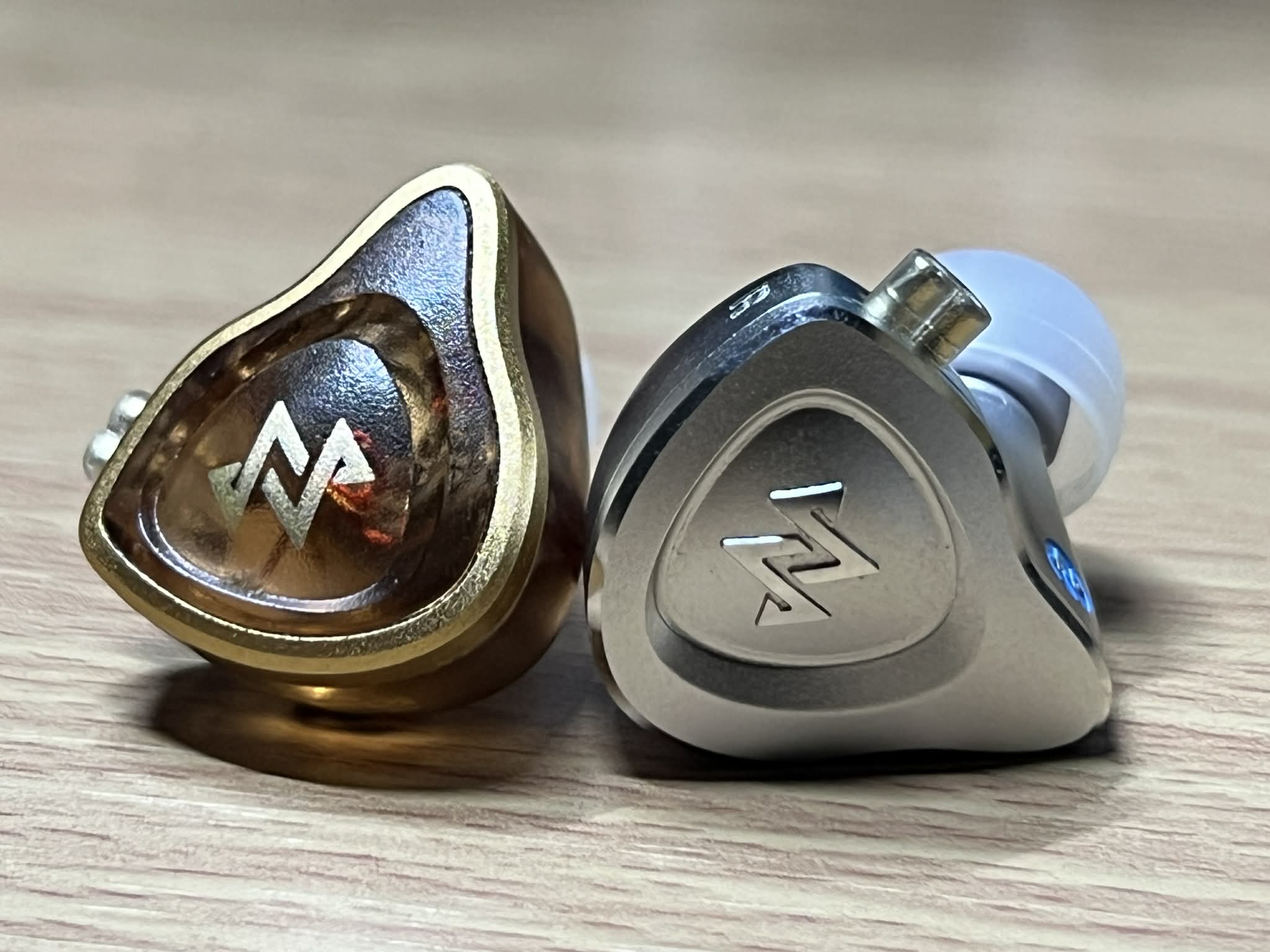
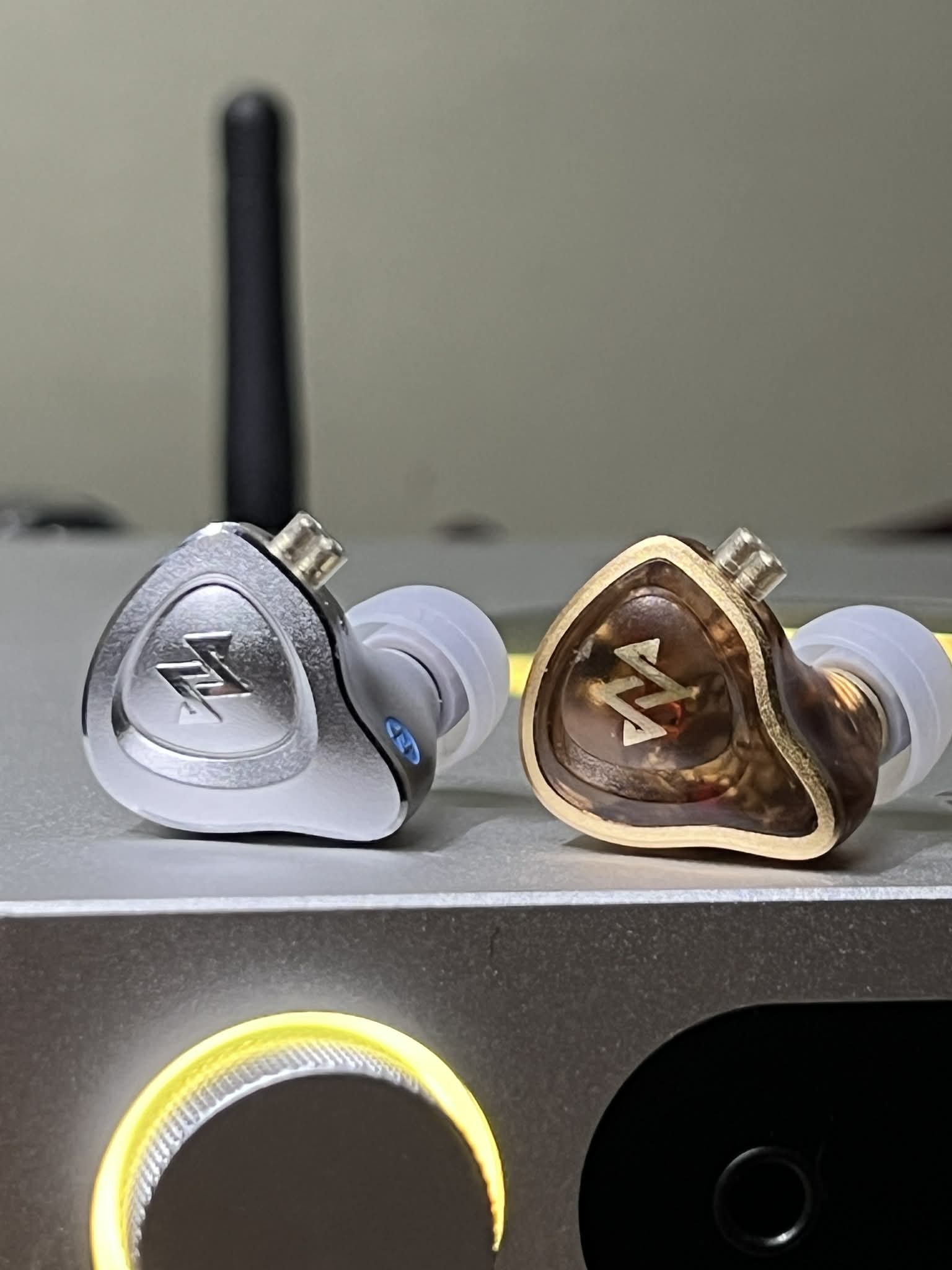
The shell is all CNC-machined metal, and it feels properly solid in hand. No sharp edges, no weird fit quirks, just a clean, professional look that wouldn’t feel out of place on stage or in a studio setting. It has that reassuring density where you know it’s built to last.
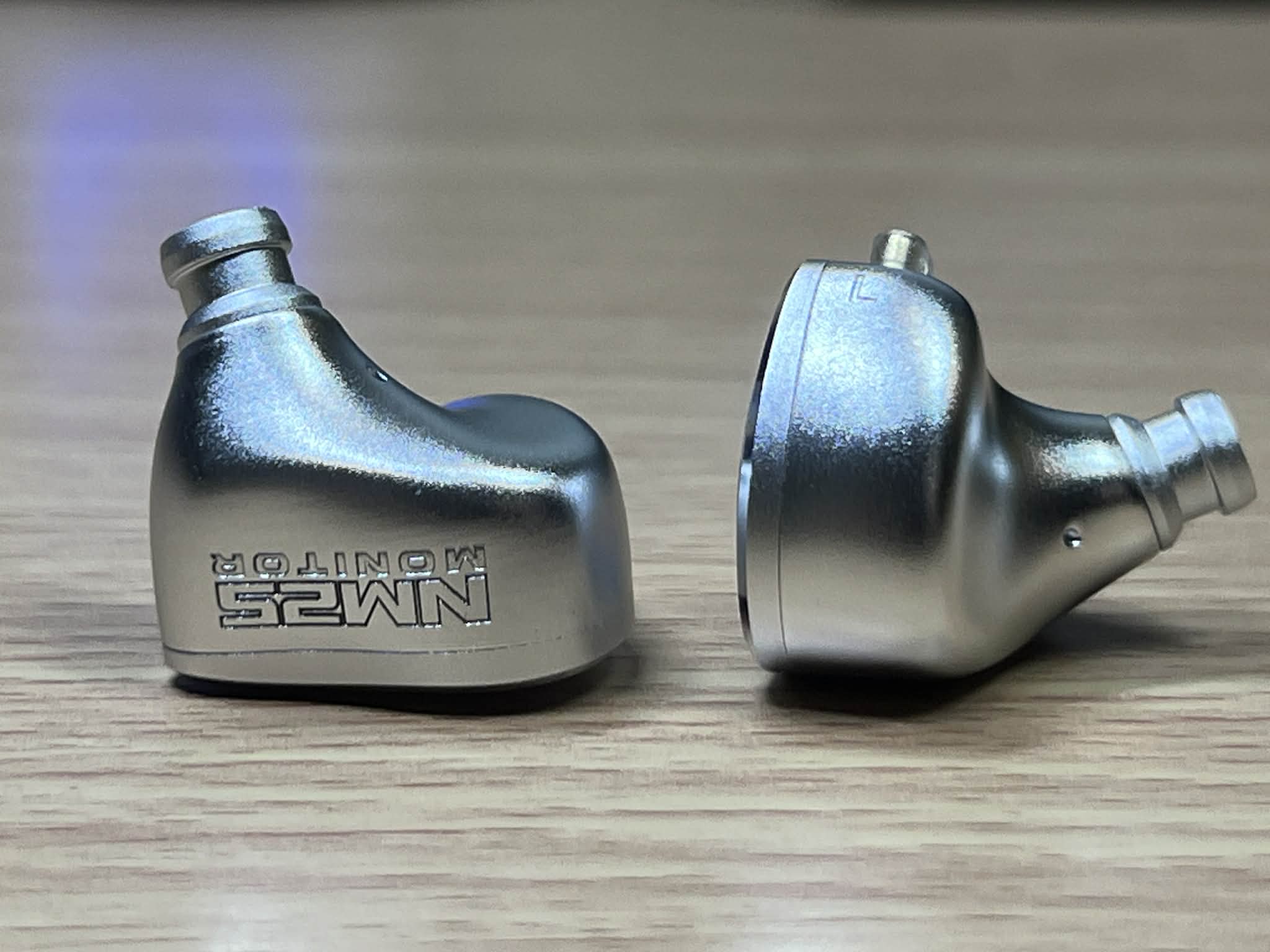
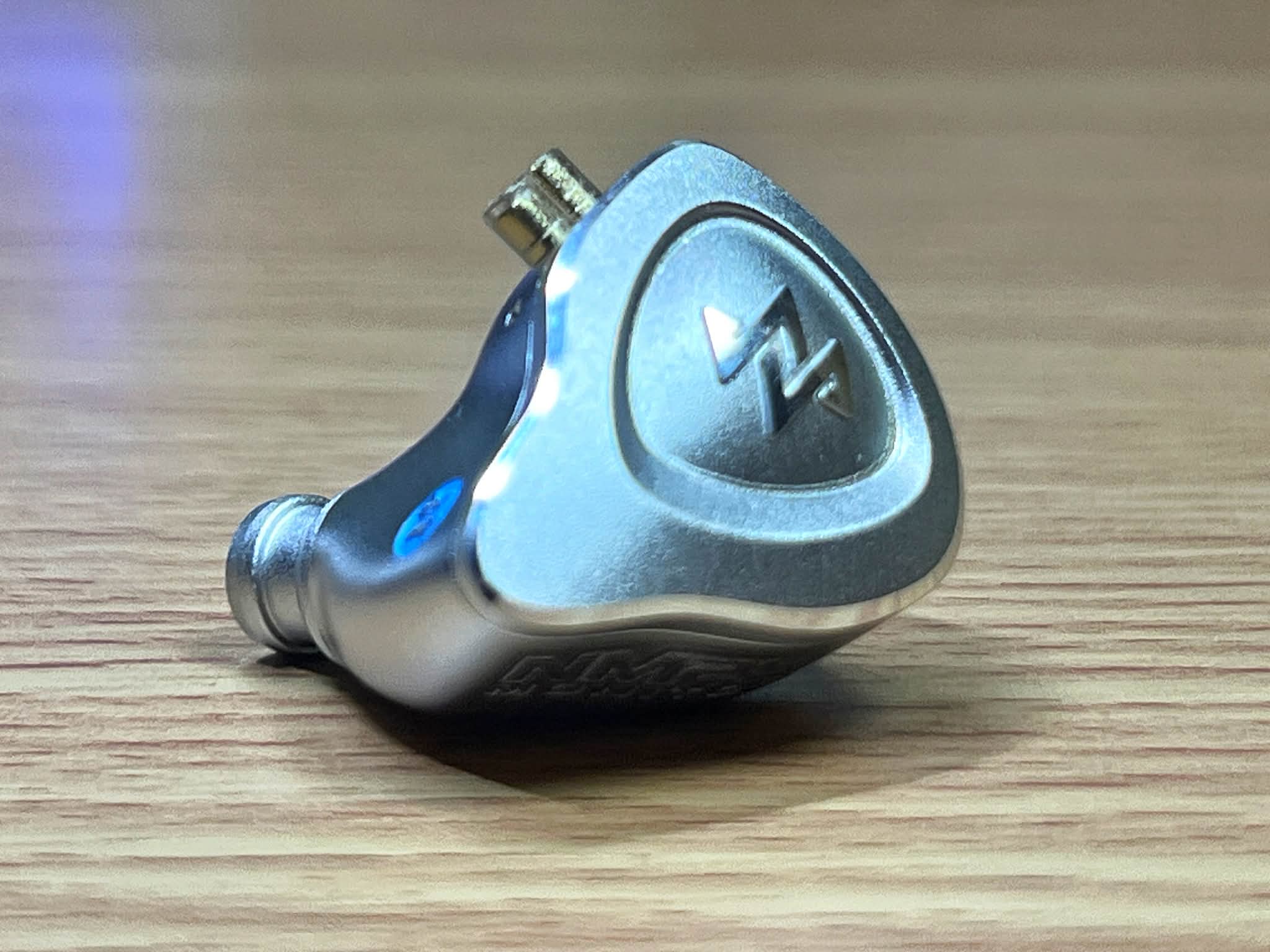
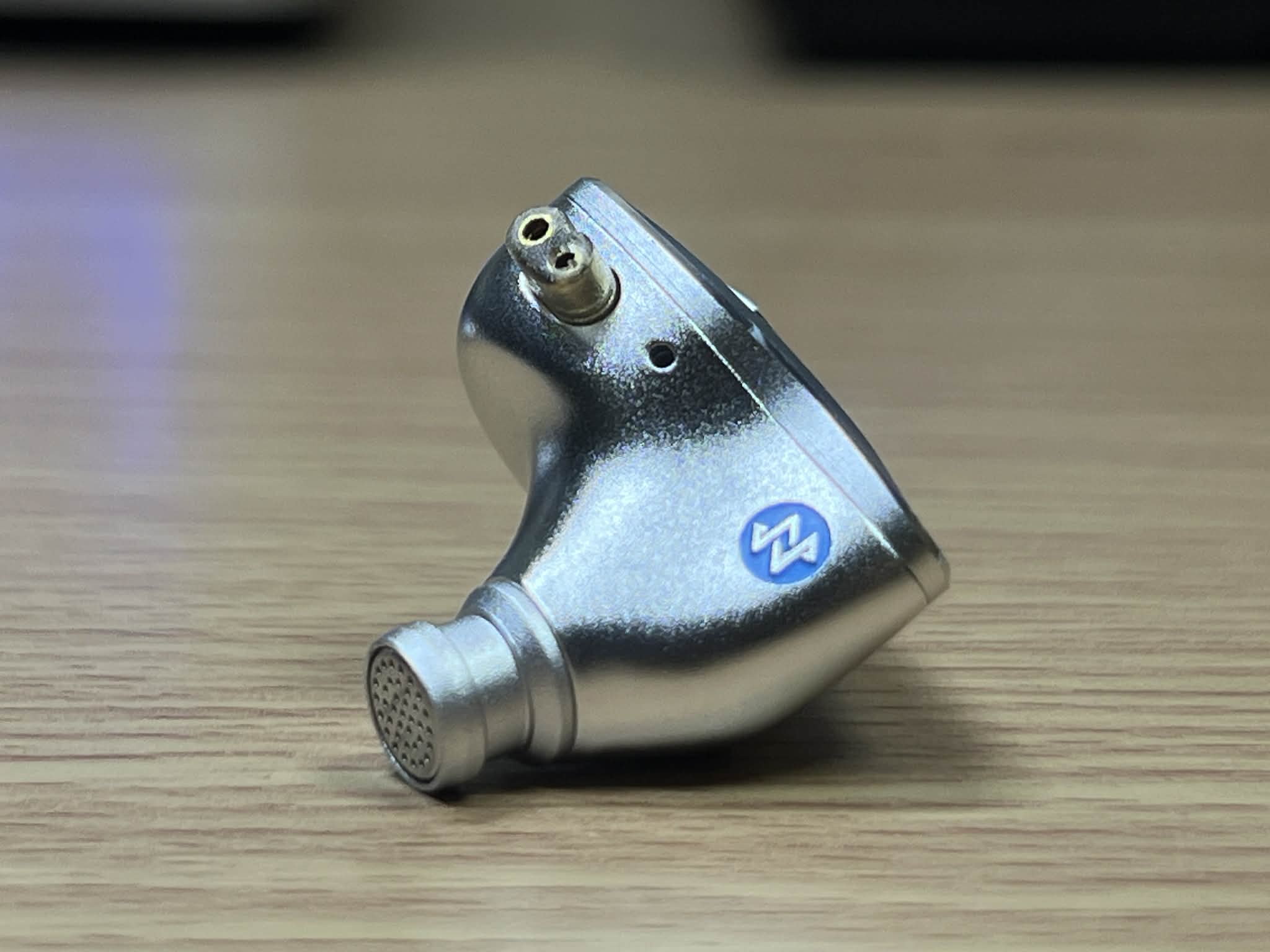
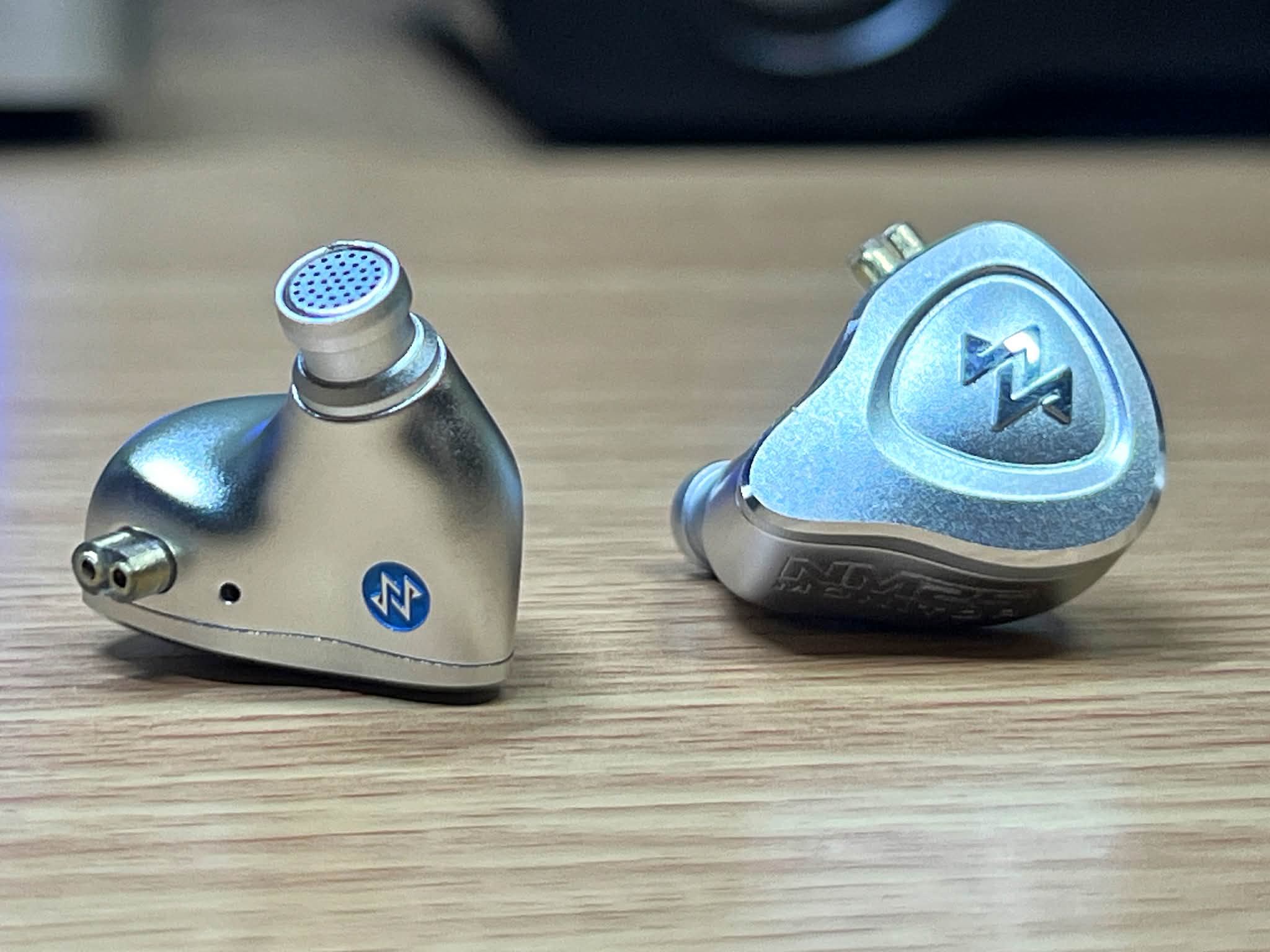
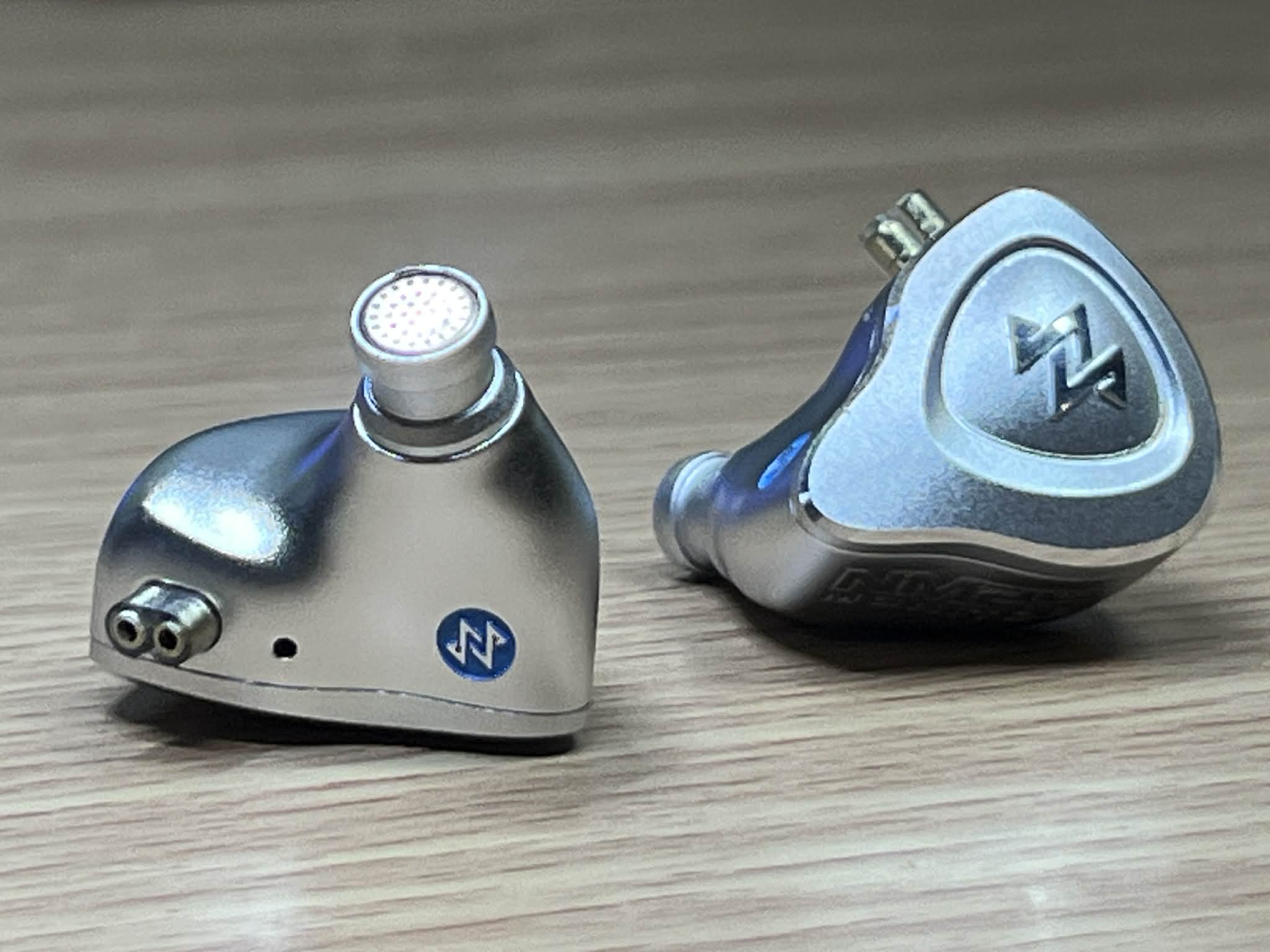
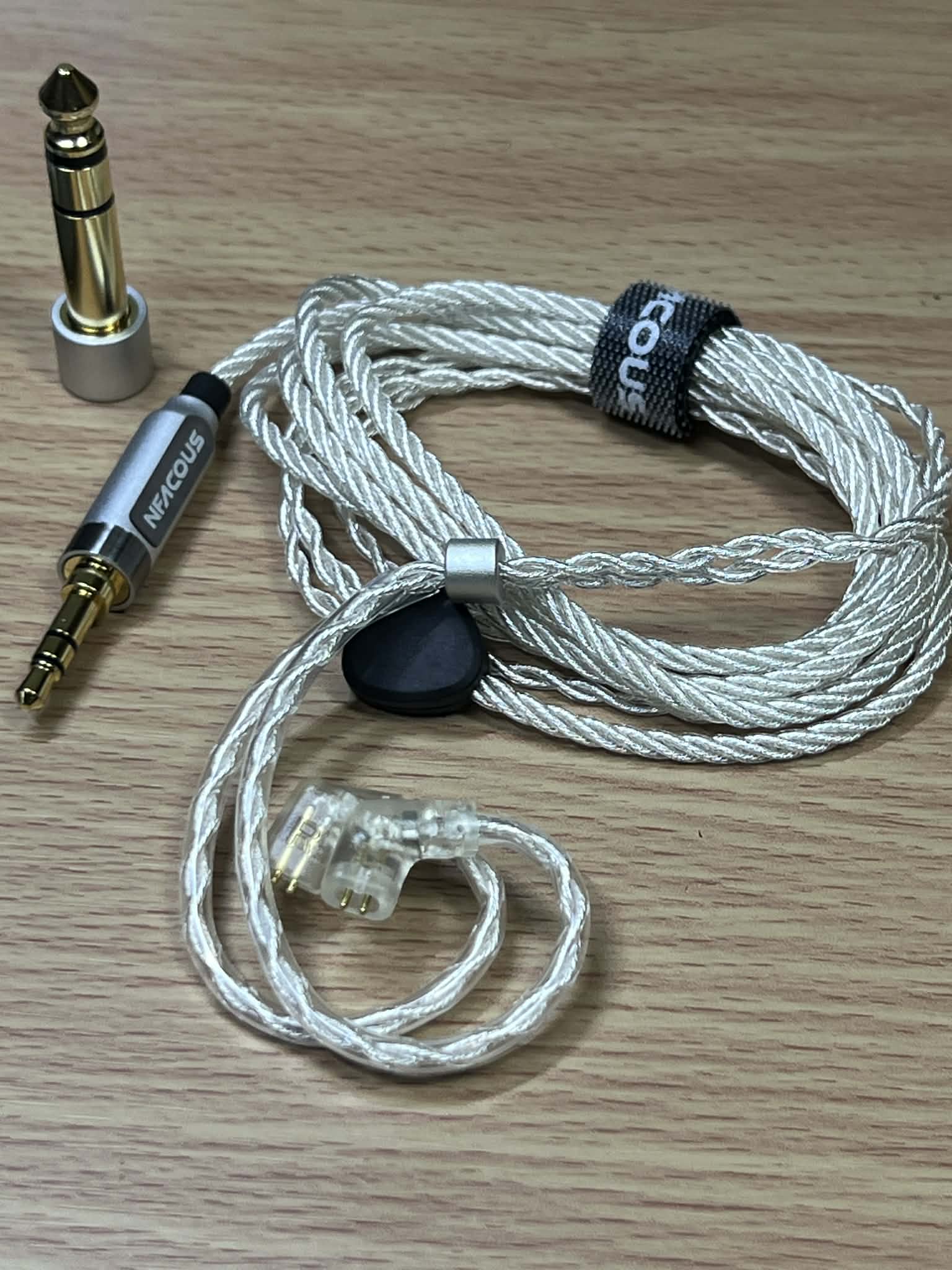
The cable deserves a shoutout. It’s one of those things you don’t notice until you realize how little it annoys you. Not too thick, very soft, zero memory, and it doesn’t fight you when you’re packing up. It doesn’t tangle easily, drapes nicely, and just gets out of the way. That alone makes daily use a lot more pleasant.
Clutter Trap 2.0 and Overall Tuning Philosophy
NFACOUS uses their patented Clutter Trap 2.0 system here, which is essentially an acoustic dampening approach designed to control unwanted internal reflections and reverb. In practice, what that means is a cleaner top end and better control over note decay. You hear it most clearly in busy passages where things stay composed instead of turning splashy or smeared.
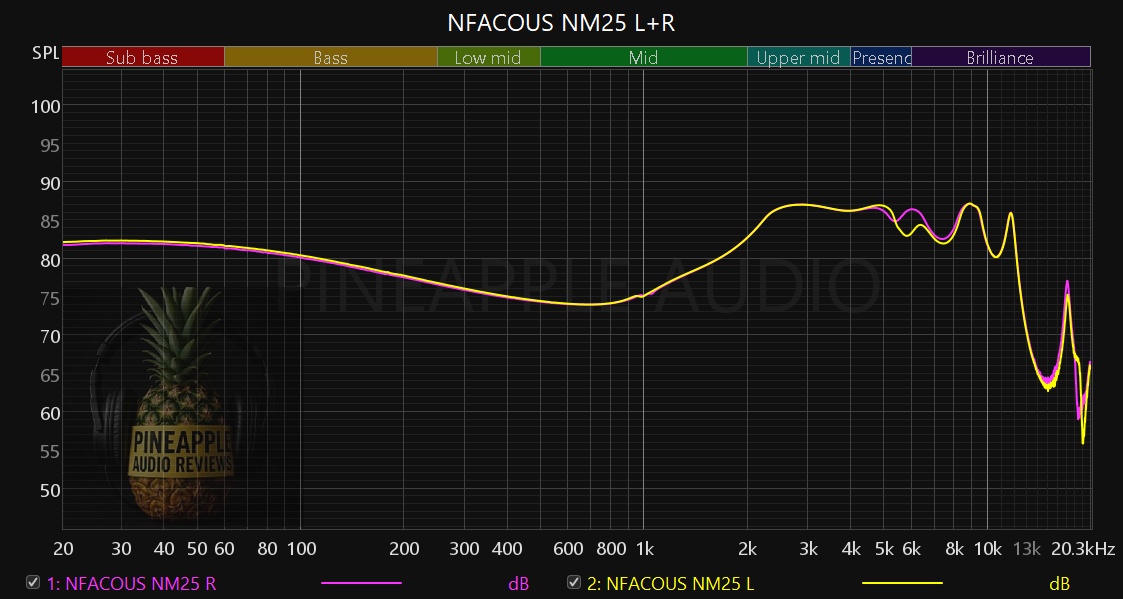
The NM25 leans technical, clean, and disciplined. It’s not trying to be warm, lush, or romantic. Instead, it focuses on speed, precision, and detail retrieval, and it does that with confidence. Transients are quick and well-defined, almost planar-like in how fast notes start and stop. For a single dynamic driver, that’s genuinely impressive.
Bass
The bass on the NM25 is tight, controlled, and very intentional. It’s clearly tuned with discipline rather than indulgence in mind. Subbass presence is minimal, so if you’re chasing deep, room-rattling rumble or that chesty low-end pressure, this isn’t the tuning that’s going to scratch that itch. The NM25 isn’t about shaking the floor, it’s about keeping the low end clean and out of the way.
The focus is squarely on midbass punch. Notes hit fast, stop fast, and don’t linger longer than they should. Transients are snappy and well-defined, which works great for kick drums, bass guitar plucks, and anything that relies on speed and precision. There’s no midbass bleed into the mids, so the overall presentation stays clean and well-organized even in busy mixes.
Texture and detail are handled well, but the bass can come across as a bit lean depending on the track. For my personal taste, I would have liked just a touch more warmth or weight, even a small bump in body, to give the low end more substance and a slightly more natural sense of density. That extra bit of fullness would have gone a long way in making the bass feel more satisfying without sacrificing control.
As it stands, the NM25’s bass is accurate, punchy, and technically impressive, but it’s not particularly forgiving. It tells you exactly what’s in the recording, no more and no less. If you value precision and cleanliness over sheer impact, the bass tuning here makes a lot of sense.
Midrange
The midrange is where the NM25 really makes its intentions clear. The tuning here is very natural in terms of tonal accuracy and timbre, and it’s packed with detail, but it doesn’t go for that lush, thick, or romantic kind of presentation. Instead, it stays clean, controlled, and matter-of-fact. Think clarity and precision first, emotion second.
Vocals sit slightly behind the instruments in the mix, which gives guitars, keys, and percussion more spotlight and definition. This works especially well with complex arrangements where you want to hear everything happening at once without things smearing together. For stage monitoring and critical listening, this makes a lot of sense since separation and intelligibility are prioritized over vocal intimacy.
The upper mids are energetic, bright, and airy, which really helps with articulation and detail retrieval. String attacks, vocal edges, and instrumental textures come through clearly, and you can hear subtle layers that many single dynamic driver IEMs tend to smooth over or gloss past. That said, this region can be a bit much depending on your tolerance. On tracks that already lean hot in the upper mids, the NM25 can sound slightly bright, and for my taste, it occasionally borders on being a touch too energetic.
Still, it’s hard not to appreciate what the NM25 is doing here. The level of clarity and resolution in the midrange is impressive, and it’s one of the reasons this set feels so capable and technically confident. It doesn’t aim to sound cozy or forgiving, but if you value insight into your music and want to hear every layer and nuance, the midrange performance here is genuinely strong.
Treble
The treble on the NM25 is clearly tuned with detail and openness in mind. It’s bright, well-extended, and very articulate, with plenty of air up top that gives cymbals, hi-hats, and upper harmonics a nice sense of space. Nothing feels prematurely rolled off, so you get that open, airy presentation that really highlights micro details and subtle overtones in recordings.
What I appreciate here is that it largely avoids outright sibilance. “S” and “T” sounds stay under control, and the treble doesn’t come across as sharp or piercing in the usual sense. That said, the energy is definitely present. This is not a relaxed or laid-back treble tuning by any stretch. It’s forward, lively, and very revealing, which means it will happily expose bright recordings or less forgiving sources.
If you’re sensitive to treble, longer listening sessions could lead to some fatigue, especially at higher volumes. The NM25 doesn’t sugarcoat things or smooth edges for comfort. Instead, it leans into clarity and precision, which fits perfectly with its technical, reference-leaning character. When paired with good recordings and a clean source, the treble sounds impressive and refined. Just don’t expect it to be gentle or forgiving.
Soundstage and Imaging
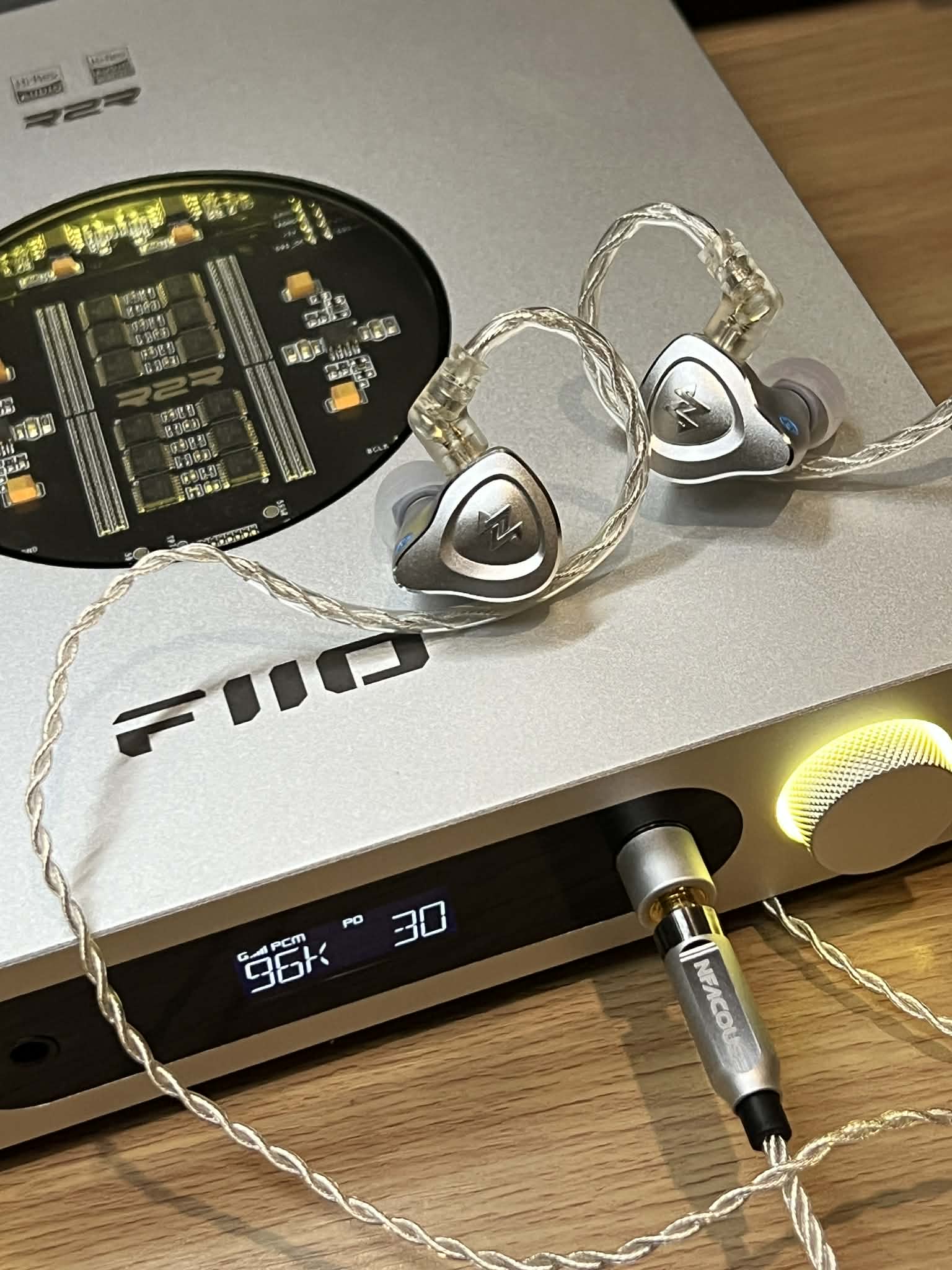
The soundstage on the NM25 is pleasantly wide, with good left-to-right spread that helps keep things open and uncluttered. It’s not the kind of stage that fully wraps around you front to back, so depth is more average than expansive, but it never feels boxed in. Instruments are given enough room to breathe, and that sense of space helps the overall presentation stay clean even when the mix gets busy.
Imaging is where the NM25 really flexes. Positioning is very precise and, at times, almost holographic in how clearly sounds are placed within the stage. You can easily track where each instrument sits, and more importantly, where it moves. Instrument separation is strong, so even in dense or fast passages, individual elements remain distinct rather than blending into each other.
Dynamics are another highlight. The NM25 handles soft-to-loud transitions with ease, giving music a lively, responsive feel. Drums hit with snap, accents have real impact, and there’s a nice sense of contrast between quieter details and bigger dynamic swings. It never feels flat or compressed, which makes listening more engaging and keeps the NM25 feeling energetic and alive, especially with well-recorded tracks.
Comparison
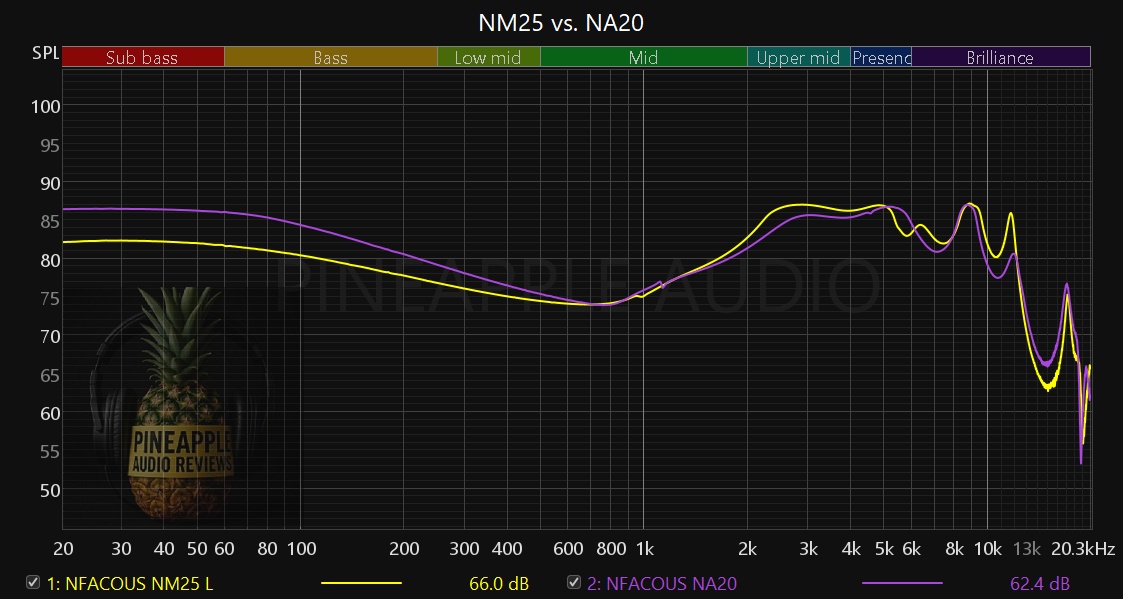
When you put the NM25 side by side with the NA20, the difference in tuning philosophy becomes pretty obvious, especially once you look at the graph. The NA20 has a noticeable subbass lift, and that one change already shifts the entire character of the set. It leans more musical and more fun, with a stronger sense of groove and physicality down low.
That subbass presence really matters to me. As someone who plays drums, I naturally gravitate toward the NA20 as my monitor during practice. It’s simply easier to lock in with the rhythm. Kick drums have more weight and authority, and you can feel the impact instead of just hearing the transient. That makes following timing, dynamics, and groove more intuitive, especially during longer sessions.
The NM25, on the other hand, is more disciplined and technical. It prioritizes control, speed, and clarity over low-end weight. Bass is tighter and cleaner, but it doesn’t give you the same physical feedback that the NA20 does. For critical listening or stage work where precision is the top priority, that approach makes a lot of sense.
Performance-wise, both sets are excellent and actually closer than you might expect. Resolution, imaging, and overall technical capability are on a similar level. Neither feels like a clear downgrade from the other. It really comes down to what you need and how you listen. If you want accuracy and a more reference-leaning presentation, the NM25 makes a strong case. If you want something that’s easier to groove with and more engaging rhythmically, the NA20 has the edge.
For my personal use, I still lean toward the NA20. That extra subbass presence just makes it more natural and enjoyable for my playing style. But honestly, you’re not choosing between good and bad here. You’re choosing between two very competent tunings with slightly different priorities.
Final Thoughts
The NFACOUS NM25 is a smartly tuned, technically focused single dynamic driver IEM that prioritizes precision over warmth. It’s fast, detailed, and controlled, with a tuning that clearly favors clarity, separation, and accuracy. NFACOUS is doing a great job pushing the limits of what a single DD can do, and it shows that they’re refining their approach with each release.
This isn’t an IEM for bassheads or those chasing a lush, relaxed sound. It’s for listeners who value speed, detail, and a clean presentation, whether for stage use, critical listening, or just enjoying a more analytical take on their music. If that sounds like your lane, the NM25 is absolutely worth your attention.
This isn’t an IEM for bassheads or those chasing a lush, relaxed sound. It’s for listeners who value speed, detail, and a clean presentation, whether for stage use, critical listening, or just enjoying a more analytical take on their music. If that sounds like your lane, the NM25 is absolutely worth your attention.
- Get link
- X
- Other Apps
- Get link
- X
- Other Apps
Comments
Post a Comment