Pros:
*Excellent balance between technical performance and musicality
*Tight, textured, and highly controlled bass response
*Smooth yet highly detailed treble with great extension and air
*Natural, clean, and transparent midrange presentation
*Noticeably improved coherency over the OG NX8
*Fast transient response with impressive layering and separation
*Wide, spacious, and holographic soundstage
*Very good imaging and positional accuracy
*Lightweight and ergonomic shell with excellent comfort
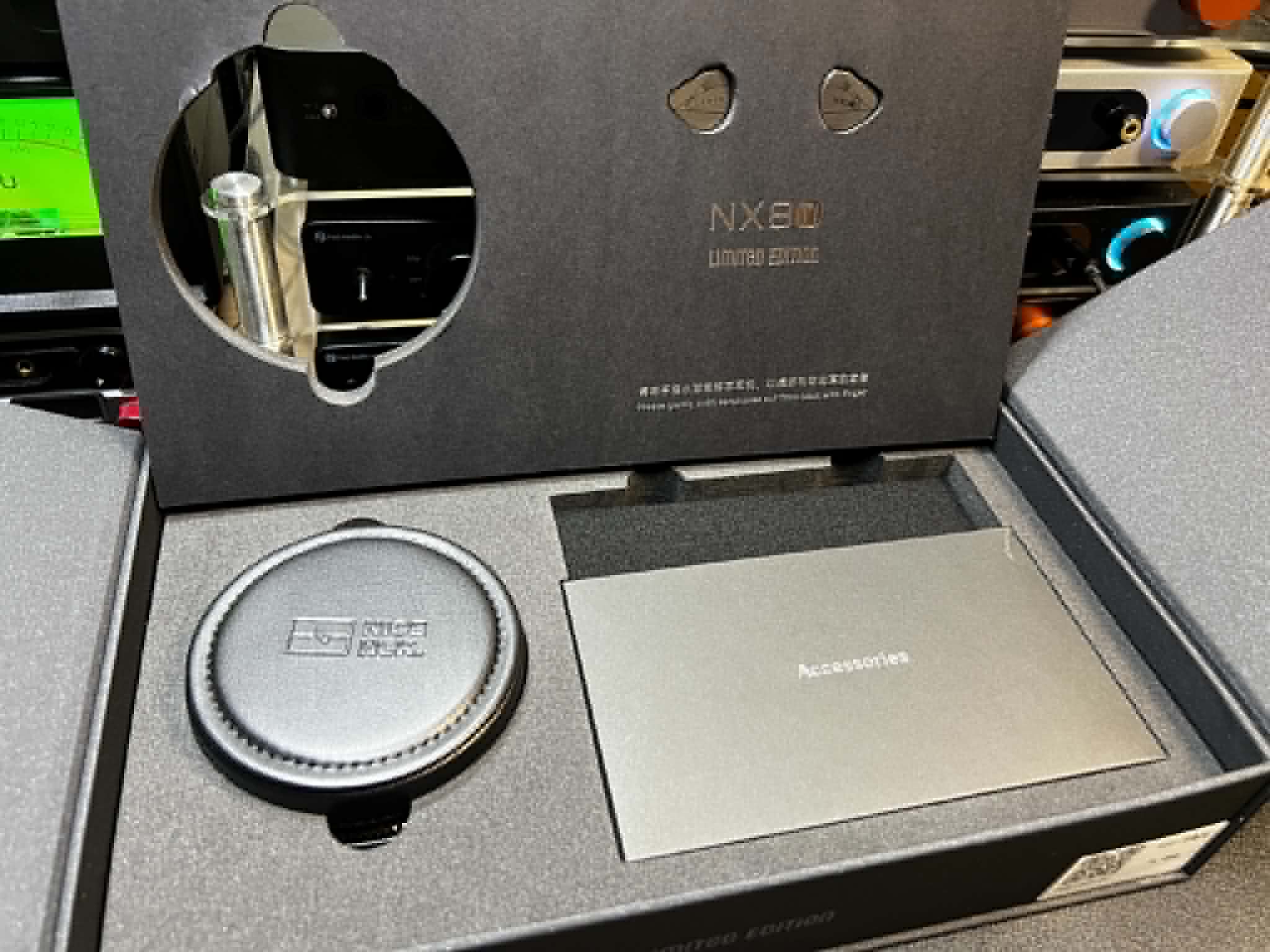
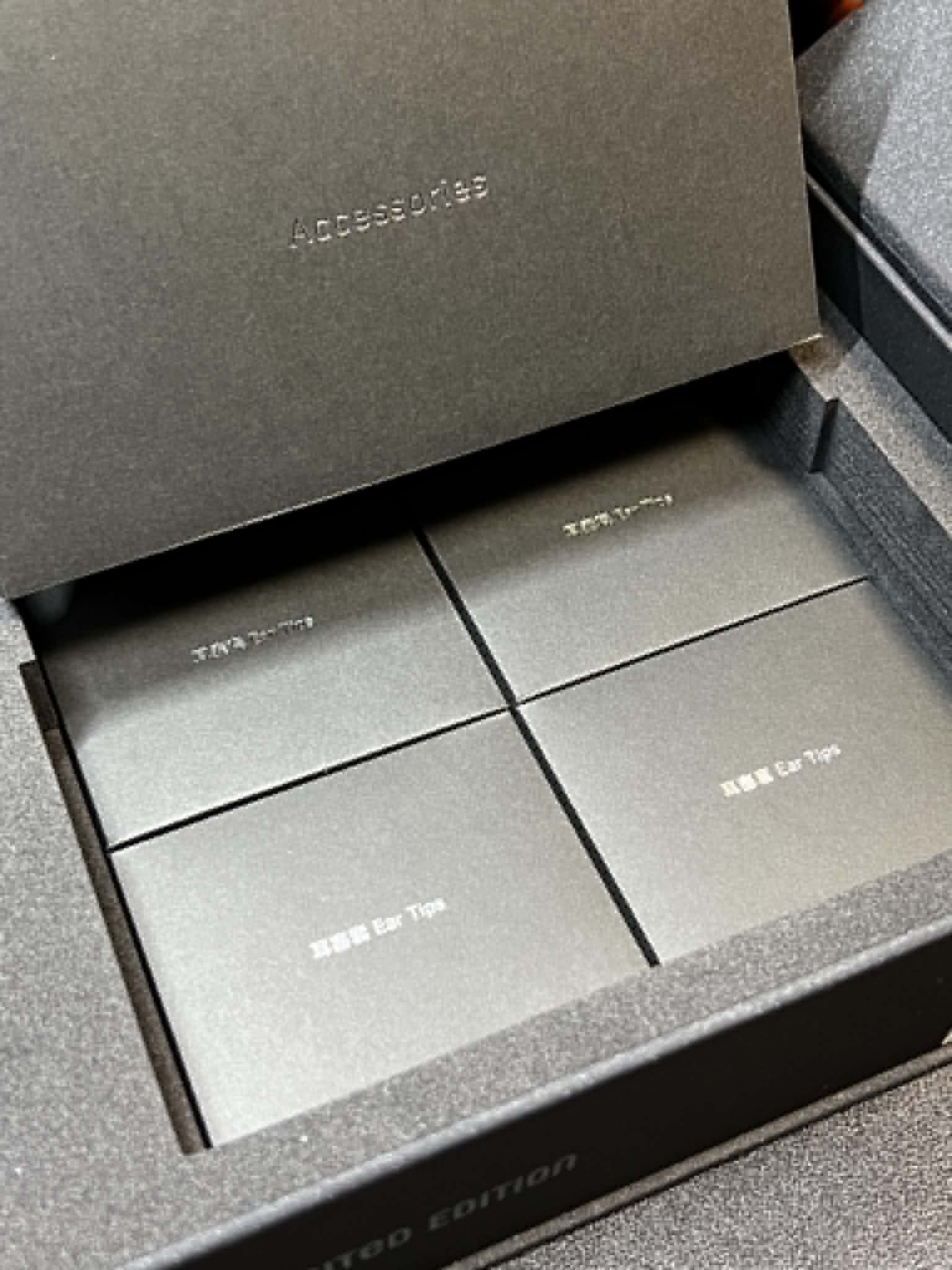
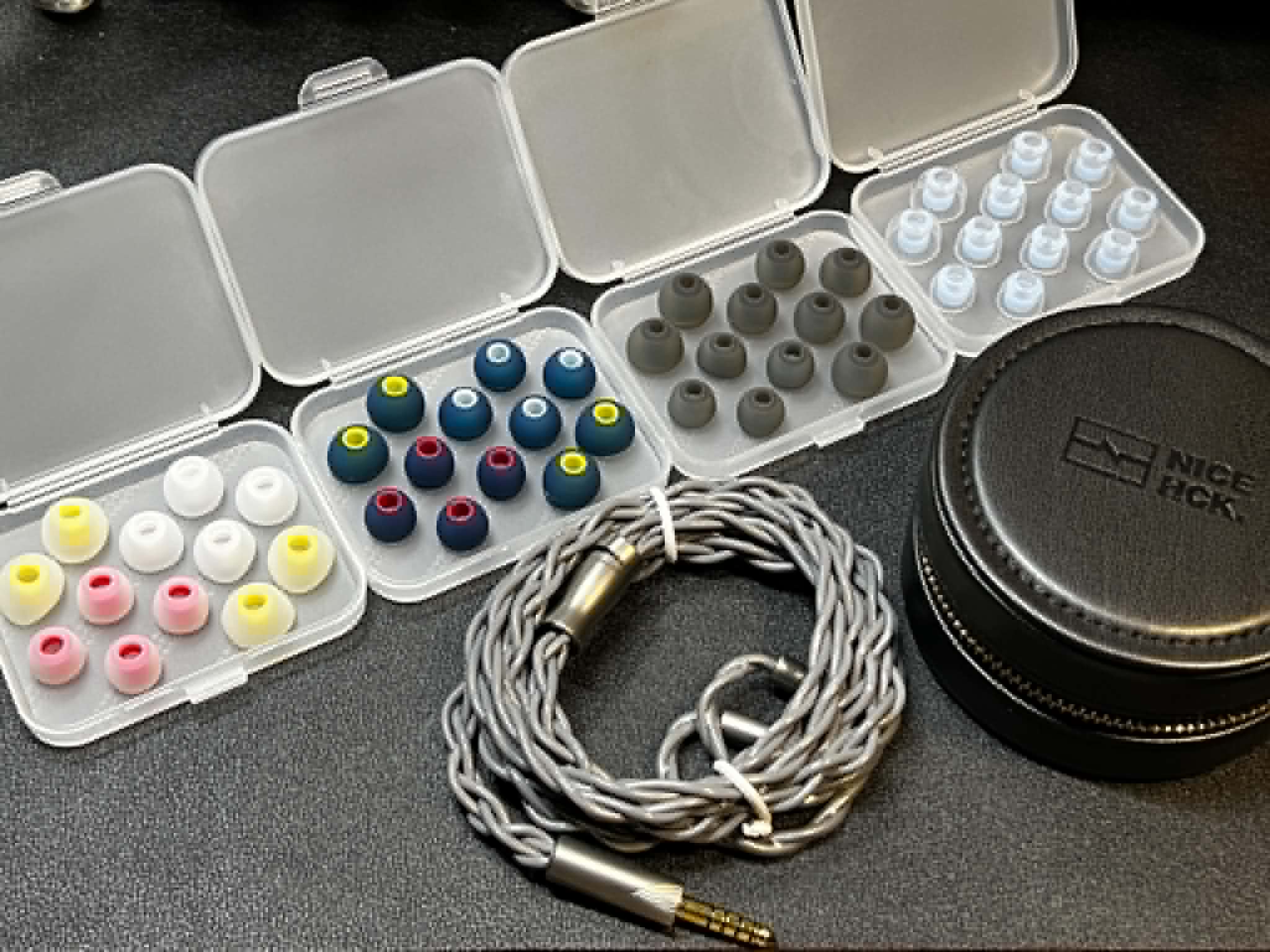
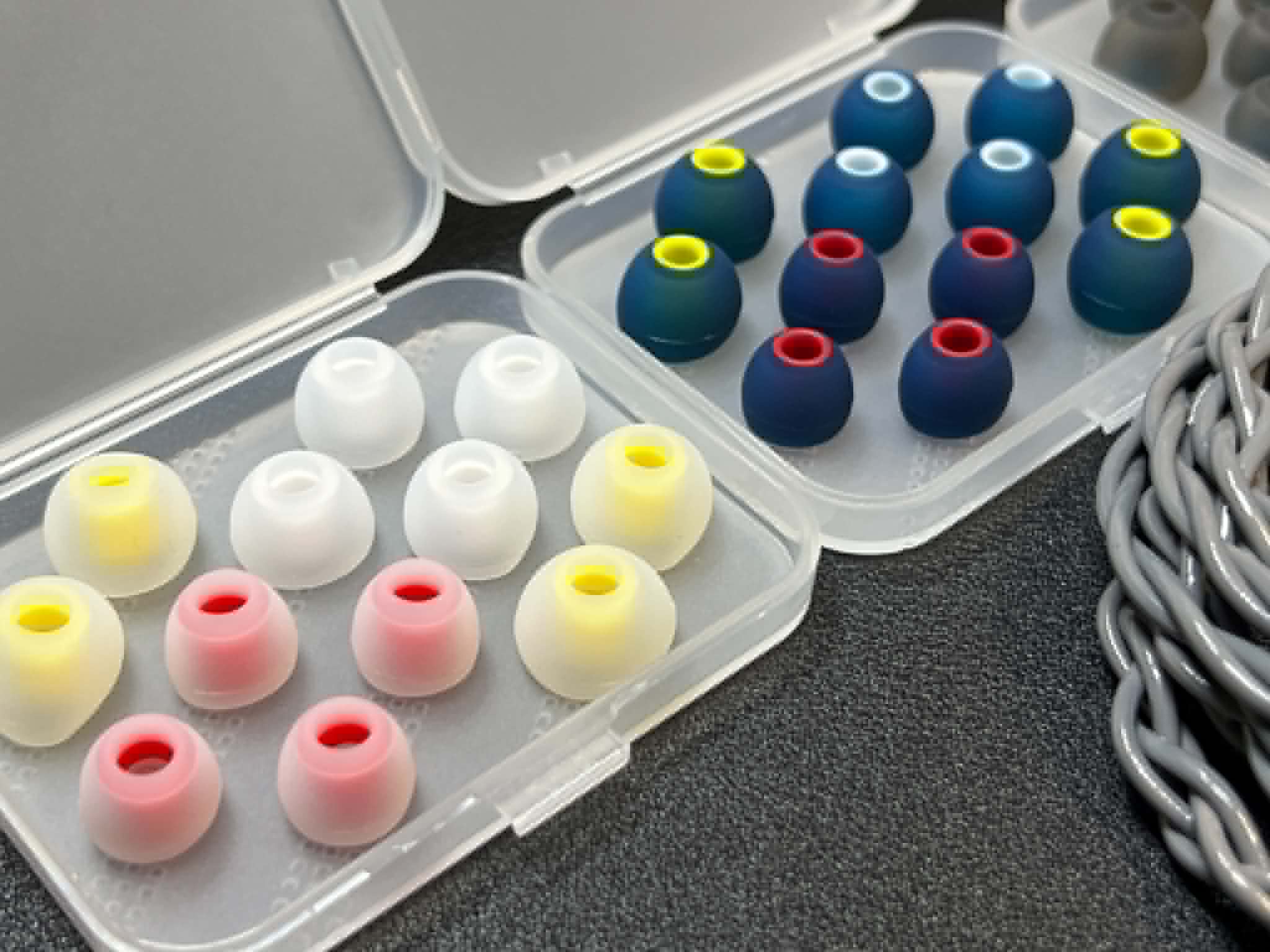
*Premium build quality and accessories
*Easy to drive and scales well with better sources
*Much less fatiguing than the original NX8 during long sessions
Cons:
*Stock cable feels a bit too thick and heavy for the lightweight shells
*Treble-sensitive listeners may still find the upper-end energetic on brighter sources
*Slightly revealing nature can expose poor recordings
*Bass prioritizes control and texture over sheer warmth and quantity
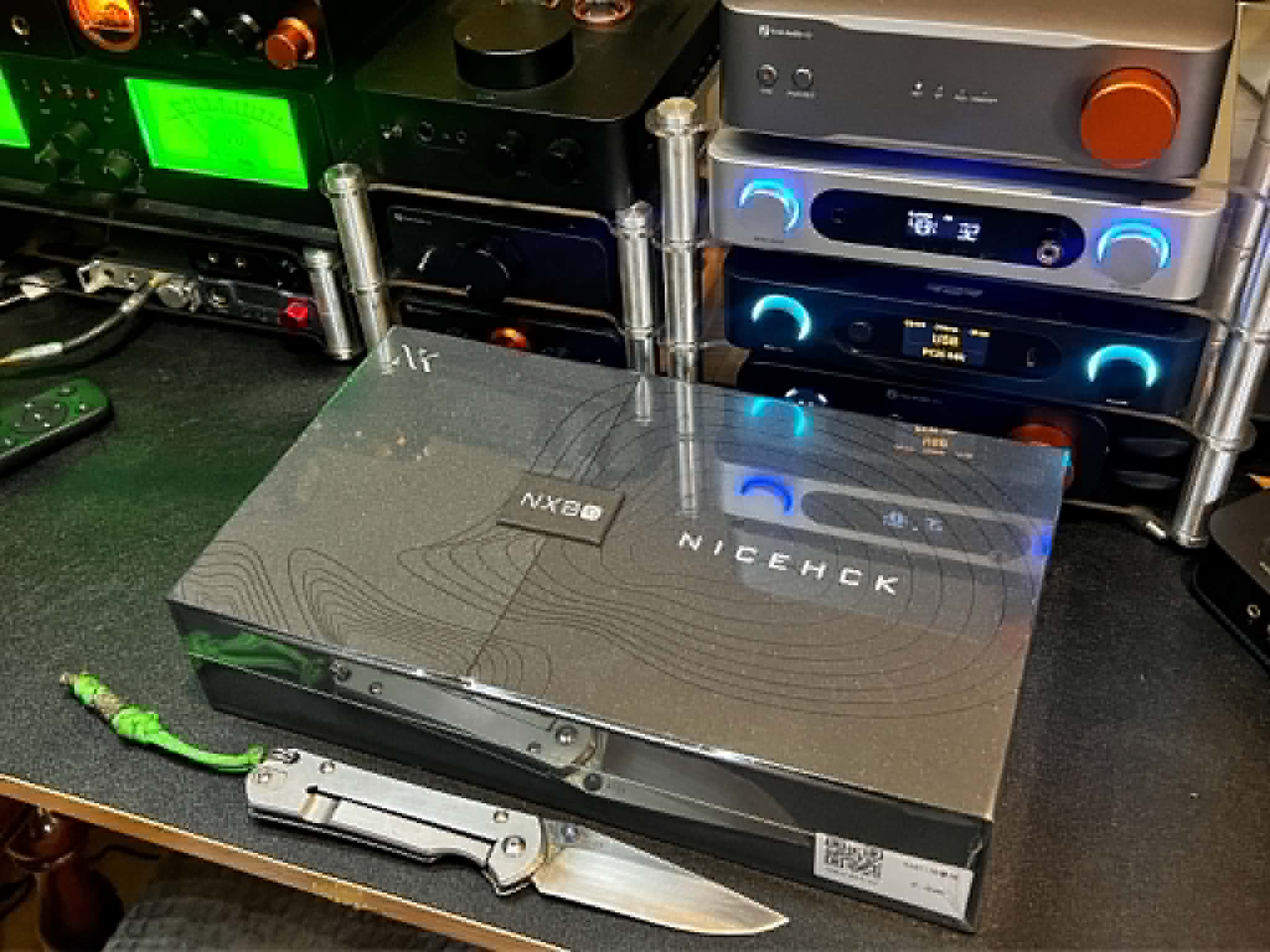
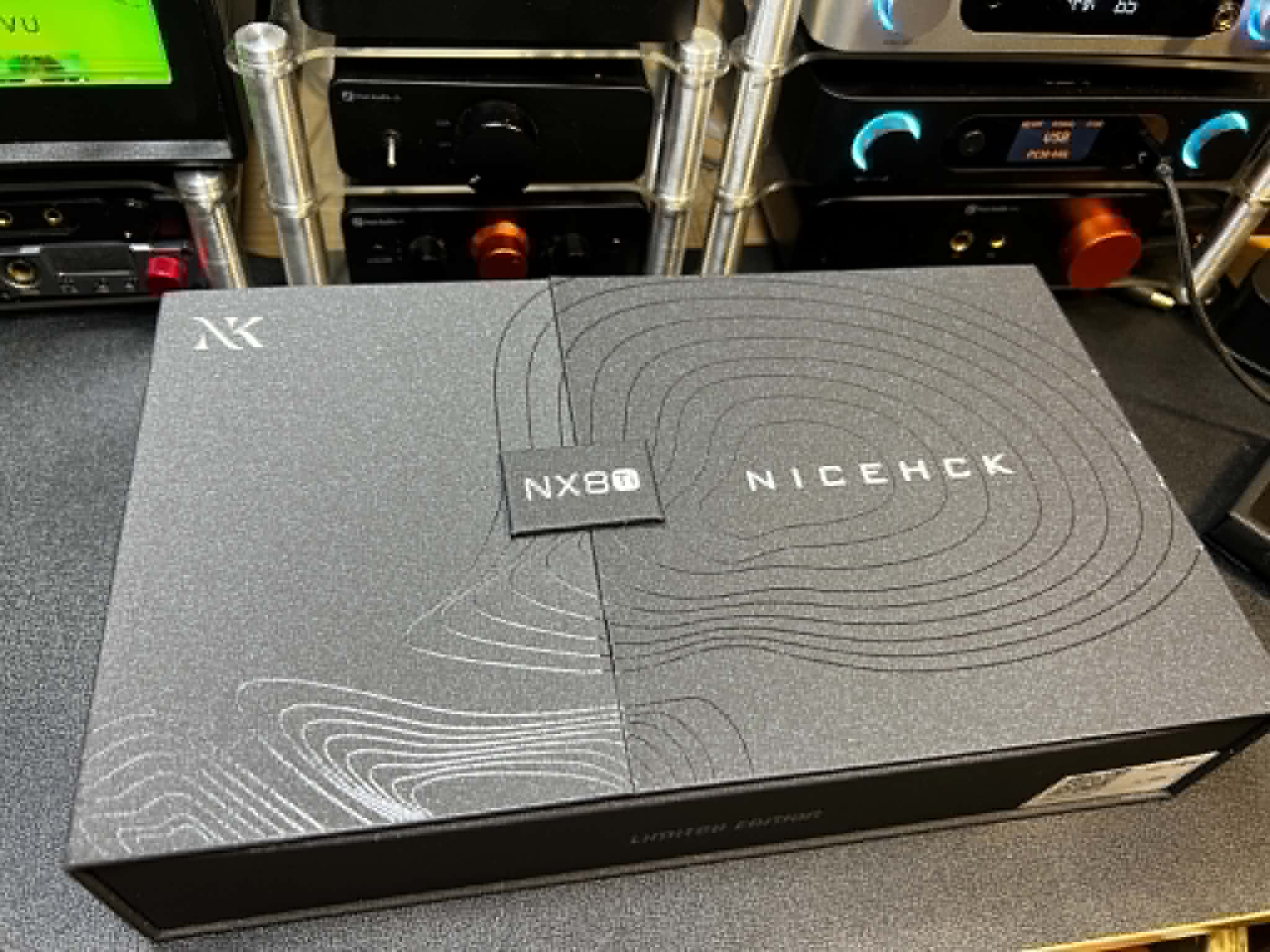
You know it’s going to be a little special when a tiny IEM arrives in a box large enough to make you wonder if they accidentally shipped a desktop DAC instead. The NX8Ti Limited Edition landed right in the middle of one of my afternoon coffee sessions, and honestly, the first thing that crossed my mind was, “okay NiceHCK is clearly proud of this one.”
And after spending almost an entire week with it as my main IEM, I kind of understand why.
The NX8Ti is the updated version of the original NX8, still carrying the same tribrid driver setup of 1DD + 6BA + 1PZT, but this time the biggest change is the move to a titanium alloy diaphragm dynamic driver. On paper, that sounds like a simple material swap, but in practice, diaphragm material plays a huge role in how an IEM behaves mechanically and acoustically.
Titanium is stiffer and more rigid compared to the polymer diaphragm used in many dynamic drivers. That added rigidity improves pistonic motion, reduces unwanted flex, and generally leads to cleaner bass response, faster transients, and lower distortion. Usually when manufacturers go this route, the goal is not just “more detail,” but better control across the frequency range.
And that is exactly what the NX8Ti sounds like.
This is not some dramatic retune that throws away the identity of the original NX8. Instead, it feels more like a refinement of the concept. More mature. More controlled. More technically polished.
And coming from someone who rotates through multiple IEMs almost daily, the fact that I kept reaching for the NX8Ti for nearly a full week straight already says a lot.
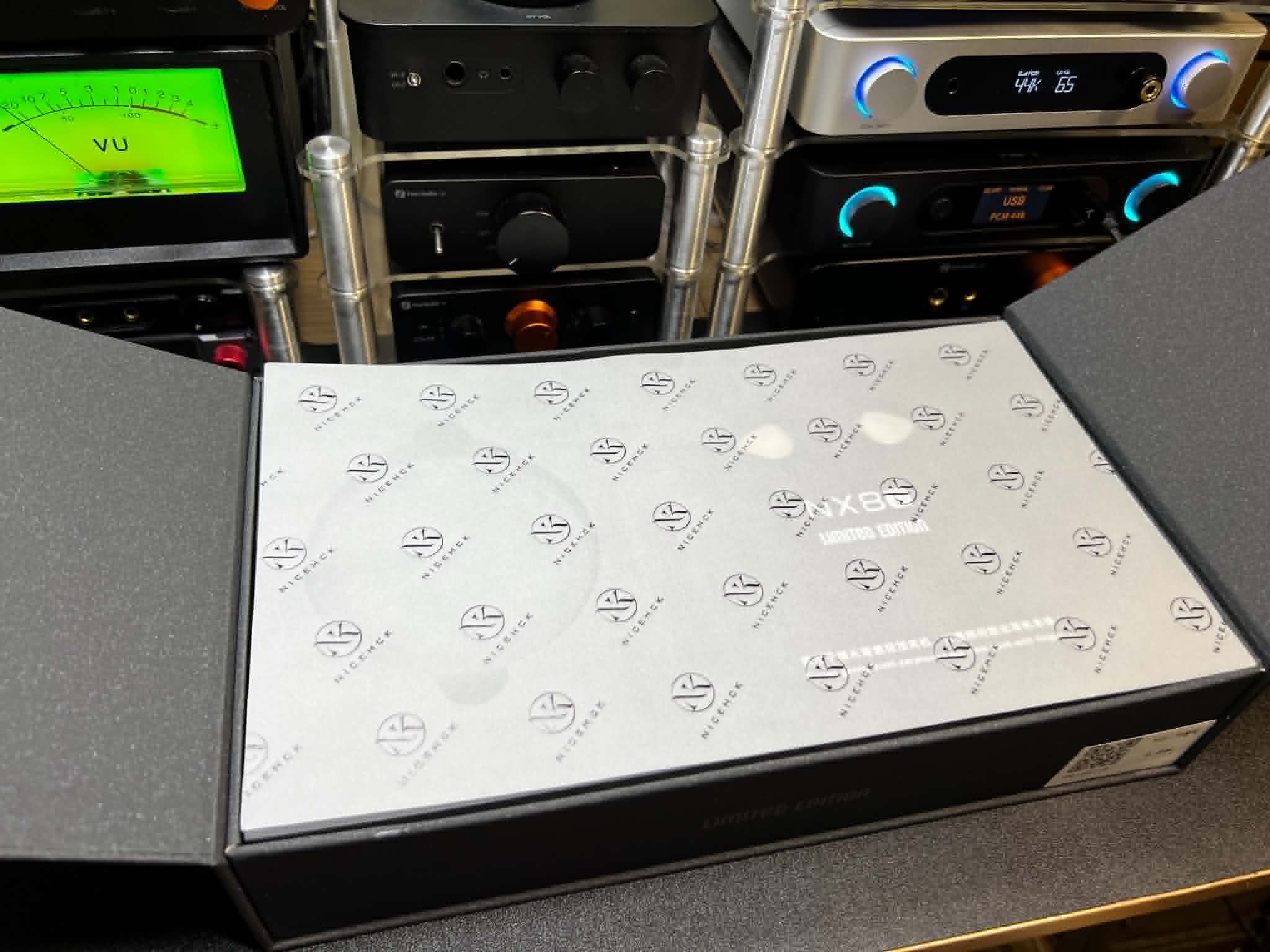
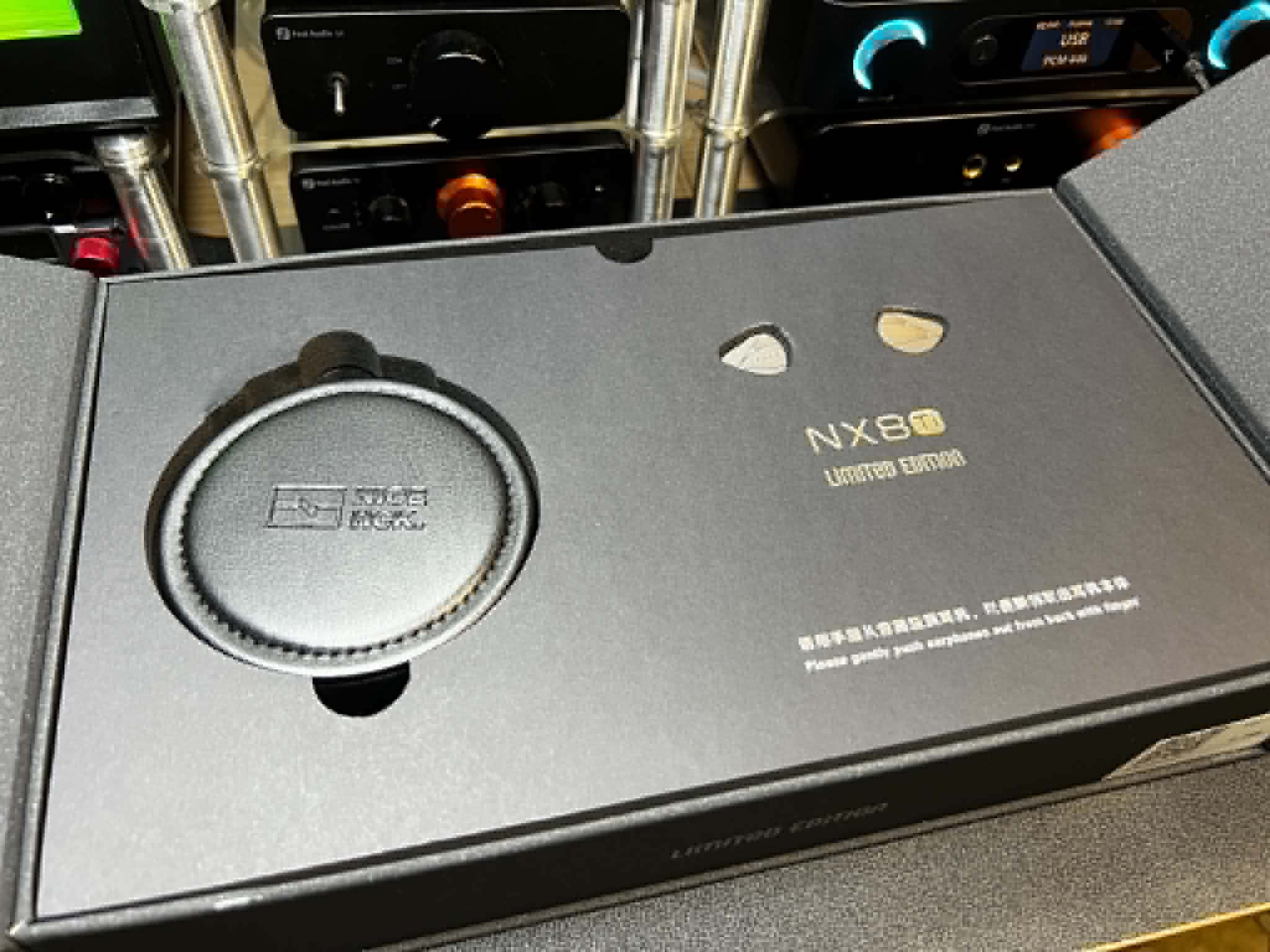
Whats in the box? checkout my quick unboxing video and take a closer look at the NX8Ti.
Specifications:
Driver Configuration: 1DD + 6BA + 1PZT
Dynamic Driver: 10mm Titanium Coated Diaphragm Dual Magnetic DD
Impedance: 18Ω @1kHz
Sensitivity: 112.3dB/mW @1kHz
Frequency Response: 20Hz–30kHz
Shell Material: Resin + Titanium Alloy
Cable: 7N Single Crystal Copper
Connector: 0.78mm 2-Pin
Plug Options: 3.5mm / 4.4mm
Other notable features include:
Titanium alloy laser-etched faceplate
Titanium alloy nozzle
Rubycon film capacitors
6N single-crystal silver internal wiring
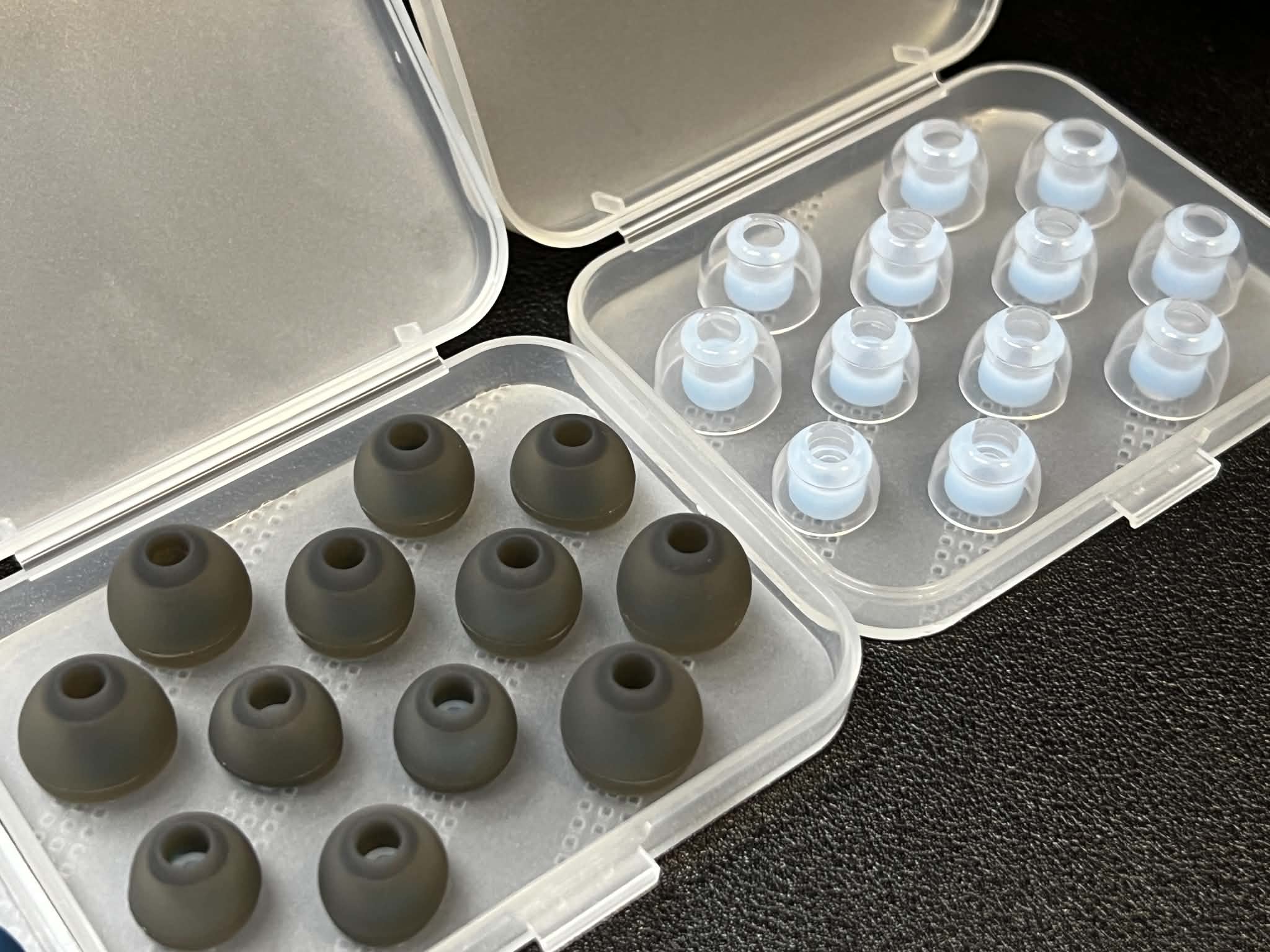
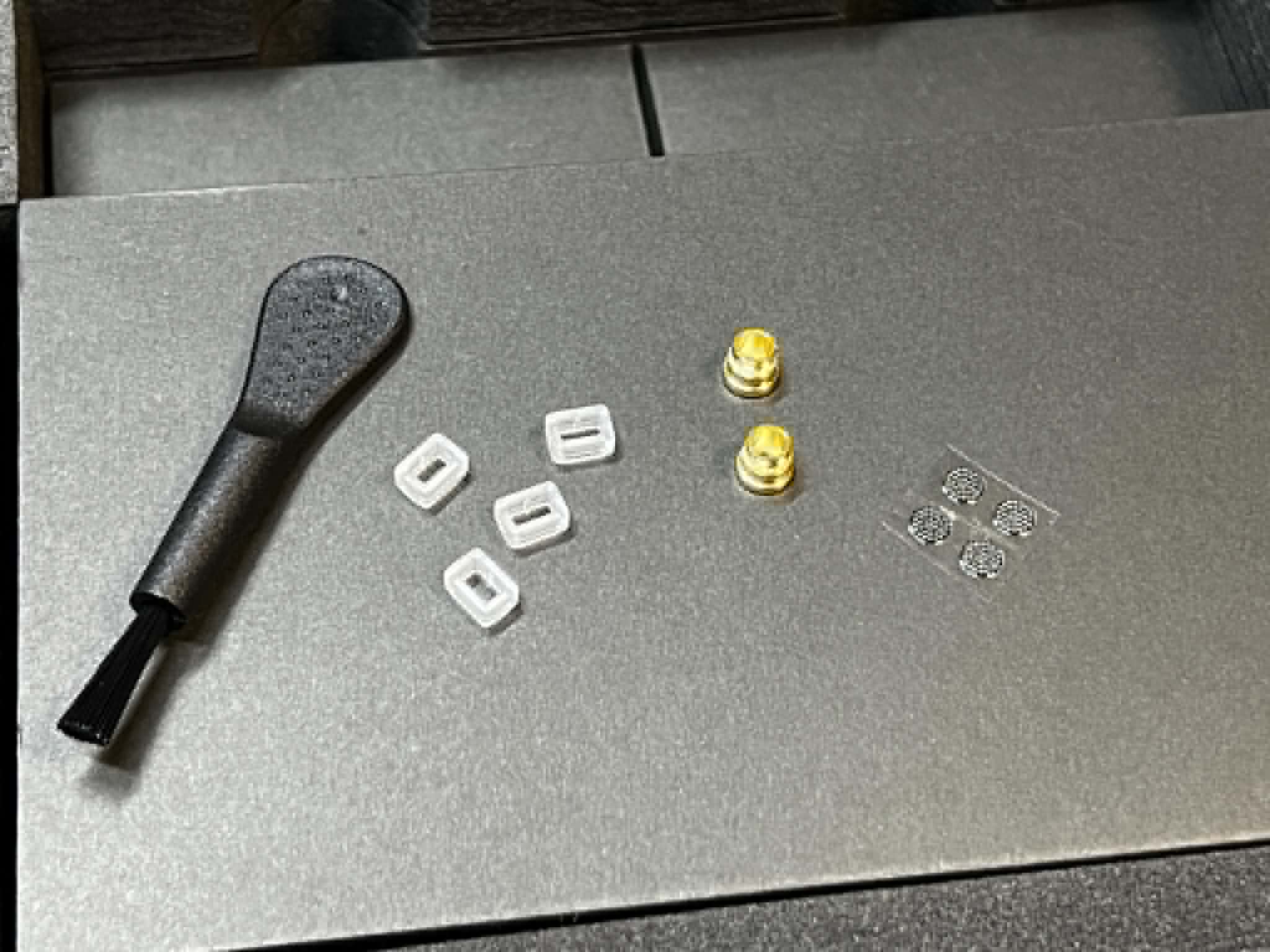
Build Quality, Comfort and Cable
Physically, the NX8Ti stays very close to the original NX8 in both size and overall shape, and honestly that is a good thing because the OG NX8 already had one of the better fitting universal shells in this category. NiceHCK clearly understood they already had a solid ergonomic foundation here, so instead of redesigning everything for the sake of looking “new,” they focused on refining the materials and overall execution.
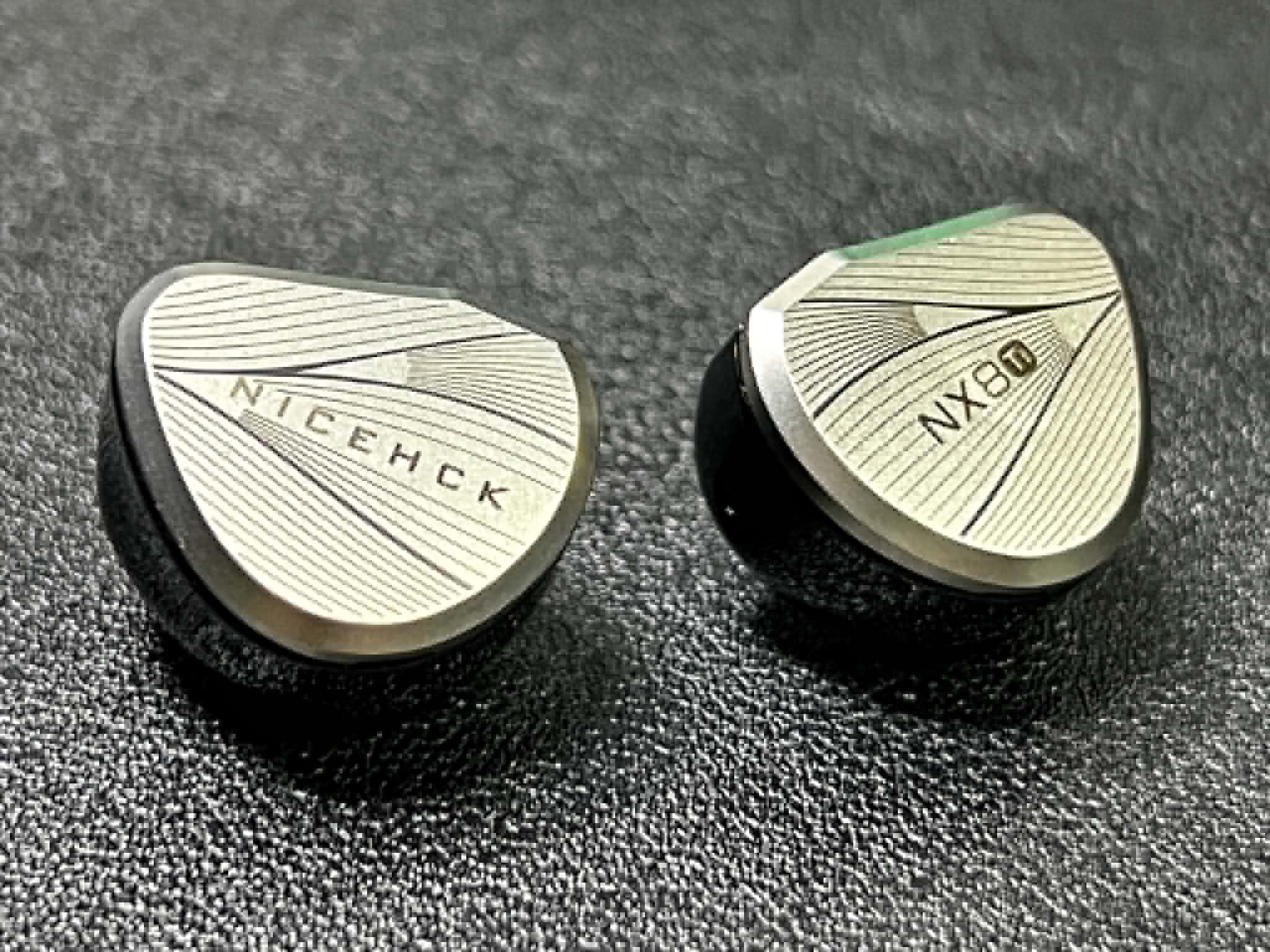
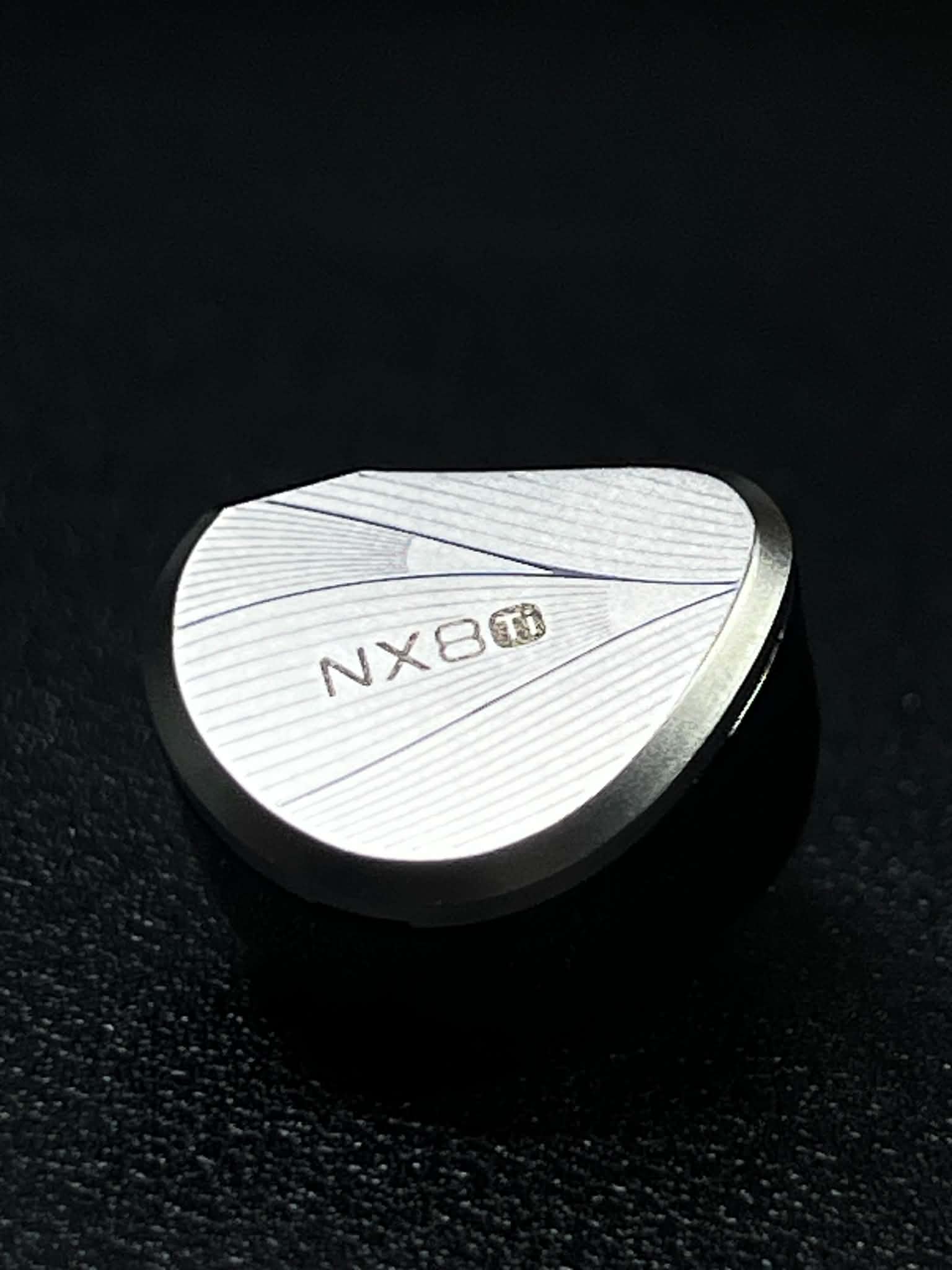
The shell itself remains compact, sleek, and surprisingly lightweight for a tribrid configuration packing this many drivers inside. In the ears, it never feels bulky or awkward. The inner resin shell has a very smooth contour that naturally follows the shape of the ear, giving it a secure fit and consistent seal without creating pressure points. Even after several hours of listening, I never really felt the urge to take them out and rest my ears, which is always a good sign.
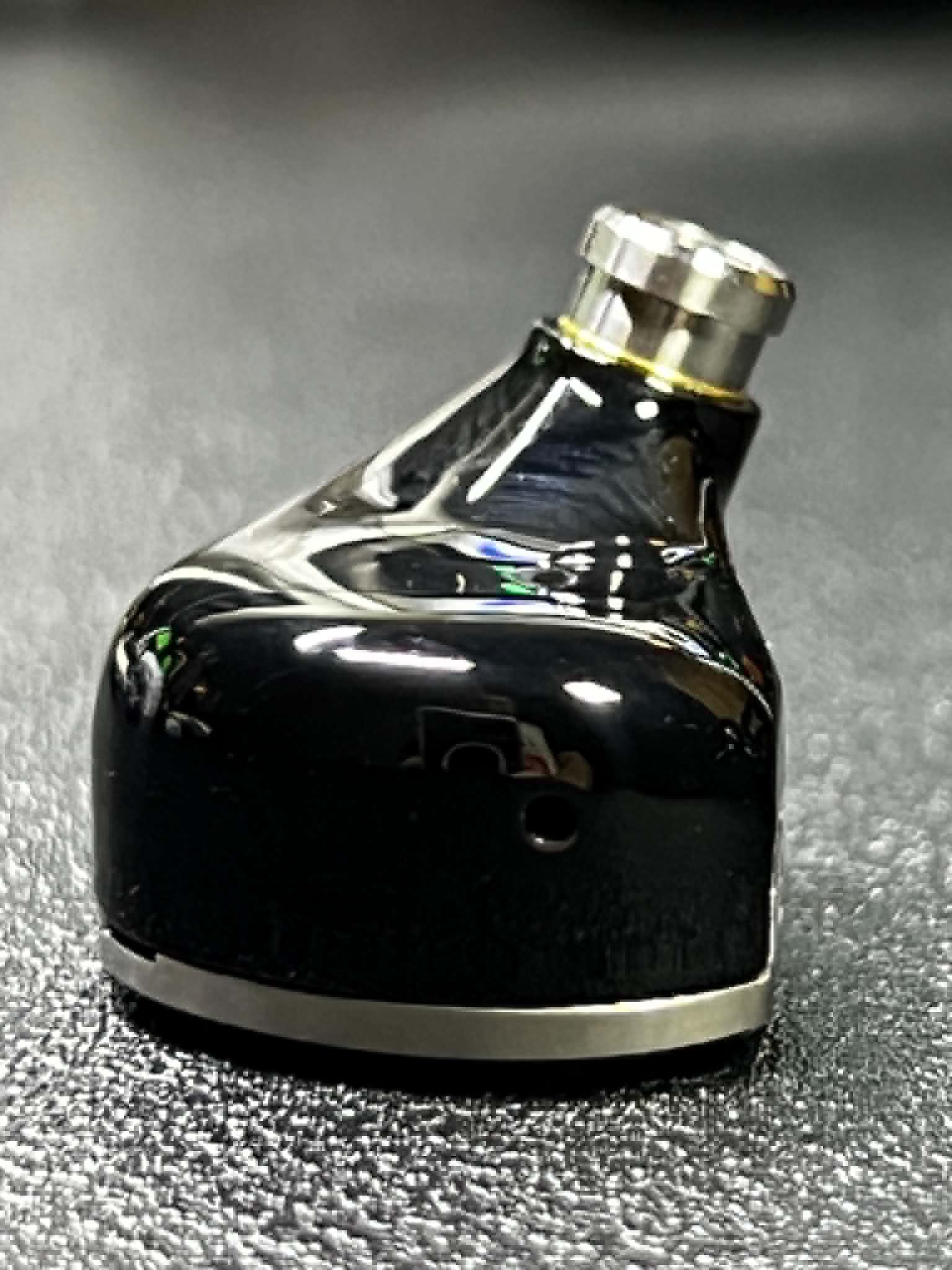
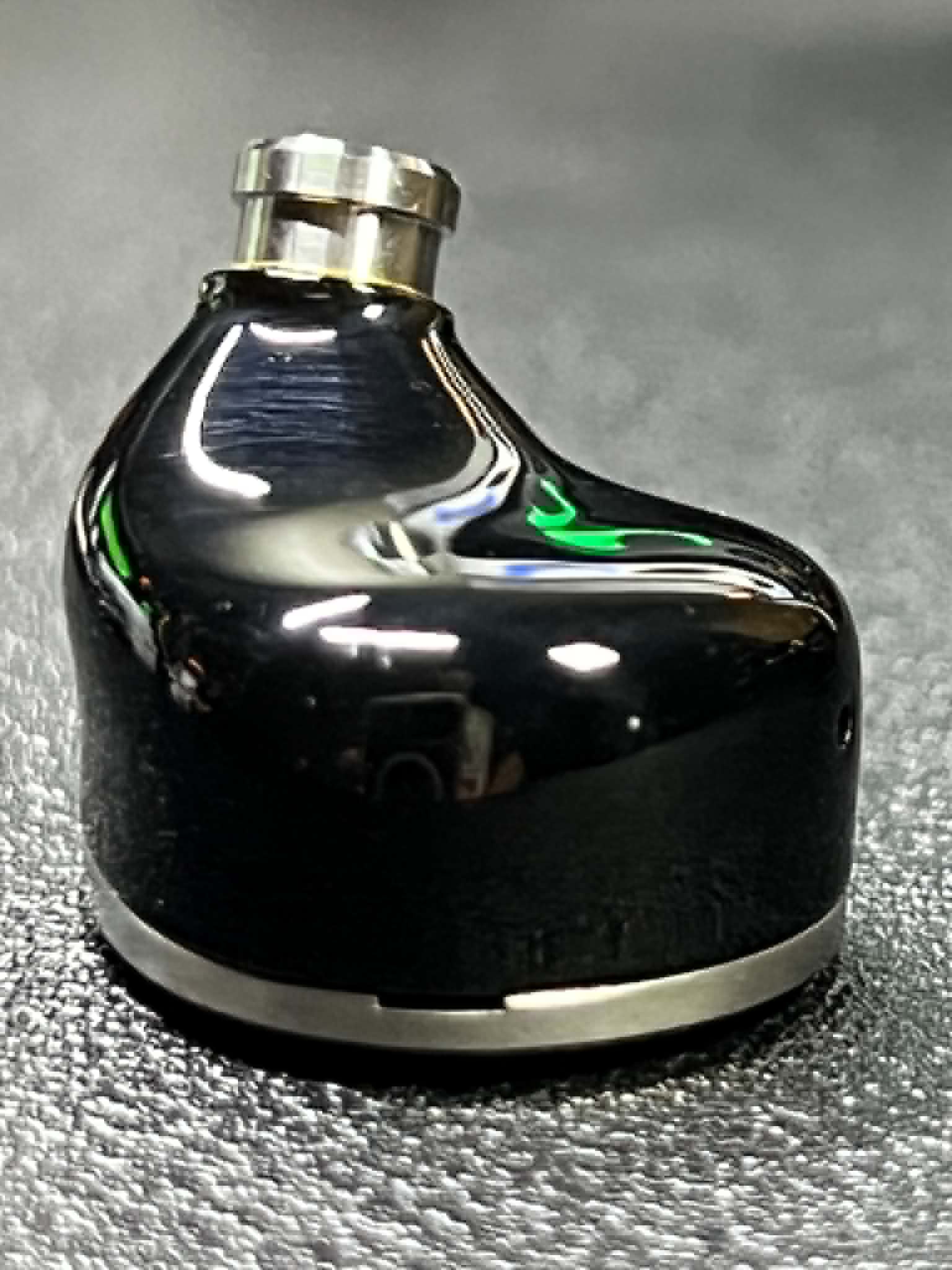
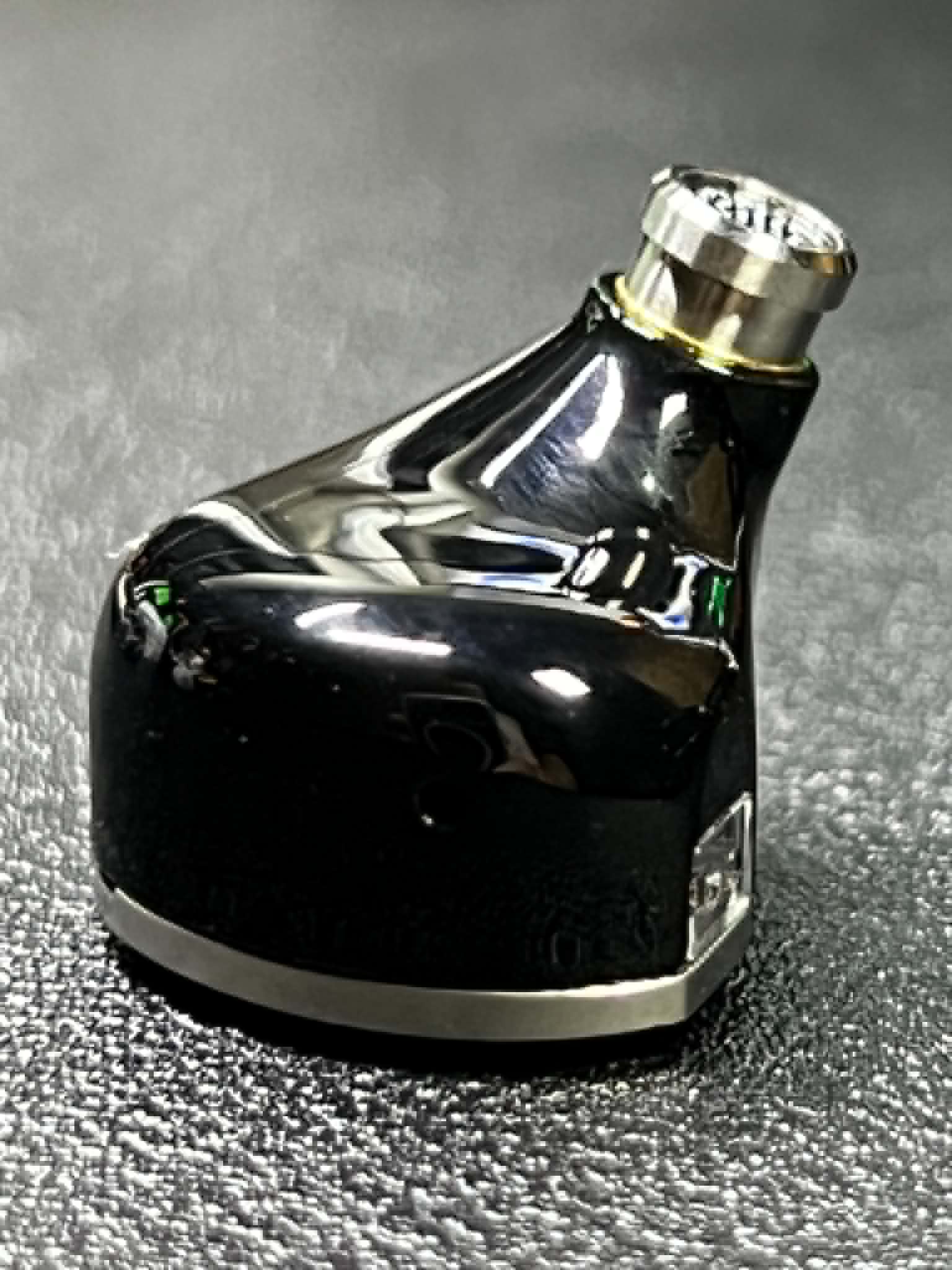
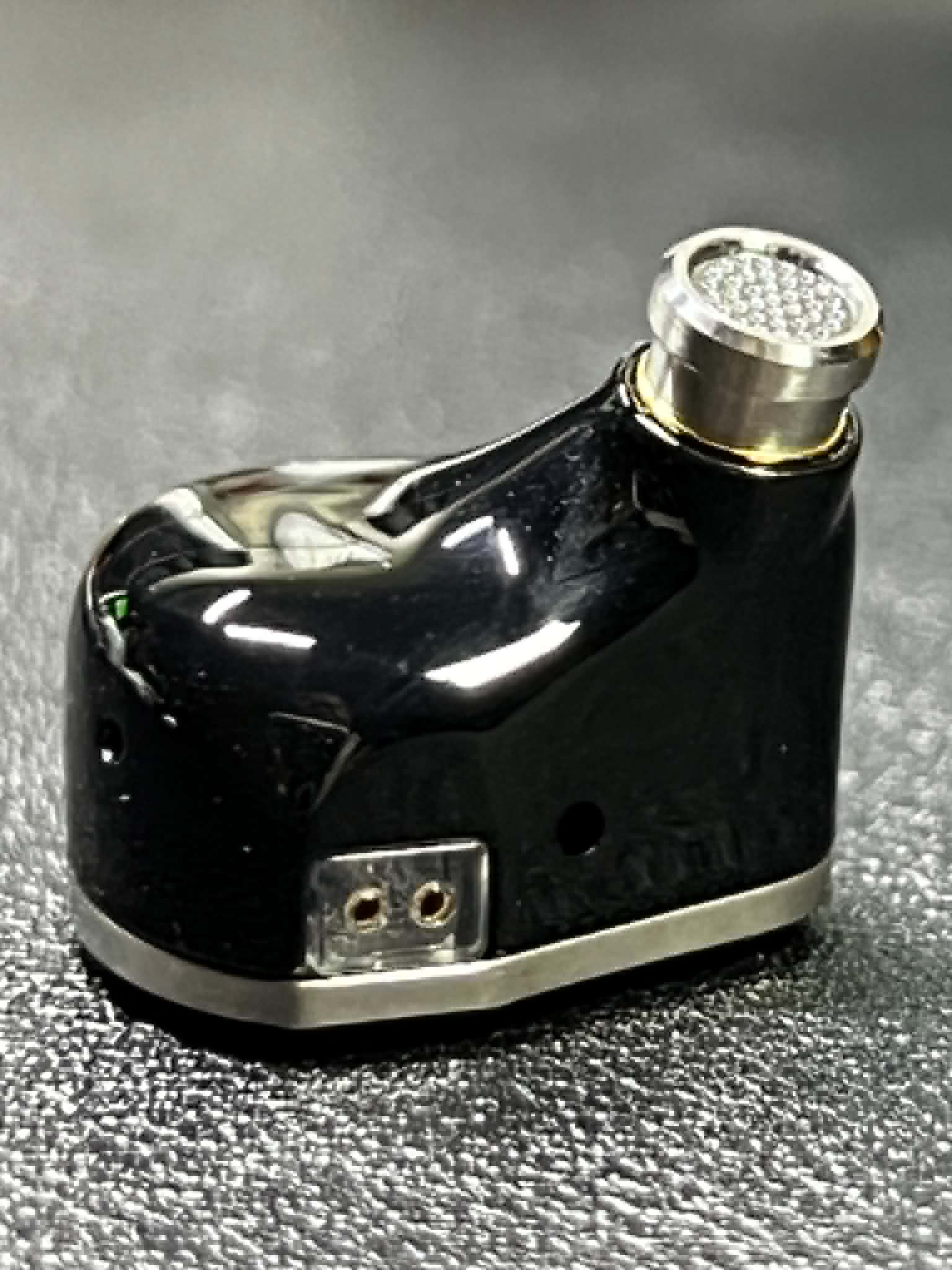
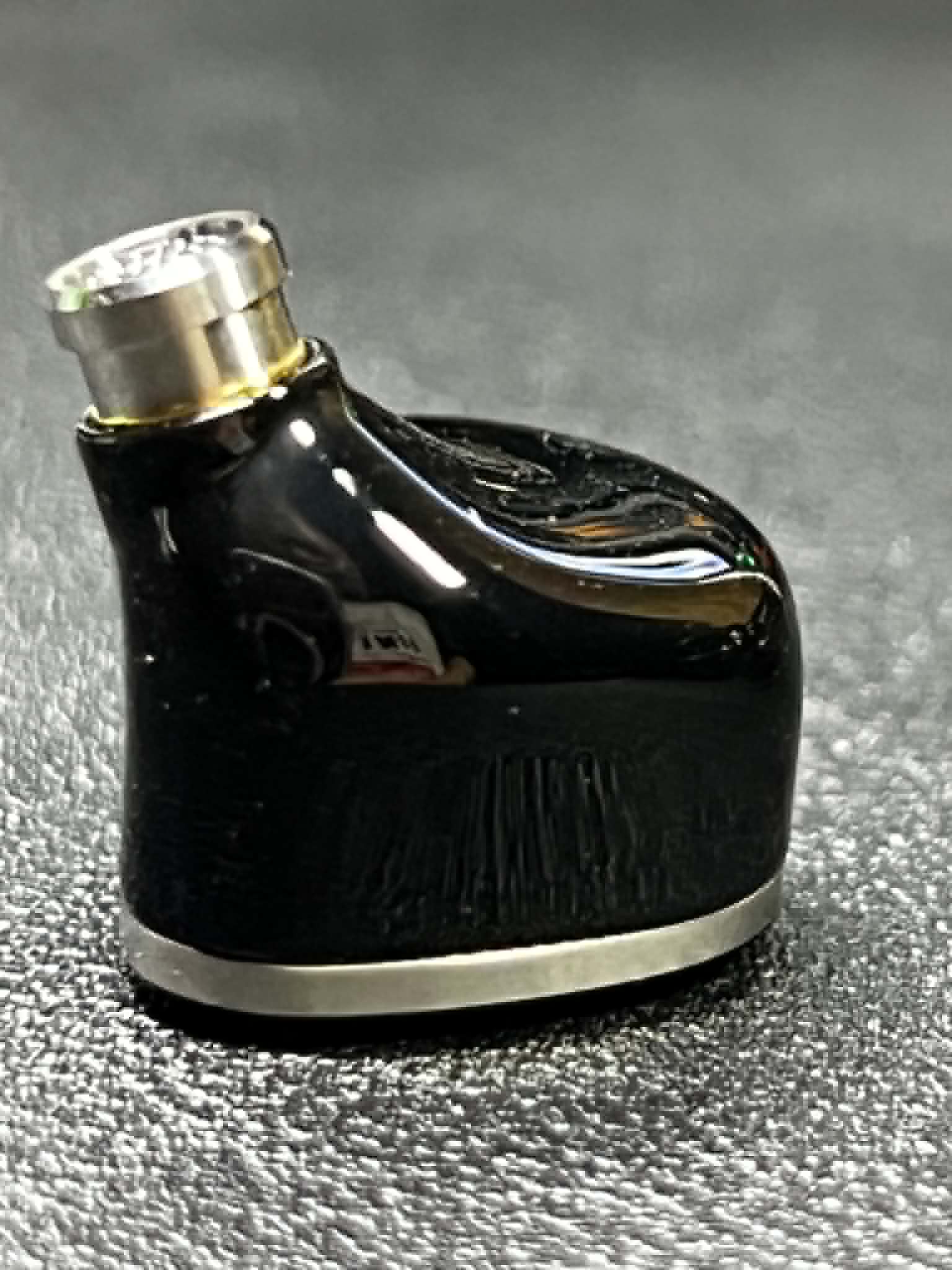
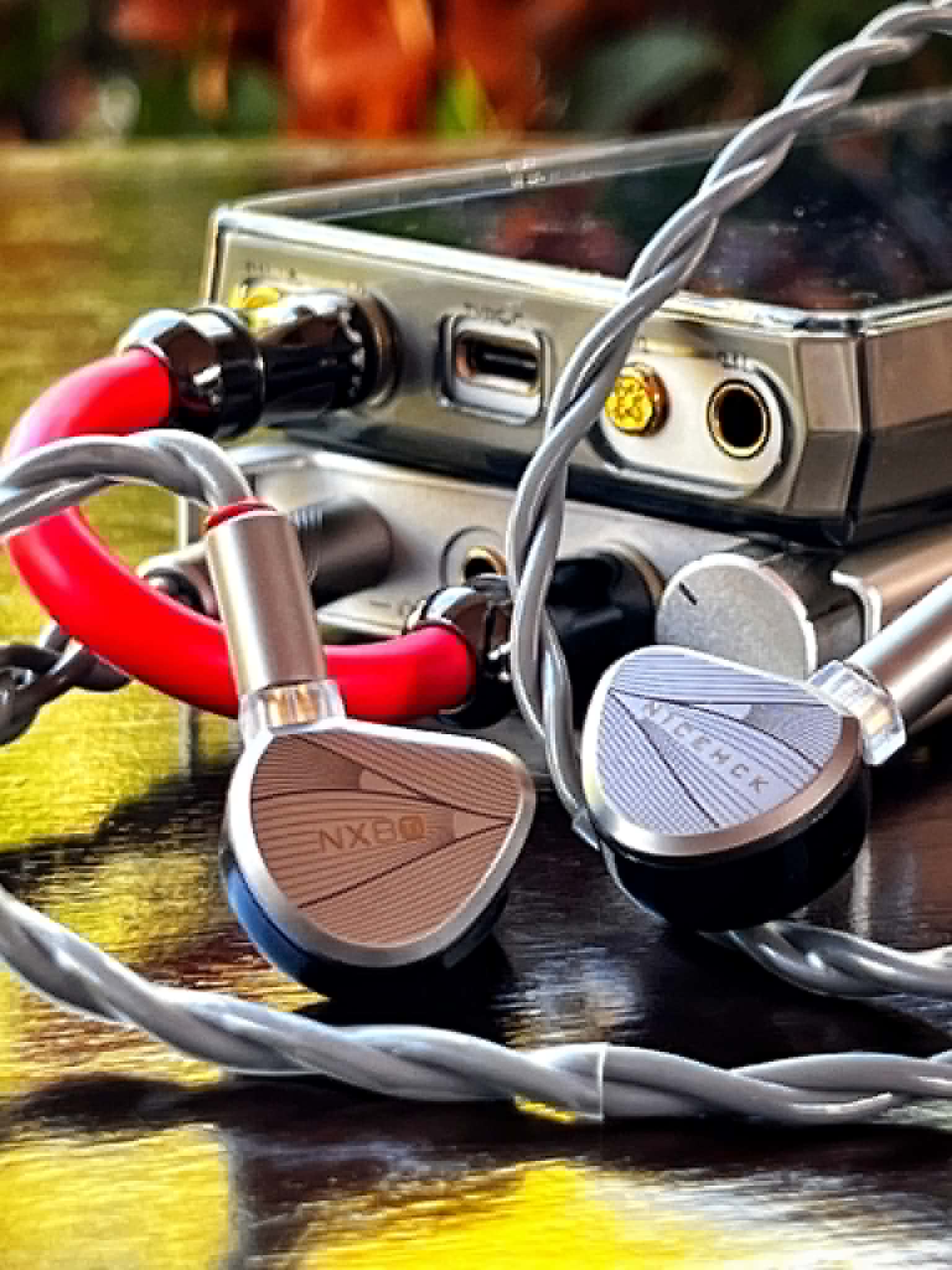
Visually, the NX8Ti looks more mature and premium compared to the OG NX8. The matte titanium alloy faceplate immediately stands out the moment light hits it. It has this raw industrial look that feels clean and understated rather than flashy or overly decorative. The laser etched line design adds just enough texture and character without turning it into some overly aggressive “gaming” aesthetic. It has a very modern minimalist vibe to it that I personally really like.
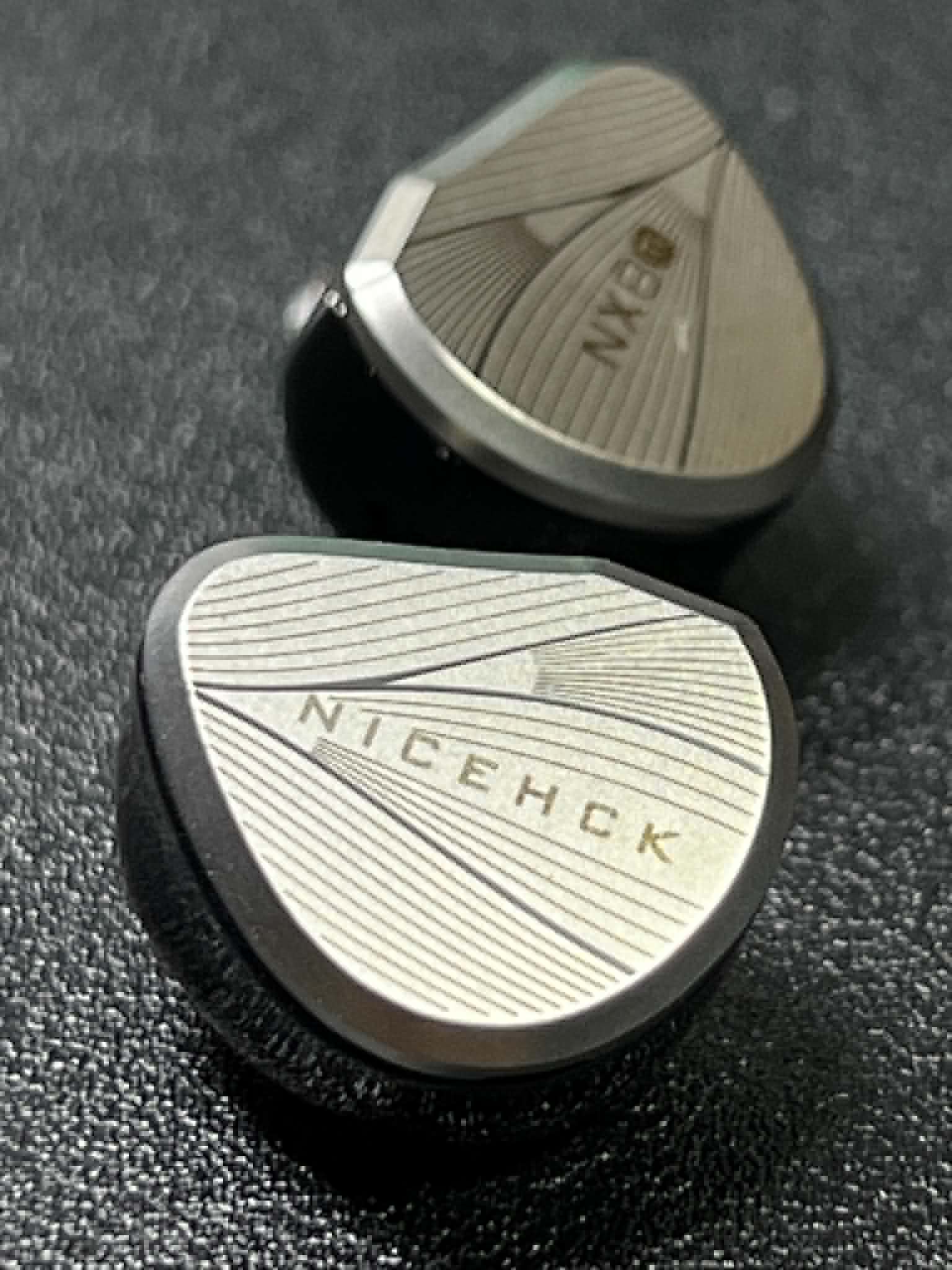
The transition between the resin shell and titanium faceplate is also very clean. No uneven seams, no rough edges, no cheap feeling joins. Everything feels properly assembled and well finished. For a limited edition release, the build quality definitely feels appropriate.
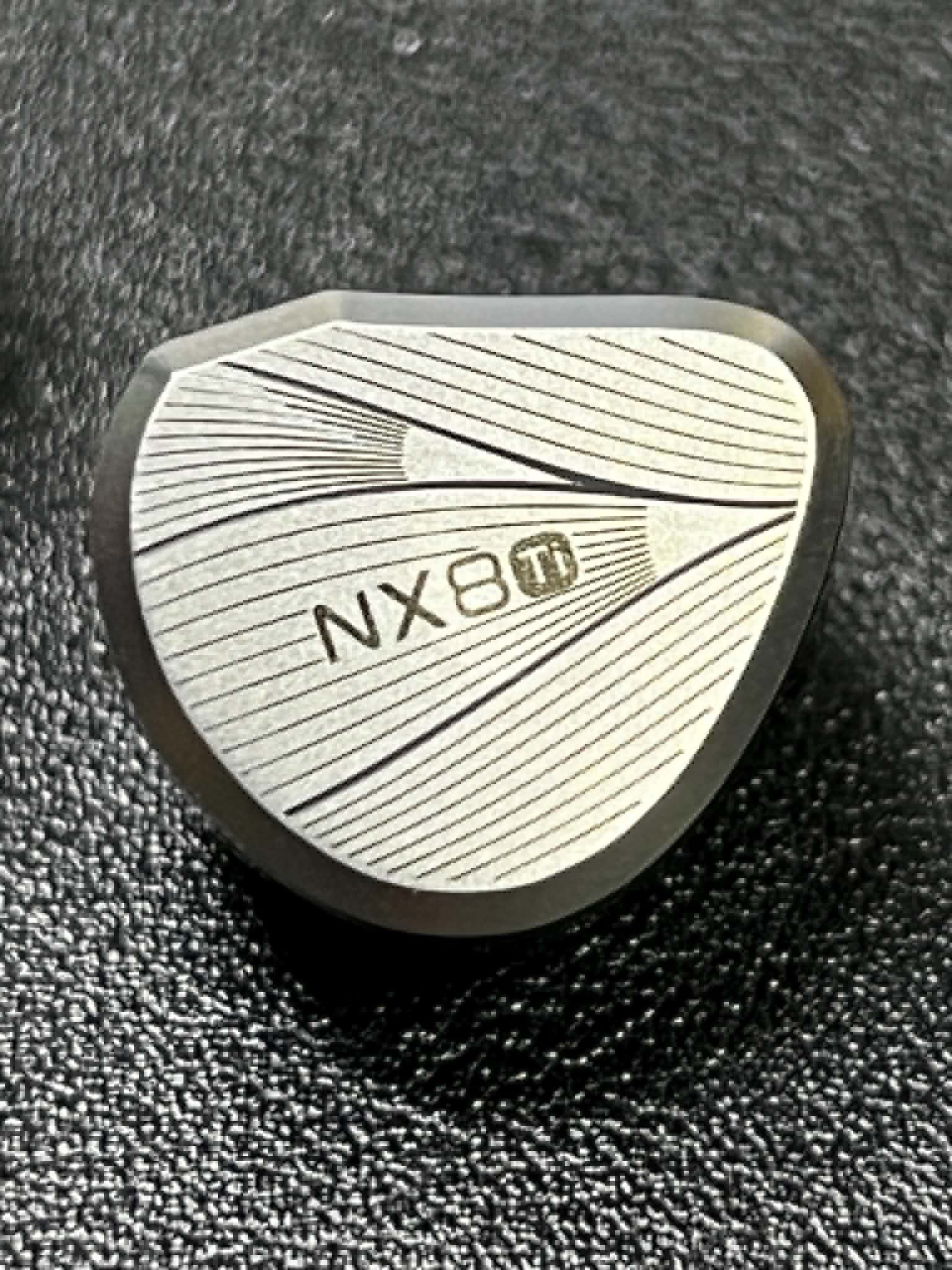
More importantly, the titanium faceplate is not just there for visual appeal or marketing points. Titanium is an extremely rigid material, and that rigidity helps reduce unwanted shell resonance and vibrations. Now, whether that alone completely transforms the sound is always hard to quantify, but combined with the new titanium diaphragm dynamic driver, the overall presentation of the NX8Ti does come across cleaner, tighter, and more refined compared to the original NX8. There is a sense of control and composure here that the OG version occasionally lacked, especially in the upper frequencies.
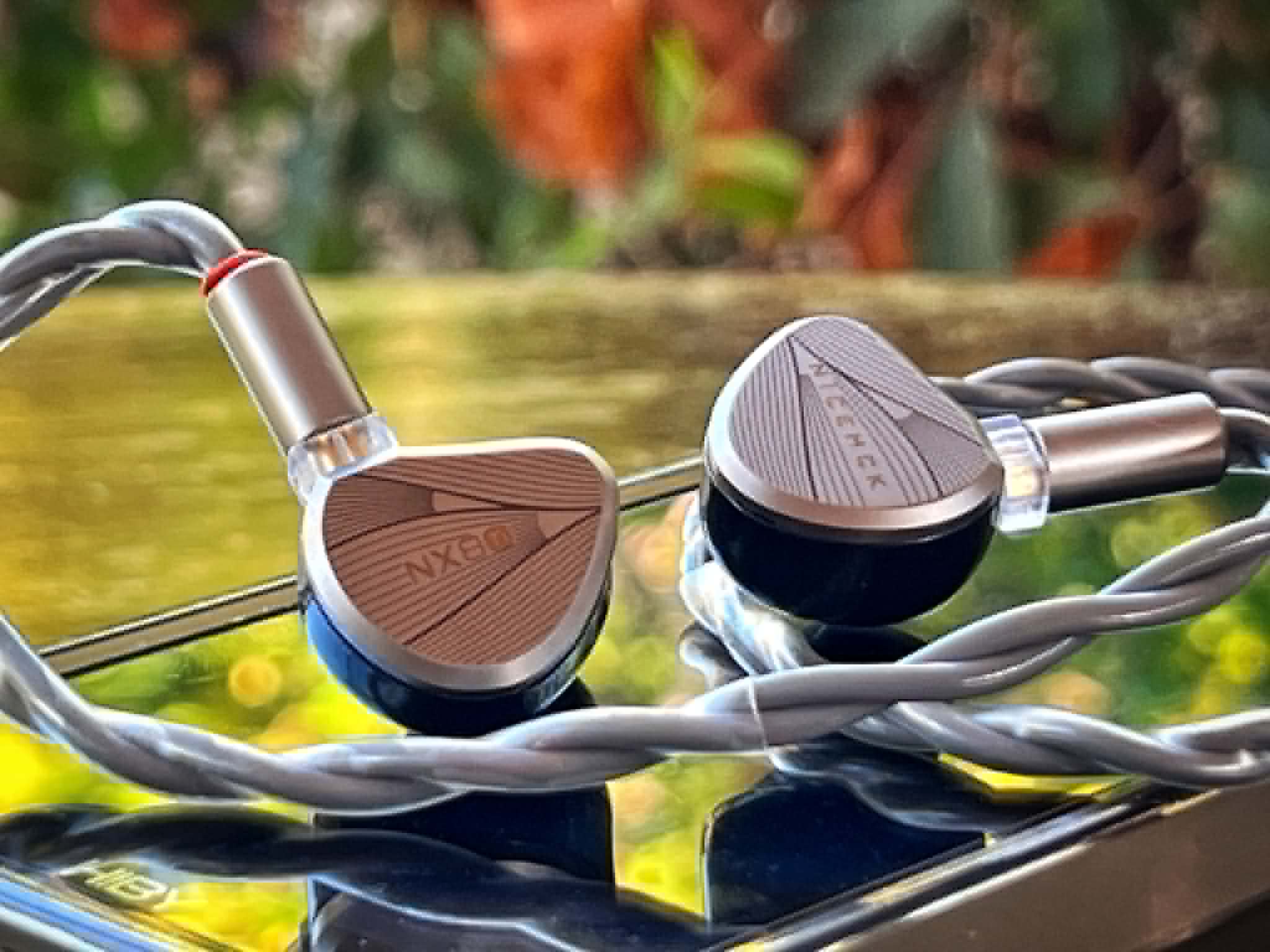
Comfort is excellent for my ears. Once inserted, the shells almost disappear because of how lightweight they are. Isolation is also pretty solid thanks to the compact fit and deep enough nozzle insertion. I had no issues using them for long late-night listening sessions, and they never developed that annoying hotspot fatigue some larger tribrids tend to cause.
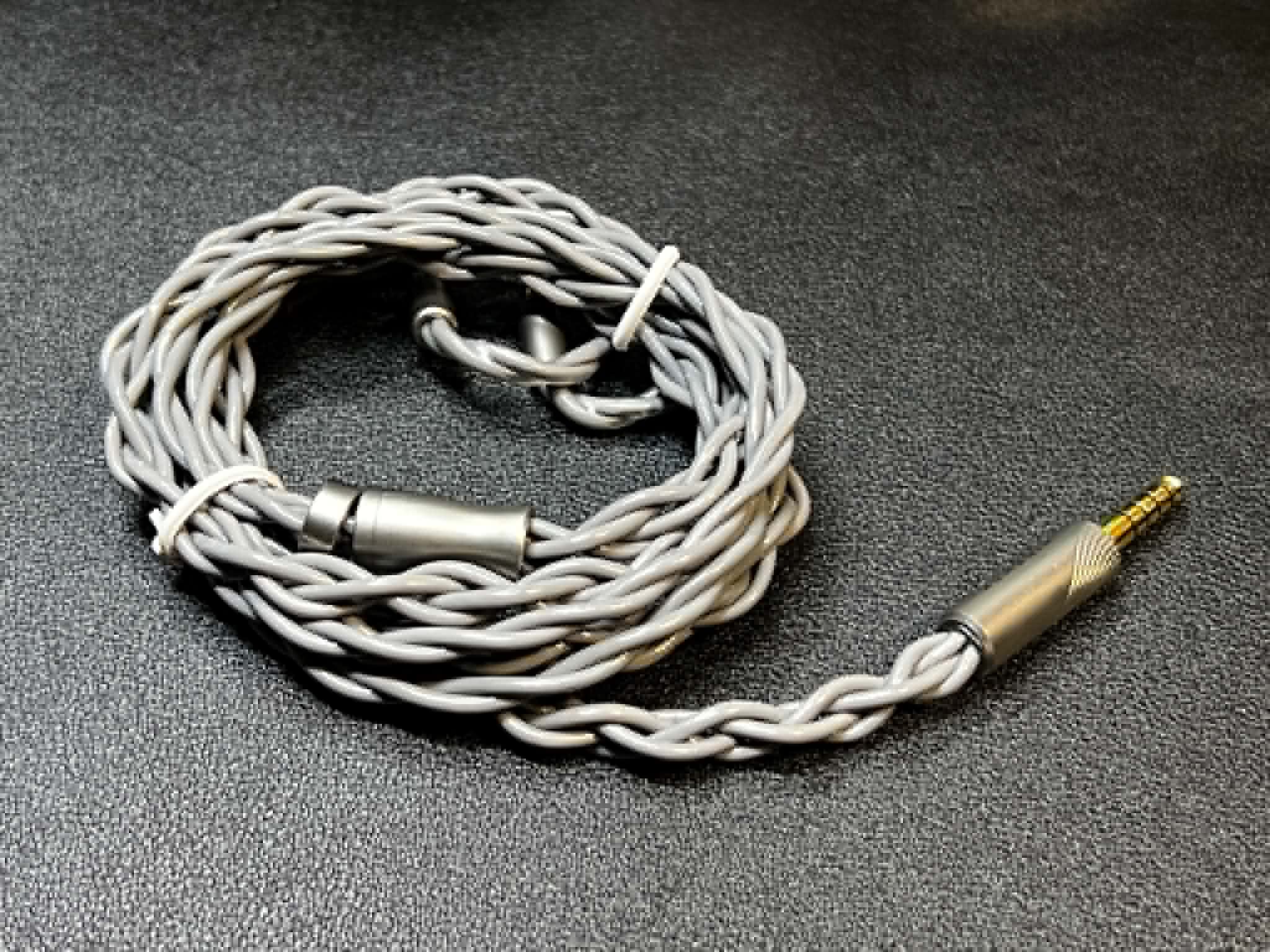
Now the cable… this thing is an absolute tank.
The moment I pulled it out of the box, it immediately reminded me of the NiceHCK BlackCat cable because of the thickness and overall construction style, except this one somehow feels even denser and more premium in hand. The braid is tight and substantial, and the entire thing just screams “high-end aftermarket cable included in the box.”
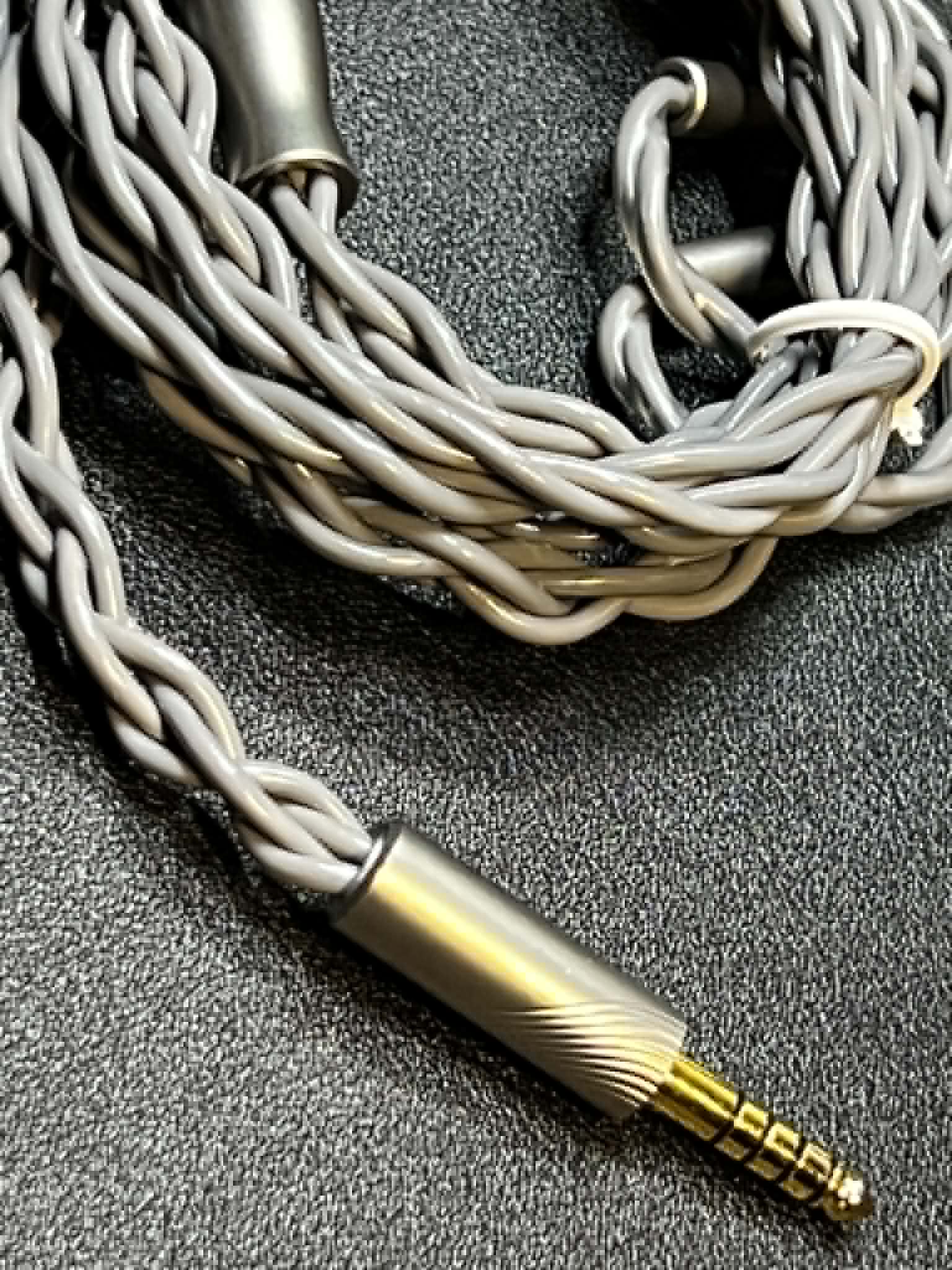
The hardware deserves some attention too. The titanium finished jack, splitter, chin slider, and 2-pin connectors all perfectly match the aesthetic of the NX8Ti itself. NiceHCK clearly paid attention to consistency here because the entire package feels cohesive from the shells down to the cable hardware.
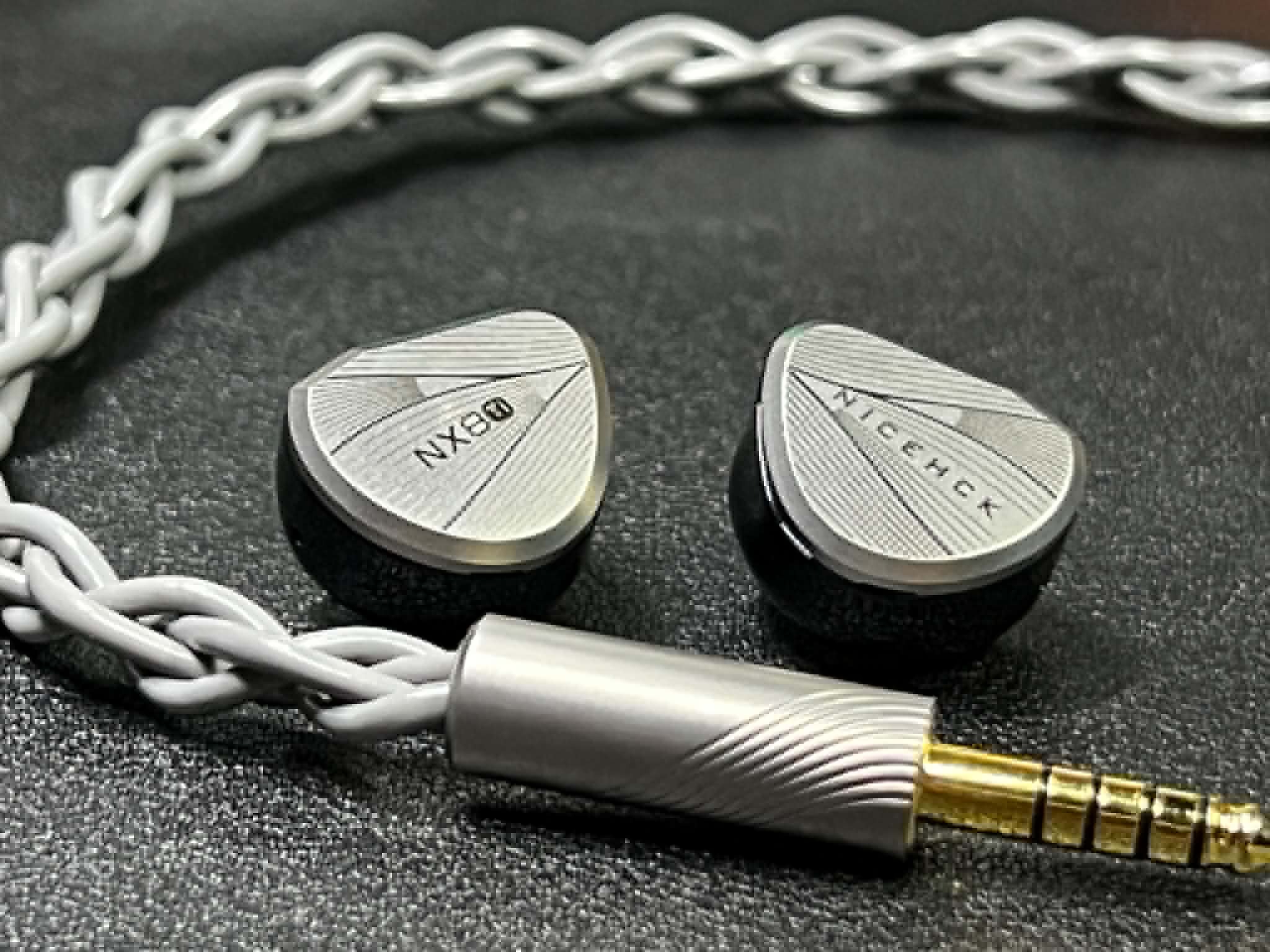
In terms of feel, this cable definitely leans toward the “luxury” side rather than the lightweight practical side. It has weight to it. Real weight. Some people absolutely love that because it gives off that premium, serious audio gear feel. Personally though, I think it borders slightly into overkill considering how compact and lightweight the NX8Ti shells are. The cable almost feels more substantial than the IEM itself.
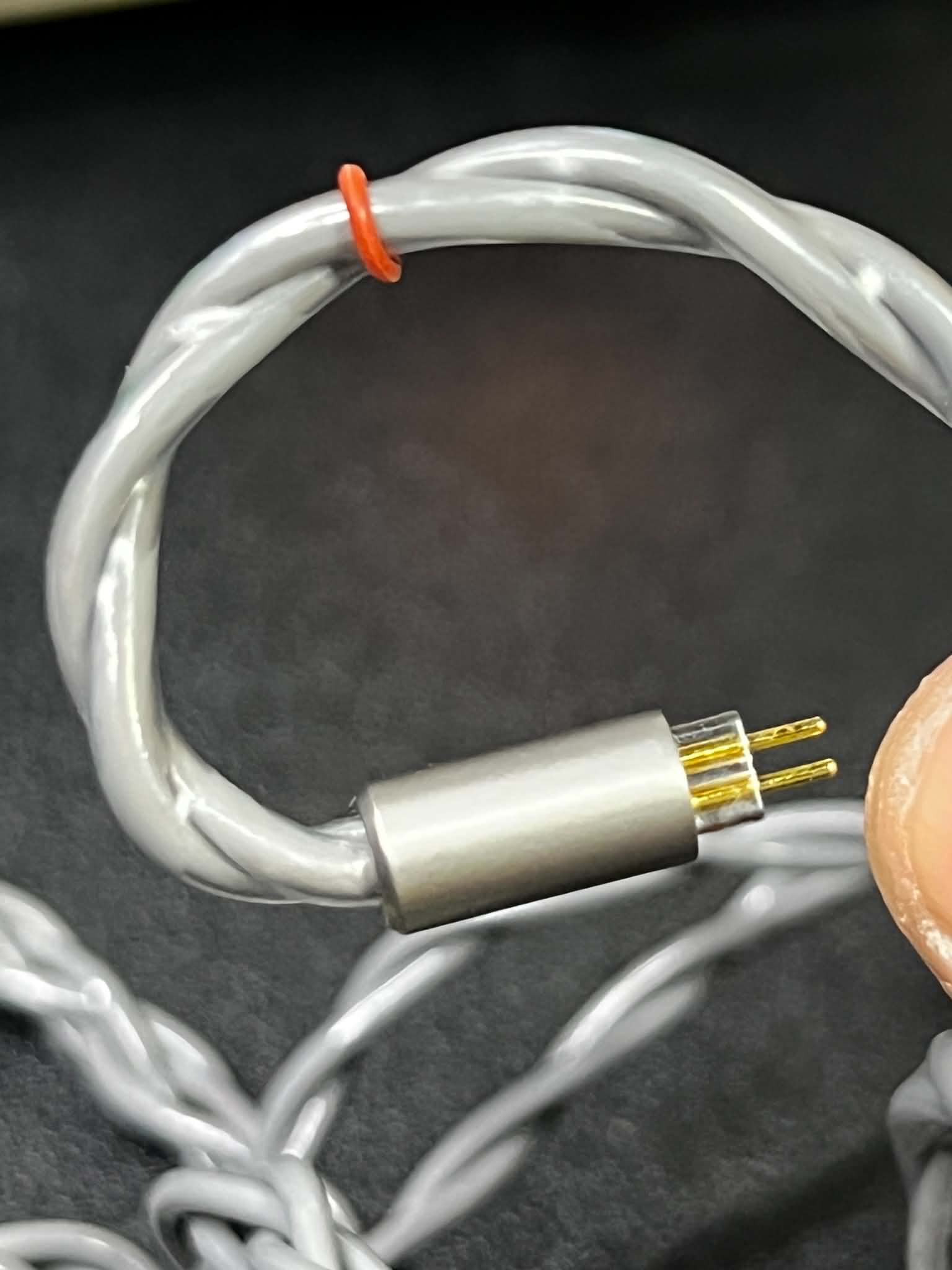
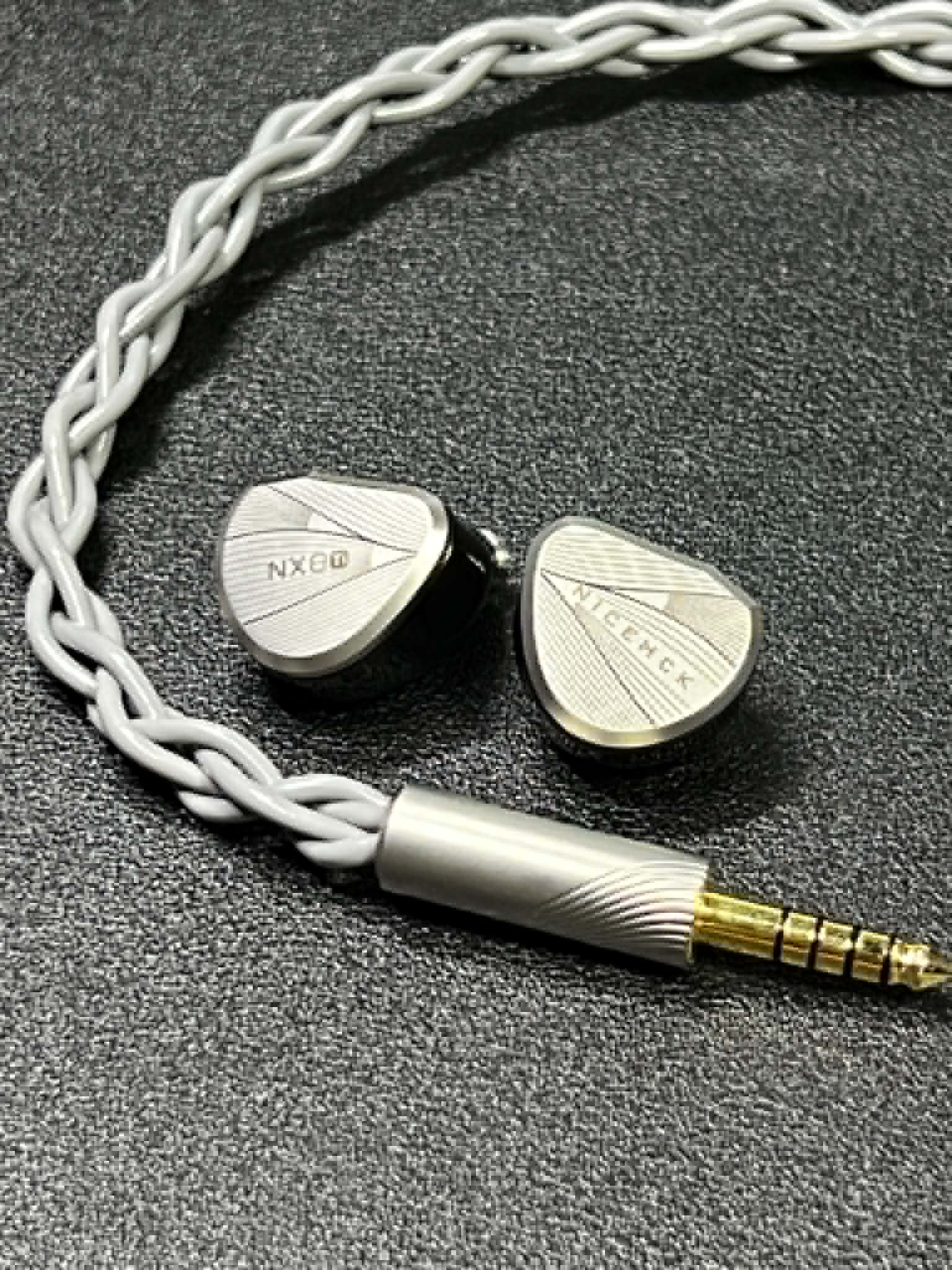
It is not uncomfortable, but you are always aware of it. A softer and slightly lighter cable probably would have matched the NX8Ti’s sleek ergonomic design a little better for daily portable use. Still, this is one of those “good problem to have” situations because the actual quality here is undeniably excellent.
Overall, the NX8Ti feels properly premium from top to bottom. Nothing about it comes across cheap or rushed. Between the titanium faceplate, the excellent shell ergonomics, and the absurdly overbuilt cable, this definitely feels like a more refined and upscale evolution of the original NX8 rather than just a minor refresh.
Drivability and Pairing
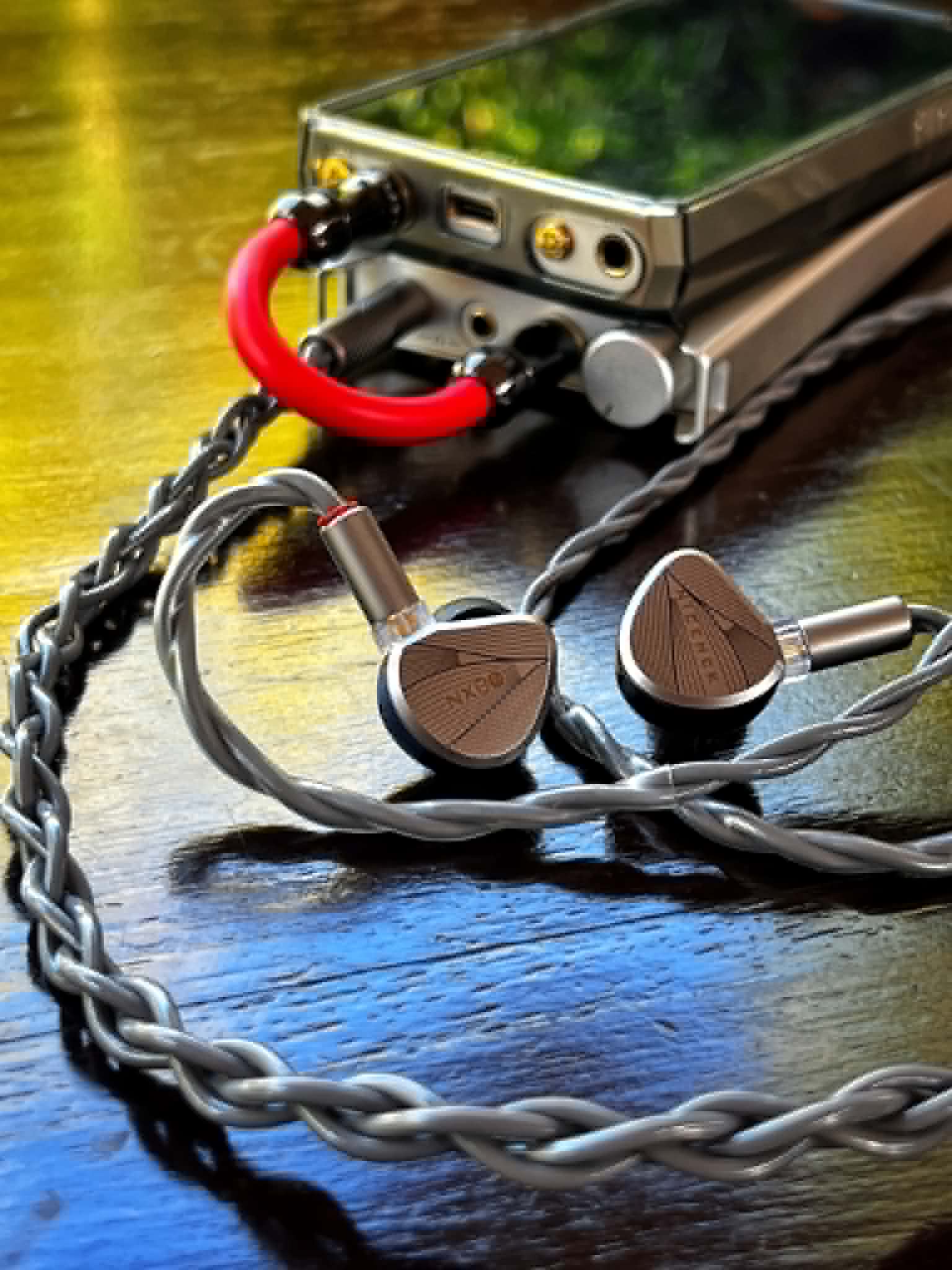
Despite packing a pretty serious tribrid setup with a 1DD + 6BA + 1PZT configuration, the NX8Ti is actually surprisingly easy to drive. This is not one of those ultra-picky IEMs that suddenly sounds dead or lifeless unless you hook it up to some massive desktop amplifier that looks like it belongs in a recording studio. Even modest portable dongles have no problem driving it properly.
Straight out of smaller portable sources, the NX8Ti already sounds full, dynamic, and resolving. Volume headroom is easy to achieve, and the overall tuning remains stable even from lower-powered devices. That makes it a very practical daily carry because you are not constantly worrying about whether your source has enough juice to wake it up.
What impressed me more though is how well the NX8Ti scales when you start pairing it with cleaner and more resolving sources. The core tuning remains intact, but better sources noticeably improve layering, transient sharpness, bass texture, and stage depth. It is one of those IEMs where you can clearly hear the source chain changes without it becoming overly source dependent.
Personally, I think the NX8Ti pairs best with smoother or slightly analog leaning sources. Pair it with something that has a natural timbre or a mildly warm presentation and the NX8Ti becomes incredibly addictive. The titanium dynamic driver already gives the bass very good control and texture, so pairing it with smoother DACs or slightly organic sounding amps helps balance the technical performance with a more relaxed musical presentation.
I especially enjoyed pairing it with R2R-style sources and smoother Class A amplifiers because they complement the NX8Ti’s cleaner and more resolving nature really well. The sound becomes richer and more immersive without sacrificing detail retrieval or speed. Vocals gain a little more body, the treble smooths out even further, and the entire presentation just feels effortless.
Compared to the original NX8, this is honestly one of the biggest improvements of the Ti version.
The OG NX8 was already highly detailed and energetic, but depending on the source and recording quality, it could occasionally become a bit too intense in the upper mids and lower treble region. Brighter DACs or sharper ESS implementations especially could push the OG NX8 into slightly fatiguing territory during longer listening sessions. It was exciting, but sometimes almost too eager to show every little detail.
The NX8Ti feels noticeably more refined in that regard.
The treble is still highly resolving and extended, but the delivery is smoother, more controlled, and more natural sounding. There is still plenty of air and sparkle up top, but now it comes with better balance and composure. You still get all the microdetail and openness, just without the occasional sharpness that the OG NX8 could exhibit on certain tracks.
That smoother top-end behavior also makes the NX8Ti significantly less fatiguing during long sessions. I could comfortably listen to it for hours without feeling that upper-frequency tension or listening fatigue creeping in. That is honestly a huge compliment for a tribrid running both multiple BAs and a piezoelectric driver, because those types of setups can sometimes become overly analytical or aggressive if not tuned properly.
Another thing I noticed is that the NX8Ti maintains its composure better at higher listening volumes compared to the OG NX8. The original sounded best at low to medium volume levels, while pushing it louder could make the upper frequencies feel overwhelming. The NX8Ti handles volume scaling much better. Even when turning the volume up, the sound stays controlled and cohesive rather than becoming sharp or shouty.
Sound Impressions
Bass
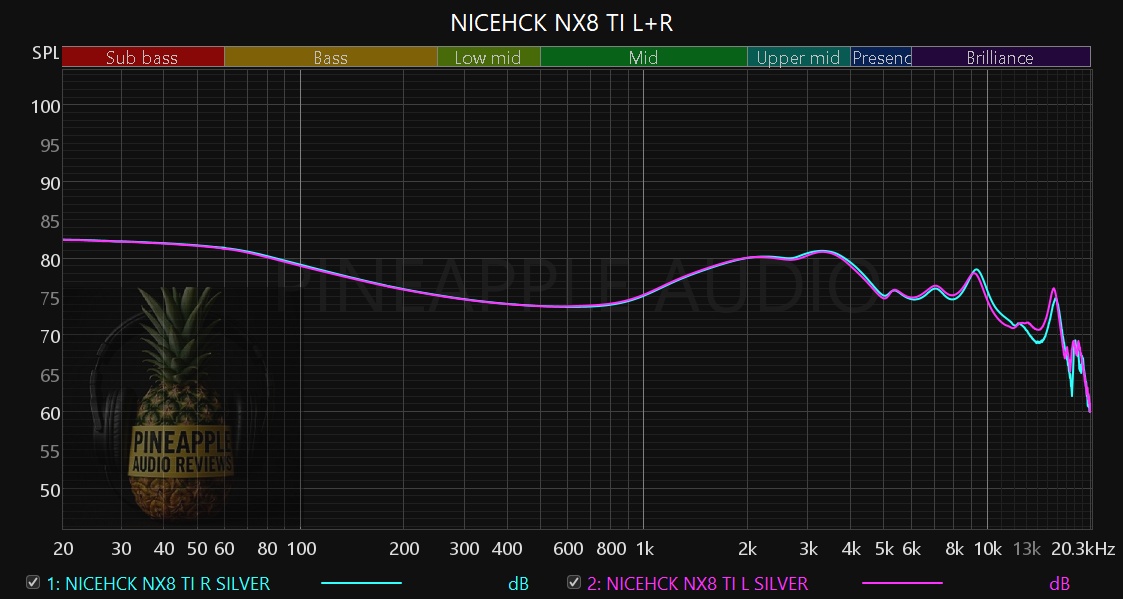
The low-end performance on the NX8Ti is probably the first thing that immediately made me realize this was not just a minor cosmetic refresh over the original NX8. The moment the bass kicks in, you can hear what that titanium diaphragm is doing differently. There is a level of control, speed, and texture here that feels noticeably more refined and technically polished compared to the OG version.
Subbass extension is excellent. It reaches deep effortlessly and has that satisfying physical rumble that you can both hear and feel, especially on tracks with proper low-end information. The NX8Ti can dig very low when the recording calls for it, but what I appreciate is how disciplined it stays throughout. It never turns into that overly boosted or loose “subwoofer strapped to your ears” type of bass presentation. Instead, it keeps things clean, layered, and controlled.
There is a nice sense of physicality to the subbass too. You get that tactile vibration and air movement that gives electronic tracks, cinematic scores, and modern pop music a really immersive foundation. At the same time, the bass never overshadows the rest of the frequency range. It supports the presentation rather than dominating it.
What really stands out to me though is the transient behavior of the dynamic driver. This is where the titanium diaphragm immediately separates itself from more conventional polymer implementations. Notes attack fast, stop fast, and recover quickly. The bass has a very precise and well-defined character that makes complex bass passages sound organized instead of smeared together.
You can clearly hear the edges of bass notes. There is very little bloom or lingering resonance, which gives the NX8Ti excellent bass separation and layering. On busy tracks with multiple low-frequency elements happening simultaneously, like layered synth bass, kick drums, bass guitar lines, and subbass drops, the NX8Ti maintains composure extremely well. Nothing turns muddy or congested.
Texture retrieval is also excellent. You do not just hear bass quantity here, you hear the nuances within the bass itself. Bass guitars have string texture and grip, kick drums have proper definition between the initial impact and the trailing resonance, and electronic bass lines sound tight and articulate rather than soft or blurred.
Midbass is where the tuning becomes especially satisfying for me. It has very good punch and impact, but avoids sounding bloated or overly thick. The slam feels fast, dense, and controlled. There is enough weight to make drums sound lively and engaging, but the bass never bleeds into the lower mids or clouds vocal clarity.
This balance is something I think NiceHCK handled really well with the NX8Ti. A lot of technically tuned tribrids can sometimes sound a little too lean or dry in the bass department because they prioritize speed over physicality. The NX8Ti manages to keep both. It sounds clean and technical, but still musical and dynamic.
Another thing I noticed is how consistent the bass remains across different genres. Whether I was listening to electronic music, jazz, rock, acoustic tracks, or even orchestral recordings, the low-end always sounded controlled and appropriately scaled to the recording. It adapts well rather than forcing the same exaggerated bass profile onto everything.
Compared directly to the original NX8, the difference becomes pretty obvious.
The OG NX8 had a fuller and warmer low-end presentation with a bit more bloom and body. It sounded rich and engaging, but occasionally leaned slightly soft or rounded in comparison. The NX8Ti tightens everything up considerably. Bass notes are cleaner, faster, and more textured. Separation between subbass and midbass is more defined, and overall control is noticeably improved.
The OG NX8 felt more “fun” and slightly more colored down low, while the NX8Ti feels more mature and technically capable. It prioritizes precision, layering, and texture without sacrificing impact or musicality.
Personally, I think the NX8Ti strikes the better balance overall. It still gives you that satisfying dynamic driver punch and rumble, but now with significantly better control and refinement behind it.
Midrange
The midrange is honestly where the NX8Ti completely won me over. This is easily my favorite part of the tuning and probably the reason I kept reaching for it over and over again throughout the week. A lot of tribrids today focus so heavily on bass impact and hyper-detailed treble that the mids sometimes end up feeling artificially pushed back or overly processed. The NX8Ti thankfully avoids that trap.
What NiceHCK managed to do here is strike a really nice balance between technical clarity and natural musicality.
The overall midrange presentation sounds clean, transparent, and highly resolving, but never sterile or lifeless. There is very minimal coloration across the mids, and I mean that in a good way. The NX8Ti does not try to artificially sweeten vocals or add unnecessary warmth just to sound “musical.” Instead, it leans toward realism and accuracy while still maintaining a very engaging presentation.
Vocals sound properly centered and naturally positioned within the mix. They are not shoved aggressively forward, but they never feel recessed either. There is a very nice sense of openness and space around vocals that helps them breathe naturally within the presentation.
Male vocals have good density and texture. You can hear subtle nuances in vocal delivery like breath texture, vocal layering, and chest resonance without the presentation sounding overly thick or heavy. Baritone vocals especially sound really satisfying because the NX8Ti preserves enough lower-mid body while keeping everything clean and controlled.
Female vocals are where the NX8Ti really shines for me. There is a lively and energetic presentation to female vocals that gives them excellent clarity and emotional presence, but unlike the OG NX8, the tuning never crosses into shouty or piercing territory. That was one of the biggest improvements I immediately noticed moving from the original NX8 to the Ti version.
The OG NX8 could occasionally sound a little too eager in the upper mids, especially with brighter recordings or at higher listening volumes. Female vocals sometimes carried a sharper edge that could become fatiguing over long sessions. The NX8Ti smooths that region out significantly while still preserving the openness and energy that made the original engaging.
The upper mids here are elevated enough to give vocals and instruments strong clarity and articulation, but the transition into the lower treble feels much more refined and cohesive now. Instead of sounding sharp or overly excited, the energy flows more naturally across the frequency range.
Instrument reproduction is another area where the NX8Ti performs really well.
Guitars sound crisp and articulate with very good string definition. Piano notes carry proper weight and harmonic richness without sounding overly thin or metallic. Acoustic instruments in general sound very clean and believable. There is a nice balance between note body and note edge that keeps instruments sounding realistic rather than overly analytical.
One thing I really appreciate is how organized the midrange stays even on complex tracks. Instrument separation is excellent, and the layering capability here is genuinely impressive for the price range. Busy recordings with multiple instruments happening simultaneously never collapse into congestion or smear together. You can easily follow individual instruments within the mix without needing to “search” for details.
There is also a noticeable cleanliness to the overall presentation that gives the NX8Ti a very refined character. Notes are well outlined, background details come through effortlessly, and there is very little haze or blur between layers. The presentation feels precise without sounding dry.
Technically, I think the improved transient response from the titanium dynamic driver also contributes a lot here. Faster bass decay prevents the low-end from bleeding upward into the mids, which helps maintain that clean and transparent midrange presentation.
Compared to the original NX8, the NX8Ti sounds more mature and more coherent overall. The OG NX8 was exciting and energetic, but occasionally felt slightly aggressive in the upper mids. The NX8Ti keeps the clarity and openness, but now everything feels smoother, more controlled, and more naturally integrated across the frequency range.
The result is a midrange that sounds highly detailed and technically capable while still remaining easy to listen to for hours. That balance is honestly harder to achieve than most people realize, especially with multi-driver tribrid setups like this.
And for me personally, that is what makes the NX8Ti so addictive. It gives you the resolution and transparency you want from a modern tribrid, but still sounds musical and emotionally engaging rather than cold or clinical.
Treble
The treble performance on the NX8Ti is honestly one of the biggest highlights of this set and probably the area where the “Ti” revision feels the most refined compared to the original NX8. This is a highly technical and highly resolving top-end presentation, but unlike a lot of detail-focused tribrids, it does not rely on aggressive peaks or artificial sharpness just to create the illusion of resolution.
The combination of the balanced armatures and piezoelectric driver gives the NX8Ti a very airy, open, and extended treble response. There is a huge amount of information being presented up top, but the way it delivers detail feels effortless rather than forced. That distinction is important because some IEMs try so hard to sound “detailed” that they end up sounding thin, metallic, or overly analytical. The NX8Ti manages to retrieve a ton of microdetail while still sounding smooth and natural.
Treble extension here is excellent. There is a very noticeable sense of air and openness above the mix that helps create a spacious and highly resolving presentation. The upper treble has good reach without sounding brittle or artificially boosted, and that extra air contributes a lot to the NX8Ti’s impressive sense of layering and stage separation.
Cymbals sound crisp, clean, and properly defined. You can hear the initial strike, the shimmer, and the natural trailing decay very clearly without the treble becoming splashy or uncontrolled. Hi-hats have a fast and articulate presentation with excellent transient sharpness, but they never cross into that harsh “tss tss” territory that can make brighter tribrids fatiguing after a while.
What impressed me most though is how well controlled the entire treble region feels despite the amount of energy present.
The OG NX8 was already a very detailed and energetic set, but depending on the source or recording, it could occasionally become a little too excited in the upper frequencies. At higher listening volumes especially, the upper mids and lower treble could start pushing too much energy forward, which sometimes made brighter recordings sound slightly aggressive or fatiguing over time.
The NX8Ti handles this significantly better.
There is still plenty of sparkle, excitement, and treble energy here, but now it comes with much better composure and refinement. The tuning feels smoother and more balanced without sacrificing the technical performance that made the original NX8 impressive in the first place.
This is the kind of treble presentation that gives you detail naturally instead of demanding your attention constantly. Microdetails come through effortlessly in the background rather than being artificially spotlighted. Small nuances like room reverbs, subtle vocal layering, cymbal decay trails, and ambient recording details are all very easy to pick up, but they integrate into the music organically.
Another thing I really like is how coherent the treble sounds relative to the rest of the frequency range. Piezoelectric drivers can sometimes sound disconnected or unnatural if not implemented properly, often creating an oddly sharp or metallic upper treble character. Thankfully, that is not the case here. NiceHCK did a really good job integrating the piezo driver into the overall tuning because the treble feels cohesive and controlled rather than detached from the mids.
The NX8Ti also avoids sounding overly dry or sterile despite its strong technical ability. There is still enough smoothness and note density to keep instruments sounding realistic and musical. String harmonics, cymbal overtones, and upper vocal air all sound refined and properly textured rather than artificially sharpened.
Volume scaling is another area where the NX8Ti improves significantly over the OG NX8. The original sounded best at lower to medium listening levels because pushing the volume higher could make the treble a bit too intense. The NX8Ti maintains much better control even when listening louder. The treble remains composed and extended without collapsing into glare or harshness.
Overall, the NX8Ti delivers a very impressive balance between technical resolution and long-term listenability. It has the speed, air, sparkle, and extension you would expect from a high-performing tribrid, but now with a much smoother and more mature tuning approach.
Instead of sounding like it is trying to impress you with detail every second, the NX8Ti simply lets the resolution exist naturally within the music. And honestly, that level of restraint and refinement is what makes the treble performance here so satisfying.
Technical Performance
Technically, the NX8Ti performs at a seriously high level for its price range, and honestly this is where the improvements over the original NX8 become the most obvious. The OG NX8 was already a capable tribrid technically, but the NX8Ti feels more refined, more coherent, and noticeably more mature in how it presents detail and spatial information.
What I like most is that the technical performance never feels disconnected from the musicality. Some highly technical IEMs can sound impressive for the first few minutes, then eventually become fatiguing because they constantly throw detail at your face. The NX8Ti takes a more balanced approach. It gives you the technical capability and resolution you want from a modern tribrid, but still keeps the presentation natural and engaging enough to simply enjoy music rather than analyze it nonstop.
Soundstage
The soundstage on the NX8Ti is noticeably improved over the original NX8. The OG version had decent width and solid imaging, but the Ti version opens things up significantly more in all directions. The presentation feels wider, deeper, and taller, giving music a more spacious and immersive character overall.
Width is the first thing you notice. Instruments stretch further outward with more breathing room between elements, but what impressed me more is the improved depth layering. The NX8Ti does a much better job creating front-to-back positioning, which helps recordings sound more dimensional instead of flat or two-dimensional.
There is also better height perception here. Certain tracks with atmospheric effects, live recordings, or orchestral arrangements have a stronger sense of vertical space, which adds to the holographic feeling of the presentation.
The overall stage is not artificially exaggerated either. It does not try to sound unnaturally huge just for the sake of impressing you during quick demos. Instead, the staging feels realistic, coherent, and proportionally scaled to the recording.
Combined with the cleaner transient response and strong layering capability, the NX8Ti creates a presentation that feels spacious without losing focus or precision.
Imaging
The NX8Ti places instruments and vocals with a very high level of accuracy inside the soundstage. Directional cues are easy to track, and there is a very solid sense of positional stability across the stereo field.
Whether it is live recordings, binaural tracks, gaming, or complex orchestral music, the NX8Ti does a great job separating and locating individual sounds within the mix. Small positional movements are easy to pick up, and instruments never feel blurred together.
The improved stage depth also helps imaging feel more convincing because sounds are not only placed left and right, but also forward and behind within the presentation. This gives the NX8Ti a more holographic and layered imaging experience compared to the OG NX8.
One thing I noticed during busy passages is how confidently the NX8Ti maintains positional accuracy even when multiple instruments are competing for space. Some IEMs lose composure and imaging sharpness once tracks become crowded, but the NX8Ti stays remarkably organized.
Separation and Layering
This thing handles busy tracks extremely well. Even dense recordings with layered instrumentation remain clean, organized, and easy to follow. There is very little smearing or congestion happening even during fast or complex passages.
Part of this comes from the fast transient response of the titanium dynamic driver, but the overall crossover implementation also deserves credit because the different driver types integrate surprisingly well together.
Each instrument occupies its own clearly defined space within the mix. You can easily isolate individual elements without the presentation sounding artificially dissected or overly analytical.
Layering performance is especially impressive. The NX8Ti presents music in distinct layers with very good separation between foreground, midground, and background elements. Ambient effects, backing vocals, reverbs, and microdetails remain audible even when the main mix becomes busy.
This clean layering contributes a lot to the overall sense of technical refinement and resolution.
Dynamics
The NX8Ti has a very lively and expressive presentation with strong contrast between quiet and loud passages. Dynamic swings feel impactful and convincing rather than compressed or flat.
Drum hits carry proper physical impact, bass drops feel satisfying, and crescendos build naturally with good energy. There is enough punch and slam to keep music sounding exciting, but also enough control to preserve nuance and articulation.
Microdynamics are also handled very well. Small volume fluctuations, subtle instrumental textures, and delicate vocal inflections come through clearly, adding emotional nuance to recordings.
This balance between macro and microdynamic performance helps the NX8Ti sound engaging across a wide range of genres.
Resolution and Detail Retrieval
This is a highly resolving IEM that retrieves an impressive amount of information across the frequency range. Small background details, room reverbs, recording textures, and subtle instrumental nuances are presented effortlessly.
What I appreciate though is that the NX8Ti does not sound clinical or sterile despite its technical ability. The detail retrieval feels natural and integrated into the music rather than artificially exaggerated.
Some detail-focused IEMs constantly force microdetails forward to impress you immediately, but that often comes at the expense of natural timbre and listening comfort. The NX8Ti takes a more refined approach. Details are always present and easy to hear, but they never dominate the presentation unnaturally.
The improved treble smoothness compared to the OG NX8 also helps a lot here because the resolution comes through without excessive sharpness or glare.
Transient Response
The transient response on the NX8Ti is one of the clearest indicators of the titanium diaphragm upgrade. Notes attack with excellent sharpness and precision, then decay quickly without unnecessary lingering resonance.
This gives the entire presentation a very clean, tight, and highly resolving character.
Bass lines sound articulate, percussion feels crisp and snappy, and layered passages maintain excellent definition because notes do not smear into one another.
At the same time, the NX8Ti avoids sounding unnaturally dry or overly aggressive. There is still enough note body and decay to keep instruments sounding realistic and musical.
Compared to the OG NX8, the NX8Ti sounds noticeably faster and more controlled overall. The original had a slightly softer and warmer presentation, while the Ti version feels more precise, cleaner, and technically sharper without becoming cold or analytical.
Overall, the NX8Ti delivers a genuinely impressive technical performance that competes far above what I expected from this price bracket. It manages to combine strong resolution, speed, staging, and separation with a tuning that still feels musical and enjoyable long term, and honestly that balance is what makes this set so easy to keep listening to for hours.
NX8Ti vs Original NX8
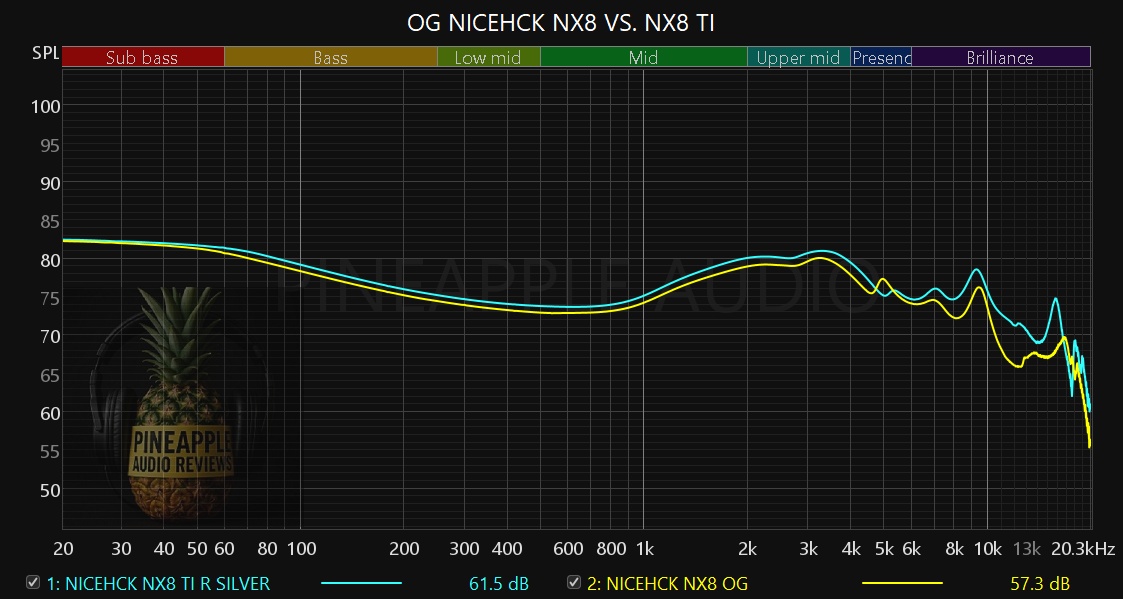
The original NX8 was already a very impressive tribrid for its price and honestly one of the more memorable sets NiceHCK has released in recent years. It had that kind of tuning that immediately grabs your attention the moment you press play. Deep bass, energetic upper mids, sparkling treble, and a highly detailed presentation that sounded exciting and lively right out of the box.
It was the kind of IEM that made a strong first impression.
The OG NX8 had a very engaging and almost addictive character to it. Vocals were forward and vivid, the bass had satisfying presence and weight, and the treble carried a lot of sparkle and air. Combined with its strong technical performance, it gave the NX8 a very “fun but technical” personality that worked especially well for modern pop, electronic music, rock, and vocal-focused tracks.
But at the same time, the original NX8 also had a few rough edges that became more noticeable during longer listening sessions or direct comparisons with more refined sets.
The upper mids and lower treble region could occasionally become a bit too aggressive depending on the recording, source pairing, or listening volume. At low to medium volumes, the OG NX8 sounded exciting and highly detailed, but once you started pushing the volume higher, the energy in the upper frequencies could become overwhelming at times.
It was not necessarily harsh or sibilant, but there was definitely a certain sharpness and intensity to the presentation that could become fatiguing over time, especially with brighter recordings or analytical DAC pairings.
The bass on the OG NX8 was also satisfying and impactful, but compared directly to the NX8Ti, it sounded softer and slightly less controlled. There was more warmth and fullness, which made it sound fun and musical, but it did not have the same level of texture definition, speed, and precision that the titanium driver brings to the table.
And this is exactly where the NX8Ti feels like a proper refinement rather than just a simple revision.
The NX8Ti sounds like NiceHCK took everything people liked about the original NX8, then carefully cleaned up the rougher edges without losing the personality that made it special in the first place.
Bass Control
The improvement in bass performance is immediately noticeable.
The titanium diaphragm dynamic driver gives the NX8Ti a much tighter, faster, and more controlled low-end response. Subbass extension remains excellent, but the overall bass presentation now feels cleaner and more disciplined.
Compared to the OG NX8, bass notes on the NX8Ti have better definition and separation. The transient response is noticeably faster, which helps bass lines sound more articulate and textured rather than slightly rounded or soft.
Midbass impact is still satisfying and dynamic, but now it comes with improved control and less bloom into the lower mids. You can hear more layering within bass-heavy tracks, and the distinction between subbass rumble, kick drum impact, and bass guitar textures becomes clearer.
The OG NX8 sounded fuller and warmer down low.
The NX8Ti sounds more precise and refined.
Treble Refinement
This is honestly one of the biggest upgrades of the Ti version.
The OG NX8 already had excellent detail retrieval and strong treble extension, but sometimes it almost felt too eager to show every little detail in the mix. The upper frequencies could occasionally sound sharp or overly energetic depending on the track and volume level.
The NX8Ti smooths that entire region out significantly while still preserving the resolution and air that made the original impressive.
Treble on the NX8Ti feels much more controlled and mature now. You still get excellent extension, sparkle, and microdetail retrieval, but the presentation is less fatiguing and far more natural during long listening sessions.
What I really appreciate is that the NX8Ti does not sacrifice excitement just to sound smoother. It still sounds lively and resolving, just without constantly pushing the upper frequencies forward aggressively.
The result is a top-end presentation that feels more refined and easier to live with long term.
Midrange Improvements
The midrange also benefits quite a bit from the improved tuning balance.
The OG NX8 had very energetic upper mids that gave female vocals strong presence and clarity, but occasionally that energy bordered on being too intense depending on the recording.
The NX8Ti keeps the openness and vocal clarity, but smooths out the upper-mid transition significantly. Vocals sound more natural, more controlled, and less fatiguing while still remaining highly engaging.
There is also better note definition and separation throughout the mids. Instruments sound cleaner and more layered, and the overall presentation feels more coherent from bass to treble.
Technical Performance
Technically, the NX8Ti outperforms the original NX8 in pretty much every category.
The soundstage feels wider and deeper with better spatial layering. Imaging is more precise, instrument separation is cleaner, and the overall presentation feels more holographic and organized.
The improved transient response from the titanium driver also contributes heavily to the perception of higher technical performance. Notes attack and decay faster, which gives the NX8Ti a cleaner and more resolving presentation overall.
Microdetail retrieval also feels more effortless compared to the OG NX8. The original already retrieved a lot of detail, but the NX8Ti presents those details in a smoother and more natural way rather than constantly emphasizing them.
The technical improvements are not night-and-day dramatic, but once you hear them side by side, the NX8Ti clearly sounds more mature and refined.
Overall Coherency
Honestly, this might be the biggest improvement of all.
The OG NX8 sometimes sounded like a very good tribrid with multiple drivers each trying to impress you individually. The bass was energetic, the mids were forward, and the treble was highly detailed, but occasionally the presentation felt slightly disconnected across the frequency range.
The NX8Ti sounds far more unified and cohesive.
Everything transitions more naturally now. The bass integrates better into the mids, the upper mids flow more smoothly into the treble, and the entire tuning feels more balanced and controlled from top to bottom.
The drivers sound like they are working together rather than competing for attention.
And honestly, that is what really separates the NX8Ti from the original for me.
The OG NX8 sounded exciting.
The NX8Ti sounds polished.
It keeps the energy, technicality, and engaging character of the original, but now presents everything with significantly more refinement, control, and maturity.
Final Thoughts
The NiceHCK NX8Ti Limited Edition honestly feels like the final polished version of the original NX8 concept. It takes everything that made the OG NX8 enjoyable and memorable, then refines it in almost every meaningful way without stripping away the personality that made people like it in the first place.
The original NX8 was exciting, energetic, and highly engaging, but sometimes that excitement came with a few compromises. The upper mids could occasionally get a little too hot, the treble could become intense depending on the source or recording, and while the bass was fun and satisfying, it was not always the cleanest or most controlled presentation.
The NX8Ti fixes a lot of those issues while still keeping the same tribrid spirit intact.
What NiceHCK managed to do here is make the NX8Ti sound more mature and technically refined without turning it into some cold, sterile “audiophile” tuning that forgets how to be enjoyable. It still has energy. It still has excitement. It still gives you that lively and immersive presentation that keeps you engaged with the music. But now everything feels more controlled, more coherent, and far more polished.
And honestly, the titanium driver upgrade is not just another marketing buzzword slapped onto the box to justify a new release. You can genuinely hear the difference in the way the NX8Ti handles bass texture, transient speed, layering, and overall control. The low-end sounds tighter and more articulate, note attacks feel cleaner and faster, and the entire presentation comes across more organized and composed compared to the OG NX8.
The improvements in coherency might actually be the biggest upgrade though.
The NX8Ti sounds like a much more unified IEM overall. The drivers integrate more naturally, transitions between frequencies feel smoother, and nothing sounds like it is competing for attention anymore. Instead of constantly trying to impress you with isolated parts of the tuning, the NX8Ti delivers a more complete and balanced listening experience.
I also really appreciate how NiceHCK handled the treble refinement here. They could have easily toned everything down and made it safer, but thankfully they did not kill the energy or technical performance. The NX8Ti still sounds airy, detailed, and highly resolving, but now with significantly better control and long-term listenability. You get the sparkle and microdetail without the fatigue that the OG NX8 could occasionally introduce at louder listening levels.
That balance between technical performance and musical enjoyment is honestly what makes the NX8Ti stand out for me.
A lot of highly technical tribrids today can sound impressive for a few tracks, then eventually become exhausting because they constantly demand your attention. The NX8Ti avoids that. It has the technical capability to satisfy detail-focused listeners, but it still sounds natural and enjoyable enough to simply relax and listen to music for hours.
And that is probably the biggest compliment I can give this set.
At some point during the week, I completely stopped analyzing it.
I stopped focusing on driver configurations, treble extension, layering performance, transient response, and all the usual reviewer brain nonsense that audio nerds like us tend to obsess over. I just kept scrolling through playlists and listening to album after album without feeling the urge to switch IEMs.
For someone like me who constantly rotates through multiple sets almost every single day, that almost never happens.
The NX8Ti is not just technically impressive. It is genuinely enjoyable to live with long term, and honestly that matters more to me than any spec sheet or driver count ever will.
Physically, the NX8Ti stays very close to the original NX8 in both size and overall shape, and honestly that is a good thing because the OG NX8 already had one of the better fitting universal shells in this category. NiceHCK clearly understood they already had a solid ergonomic foundation here, so instead of redesigning everything for the sake of looking “new,” they focused on refining the materials and overall execution.
The shell itself remains compact, sleek, and surprisingly lightweight for a tribrid configuration packing this many drivers inside. In the ears, it never feels bulky or awkward. The inner resin shell has a very smooth contour that naturally follows the shape of the ear, giving it a secure fit and consistent seal without creating pressure points. Even after several hours of listening, I never really felt the urge to take them out and rest my ears, which is always a good sign.
Visually, the NX8Ti looks more mature and premium compared to the OG NX8. The matte titanium alloy faceplate immediately stands out the moment light hits it. It has this raw industrial look that feels clean and understated rather than flashy or overly decorative. The laser etched line design adds just enough texture and character without turning it into some overly aggressive “gaming” aesthetic. It has a very modern minimalist vibe to it that I personally really like.
The transition between the resin shell and titanium faceplate is also very clean. No uneven seams, no rough edges, no cheap feeling joins. Everything feels properly assembled and well finished. For a limited edition release, the build quality definitely feels appropriate.
More importantly, the titanium faceplate is not just there for visual appeal or marketing points. Titanium is an extremely rigid material, and that rigidity helps reduce unwanted shell resonance and vibrations. Now, whether that alone completely transforms the sound is always hard to quantify, but combined with the new titanium diaphragm dynamic driver, the overall presentation of the NX8Ti does come across cleaner, tighter, and more refined compared to the original NX8. There is a sense of control and composure here that the OG version occasionally lacked, especially in the upper frequencies.
Comfort is excellent for my ears. Once inserted, the shells almost disappear because of how lightweight they are. Isolation is also pretty solid thanks to the compact fit and deep enough nozzle insertion. I had no issues using them for long late-night listening sessions, and they never developed that annoying hotspot fatigue some larger tribrids tend to cause.
Now the cable… this thing is an absolute tank.
The moment I pulled it out of the box, it immediately reminded me of the NiceHCK BlackCat cable because of the thickness and overall construction style, except this one somehow feels even denser and more premium in hand. The braid is tight and substantial, and the entire thing just screams “high-end aftermarket cable included in the box.”
The hardware deserves some attention too. The titanium finished jack, splitter, chin slider, and 2-pin connectors all perfectly match the aesthetic of the NX8Ti itself. NiceHCK clearly paid attention to consistency here because the entire package feels cohesive from the shells down to the cable hardware.
In terms of feel, this cable definitely leans toward the “luxury” side rather than the lightweight practical side. It has weight to it. Real weight. Some people absolutely love that because it gives off that premium, serious audio gear feel. Personally though, I think it borders slightly into overkill considering how compact and lightweight the NX8Ti shells are. The cable almost feels more substantial than the IEM itself.
It is not uncomfortable, but you are always aware of it. A softer and slightly lighter cable probably would have matched the NX8Ti’s sleek ergonomic design a little better for daily portable use. Still, this is one of those “good problem to have” situations because the actual quality here is undeniably excellent.
Overall, the NX8Ti feels properly premium from top to bottom. Nothing about it comes across cheap or rushed. Between the titanium faceplate, the excellent shell ergonomics, and the absurdly overbuilt cable, this definitely feels like a more refined and upscale evolution of the original NX8 rather than just a minor refresh.
Drivability and Pairing
Despite packing a pretty serious tribrid setup with a 1DD + 6BA + 1PZT configuration, the NX8Ti is actually surprisingly easy to drive. This is not one of those ultra-picky IEMs that suddenly sounds dead or lifeless unless you hook it up to some massive desktop amplifier that looks like it belongs in a recording studio. Even modest portable dongles have no problem driving it properly.
Straight out of smaller portable sources, the NX8Ti already sounds full, dynamic, and resolving. Volume headroom is easy to achieve, and the overall tuning remains stable even from lower-powered devices. That makes it a very practical daily carry because you are not constantly worrying about whether your source has enough juice to wake it up.
What impressed me more though is how well the NX8Ti scales when you start pairing it with cleaner and more resolving sources. The core tuning remains intact, but better sources noticeably improve layering, transient sharpness, bass texture, and stage depth. It is one of those IEMs where you can clearly hear the source chain changes without it becoming overly source dependent.
Personally, I think the NX8Ti pairs best with smoother or slightly analog leaning sources. Pair it with something that has a natural timbre or a mildly warm presentation and the NX8Ti becomes incredibly addictive. The titanium dynamic driver already gives the bass very good control and texture, so pairing it with smoother DACs or slightly organic sounding amps helps balance the technical performance with a more relaxed musical presentation.
I especially enjoyed pairing it with R2R-style sources and smoother Class A amplifiers because they complement the NX8Ti’s cleaner and more resolving nature really well. The sound becomes richer and more immersive without sacrificing detail retrieval or speed. Vocals gain a little more body, the treble smooths out even further, and the entire presentation just feels effortless.
Compared to the original NX8, this is honestly one of the biggest improvements of the Ti version.
The OG NX8 was already highly detailed and energetic, but depending on the source and recording quality, it could occasionally become a bit too intense in the upper mids and lower treble region. Brighter DACs or sharper ESS implementations especially could push the OG NX8 into slightly fatiguing territory during longer listening sessions. It was exciting, but sometimes almost too eager to show every little detail.
The NX8Ti feels noticeably more refined in that regard.
The treble is still highly resolving and extended, but the delivery is smoother, more controlled, and more natural sounding. There is still plenty of air and sparkle up top, but now it comes with better balance and composure. You still get all the microdetail and openness, just without the occasional sharpness that the OG NX8 could exhibit on certain tracks.
That smoother top-end behavior also makes the NX8Ti significantly less fatiguing during long sessions. I could comfortably listen to it for hours without feeling that upper-frequency tension or listening fatigue creeping in. That is honestly a huge compliment for a tribrid running both multiple BAs and a piezoelectric driver, because those types of setups can sometimes become overly analytical or aggressive if not tuned properly.
Another thing I noticed is that the NX8Ti maintains its composure better at higher listening volumes compared to the OG NX8. The original sounded best at low to medium volume levels, while pushing it louder could make the upper frequencies feel overwhelming. The NX8Ti handles volume scaling much better. Even when turning the volume up, the sound stays controlled and cohesive rather than becoming sharp or shouty.
Sound Impressions
Bass
The low-end performance on the NX8Ti is probably the first thing that immediately made me realize this was not just a minor cosmetic refresh over the original NX8. The moment the bass kicks in, you can hear what that titanium diaphragm is doing differently. There is a level of control, speed, and texture here that feels noticeably more refined and technically polished compared to the OG version.
Subbass extension is excellent. It reaches deep effortlessly and has that satisfying physical rumble that you can both hear and feel, especially on tracks with proper low-end information. The NX8Ti can dig very low when the recording calls for it, but what I appreciate is how disciplined it stays throughout. It never turns into that overly boosted or loose “subwoofer strapped to your ears” type of bass presentation. Instead, it keeps things clean, layered, and controlled.
There is a nice sense of physicality to the subbass too. You get that tactile vibration and air movement that gives electronic tracks, cinematic scores, and modern pop music a really immersive foundation. At the same time, the bass never overshadows the rest of the frequency range. It supports the presentation rather than dominating it.
What really stands out to me though is the transient behavior of the dynamic driver. This is where the titanium diaphragm immediately separates itself from more conventional polymer implementations. Notes attack fast, stop fast, and recover quickly. The bass has a very precise and well-defined character that makes complex bass passages sound organized instead of smeared together.
You can clearly hear the edges of bass notes. There is very little bloom or lingering resonance, which gives the NX8Ti excellent bass separation and layering. On busy tracks with multiple low-frequency elements happening simultaneously, like layered synth bass, kick drums, bass guitar lines, and subbass drops, the NX8Ti maintains composure extremely well. Nothing turns muddy or congested.
Texture retrieval is also excellent. You do not just hear bass quantity here, you hear the nuances within the bass itself. Bass guitars have string texture and grip, kick drums have proper definition between the initial impact and the trailing resonance, and electronic bass lines sound tight and articulate rather than soft or blurred.
Midbass is where the tuning becomes especially satisfying for me. It has very good punch and impact, but avoids sounding bloated or overly thick. The slam feels fast, dense, and controlled. There is enough weight to make drums sound lively and engaging, but the bass never bleeds into the lower mids or clouds vocal clarity.
This balance is something I think NiceHCK handled really well with the NX8Ti. A lot of technically tuned tribrids can sometimes sound a little too lean or dry in the bass department because they prioritize speed over physicality. The NX8Ti manages to keep both. It sounds clean and technical, but still musical and dynamic.
Another thing I noticed is how consistent the bass remains across different genres. Whether I was listening to electronic music, jazz, rock, acoustic tracks, or even orchestral recordings, the low-end always sounded controlled and appropriately scaled to the recording. It adapts well rather than forcing the same exaggerated bass profile onto everything.
Compared directly to the original NX8, the difference becomes pretty obvious.
The OG NX8 had a fuller and warmer low-end presentation with a bit more bloom and body. It sounded rich and engaging, but occasionally leaned slightly soft or rounded in comparison. The NX8Ti tightens everything up considerably. Bass notes are cleaner, faster, and more textured. Separation between subbass and midbass is more defined, and overall control is noticeably improved.
The OG NX8 felt more “fun” and slightly more colored down low, while the NX8Ti feels more mature and technically capable. It prioritizes precision, layering, and texture without sacrificing impact or musicality.
Personally, I think the NX8Ti strikes the better balance overall. It still gives you that satisfying dynamic driver punch and rumble, but now with significantly better control and refinement behind it.
Midrange
The midrange is honestly where the NX8Ti completely won me over. This is easily my favorite part of the tuning and probably the reason I kept reaching for it over and over again throughout the week. A lot of tribrids today focus so heavily on bass impact and hyper-detailed treble that the mids sometimes end up feeling artificially pushed back or overly processed. The NX8Ti thankfully avoids that trap.
What NiceHCK managed to do here is strike a really nice balance between technical clarity and natural musicality.
The overall midrange presentation sounds clean, transparent, and highly resolving, but never sterile or lifeless. There is very minimal coloration across the mids, and I mean that in a good way. The NX8Ti does not try to artificially sweeten vocals or add unnecessary warmth just to sound “musical.” Instead, it leans toward realism and accuracy while still maintaining a very engaging presentation.
Vocals sound properly centered and naturally positioned within the mix. They are not shoved aggressively forward, but they never feel recessed either. There is a very nice sense of openness and space around vocals that helps them breathe naturally within the presentation.
Male vocals have good density and texture. You can hear subtle nuances in vocal delivery like breath texture, vocal layering, and chest resonance without the presentation sounding overly thick or heavy. Baritone vocals especially sound really satisfying because the NX8Ti preserves enough lower-mid body while keeping everything clean and controlled.
Female vocals are where the NX8Ti really shines for me. There is a lively and energetic presentation to female vocals that gives them excellent clarity and emotional presence, but unlike the OG NX8, the tuning never crosses into shouty or piercing territory. That was one of the biggest improvements I immediately noticed moving from the original NX8 to the Ti version.
The OG NX8 could occasionally sound a little too eager in the upper mids, especially with brighter recordings or at higher listening volumes. Female vocals sometimes carried a sharper edge that could become fatiguing over long sessions. The NX8Ti smooths that region out significantly while still preserving the openness and energy that made the original engaging.
The upper mids here are elevated enough to give vocals and instruments strong clarity and articulation, but the transition into the lower treble feels much more refined and cohesive now. Instead of sounding sharp or overly excited, the energy flows more naturally across the frequency range.
Instrument reproduction is another area where the NX8Ti performs really well.
Guitars sound crisp and articulate with very good string definition. Piano notes carry proper weight and harmonic richness without sounding overly thin or metallic. Acoustic instruments in general sound very clean and believable. There is a nice balance between note body and note edge that keeps instruments sounding realistic rather than overly analytical.
One thing I really appreciate is how organized the midrange stays even on complex tracks. Instrument separation is excellent, and the layering capability here is genuinely impressive for the price range. Busy recordings with multiple instruments happening simultaneously never collapse into congestion or smear together. You can easily follow individual instruments within the mix without needing to “search” for details.
There is also a noticeable cleanliness to the overall presentation that gives the NX8Ti a very refined character. Notes are well outlined, background details come through effortlessly, and there is very little haze or blur between layers. The presentation feels precise without sounding dry.
Technically, I think the improved transient response from the titanium dynamic driver also contributes a lot here. Faster bass decay prevents the low-end from bleeding upward into the mids, which helps maintain that clean and transparent midrange presentation.
Compared to the original NX8, the NX8Ti sounds more mature and more coherent overall. The OG NX8 was exciting and energetic, but occasionally felt slightly aggressive in the upper mids. The NX8Ti keeps the clarity and openness, but now everything feels smoother, more controlled, and more naturally integrated across the frequency range.
The result is a midrange that sounds highly detailed and technically capable while still remaining easy to listen to for hours. That balance is honestly harder to achieve than most people realize, especially with multi-driver tribrid setups like this.
And for me personally, that is what makes the NX8Ti so addictive. It gives you the resolution and transparency you want from a modern tribrid, but still sounds musical and emotionally engaging rather than cold or clinical.
Treble
The treble performance on the NX8Ti is honestly one of the biggest highlights of this set and probably the area where the “Ti” revision feels the most refined compared to the original NX8. This is a highly technical and highly resolving top-end presentation, but unlike a lot of detail-focused tribrids, it does not rely on aggressive peaks or artificial sharpness just to create the illusion of resolution.
The combination of the balanced armatures and piezoelectric driver gives the NX8Ti a very airy, open, and extended treble response. There is a huge amount of information being presented up top, but the way it delivers detail feels effortless rather than forced. That distinction is important because some IEMs try so hard to sound “detailed” that they end up sounding thin, metallic, or overly analytical. The NX8Ti manages to retrieve a ton of microdetail while still sounding smooth and natural.
Treble extension here is excellent. There is a very noticeable sense of air and openness above the mix that helps create a spacious and highly resolving presentation. The upper treble has good reach without sounding brittle or artificially boosted, and that extra air contributes a lot to the NX8Ti’s impressive sense of layering and stage separation.
Cymbals sound crisp, clean, and properly defined. You can hear the initial strike, the shimmer, and the natural trailing decay very clearly without the treble becoming splashy or uncontrolled. Hi-hats have a fast and articulate presentation with excellent transient sharpness, but they never cross into that harsh “tss tss” territory that can make brighter tribrids fatiguing after a while.
What impressed me most though is how well controlled the entire treble region feels despite the amount of energy present.
The OG NX8 was already a very detailed and energetic set, but depending on the source or recording, it could occasionally become a little too excited in the upper frequencies. At higher listening volumes especially, the upper mids and lower treble could start pushing too much energy forward, which sometimes made brighter recordings sound slightly aggressive or fatiguing over time.
The NX8Ti handles this significantly better.
There is still plenty of sparkle, excitement, and treble energy here, but now it comes with much better composure and refinement. The tuning feels smoother and more balanced without sacrificing the technical performance that made the original NX8 impressive in the first place.
This is the kind of treble presentation that gives you detail naturally instead of demanding your attention constantly. Microdetails come through effortlessly in the background rather than being artificially spotlighted. Small nuances like room reverbs, subtle vocal layering, cymbal decay trails, and ambient recording details are all very easy to pick up, but they integrate into the music organically.
Another thing I really like is how coherent the treble sounds relative to the rest of the frequency range. Piezoelectric drivers can sometimes sound disconnected or unnatural if not implemented properly, often creating an oddly sharp or metallic upper treble character. Thankfully, that is not the case here. NiceHCK did a really good job integrating the piezo driver into the overall tuning because the treble feels cohesive and controlled rather than detached from the mids.
The NX8Ti also avoids sounding overly dry or sterile despite its strong technical ability. There is still enough smoothness and note density to keep instruments sounding realistic and musical. String harmonics, cymbal overtones, and upper vocal air all sound refined and properly textured rather than artificially sharpened.
Volume scaling is another area where the NX8Ti improves significantly over the OG NX8. The original sounded best at lower to medium listening levels because pushing the volume higher could make the treble a bit too intense. The NX8Ti maintains much better control even when listening louder. The treble remains composed and extended without collapsing into glare or harshness.
Overall, the NX8Ti delivers a very impressive balance between technical resolution and long-term listenability. It has the speed, air, sparkle, and extension you would expect from a high-performing tribrid, but now with a much smoother and more mature tuning approach.
Instead of sounding like it is trying to impress you with detail every second, the NX8Ti simply lets the resolution exist naturally within the music. And honestly, that level of restraint and refinement is what makes the treble performance here so satisfying.
Technical Performance
Technically, the NX8Ti performs at a seriously high level for its price range, and honestly this is where the improvements over the original NX8 become the most obvious. The OG NX8 was already a capable tribrid technically, but the NX8Ti feels more refined, more coherent, and noticeably more mature in how it presents detail and spatial information.
What I like most is that the technical performance never feels disconnected from the musicality. Some highly technical IEMs can sound impressive for the first few minutes, then eventually become fatiguing because they constantly throw detail at your face. The NX8Ti takes a more balanced approach. It gives you the technical capability and resolution you want from a modern tribrid, but still keeps the presentation natural and engaging enough to simply enjoy music rather than analyze it nonstop.
Soundstage
The soundstage on the NX8Ti is noticeably improved over the original NX8. The OG version had decent width and solid imaging, but the Ti version opens things up significantly more in all directions. The presentation feels wider, deeper, and taller, giving music a more spacious and immersive character overall.
Width is the first thing you notice. Instruments stretch further outward with more breathing room between elements, but what impressed me more is the improved depth layering. The NX8Ti does a much better job creating front-to-back positioning, which helps recordings sound more dimensional instead of flat or two-dimensional.
There is also better height perception here. Certain tracks with atmospheric effects, live recordings, or orchestral arrangements have a stronger sense of vertical space, which adds to the holographic feeling of the presentation.
The overall stage is not artificially exaggerated either. It does not try to sound unnaturally huge just for the sake of impressing you during quick demos. Instead, the staging feels realistic, coherent, and proportionally scaled to the recording.
Combined with the cleaner transient response and strong layering capability, the NX8Ti creates a presentation that feels spacious without losing focus or precision.
Imaging
The NX8Ti places instruments and vocals with a very high level of accuracy inside the soundstage. Directional cues are easy to track, and there is a very solid sense of positional stability across the stereo field.
Whether it is live recordings, binaural tracks, gaming, or complex orchestral music, the NX8Ti does a great job separating and locating individual sounds within the mix. Small positional movements are easy to pick up, and instruments never feel blurred together.
The improved stage depth also helps imaging feel more convincing because sounds are not only placed left and right, but also forward and behind within the presentation. This gives the NX8Ti a more holographic and layered imaging experience compared to the OG NX8.
One thing I noticed during busy passages is how confidently the NX8Ti maintains positional accuracy even when multiple instruments are competing for space. Some IEMs lose composure and imaging sharpness once tracks become crowded, but the NX8Ti stays remarkably organized.
Separation and Layering
This thing handles busy tracks extremely well. Even dense recordings with layered instrumentation remain clean, organized, and easy to follow. There is very little smearing or congestion happening even during fast or complex passages.
Part of this comes from the fast transient response of the titanium dynamic driver, but the overall crossover implementation also deserves credit because the different driver types integrate surprisingly well together.
Each instrument occupies its own clearly defined space within the mix. You can easily isolate individual elements without the presentation sounding artificially dissected or overly analytical.
Layering performance is especially impressive. The NX8Ti presents music in distinct layers with very good separation between foreground, midground, and background elements. Ambient effects, backing vocals, reverbs, and microdetails remain audible even when the main mix becomes busy.
This clean layering contributes a lot to the overall sense of technical refinement and resolution.
Dynamics
The NX8Ti has a very lively and expressive presentation with strong contrast between quiet and loud passages. Dynamic swings feel impactful and convincing rather than compressed or flat.
Drum hits carry proper physical impact, bass drops feel satisfying, and crescendos build naturally with good energy. There is enough punch and slam to keep music sounding exciting, but also enough control to preserve nuance and articulation.
Microdynamics are also handled very well. Small volume fluctuations, subtle instrumental textures, and delicate vocal inflections come through clearly, adding emotional nuance to recordings.
This balance between macro and microdynamic performance helps the NX8Ti sound engaging across a wide range of genres.
Resolution and Detail Retrieval
This is a highly resolving IEM that retrieves an impressive amount of information across the frequency range. Small background details, room reverbs, recording textures, and subtle instrumental nuances are presented effortlessly.
What I appreciate though is that the NX8Ti does not sound clinical or sterile despite its technical ability. The detail retrieval feels natural and integrated into the music rather than artificially exaggerated.
Some detail-focused IEMs constantly force microdetails forward to impress you immediately, but that often comes at the expense of natural timbre and listening comfort. The NX8Ti takes a more refined approach. Details are always present and easy to hear, but they never dominate the presentation unnaturally.
The improved treble smoothness compared to the OG NX8 also helps a lot here because the resolution comes through without excessive sharpness or glare.
Transient Response
The transient response on the NX8Ti is one of the clearest indicators of the titanium diaphragm upgrade. Notes attack with excellent sharpness and precision, then decay quickly without unnecessary lingering resonance.
This gives the entire presentation a very clean, tight, and highly resolving character.
Bass lines sound articulate, percussion feels crisp and snappy, and layered passages maintain excellent definition because notes do not smear into one another.
At the same time, the NX8Ti avoids sounding unnaturally dry or overly aggressive. There is still enough note body and decay to keep instruments sounding realistic and musical.
Compared to the OG NX8, the NX8Ti sounds noticeably faster and more controlled overall. The original had a slightly softer and warmer presentation, while the Ti version feels more precise, cleaner, and technically sharper without becoming cold or analytical.
Overall, the NX8Ti delivers a genuinely impressive technical performance that competes far above what I expected from this price bracket. It manages to combine strong resolution, speed, staging, and separation with a tuning that still feels musical and enjoyable long term, and honestly that balance is what makes this set so easy to keep listening to for hours.
NX8Ti vs Original NX8
The original NX8 was already a very impressive tribrid for its price and honestly one of the more memorable sets NiceHCK has released in recent years. It had that kind of tuning that immediately grabs your attention the moment you press play. Deep bass, energetic upper mids, sparkling treble, and a highly detailed presentation that sounded exciting and lively right out of the box.
It was the kind of IEM that made a strong first impression.
The OG NX8 had a very engaging and almost addictive character to it. Vocals were forward and vivid, the bass had satisfying presence and weight, and the treble carried a lot of sparkle and air. Combined with its strong technical performance, it gave the NX8 a very “fun but technical” personality that worked especially well for modern pop, electronic music, rock, and vocal-focused tracks.
But at the same time, the original NX8 also had a few rough edges that became more noticeable during longer listening sessions or direct comparisons with more refined sets.
The upper mids and lower treble region could occasionally become a bit too aggressive depending on the recording, source pairing, or listening volume. At low to medium volumes, the OG NX8 sounded exciting and highly detailed, but once you started pushing the volume higher, the energy in the upper frequencies could become overwhelming at times.
It was not necessarily harsh or sibilant, but there was definitely a certain sharpness and intensity to the presentation that could become fatiguing over time, especially with brighter recordings or analytical DAC pairings.
The bass on the OG NX8 was also satisfying and impactful, but compared directly to the NX8Ti, it sounded softer and slightly less controlled. There was more warmth and fullness, which made it sound fun and musical, but it did not have the same level of texture definition, speed, and precision that the titanium driver brings to the table.
And this is exactly where the NX8Ti feels like a proper refinement rather than just a simple revision.
The NX8Ti sounds like NiceHCK took everything people liked about the original NX8, then carefully cleaned up the rougher edges without losing the personality that made it special in the first place.
Bass Control
The improvement in bass performance is immediately noticeable.
The titanium diaphragm dynamic driver gives the NX8Ti a much tighter, faster, and more controlled low-end response. Subbass extension remains excellent, but the overall bass presentation now feels cleaner and more disciplined.
Compared to the OG NX8, bass notes on the NX8Ti have better definition and separation. The transient response is noticeably faster, which helps bass lines sound more articulate and textured rather than slightly rounded or soft.
Midbass impact is still satisfying and dynamic, but now it comes with improved control and less bloom into the lower mids. You can hear more layering within bass-heavy tracks, and the distinction between subbass rumble, kick drum impact, and bass guitar textures becomes clearer.
The OG NX8 sounded fuller and warmer down low.
The NX8Ti sounds more precise and refined.
Treble Refinement
This is honestly one of the biggest upgrades of the Ti version.
The OG NX8 already had excellent detail retrieval and strong treble extension, but sometimes it almost felt too eager to show every little detail in the mix. The upper frequencies could occasionally sound sharp or overly energetic depending on the track and volume level.
The NX8Ti smooths that entire region out significantly while still preserving the resolution and air that made the original impressive.
Treble on the NX8Ti feels much more controlled and mature now. You still get excellent extension, sparkle, and microdetail retrieval, but the presentation is less fatiguing and far more natural during long listening sessions.
What I really appreciate is that the NX8Ti does not sacrifice excitement just to sound smoother. It still sounds lively and resolving, just without constantly pushing the upper frequencies forward aggressively.
The result is a top-end presentation that feels more refined and easier to live with long term.
Midrange Improvements
The midrange also benefits quite a bit from the improved tuning balance.
The OG NX8 had very energetic upper mids that gave female vocals strong presence and clarity, but occasionally that energy bordered on being too intense depending on the recording.
The NX8Ti keeps the openness and vocal clarity, but smooths out the upper-mid transition significantly. Vocals sound more natural, more controlled, and less fatiguing while still remaining highly engaging.
There is also better note definition and separation throughout the mids. Instruments sound cleaner and more layered, and the overall presentation feels more coherent from bass to treble.
Technical Performance
Technically, the NX8Ti outperforms the original NX8 in pretty much every category.
The soundstage feels wider and deeper with better spatial layering. Imaging is more precise, instrument separation is cleaner, and the overall presentation feels more holographic and organized.
The improved transient response from the titanium driver also contributes heavily to the perception of higher technical performance. Notes attack and decay faster, which gives the NX8Ti a cleaner and more resolving presentation overall.
Microdetail retrieval also feels more effortless compared to the OG NX8. The original already retrieved a lot of detail, but the NX8Ti presents those details in a smoother and more natural way rather than constantly emphasizing them.
The technical improvements are not night-and-day dramatic, but once you hear them side by side, the NX8Ti clearly sounds more mature and refined.
Overall Coherency
Honestly, this might be the biggest improvement of all.
The OG NX8 sometimes sounded like a very good tribrid with multiple drivers each trying to impress you individually. The bass was energetic, the mids were forward, and the treble was highly detailed, but occasionally the presentation felt slightly disconnected across the frequency range.
The NX8Ti sounds far more unified and cohesive.
Everything transitions more naturally now. The bass integrates better into the mids, the upper mids flow more smoothly into the treble, and the entire tuning feels more balanced and controlled from top to bottom.
The drivers sound like they are working together rather than competing for attention.
And honestly, that is what really separates the NX8Ti from the original for me.
The OG NX8 sounded exciting.
The NX8Ti sounds polished.
It keeps the energy, technicality, and engaging character of the original, but now presents everything with significantly more refinement, control, and maturity.
Final Thoughts
The NiceHCK NX8Ti Limited Edition honestly feels like the final polished version of the original NX8 concept. It takes everything that made the OG NX8 enjoyable and memorable, then refines it in almost every meaningful way without stripping away the personality that made people like it in the first place.
The original NX8 was exciting, energetic, and highly engaging, but sometimes that excitement came with a few compromises. The upper mids could occasionally get a little too hot, the treble could become intense depending on the source or recording, and while the bass was fun and satisfying, it was not always the cleanest or most controlled presentation.
The NX8Ti fixes a lot of those issues while still keeping the same tribrid spirit intact.
What NiceHCK managed to do here is make the NX8Ti sound more mature and technically refined without turning it into some cold, sterile “audiophile” tuning that forgets how to be enjoyable. It still has energy. It still has excitement. It still gives you that lively and immersive presentation that keeps you engaged with the music. But now everything feels more controlled, more coherent, and far more polished.
And honestly, the titanium driver upgrade is not just another marketing buzzword slapped onto the box to justify a new release. You can genuinely hear the difference in the way the NX8Ti handles bass texture, transient speed, layering, and overall control. The low-end sounds tighter and more articulate, note attacks feel cleaner and faster, and the entire presentation comes across more organized and composed compared to the OG NX8.
The improvements in coherency might actually be the biggest upgrade though.
The NX8Ti sounds like a much more unified IEM overall. The drivers integrate more naturally, transitions between frequencies feel smoother, and nothing sounds like it is competing for attention anymore. Instead of constantly trying to impress you with isolated parts of the tuning, the NX8Ti delivers a more complete and balanced listening experience.
I also really appreciate how NiceHCK handled the treble refinement here. They could have easily toned everything down and made it safer, but thankfully they did not kill the energy or technical performance. The NX8Ti still sounds airy, detailed, and highly resolving, but now with significantly better control and long-term listenability. You get the sparkle and microdetail without the fatigue that the OG NX8 could occasionally introduce at louder listening levels.
That balance between technical performance and musical enjoyment is honestly what makes the NX8Ti stand out for me.
A lot of highly technical tribrids today can sound impressive for a few tracks, then eventually become exhausting because they constantly demand your attention. The NX8Ti avoids that. It has the technical capability to satisfy detail-focused listeners, but it still sounds natural and enjoyable enough to simply relax and listen to music for hours.
And that is probably the biggest compliment I can give this set.
At some point during the week, I completely stopped analyzing it.
I stopped focusing on driver configurations, treble extension, layering performance, transient response, and all the usual reviewer brain nonsense that audio nerds like us tend to obsess over. I just kept scrolling through playlists and listening to album after album without feeling the urge to switch IEMs.
For someone like me who constantly rotates through multiple sets almost every single day, that almost never happens.
The NX8Ti is not just technically impressive. It is genuinely enjoyable to live with long term, and honestly that matters more to me than any spec sheet or driver count ever will.
Comments
Post a Comment